
At first glance, comparing an iPad Mini to an iPhone 8 Plus seems like a mismatch—after all, one is a tablet, the other a phone. But when it comes to real-world portability and daily carry convenience, the conversation becomes surprisingly nuanced. Many users who’ve transitioned from large iPhones like the 8 Plus to the compact iPad Mini report a surprising shift in how they perceive “easy to carry.” The answer isn’t just about dimensions; it’s about use case, pocket fit, grip comfort, and lifestyle integration.
The iPhone 8 Plus, released in 2017, features a 5.5-inch display and was considered large for its time. Fast forward to today, and Apple’s iPad Mini (6th generation) packs an 8.3-inch screen into a frame that’s remarkably compact. While bigger in screen area, the Mini’s aspect ratio and slim bezels make it more pocketable than expected—and in some cases, more convenient than lugging around a bulky phone.
Size and Dimensions: A Closer Look
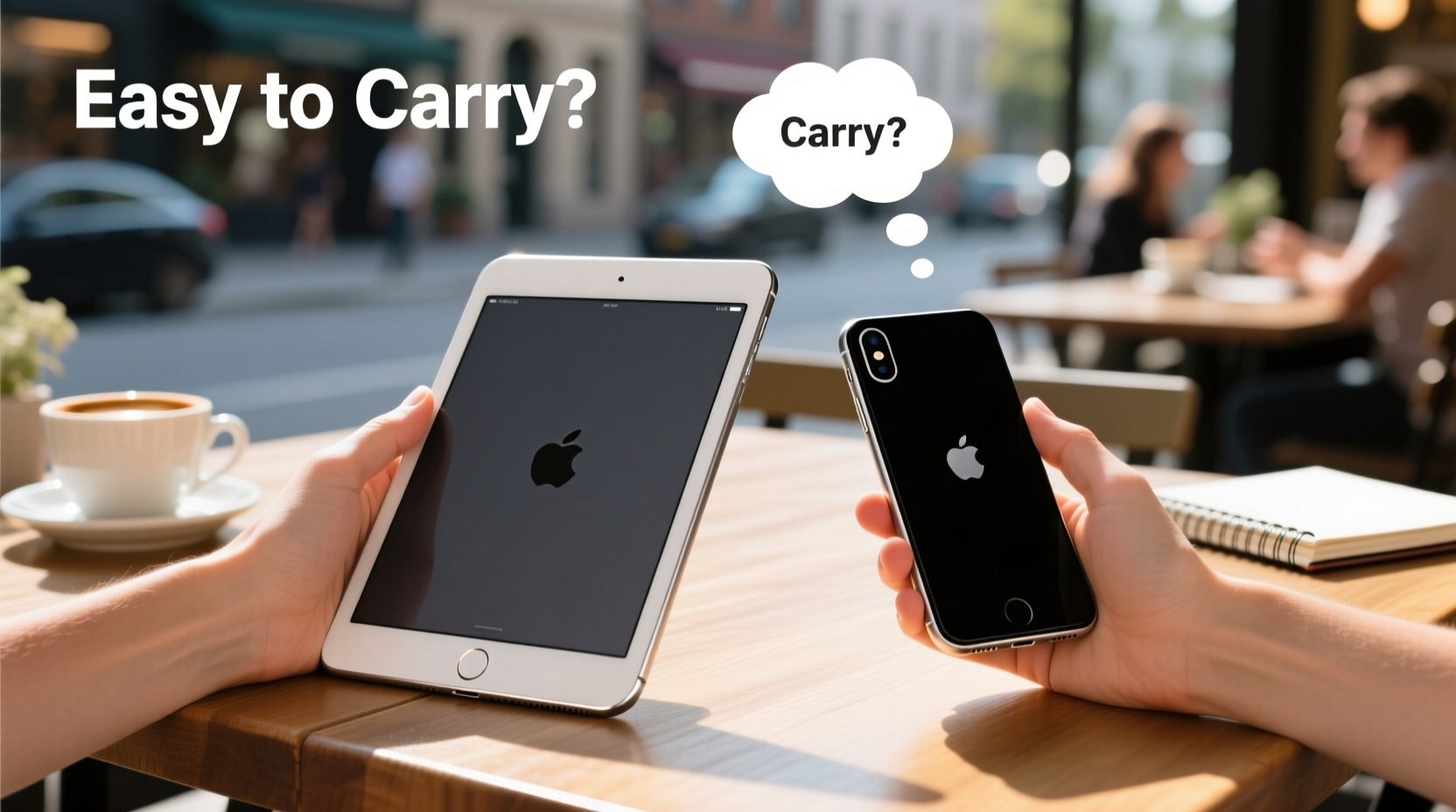
Let’s start with the numbers. Physical size doesn’t always translate directly to usability, but it’s a critical starting point.
| Device | Height | Width | Thickness | Weight | Screen Size |
|---|---|---|---|---|---|
| iPhone 8 Plus | 158.4 mm | 78.1 mm | 7.5 mm | 202g | 5.5 inches |
| iPad Mini (6th gen) | 195.4 mm | 134.8 mm | 6.3 mm | 293g | 8.3 inches |
On paper, the iPad Mini is larger in every dimension except thickness. It’s also significantly heavier. However, users often describe the Mini as feeling “more intentional” to carry. Unlike the iPhone 8 Plus, which many found too wide for comfortable one-handed use or back-pocket carry, the Mini’s narrow width makes it easier to slip into a jacket, tote, or even a large front pants pocket at an angle.
Pocketability: The Real-World Test
Pocket fit is where the iPhone 8 Plus starts to lose ground. At 78.1mm wide, it exceeds the width of most standard jeans and trousers. Users commonly reported discomfort, bulging fabric, or even accidental drops when reaching into tight pockets. In contrast, the iPad Mini, though longer, is only 134.8mm wide—narrower than the 8 Plus when oriented vertically.
Many users place the Mini diagonally in larger coat or cargo pants pockets. It doesn’t disappear like a smartphone, but it stays secure and accessible. As one Reddit user noted: “I used to hate pulling out my 8 Plus—it felt like I was retrieving a brick. With the Mini, I don’t pull it out as often, but when I do, it feels like I’m grabbing a tool, not a burden.”
This reflects a broader behavioral shift: people don’t treat the Mini like a phone. They don’t expect constant access. Instead, it becomes a dedicated companion for specific tasks—reading, sketching, watching videos—reducing the urge to check it compulsively.
User Scenarios: Who Benefits Most?
Portability needs vary by lifestyle. Here are three real-life examples illustrating how different users experience these devices:
Case Study: Commuter & Reader
Alex, a subway commuter, upgraded from an iPhone 8 Plus to an iPhone SE (2022) and added an iPad Mini for reading. He found that carrying both was lighter than his old 8 Plus alone. “The Mini fits perfectly in my backpack sleeve, and I can read for 45 minutes without neck strain. The SE handles calls and texts. I feel less weighed down overall.”
Case Study: Artist & Note-Taker
Jamila, a freelance illustrator, uses her iPad Mini with an Apple Pencil daily. She previously carried her 8 Plus everywhere but now leaves it at home unless needed. “The Mini is larger, yes, but it does work. My phone just couldn’t handle drawing properly. Now I carry the Mini in a padded sleeve—it’s worth the extra inch for the creative freedom.”
Case Study: Minimalist Traveler
David travels frequently with just a sling bag. He replaced his 8 Plus with a Mini and a smartwatch for communication. “It sounds extreme, but the Mini lets me check email, browse maps, and watch shows on flights. I use watch calls when necessary. The setup is more flexible than a single oversized phone.”
“Portability isn’t just about size—it’s about purpose. A device that serves multiple roles well often feels lighter than two that half-succeed.” — Lena Park, Digital Lifestyle Consultant
Practical Tips for Maximizing Carry Convenience
If you’re considering switching or supplementing your iPhone 8 Plus with an iPad Mini, here’s how to optimize for ease of carry:
- Downsize your phone: Pair the Mini with a smaller iPhone (like the SE) to avoid double device fatigue.
- Choose the right bag: Even small bags often have tablet sleeves. Measure before you buy.
- Use AirPods for audio: Reduces the need to hold the device while listening or watching.
- Enable Handoff: Seamlessly continue tasks between devices if you keep both.
- Limit app overlap: Designate roles—e.g., Mini for media, phone for communication.
Frequently Asked Questions
Can the iPad Mini really fit in a pocket?
Not in the traditional sense like a phone, but it can fit diagonally in larger jacket, coat, or cargo pants pockets. It’s best treated as a “slip-in” device rather than a “pull-out” one.
Isn’t the iPad Mini heavier than the iPhone 8 Plus?
Yes—it weighs 293g compared to the 8 Plus’s 202g. However, weight distribution and usage patterns matter. Because you use it less frequently and often while seated or at rest, the difference feels less pronounced in daily life.
Can I use the iPad Mini as my main device?
Yes, especially if you rely on cellular connectivity. The Wi-Fi + Cellular model supports eSIM, allowing you to make calls via FaceTime or third-party apps. Paired with a smartwatch or headphones, it can function as a standalone mobile hub.
Checklist: Is the iPad Mini Right for Your Carry Routine?
- ☐ Do you regularly consume long-form content (books, videos, articles)?
- ☐ Are you frustrated by the size or weight of your current phone?
- ☐ Do you carry a bag or backpack daily?
- ☐ Would you benefit from Apple Pencil or external keyboard support?
- ☐ Are you open to using a secondary device for calls (smartwatch, laptop, etc.)?
If you answered “yes” to three or more, the iPad Mini may offer a more balanced, sustainable carry solution—even if it’s technically larger.
The Verdict: Rethinking \"Easy to Carry\"
The question isn’t whether the iPad Mini is smaller than the iPhone 8 Plus—it clearly isn’t. But “easier to carry” depends on context. For users overwhelmed by the heft and constant distraction of a large phone, the Mini offers a refreshing alternative: a focused device that encourages intentionality.
Where the 8 Plus demanded attention—buzzing, lighting up, slipping out of pockets—the Mini waits patiently in a bag, ready for deep engagement without demanding constant interaction. Its size discourages mindless scrolling, and its capabilities exceed what any smartphone can offer for productivity, creativity, and media consumption.
In this light, “convenience” shifts from pure pocketability to holistic usability. The iPad Mini isn’t easier to carry because it’s smaller—it’s easier because it changes how you use technology.




 浙公网安备
33010002000092号
浙公网安备
33010002000092号 浙B2-20120091-4
Comments
No comments yet. Why don't you start the discussion?