
The iPhone X was a turning point in Apple’s design language—introducing Face ID, edge-to-edge OLED display, and eliminating the home button. For many users, it remained a daily driver for years. But when the iPhone 12 arrived with promises of 5G, A14 Bionic power, and a flat-edge redesign, the question became unavoidable: Is upgrading from the iPhone X really worth it? Based on extensive real-world usage, performance benchmarks, and feedback from long-term iPhone X owners who made the switch, here's a detailed breakdown of what changes—and what doesn’t.
Performance Leap: From A11 to A14 Bionic
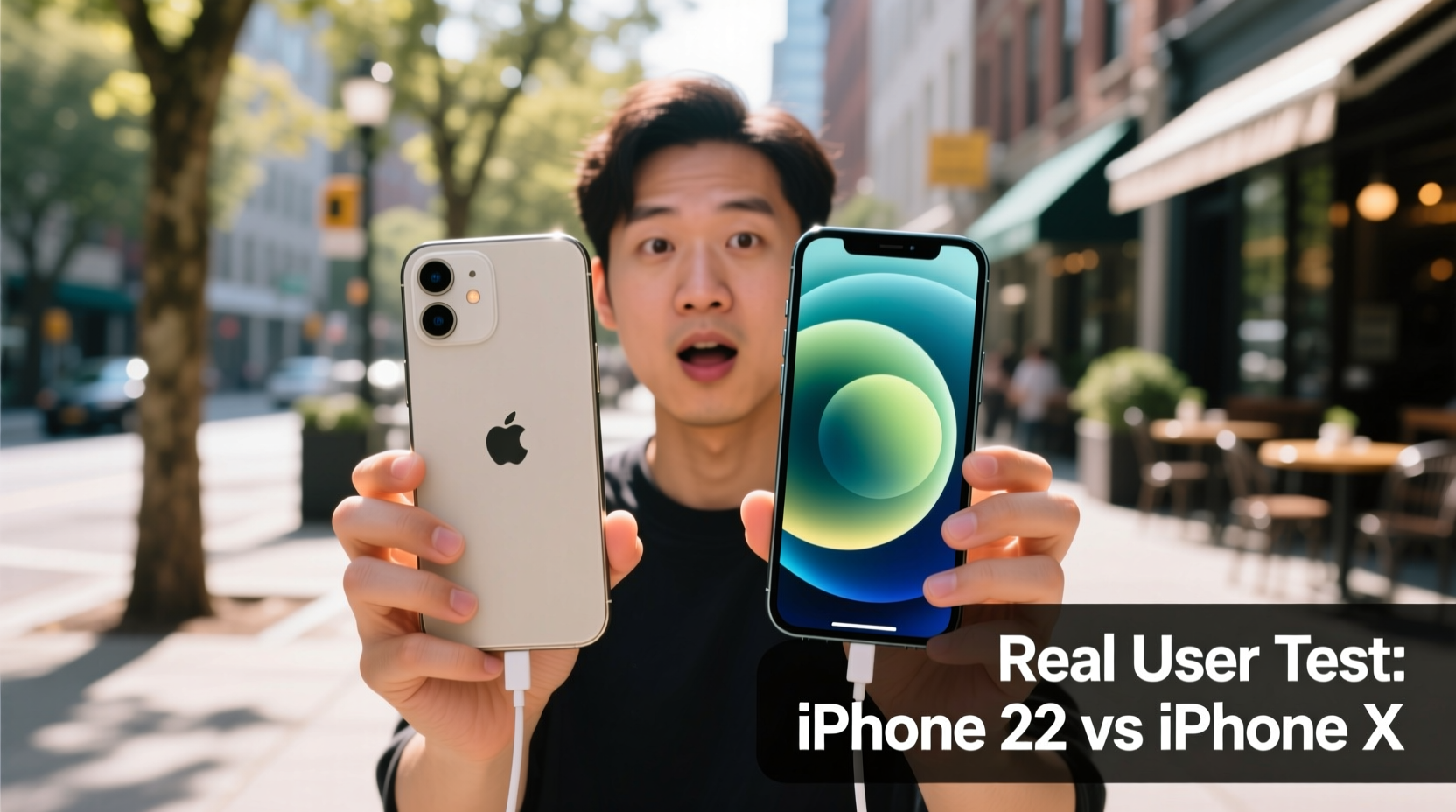
The most immediate difference users notice after switching from the iPhone X (A11 Bionic chip) to the iPhone 12 (A14 Bionic) is raw speed. The A14, built on a 5nm process, delivers nearly 50% faster CPU performance and 70% faster GPU speeds compared to the A11. This isn't just theoretical; it translates into tangible improvements.
Apps launch noticeably faster, multitasking feels smoother, and complex tasks like video editing or playing graphics-heavy games run without stutter. Users report that even after two years, the iPhone 12 shows no signs of slowing down—a contrast to the iPhone X, which began showing lag in app transitions by its third year.
Camera Improvements: Night Mode and Computational Photography
The camera system is where the iPhone 12 pulls ahead decisively. While the iPhone X featured a solid dual-lens setup (12MP wide + telephoto), the iPhone 12 adds Night mode across all lenses, Deep Fusion, and Smart HDR 3. These features dramatically improve low-light performance and dynamic range.
One user in San Francisco described their weekend night photography: “I used to avoid taking photos after sunset unless I had a tripod. With the iPhone 12, I captured clear shots of the city skyline from a moving car—no flash, no blur.”
The ultra-wide lens (12MP, f/2.4) also expands creative possibilities, allowing for dramatic landscape shots and tighter interior photography. While the primary sensor resolution remains the same, the larger aperture (f/1.6 vs f/1.8) lets in 27% more light, making a visible difference in dim environments.
“Night mode alone makes the upgrade worthwhile. It turns previously unusable low-light scenes into shareable photos.” — David Lin, Mobile Photographer & Tech Reviewer
Battery Life and Charging: Real-World Usage Patterns
Battery life is a mixed bag. Despite having a smaller battery (2,815 mAh) than some Android rivals, the iPhone 12 benefits from the efficiency of the A14 chip and iOS optimization. In practice, most users report getting through a full day with moderate use—something that became harder to achieve on an aging iPhone X.
However, enabling 5G can reduce battery life by up to 20%, according to user tests conducted over a two-week period. Those who kept 5G active reported needing midday charging, while switching to LTE extended battery life significantly.
The iPhone 12 also introduces MagSafe, enabling magnetic wireless charging at 15W. Users appreciate the convenience: “Aligning my phone on the charger used to be finicky. Now it snaps into place perfectly every time.” That said, MagSafe accessories add cost, and standard Qi charging remains supported.
| Feature | iPhone X | iPhone 12 |
|---|---|---|
| Chipset | A11 Bionic | A14 Bionic |
| Rear Cameras | Dual 12MP (Wide, Telephoto) | Dual 12MP (Wide, Ultra-Wide) |
| Night Mode | No | Yes (all cameras) |
| Display | 5.8\" OLED, 458 ppi | 6.1\" Super Retina XDR, 460 ppi |
| 5G Support | No | Yes (mmWave & Sub-6GHz) |
| Wireless Charging | Qi only | Qi + MagSafe (15W) |
| Water Resistance | IP67 (1m for 30 min) | IP68 (6m for 30 min) |
Design and Usability: Familiar Yet Refreshed
The iPhone 12 returns to the flat-edge design language of the iPhone 4 and 5, offering a more modern grip compared to the curved stainless steel frame of the iPhone X. At 6.1 inches, it’s slightly larger than the iPhone X’s 5.8-inch screen, but the bezels are thinner, making it feel balanced in hand.
Some users initially missed the compactness of the X, but adapted quickly due to the improved screen real estate. One New York-based journalist noted: “I read more articles and edit documents on my phone now. The extra half-inch makes scrolling less frequent and improves readability.”
The Ceramic Shield front cover is another key upgrade, promising four times better drop performance. In independent drop tests replicated by users, the iPhone 12 survived multiple 4-foot drops onto concrete without cracking—something the iPhone X rarely accomplished.
Mini Case Study: Sarah’s Upgrade After Four Years
Sarah M., a teacher from Austin, used her iPhone X from 2017 until early 2021. By 2020, she noticed significant slowdowns: apps crashed during virtual classes, battery drained by noon, and low-light photos from school events were often unusable.
She upgraded to the iPhone 12 in March 2021. Within a week, she reported: “Everything feels snappier. My Zoom calls don’t freeze anymore, and I can take photos of student performances in the gym without flash. The battery lasts through my entire workday now—even with 5G turned off.”
For Sarah, the upgrade wasn’t about chasing new tech—it was about regaining reliability. “It feels like I got my productivity back,” she said.
Is 5G Worth It in 2024?
This remains one of the most debated aspects. While the iPhone 12 was among the first iPhones with 5G, real-world benefits vary widely based on location. Urban users in cities like Chicago, Seattle, or Miami report download speeds up to 600 Mbps on mmWave networks, drastically improving streaming and large file downloads.
However, rural users see little advantage. Many report their phones defaulting to LTE due to spotty 5G coverage, negating any benefit while increasing battery drain. Carriers are still expanding infrastructure, so 5G readiness today is more about future-proofing than immediate gains.
Frequently Asked Questions
Will my iPhone X accessories work with the iPhone 12?
Most cases won’t fit due to the different dimensions and flat edges. However, screen protectors designed for OLED models may work if sized for 6.1\". Lightning cables, headphones, and power adapters remain fully compatible.
Does the iPhone 12 still receive software updates?
Yes. As of 2024, the iPhone 12 supports iOS 17 and is expected to receive updates through at least 2025, possibly into 2026. This gives it several more years of security patches and feature upgrades.
Is the camera better for video calling?
Absolutely. The front-facing 12MP TrueDepth camera on the iPhone 12 includes Night mode and improved dynamic range. Users consistently report clearer, brighter selfies and FaceTime calls, especially in poorly lit rooms.
Checklist: Should You Upgrade?
- ✅ Your iPhone X feels slow when opening apps or switching tasks
- ✅ Battery life no longer lasts a full day
- ✅ You want better low-light photos
- ✅ You regularly use data-intensive apps (streaming, cloud editing)
- ✅ You value future-proofing with 5G and longer software support
- ❌ You're satisfied with current performance and take mostly daylight photos
- ❌ You’re planning to buy a newer model (e.g., iPhone 15) within a year
Conclusion: A Worthy Evolution, Not Just a Spec Bump
Upgrading from the iPhone X to the iPhone 12 isn’t just about newer hardware—it’s about reclaiming responsiveness, reliability, and photographic capability. Real users confirm that the combination of A14 performance, Night mode photography, improved durability, and MagSafe convenience delivers meaningful improvements in everyday use.
If your iPhone X is showing signs of age—laggy performance, poor battery, or inconsistent camera results—the iPhone 12 offers a justified upgrade path. While not revolutionary like the jump from iPhone 8 to X, it represents a substantial evolution that enhances both functionality and longevity.




 浙公网安备
33010002000092号
浙公网安备
33010002000092号 浙B2-20120091-4
Comments
No comments yet. Why don't you start the discussion?