
In a smartphone market increasingly dominated by large screens and high price tags, the iPhone 13 Mini and Google Pixel 6 stand out as compact, capable alternatives. Released just months apart—Apple’s in late 2021 and Google’s in October 2021—they both targeted users who wanted flagship-tier experiences without oversized devices. Now, in 2024, with newer models available, the question arises: Is the iPhone 13 Mini still a smart buy, or does the Pixel 6 deliver more value for those seeking an affordable yet powerful phone?
The answer isn’t straightforward. It depends on your priorities: iOS vs. Android, update longevity, camera preferences, software experience, and how much you value compact design. Let’s break down these two phones across key categories to help you decide which one fits your needs better today.
Design and Build: Small Doesn't Mean Compromised
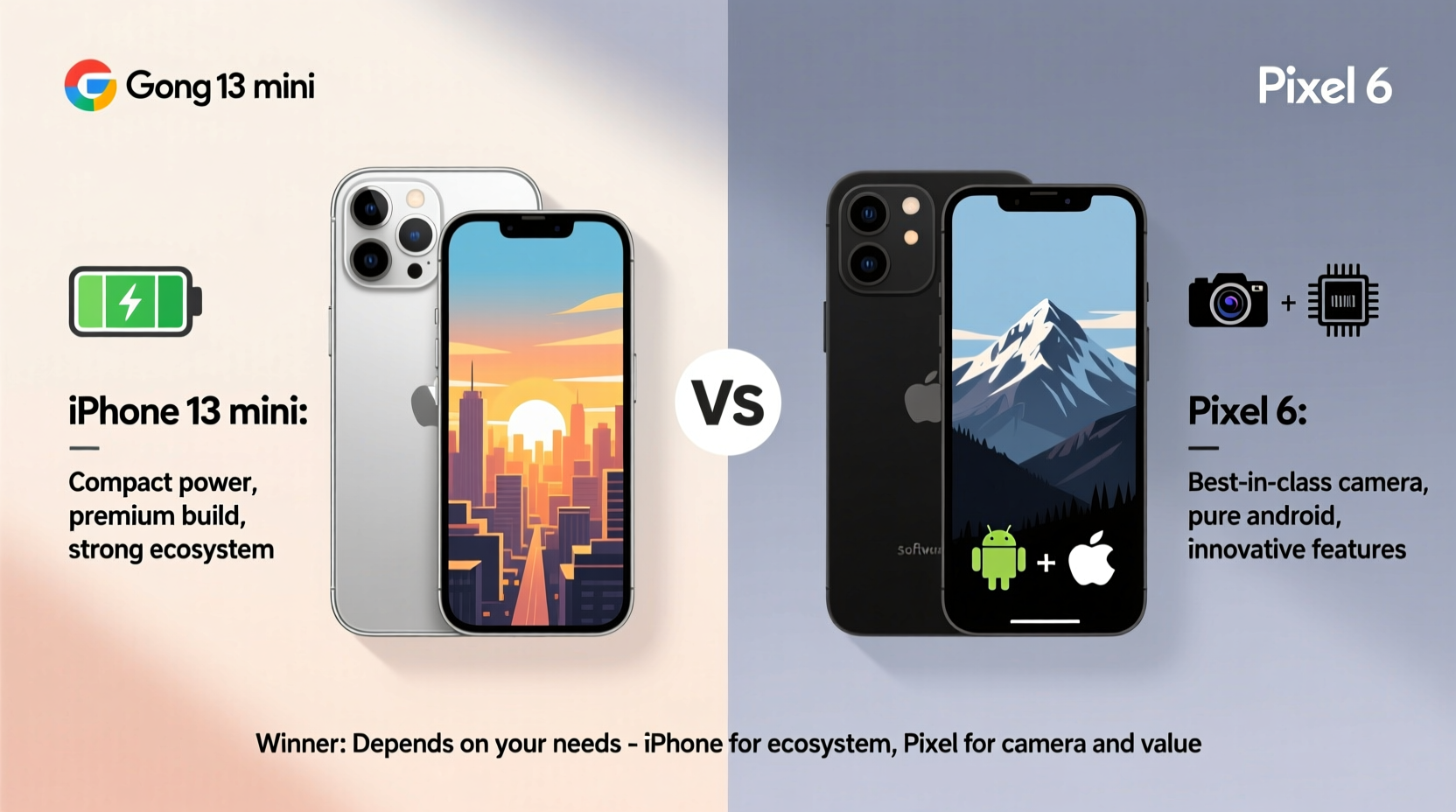
Both phones embrace a smaller form factor, but they achieve it differently. The iPhone 13 Mini measures 5.18 x 2.53 x 0.30 inches and weighs 4.76 oz, making it one of the last truly pocketable iPhones. Its flat edges, aerospace-grade aluminum frame, and Ceramic Shield front glass give it a premium feel that’s hard to match at this size.
The Pixel 6, meanwhile, has a larger 6.4-inch display and weighs 6.1 oz—noticeably heavier and wider. While not “mini” by any stretch, its clean design, matte finish, and flush camera visor lend it a modern aesthetic. For users transitioning from larger phones, it might still feel manageable, but it lacks the effortless pocketability of the 13 Mini.
Performance and Software Longevity
Under the hood, the iPhone 13 Mini uses Apple’s A15 Bionic chip—still a powerhouse in 2024. Even with only 4GB of RAM, iOS optimization ensures smooth multitasking, gaming, and app responsiveness. Apple typically supports iPhones with iOS updates for five to six years, meaning the 13 Mini will likely receive updates through 2027. This makes it a strong long-term investment for users who hate frequent upgrades.
The Pixel 6 runs on Google’s first-generation Tensor chip, built for AI and machine learning tasks like speech recognition and photo processing. While adequate for daily use, it falls behind the A15 in raw CPU and GPU performance. More importantly, Google guarantees only three OS upgrades and five years of security patches. With Android 12 as its launch OS, the Pixel 6 will stop receiving major updates in 2024—right now.
“Hardware matters, but software support defines a phone’s real lifespan. The 13 Mini wins on longevity.” — David Kim, Mobile Analyst at TechPulse Insights
Camera Comparison: Computational Photography vs. Consistency
Both phones shine in photography, but in different ways. The iPhone 13 Mini features a dual 12MP system (wide and ultra-wide) with sensor-shift stabilization on the main lens. It excels in natural color reproduction, dynamic range, and video quality. Low-light shots are balanced, with minimal noise and accurate skin tones. Its cinematic mode and Dolby Vision recording remain industry-leading.
The Pixel 6 introduced Google’s next-gen computational photography. Its 50MP main sensor captures impressive detail, and the 12MP ultrawide adds versatility. Night Sight and Magic Eraser enhance low-light and post-processing capabilities. However, early Tensor-era Pixels occasionally struggle with HDR consistency and white balance in challenging lighting.
| Feature | iPhone 13 Mini | Pixel 6 |
|---|---|---|
| Primary Camera | 12MP, sensor-shift OIS | 50MP, OIS |
| Ultra-Wide | 12MP | 12MP |
| Front Camera | 12MP | 8MP |
| Video Recording | 4K Dolby Vision HDR | 4K HDR |
| Low-Light Performance | Excellent | Very Good (with processing) |
If you prioritize point-and-shoot reliability and video, the iPhone pulls ahead. For creative editing and AI-enhanced photos, the Pixel offers unique tools.
Battery Life and Charging: The Mini Trade-Off
This is where the iPhone 13 Mini shows its biggest limitation. Apple rates it for up to 17 hours of video playback, but real-world usage often lands between 8–10 hours of screen-on time. Heavy users may need to charge by mid-afternoon. It supports 20W wired fast charging and 15W MagSafe wireless, but no charger is included in the box.
The Pixel 6, with its 4614mAh battery, consistently delivers 12+ hours of screen time. It supports 30W fast charging (charger sold separately) and 21W wireless charging. While not class-leading, its endurance is noticeably better than the 13 Mini’s.
User Experience: iOS vs. Android in 2024
Your preference for operating systems will heavily influence your satisfaction. iOS offers seamless integration with other Apple devices, consistent app design, robust privacy controls, and fewer fragmentation issues. Features like iMessage, FaceTime, AirDrop, and Find My are deeply embedded in the ecosystem.
Android 13/14 on the Pixel 6 brings richer customization, Google Assistant integration, faster feature rollouts, and superior notification management. Direct Android updates ensure timely security patches—while they last. However, the Pixel 6 will not receive Android 15, limiting its future-proofing.
For users already invested in either ecosystem, switching costs matter. Migrating from iPhone to Android (or vice versa) means relearning workflows, losing some app continuity, and adjusting to different cloud syncing.
Mini Case Study: Sarah’s Upgrade Dilemma
Sarah, a freelance photographer in Portland, needed a new phone after her iPhone SE (2020) started slowing down. She loved small phones and used her device mostly for communication, light editing, and social media. She considered both the 13 Mini and Pixel 6.
She chose the iPhone 13 Mini because she relied on iMessage for client coordination and preferred the consistency of iPhone video for Instagram Reels. Despite shorter battery life, she kept a power bank handy and valued the longer software support. Two years later, her phone still runs smoothly and receives updates.
Her colleague Mark, a tech blogger, picked the Pixel 6 for its camera magic and stock Android experience. He enjoyed editing photos with Magic Eraser and appreciated the larger screen for reviewing images. But by early 2024, he noticed slower app launches and received news that his phone wouldn’t get Android 15—prompting an earlier-than-expected upgrade.
Checklist: Which Phone Should You Buy?
- Choose the iPhone 13 Mini if:
- You want 5+ years of software updates
- You prefer a truly compact, lightweight design
- You’re already in the Apple ecosystem
- You record a lot of video
- You prioritize long-term resale value
- Choose the Pixel 6 if:
- You want better battery life
- You value cutting-edge camera software features
- You prefer Android customization and Google integration
- You don’t mind upgrading again in 2024–2025
- You find it at a significantly lower price than the 13 Mini
Frequently Asked Questions
Can the iPhone 13 Mini run iOS 17?
Yes, the iPhone 13 Mini fully supports iOS 17, released in September 2023. It continues to receive all new features, security updates, and performance improvements.
Does the Pixel 6 have a headphone jack?
No, neither the Pixel 6 nor the iPhone 13 Mini includes a 3.5mm headphone jack. Both rely on Bluetooth or USB-C/Lightning adapters for wired audio.
Which phone holds its value better?
The iPhone 13 Mini retains resale value significantly better than the Pixel 6. After two years, used 13 Minis typically sell for 40–50% of original price, while Pixel 6 units fetch 20–30%, partly due to limited software support.
Final Verdict: Value Over Time vs. Immediate Features
The iPhone 13 Mini and Pixel 6 represent two philosophies in smartphone design. The 13 Mini prioritizes longevity, ecosystem integration, and compactness—even at the cost of battery life. The Pixel 6 emphasizes innovation, camera intelligence, and Android purity, but with a shorter usable lifespan.
In 2024, if you’re buying secondhand or on a budget, the decision hinges on how long you plan to keep the phone. For users who upgrade every 2–3 years and want strong cameras and software flexibility, the Pixel 6—especially at a discounted price—can be a compelling deal. But for those seeking a durable, future-proof device with top-tier build and support, the iPhone 13 Mini remains surprisingly relevant.
Ultimately, “worth it” depends on your timeline. The Pixel 6 gives you more features now; the 13 Mini gives you more years of reliable use. Neither is objectively better—but one might be right for you.




 浙公网安备
33010002000092号
浙公网安备
33010002000092号 浙B2-20120091-4
Comments
No comments yet. Why don't you start the discussion?