
The evolution of smartphone design over the past five years has been dramatic, especially within Apple’s lineup. For users still clinging to an iPhone 8 Plus or considering an upgrade from it, one of the most pressing questions is: Just how much bigger is the iPhone 13 Pro Max? On paper, both devices are labeled “Plus” or “Max”—suggesting they’re large—but the reality involves more than just numbers. This article breaks down the physical dimensions, display size, weight, ergonomics, and usability implications to help you understand whether the jump in size is truly significant—or if it's manageable in daily use.
Physical Dimensions: A Side-by-Side Breakdown
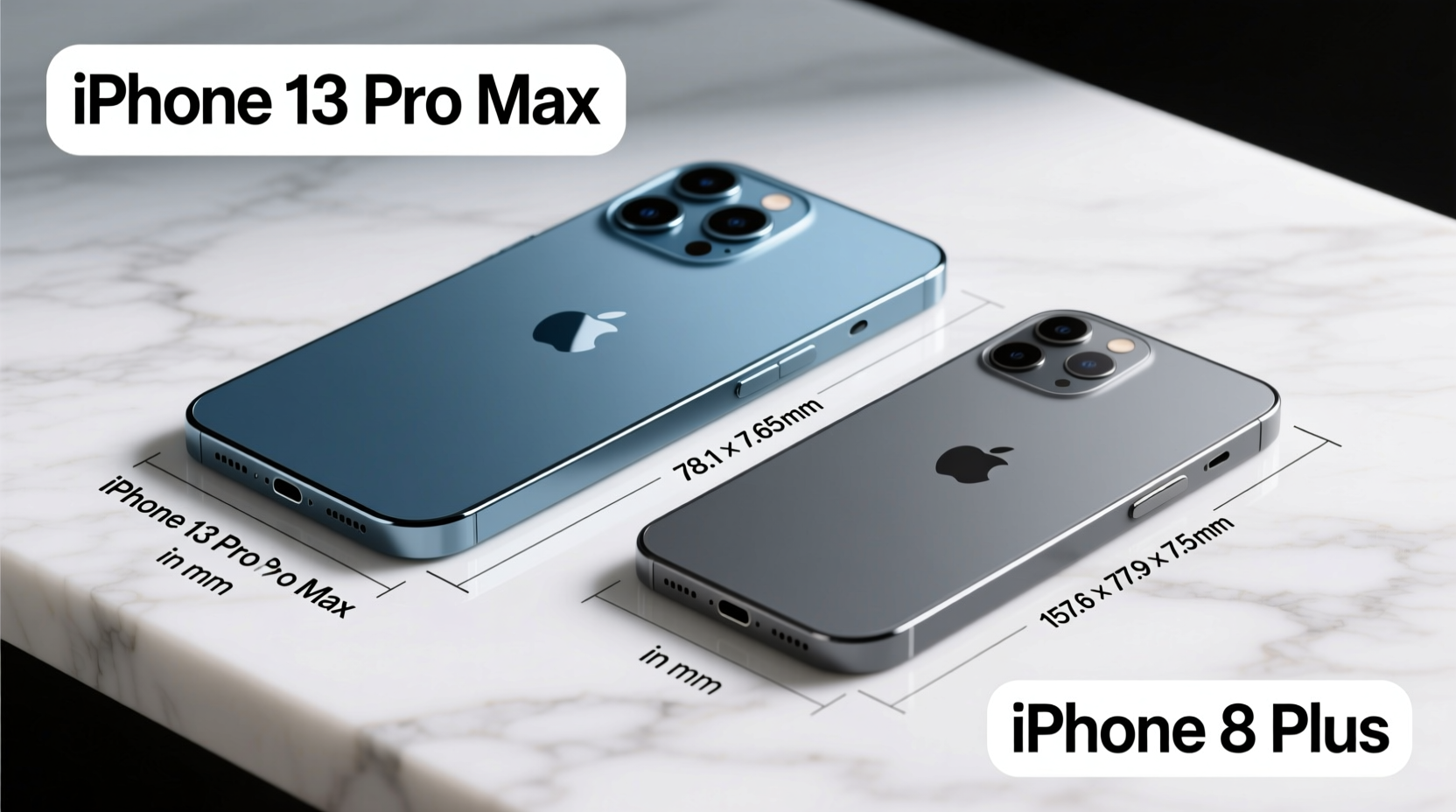
At first glance, both phones appear massive compared to earlier models like the iPhone 7 or SE series. However, comparing their exact measurements reveals notable differences shaped by changes in design philosophy.
| Specification | iPhone 8 Plus | iPhone 13 Pro Max |
|---|---|---|
| Height | 158.4 mm (6.24 inches) | 160.8 mm (6.33 inches) |
| Width | 78.1 mm (3.07 inches) | 78.1 mm (3.07 inches) |
| Thickness | 7.5 mm (0.29 inches) | 7.65 mm (0.30 inches) |
| Weight | 202 grams (7.1 oz) | 240 grams (8.47 oz) |
| Display Size | 5.5 inches (LCD) | 6.7 inches (Super Retina XDR OLED) |
| Screen-to-Body Ratio | ~67.4% | ~88.5% |
While the height difference is only 2.4 mm—less than a tenth of an inch—the iPhone 13 Pro Max manages to pack a significantly larger display into a slightly taller frame thanks to its edge-to-edge design. The width remains identical, which means grip comfort may feel similar, but the added weight becomes immediately noticeable.
Display Real Estate: More Than Just Inches
The jump from 5.5 inches on the iPhone 8 Plus to 6.7 inches on the iPhone 13 Pro Max might seem modest numerically, but the actual screen area increase is substantial due to both diagonal growth and superior aspect ratio.
The iPhone 8 Plus uses a 16:9 aspect ratio with a resolution of 1920×1080 pixels. In contrast, the iPhone 13 Pro Max features a taller 19.5:9 format at 2778×1284 pixels. This results in approximately 40% more screen surface area despite being only about 1.2 inches larger diagonally.
This expanded canvas improves multitasking, media consumption, and web browsing. Apps take full advantage of the vertical space, reducing the need for constant scrolling. Video content fills the screen better, especially modern films shot in cinematic widescreen formats.
“Smartphone displays have evolved not just in size, but in utility. The modern tall screen fits more information naturally, mimicking how we read and interact.” — Dr. Alan Reyes, Human-Computer Interaction Researcher, Stanford University
Ergonomics and One-Handed Use
Despite nearly matching widths, the iPhone 13 Pro Max feels less manageable in one hand than the iPhone 8 Plus. Why? Two reasons: weight distribution and bezel design.
The iPhone 8 Plus has thick top and bottom bezels, which make it easier to cradle in the palm. Your thumb naturally lands near the center of the screen when holding it upright. The iPhone 13 Pro Max eliminates those bezels, pushing the usable screen closer to the edges. As a result, reaching the top corners requires either shifting your grip or using Reachability mode.
Additionally, the extra 38 grams (about the weight of two nickels) may not sound like much, but over time, it contributes to hand fatigue—especially when lying down or using the phone for reading or gaming.
Real-World Example: Daily Commute Comparison
Sarah, a graphic designer in Chicago, upgraded from her trusty iPhone 8 Plus to a 13 Pro Max after four years. She expected a smoother experience but was surprised by the adjustment period.
\"I loved the bigger screen for editing mockups,\" she said, \"but I dropped it twice in the first week because it slipped out of my hand while texting on the train. The 8 Plus felt snug; this one feels like a slab of glass.\"
She eventually adopted a textured case and started using AssistiveTouch to reduce thumb strain. Her story reflects a common trend among long-time iPhone users moving from older Plus models to newer Max devices: excitement over performance and display quality, tempered by ergonomic challenges.
Durability and Pocketability: Practical Implications
Size isn’t just about aesthetics—it affects where and how you carry your phone. The iPhone 13 Pro Max’s increased length makes it harder to fit comfortably in tight front pockets, particularly in slim jeans or workout gear. Some users report fabric wear or difficulty retrieving the device without pulling too much material along with it.
On the durability front, both phones feature glass backs and aluminum frames (8 Plus) or stainless steel (13 Pro Max). However, the larger footprint of the 13 Pro Max means more surface area exposed to drops. While Apple improved drop resistance with Ceramic Shield technology, the cost of screen repairs remains high due to the expansive display.
- The iPhone 8 Plus fits easily in most shirt pockets.
- The iPhone 13 Pro Max often protrudes below jacket pockets.
- Wallet cases add bulk, making pocket storage impractical.
- Larger size increases leverage during drops, potentially causing more damage.
Checklist: Is the iPhone 13 Pro Max Right for You?
Before upgrading from the iPhone 8 Plus, ask yourself these practical questions:
- Do you prioritize screen size over portability? – The 13 Pro Max excels for movies and productivity.
- Can your hands comfortably reach across the screen? – Try it in-store first.
- Are you okay with heavier daily carry? – After prolonged use, weight matters.
- Do you frequently use public transit or tight spaces? – Larger phones are harder to manage on crowded trains.
- Are you prepared for higher repair costs? – Bigger screens mean pricier fixes.
Frequently Asked Questions
Is the iPhone 13 Pro Max noticeably taller than the iPhone 8 Plus?
Yes, though only by 2.4 mm, the lack of large bezels makes the 13 Pro Max appear significantly longer. The screen extends much closer to the top and bottom edges, giving it a more elongated look and feel.
Can I use an iPhone 8 Plus case for the iPhone 13 Pro Max?
No. Despite having the same width, the 13 Pro Max is taller, thicker, and has a different camera layout. Cases are not interchangeable between these models.
Does the larger size affect battery life significantly?
Absolutely. The iPhone 13 Pro Max offers up to 28 hours of video playback, nearly double the iPhone 8 Plus’s 14-hour maximum. Much of this improvement comes from efficiency gains, but the larger chassis allows for a bigger battery.
Conclusion: Size Matters—But So Does Context
The iPhone 13 Pro Max is indeed larger than the iPhone 8 Plus, but the difference goes beyond simple metrics. It represents a shift in smartphone philosophy: maximizing screen real estate while minimizing wasted space. Yes, it’s heavier and harder to handle one-handed, but it also delivers a vastly superior visual experience, longer battery life, and modern features like ProMotion and Face ID.
If you value immersive media, professional photography, or all-day endurance, the size trade-off is likely worth it. But if you prefer compact handling, easy pocket access, or lightweight convenience, the jump may feel excessive—even if the dimensional increase seems minor on paper.




 浙公网安备
33010002000092号
浙公网安备
33010002000092号 浙B2-20120091-4
Comments
No comments yet. Why don't you start the discussion?