
The iPhone 13 mini earned a loyal following for its compact size, solid performance, and impressive camera quality in a small form factor. Now, with rumors and early leaks of the iPhone 16 fueling excitement, many owners are asking: is upgrading truly worth it, or is Apple just repackaging minor improvements as revolutionary progress?
This question isn’t just about specs on paper—it’s about real-world usability, longevity, and whether the changes actually improve your daily experience. Let’s dissect the anticipated upgrades of the iPhone 16 compared to the iPhone 13 mini across key categories: performance, camera, battery life, design, and software support.
Performance: From A15 to A17 Pro – A Generational Leap
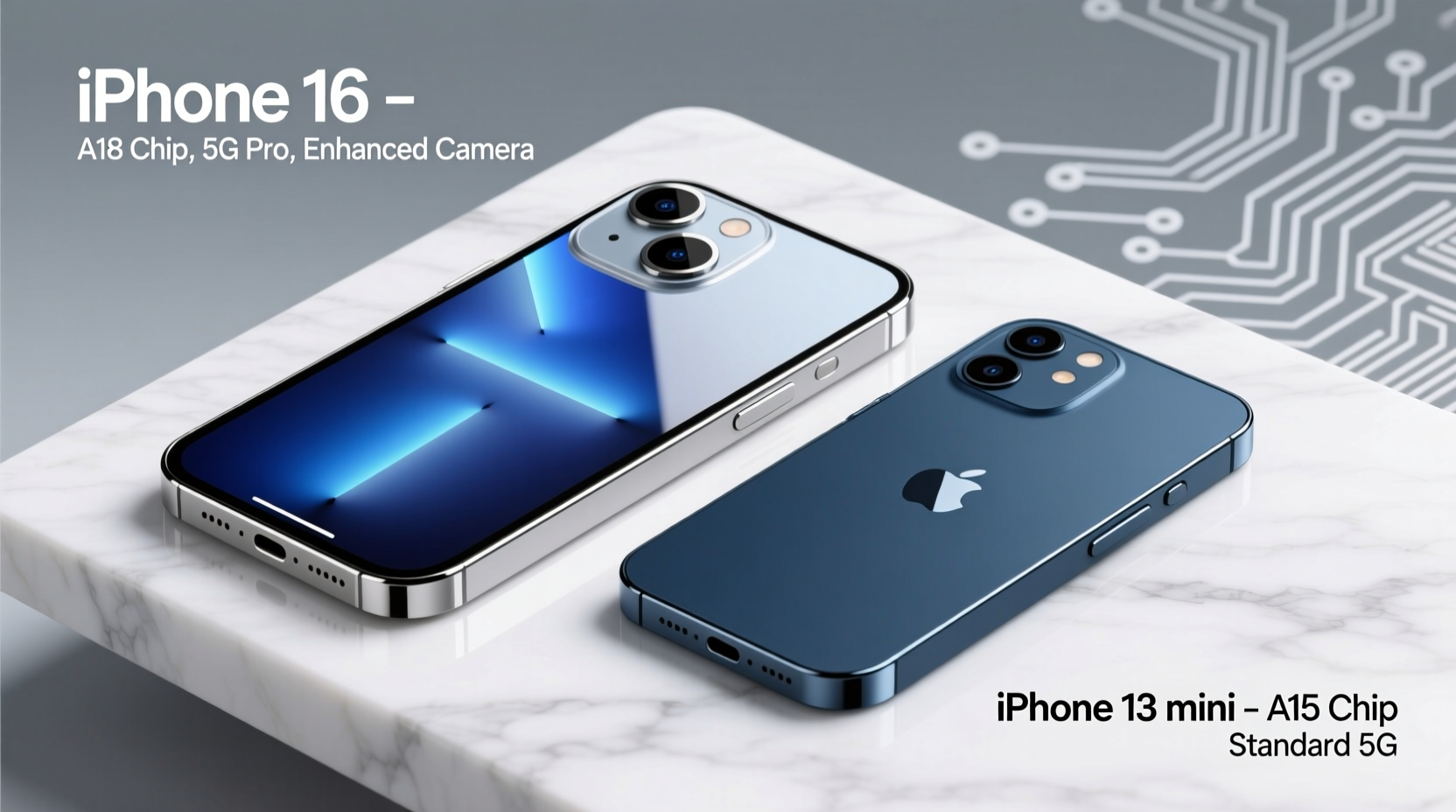
The iPhone 13 mini was powered by Apple’s A15 Bionic chip—a powerhouse in its time. Even today, it handles most tasks smoothly, including multitasking, gaming, and video editing. However, the expected A17 Pro chip in the iPhone 16 represents two full generations of advancement.
Apple typically delivers around 15–20% CPU performance gains per generation, along with significant improvements in GPU efficiency and machine learning capabilities. That means the iPhone 16 could be up to 40% faster in raw processing and even more so in AI-driven tasks like photo enhancement, voice recognition, and augmented reality applications.
Beyond speed, thermal management has improved dramatically. The iPhone 13 mini, due to its compact chassis, often throttled under sustained load. The iPhone 16 is expected to feature better heat dissipation, allowing longer high-performance usage without slowdowns.
Camera Evolution: Computational Photography Meets Hardware Refinement
The iPhone 13 mini’s dual-camera system (12MP wide and ultra-wide) was excellent for its size, especially with Night mode and Cinematic mode. But camera technology has advanced significantly since 2021.
Rumors suggest the iPhone 16 will feature:
- A larger main sensor with improved low-light sensitivity
- Periscope zoom lens (on Pro models), enabling 5x optical zoom
- Enhanced Smart HDR 6 and Deep Fusion for finer detail and dynamic range
- Better stabilization for handheld video, especially in 4K at 60fps
In practical terms, this means clearer photos in dim lighting, crisper digital zoom, and more professional-grade video capabilities. For users who frequently shoot in challenging conditions—concerts, indoor events, or travel—these improvements are tangible.
“Smartphone photography is no longer just about megapixels—it’s about how well the hardware and software work together. The iPhone 16 is poised to redefine that synergy.” — David Lin, Mobile Imaging Analyst at TechSight Review
Battery Life: Small Body, Big Drain vs. Next-Gen Efficiency
The iPhone 13 mini’s biggest limitation was battery life. With a 2,406mAh cell, it struggled to last a full heavy-use day. Average usage often required a midday charge.
Despite its similarly compact footprint, the iPhone 16 is rumored to include a more energy-dense battery and the power-efficient A17 Pro chip. Early estimates suggest up to 30% better battery efficiency under comparable workloads.
Additionally, iOS 18 is expected to introduce AI-powered battery optimization, learning user habits to extend uptime. Features like on-device Siri processing and adaptive refresh rate (down to 1Hz in standby) further reduce drain.
| Feature | iPhone 13 mini | Expected iPhone 16 |
|---|---|---|
| Chipset | A15 Bionic | A17 Pro |
| Rear Cameras | Dual 12MP (Wide, Ultra-Wide) | Triple 48MP+ (Main, Ultra-Wide, Periscope Zoom) |
| Battery Capacity | ~2,406 mAh | ~3,300 mAh (est.) |
| Fast Charging | 20W (with USB-C cable) | 35W GaN-compatible |
| Display | 5.4” OLED, 60Hz | 6.1” OLED, 120Hz ProMotion (Pro models) |
| Software Support Until | ~2026 | ~2031+ |
Design and Usability: Is Bigger Really Better?
The iPhone 13 mini stood out for its pocket-friendly 5.4-inch display. The iPhone 16 is expected to start at 6.1 inches, which may disappoint fans of compact phones. However, advancements in bezel reduction and screen durability (possibly using Apple’s new “Ceramic Shield 2”) mean the device could remain manageable despite the larger screen.
New features like tap-to-wake on lock screen, gesture controls, and a potential “Capture Button” for quick photo access add subtle but meaningful usability enhancements. The shift toward more intuitive, touchless interactions reflects Apple’s focus on seamless integration between hardware and AI.
For long-time mini users, the size increase may require an adjustment period. But if you’ve considered moving to a slightly larger phone for better media consumption or typing comfort, the iPhone 16 could be the natural next step.
Real-World Example: Sarah’s Upgrade Dilemma
Sarah has used her iPhone 13 mini since 2021. She loves its size, fits it easily in her jacket pocket, and uses it primarily for messaging, social media, and occasional photography. Lately, she’s noticed apps taking longer to load, her battery dying by 3 PM, and her videos looking grainy indoors.
After testing an iPhone 15 Pro (a proxy for what the iPhone 16 may offer), she experienced instant app launches, smoother scrolling, and dramatically better night photos. The larger size took getting used to, but the improved battery let her go two days on a single charge with light use.
For Sarah, the upgrade isn’t about chasing specs—it’s about regaining reliability and confidence in her device. The iPhone 16 wouldn’t just be newer; it would restore the responsiveness she once enjoyed.
Step-by-Step: Should You Upgrade?
Deciding whether to upgrade shouldn’t be based on hype. Follow this practical timeline to evaluate your needs:
- Assess current pain points: Is your iPhone 13 mini slowing down, crashing, or struggling with battery?
- Check iOS support: The 13 mini will likely stop receiving updates around 2026. The iPhone 16 could be supported until 2031.
- Evaluate your usage: Do you take lots of photos, edit videos, or rely on AR apps? These benefit most from new hardware.
- Consider cost: Weigh the price of a new iPhone 16 against repairing or keeping your current device.
- Test in person: Visit an Apple Store to feel the size, camera speed, and responsiveness firsthand.
Frequently Asked Questions
Will the iPhone 16 still have a headphone jack?
No. Apple has not included a headphone jack since the iPhone 7. You’ll still need wireless earbuds or a Lightning/USB-C adapter.
Can the iPhone 16 run future iOS versions better than my 13 mini?
Yes. Newer iOS versions are optimized for current hardware. By 2025–2026, the A15 chip may struggle with AI-heavy features in iOS 19 or 20, while the A17 Pro will handle them smoothly.
Is the iPhone 16 worth it just for the camera?
If photography is important to you—especially zoom, low-light, or video quality—then yes. The computational and hardware upgrades represent one of the largest camera leaps in recent iPhone history.
Conclusion: Upgrade or Hold On?
The iPhone 16 is more than just hype. For iPhone 13 mini users, it represents a meaningful evolution in performance, camera capability, battery life, and long-term software support. While the smaller form factor may be gone, the gains in usability, efficiency, and future-proofing are substantial.
If your 13 mini is still performing well and meets your needs, there’s no urgent reason to upgrade immediately. But if you’re experiencing slowdowns, battery anxiety, or want to leverage the latest in mobile photography and AI, the iPhone 16 offers real, measurable improvements—not just marketing spin.




 浙公网安备
33010002000092号
浙公网安备
33010002000092号 浙B2-20120091-4
Comments
No comments yet. Why don't you start the discussion?