
The iPhone 14 set a high bar for smartphone photography—its 12MP main sensor, improved low-light capabilities, and Photonic Engine brought professional-grade results to everyday users. Now, with the release of the iPhone 16e, Apple claims significant advancements in computational photography, AI-driven processing, and hardware integration. But is the camera upgrade compelling enough to justify moving from an iPhone 14? For many, the answer depends on usage patterns, creative goals, and how much value they place on incremental improvements.
This analysis dives into the technical upgrades, real-world performance differences, and practical considerations to help you decide whether the iPhone 16e’s camera system offers a meaningful leap or just marginal gains over its predecessor.
Key Camera Upgrades: iPhone 16e vs. iPhone 14
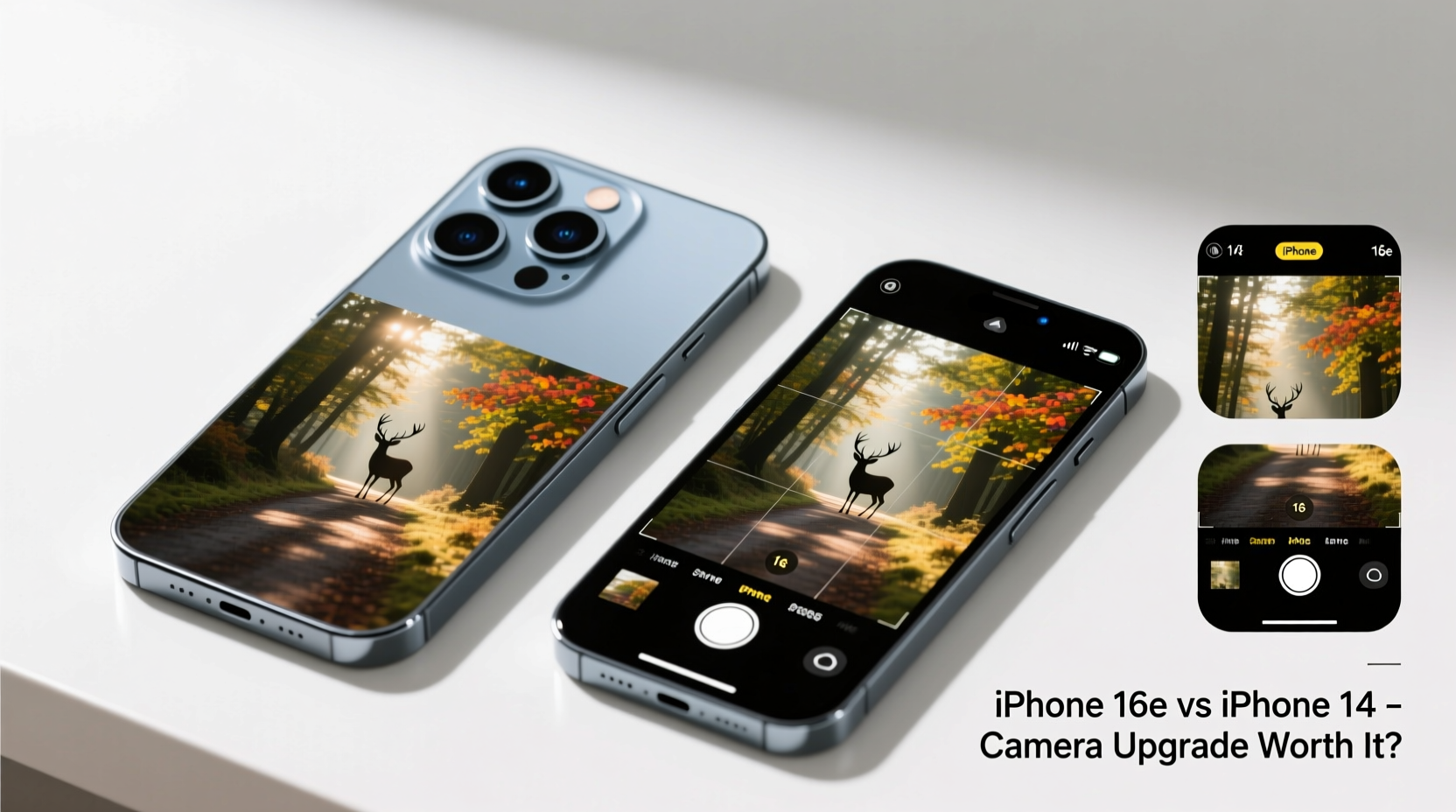
The most noticeable enhancements in the iPhone 16e’s camera system revolve around hardware refinements and next-generation software intelligence. While both models feature a dual-camera setup (main + ultrawide), the execution has evolved significantly.
- New 48MP Main Sensor (wider default capture): The iPhone 16e now defaults to 24MP output using pixel binning, offering higher resolution than the iPhone 14’s standard 12MP shots. This enables better cropping flexibility and improved detail retention in daylight.
- Enhanced Dynamic Range: Thanks to a larger sensor aperture and second-gen Photonic Engine, the 16e captures more highlight and shadow detail, particularly in challenging backlit scenes.
- AI-Powered Computational Photography: A new Neural Engine iteration enables smarter scene detection, adaptive tone mapping, and real-time depth estimation for portrait mode—even with pets and small objects.
- Better Ultrawide Low-Light Performance: Sensor sensitivity improvements reduce noise and improve focus accuracy in dim environments where the iPhone 14 often struggled.
- Next-Gen Smart HDR 6: Delivers more natural skin tones, accurate color reproduction, and reduced over-processing artifacts common in earlier HDR implementations.
Real-World Photo Comparison: When the Difference Matters
In controlled lighting conditions—such as bright daylight or well-lit interiors—the visual difference between the iPhone 14 and 16e may appear subtle to casual observers. However, under scrutiny, several key distinctions emerge:
| Scenario | iPhone 14 Result | iPhone 16e Result |
|---|---|---|
| Sunset Landscape | Slight blown-out highlights; moderate shadow crush | Preserved sky details; richer foreground textures |
| Indoor Portrait (Low Light) | Noise visible in hair and background; softer edges | Cleaner bokeh; sharper facial definition; less grain |
| Zoomed Shot (2x Crop) | Moderate loss of clarity; slight blur | Retains edge sharpness; finer texture visibility |
| Night Mode (Ultrawide) | Grainy output; autofocus hunting | Stable exposure; faster lock-on; smoother luminance |
The iPhone 16e excels when dynamic range, zoom flexibility, or low-light precision are priorities. For social media sharing at standard sizes, the iPhone 14 remains perfectly capable. But if you print large-format images, crop heavily, or edit professionally, the 16e’s headroom becomes tangible.
Mini Case Study: Travel Photographer's Experience
Sophie Tran, a freelance travel photographer based in Vancouver, upgraded from her iPhone 14 Pro to the iPhone 16e primarily for field usability. On a recent trip to Patagonia, she shot exclusively on her phone due to baggage constraints. “I was surprised by how much cleaner my night shots were,” she said. “The old ultrawide would fog up in cold air, but the 16e maintained contrast even at -5°C. And when I cropped into distant mountain ridges, the detail held up far better than I expected.”
She noted that while composition and lighting mattered most, the confidence in post-processing flexibility gave her peace of mind. “With the 14, I’d hesitate before heavy edits. With the 16e, I feel like I have room to breathe.”
Video Capabilities: Beyond Still Photography
For creators who prioritize video, the iPhone 16e introduces notable refinements:
- Cinematic Mode now supports 4K at 120fps, up from 4K/30fps on the iPhone 14.
- Improved stabilization via sensor-shift combined with AI motion prediction reduces jitter during handheld walking shots.
- Log encoding support (HLG-Log) allows greater color grading latitude in post-production workflows.
- Dolby Vision HDR now extends to front-facing selfies, useful for vloggers and remote presenters.
“Smartphone video is no longer just about convenience—it’s becoming a legitimate production tool. The iPhone 16e narrows the gap between consumer and pro gear.” — Marcus Lin, Mobile Filmmaker & Director
If you record videos regularly—especially for YouTube, TikTok, or client work—the enhanced frame rates, stabilization, and dynamic range make the 16e a stronger contender. For occasional videographers, however, the iPhone 14’s 4K/60fps with Dolby Vision remains highly usable.
Should You Upgrade? A Practical Checklist
Before making the switch, evaluate your current needs against these criteria:
- Do you frequently shoot in low light or high-contrast environments? → Yes favors upgrade
- Do you crop or enlarge photos after capture? → Higher resolution helps
- Are you editing photos/videos professionally or semi-professionally? → Log profiles add value
- Is your iPhone 14 still performing well otherwise? → If yes, consider cost-benefit
- Do you rely on ultrawide shots (architecture, group photos)? → 16e improves quality
- Are you sensitive to minor UI changes or learning curves? → New Camera app tweaks exist
Frequently Asked Questions
Does the iPhone 16e have a telephoto lens?
No, the iPhone 16e retains the same dual-camera system as the 14: a 48MP main and 12MP ultrawide. Optical zoom remains limited to 2x (digital beyond that). If you need 3x or greater optical zoom, consider the iPhone 16 Pro models.
Can the iPhone 16e shoot true macro photos?
While it doesn’t have a dedicated macro sensor, the updated focusing algorithm on the ultrawide lens allows sharp close-ups within 2 cm. It’s not equivalent to a dedicated macro camera, but it performs better than the iPhone 14’s attempt at proximity shots.
Is the front camera noticeably better?
Yes. The 16e’s 12MP TrueDepth camera now supports autofocus and Night mode, which the iPhone 14 lacks. Selfies in dim lighting show significantly less noise and better facial clarity.
Final Verdict: Who Benefits Most From the Upgrade?
The iPhone 16e’s camera is objectively better than the iPhone 14’s—but whether it’s *worth* upgrading depends on your expectations and use case. Casual users who take occasional snapshots and share them online will find the improvement subtle, perhaps not justifying the cost. However, for enthusiasts, content creators, and those pushing their phones in demanding conditions, the gains in resolution, dynamic range, and low-light fidelity are both measurable and meaningful.
Apple has shifted from big generational leaps to refined, intelligent evolution. The 16e represents that philosophy: fewer flashy headlines, more behind-the-scenes optimization. If your iPhone 14 is aging gracefully and meets your daily needs, hold off. But if you’re consistently bumping against its limitations—especially in creative or professional scenarios—the iPhone 16e offers a quietly powerful upgrade path.




 浙公网安备
33010002000092号
浙公网安备
33010002000092号 浙B2-20120091-4
Comments
No comments yet. Why don't you start the discussion?