
In the early 2010s, Apple offered two sleek devices running iOS: the iPhone 5 and the iPod Touch (5th generation). On the surface, they looked nearly identical. Same design language, same operating system, similar performance. But beneath that shared shell lies a critical divergence in functionality. For users deciding between the two—especially today, when both are considered legacy devices—the question remains: is the iPhone 5 truly worth the extra cost over the iPod Touch 5th gen? More importantly, what are you actually giving up by choosing the music-focused device?
The answer isn’t just about cellular connectivity. It’s about ecosystem access, future-proofing, app compatibility, and real-world utility. Let’s break down the tangible differences and evaluate whether the iPhone 5 still holds meaningful advantages—even years after its release.
Core Differences: Hardware & Connectivity
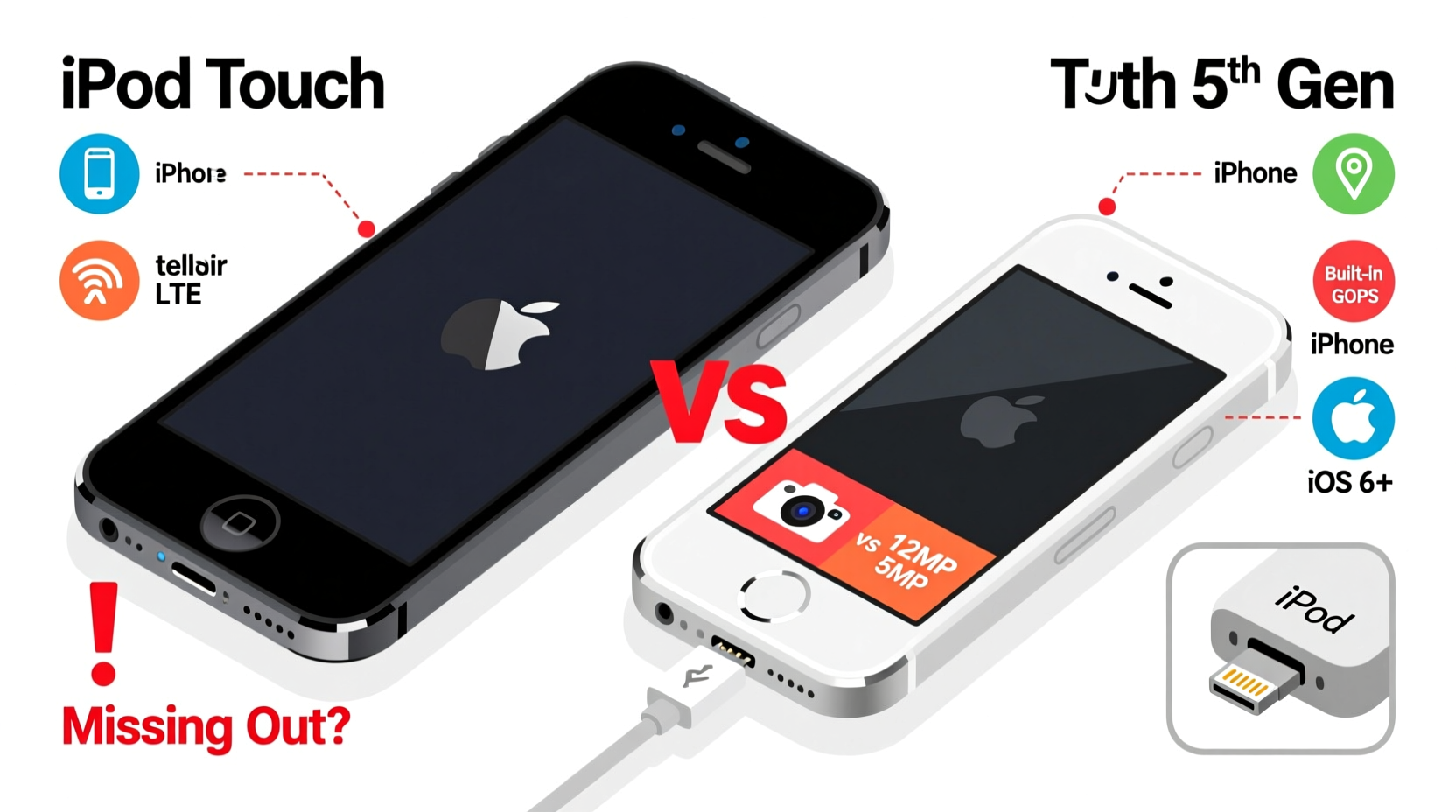
The most obvious distinction between the iPhone 5 and the iPod Touch 5th gen is cellular capability. The iPhone 5 supports GSM and LTE networks, allowing voice calls, SMS, and mobile data anywhere with signal. The iPod Touch, despite sharing the same A6 chip and 4-inch Retina display, lacks any form of built-in cellular radio.
This single difference cascades into several limitations:
- No phone calls or texts — Obvious, but essential for daily communication.
- No GPS with offline use — The iPod Touch uses Wi-Fi positioning only, making navigation unreliable without internet.
- No emergency calling — Even without a SIM, iPhones can dial emergency services; iPods cannot.
- Limited hotspot independence — You can’t receive updates, messages, or alerts unless connected to Wi-Fi.
App Ecosystem & Functionality Gaps
While both devices launched with iOS 6 and could be updated to iOS 10, their software experience diverged due to hardware constraints. Many apps assume the presence of a phone number, SIM card, or cellular data.
For example:
- Two-factor authentication (2FA) often fails on iPod Touch because verification codes are sent via SMS.
- Ride-sharing apps like Uber or Lyft may allow booking over Wi-Fi but struggle with real-time tracking without consistent data.
- Banking and financial apps sometimes block login attempts from non-phone devices for security reasons.
- iMessage fallback — Without a phone number, iMessage relies solely on email, which some contacts may not recognize.
“Even if two devices run the same OS, hardware dictates software access. No cellular means no full integration.” — Lin Zhao, Mobile Systems Analyst
Camera & Sensor Capabilities
Both devices feature an 8MP rear camera and a front-facing FaceTime camera. However, the iPhone 5 includes additional sensors that enhance photo quality and usability:
- True Tone flash — Dual LED flash (white and amber) adjusts color temperature for more natural lighting.
- Backside illumination sensor — Better low-light performance compared to the iPod Touch.
- GPS tagging — Photos taken on the iPhone 5 include geolocation metadata; iPod Touch photos do not, unless manually tagged via Wi-Fi triangulation.
These might seem minor, but for anyone organizing photos or using them professionally, location data and consistent image quality matter.
Detailed Comparison Table
| Feature | iPhone 5 | iPod Touch 5th Gen |
|---|---|---|
| Cellular Connectivity | GSM/LTE (calls, texts, data) | None |
| GPS | Yes (A-GPS + GLONASS) | Wi-Fi only (less accurate) |
| Emergency Calling | Yes (even without SIM) | No |
| Camera Flash | True Tone dual-LED | No flash |
| Photo Geotagging | Yes (via GPS) | Limited (via Wi-Fi) |
| 2FA Support | Fully supported | Often blocked or limited |
| Battery Life (Standby) | 225 hours (3G) | Up to 300 hours (Wi-Fi idle) |
| Price at Launch | $649 (16GB, contract-free) | $299 (16GB) |
Real-World Example: Daily Use Case
Consider Sarah, a college student in 2013 who bought an iPod Touch 5th gen to save money. She used it for music, notes, and social media while connected to campus Wi-Fi. But during a weekend trip, she found herself stranded when her ride canceled. With no cellular connection, she couldn’t call, send an iMessage, or even load Google Maps without finding a café with guest Wi-Fi.
She missed class because she couldn’t reroute efficiently. Later, her bank locked her account after detecting a “new device” login from her dorm IP—she had no way to verify her identity via SMS. By semester’s end, she upgraded to an iPhone 5, realizing that offline independence was worth the price difference.
Longevity and Software Support
Both devices stopped receiving official iOS updates in 2017 (iOS 10.3.4 was the last for 32-bit models). However, the iPhone 5 had a longer effective lifespan due to better app support during its prime.
Developers prioritized iPhone compatibility, and many apps either never launched on iPod Touch or dropped support earlier. Even today, secondhand buyers report that iPod Touch units struggle with modern web standards, app stores, and secure logins—largely due to outdated TLS and cryptographic support.
If you're considering either device now—perhaps for a child, as a backup, or for nostalgic use—the iPhone 5 offers slightly better odds of functional browsing and app usage, simply because it was treated as a “real” phone by developers.
Checklist: Should You Choose the iPhone 5 Over the iPod Touch?
Use this checklist to determine if the iPhone 5 is worth the investment:
- Do you need to make phone calls or send SMS? → iPhone 5 required
- Will you use the device away from Wi-Fi often? → iPhone 5 recommended
- Do you rely on GPS navigation? → iPhone 5 strongly preferred
- Are you using banking or 2FA-heavy apps? → iPhone 5 more compatible
- Is budget your primary concern? → iPod Touch saves ~40%
- Do you want emergency calling capability? → Only iPhone 5 supports it
Frequently Asked Questions
Can the iPod Touch 5th gen use FaceTime Audio?
Yes, but only over Wi-Fi. It functions like a VoIP call through Apple’s servers, but requires both parties to be online and signed into iCloud.
Can I put a SIM card in an iPod Touch to make it work like an iPhone?
No. The iPod Touch has no SIM slot and lacks the necessary baseband processor and antennas for cellular communication. It's hardware-limited.
Which device holds value better today?
Neither holds significant resale value, but the iPhone 5 is more sought after by collectors and tinkerers due to its full phone capabilities and modding potential (e.g., jailbreaking for custom firmware).
Conclusion: Is the iPhone 5 Worth It?
The iPod Touch 5th gen was marketed as an affordable gateway to iOS—a device for music lovers and casual users. But the iPhone 5 wasn't just a phone; it was a self-contained digital hub. The gap between them goes beyond calling. It's about autonomy, reliability, and integration with services that expect a phone to behave like a phone.
If you’re buying today for nostalgia, education, or as a starter device for a young user, the iPhone 5 is still the superior choice—if available at a reasonable price. You gain emergency features, better app compatibility, true GPS, and the flexibility to use cellular data when needed. The iPod Touch, while charming, operates under constant constraints.
The $350 price difference at launch was steep. But in practice, the iPhone 5 delivered significantly more real-world utility. And even now, when both are obsolete by modern standards, that functional edge remains.




 浙公网安备
33010002000092号
浙公网安备
33010002000092号 浙B2-20120091-4
Comments
No comments yet. Why don't you start the discussion?