
In 2013, Apple released two devices that defined a generation of smartphone users: the iPhone 5 and the iPhone 5s. At the time, the differences seemed subtle—same size, similar design—but under the surface, Apple had made significant upgrades. Fast-forward to 2017, and both phones are well past their prime. Yet, they still appear in second-hand markets, budget-conscious households, and as emergency backup devices. So, is the iPhone 5s truly better than the iPhone 5—and more importantly, is either device still worth using in 2017?
The answer isn’t just about specs. It’s about real-world usability, software compatibility, security, and whether these aging devices can handle daily tasks without constant frustration.
Performance: The A7 Chip Makes All the Difference
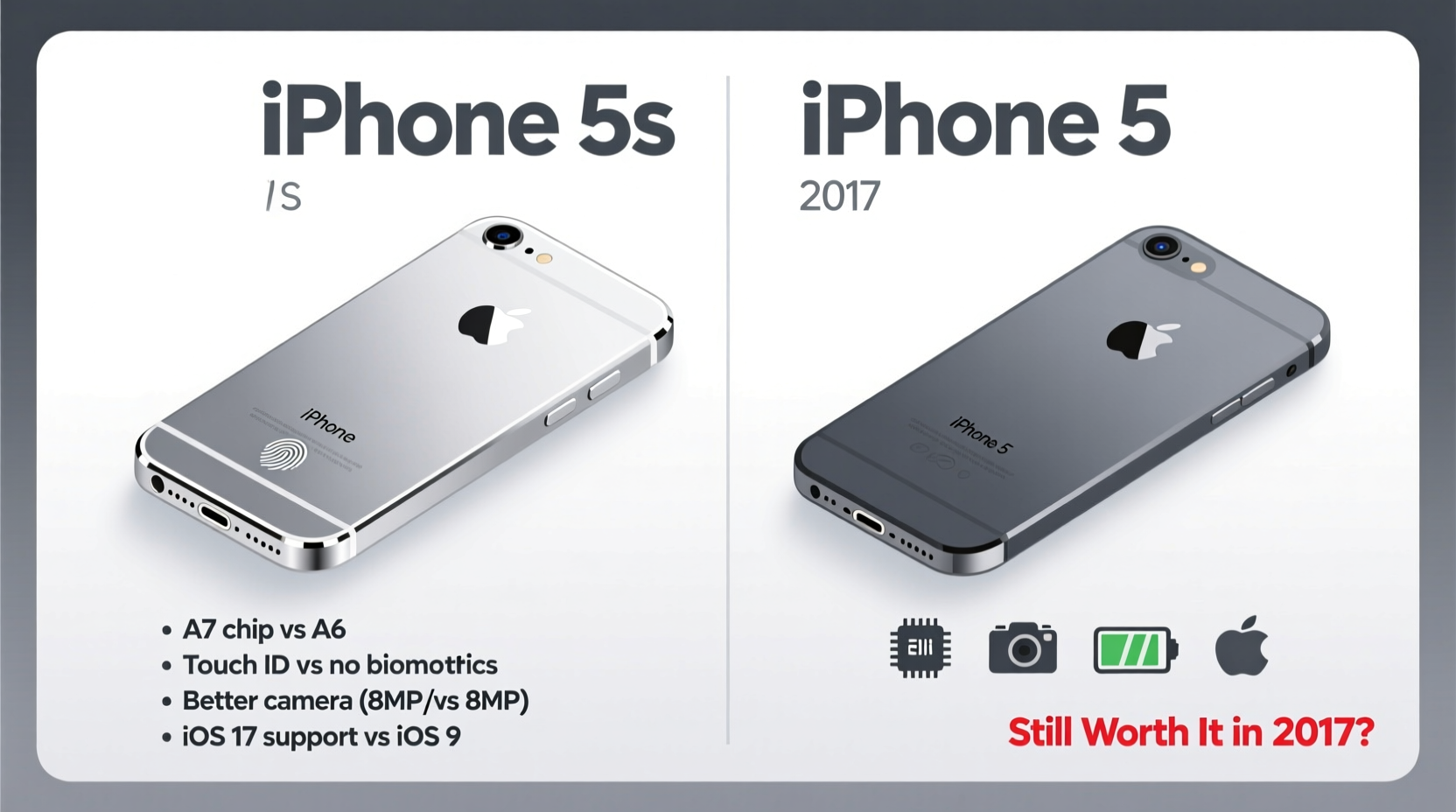
The most significant upgrade from the iPhone 5 to the iPhone 5s was the introduction of the 64-bit A7 chip with an embedded M7 motion coprocessor. This wasn't just a minor speed bump—it was a generational leap in mobile processing power.
The iPhone 5 used the dual-core A6 chip, which was impressive in 2012 but struggled by 2017 standards. Meanwhile, the A7 allowed the 5s to run iOS 10 and even receive updates into early 2017, while the iPhone 5 was capped at iOS 9.3.5. That may not sound like much, but it has major implications for app compatibility and security.
Real-world usage reflects this difference. On the iPhone 5, launching apps like Facebook or Instagram often resulted in long load times, frequent crashes, and sluggish navigation. The 5s handled the same apps with noticeably smoother transitions and faster response—even if it occasionally stuttered under heavy multitasking.
Camera Improvements You Can Actually See
Both phones feature 8-megapixel rear cameras, but the iPhone 5s includes several key enhancements:
- Bigger pixels (1.5µm vs. 1.4µm) for improved low-light performance
- True Tone flash with dual LEDs (warm and cool) for more natural skin tones
- Improved burst mode and auto HDR
- Faster autofocus and better noise reduction
The True Tone flash alone makes a visible difference. On the iPhone 5, flash photos often looked harsh and overly white. The 5s adjusts color temperature dynamically, producing softer, more balanced lighting—especially useful in indoor or nighttime settings.
Front-facing video also saw an upgrade: the 5s supports 720p HD FaceTime video, compared to the 5’s 720p stills but lower-quality video capture. For users still relying on selfies or video calls, this is a meaningful improvement.
“Even small camera upgrades matter when you’re using your phone as your primary camera. The 5s delivers noticeably better consistency across lighting conditions.” — David Lin, Mobile Photographer & Tech Reviewer
Security and Biometrics: Touch ID Changes Everything
One of the iPhone 5s’s headline features was Touch ID—the first fingerprint sensor integrated into an iPhone home button. While the iPhone 5 relied solely on a passcode, the 5s introduced biometric authentication, making it faster and safer to unlock the phone and authorize App Store purchases.
In 2017, this distinction becomes even more important. With increasing concerns over data privacy and mobile banking, having Touch ID adds a layer of convenience and protection. It also enabled Apple Pay on compatible devices (though limited to newer models), and supported third-party app logins via fingerprint.
Without Touch ID, the iPhone 5 forces users to manually enter passwords or use simple four-digit codes—making it less secure and more tedious to use regularly.
Detailed Comparison: iPhone 5 vs iPhone 5s (2017 Perspective)
| Feature | iPhone 5 | iPhone 5s |
|---|---|---|
| Processor | A6 chip (32-bit) | A7 chip (64-bit) + M7 coprocessor |
| Max iOS Version | iOS 9.3.5 | iOS 10.3.3 |
| App Compatibility (2017) | Limited; many apps no longer supported | Moderate; some modern apps still functional |
| Camera Flash | Single LED (white) | True Tone (dual LED, adjustable) |
| Front Camera Video | 720p (lower quality) | 720p HD |
| Biometric Security | None | Touch ID fingerprint sensor |
| Battery Life (real-world, 2017) | ~4–5 hours screen-on time (aged) | ~5–6 hours screen-on time (aged) |
| Current Use Case | Basic calling, SMS, light web | Light browsing, messaging, older apps |
Real-World Example: Using an iPhone 5s in 2017
Consider Maria, a college student who inherited her brother’s old iPhone 5s in early 2017. She needed a temporary phone while saving for a new one. Her daily routine included checking email, using WhatsApp, browsing social media, and occasionally streaming music.
She found that Instagram loaded slowly but worked reliably. Safari could handle basic websites, though complex pages with videos or ads caused lag. Google Maps functioned adequately for navigation, though GPS lock took longer than on newer devices. Most critically, she could still receive security updates until mid-2017 and use two-factor authentication through trusted devices.
When she tried switching to an iPhone 5 instead, she quickly gave up. Apps failed to install or update, Safari crashed frequently, and even iMessage became unreliable. The lack of iOS 10 support meant missing out on features like message effects and improved spam filtering.
Maria’s experience illustrates a broader truth: the iPhone 5s, while outdated, remains marginally usable in 2017. The iPhone 5 does not.
Step-by-Step: How to Maximize an iPhone 5s in 2017
If you’re stuck with or choosing between these devices, follow this timeline to get the most out of your iPhone 5s:
- Update to the latest possible iOS version (iOS 10.3.3) – Ensures best security and app compatibility.
- Reset and clean the device – Erase all content and settings to remove bloat and restore responsiveness.
- Install only essential apps – Stick to lightweight versions (e.g., Facebook Lite-style alternatives or web apps).
- Disable animations and background app refresh – Go to Settings > General > Accessibility > Reduce Motion, and turn off Background App Refresh.
- Use Safari with content blockers – Install ad blockers to reduce page load times and data usage.
- Monitor battery health – Replace the battery if capacity is below 80% (Settings > Battery > Battery Health not available, so check via third-party tools or symptoms).
Frequently Asked Questions
Can the iPhone 5s run iOS 11?
No. The iPhone 5s is not compatible with iOS 11 or any later version. Its final supported OS is iOS 10.3.3, released in mid-2017. After that, no further updates were provided, leaving it vulnerable to emerging security threats.
Is the iPhone 5 still secure to use in 2017?
Not really. The iPhone 5 stopped receiving security updates after iOS 9.3.5. By 2017, known vulnerabilities remained unpatched, making it risky for online banking, shopping, or storing personal data. Even basic web browsing poses potential risks due to outdated browser engines.
Should I buy an iPhone 5s in 2017?
Only as a short-term backup or for a child’s first phone with strict limitations. It’s not suitable as a primary device for anyone relying on modern apps, fast performance, or secure communication. For under $50, consider refurbished Android options with current software instead.
Final Verdict: Is the iPhone 5s Worth It Over the iPhone 5 in 2017?
Yes—but barely. The iPhone 5s is meaningfully better than the iPhone 5 in every measurable way: processor, camera, security, and software support. These advantages translate into tangible improvements in daily use, especially in 2017 when app demands have far outpaced what the A6 chip can handle.
However, “better” doesn’t mean “good.” Both devices are obsolete by modern standards. They lack LTE-Advanced speeds, modern app optimization, robust battery life, and access to current iOS features. The 5s can limp along for basic tasks, but it shouldn’t be your main phone unless absolutely necessary.
If you’re choosing between the two, always pick the 5s. But if you have the option, invest in a newer device—even a budget Android phone from 2016 or a refurbished iPhone 6s will offer a dramatically better experience.




 浙公网安备
33010002000092号
浙公网安备
33010002000092号 浙B2-20120091-4
Comments
No comments yet. Why don't you start the discussion?