
When Apple released the iPhone 6s in 2015 as the successor to the wildly popular iPhone 6, many consumers wondered: is there a noticeable difference in size between the two models? Given how similar they appear at first glance, it’s a fair question. Both devices share nearly identical design language, but subtle changes in dimensions, weight, and internal components have led to nuanced differences in user experience. This article dives into the actual measurements, compares them side by side, and explores what real users have to say about holding, using, and upgrading from the iPhone 6 to the 6s.
Physical Dimensions: A Closer Look
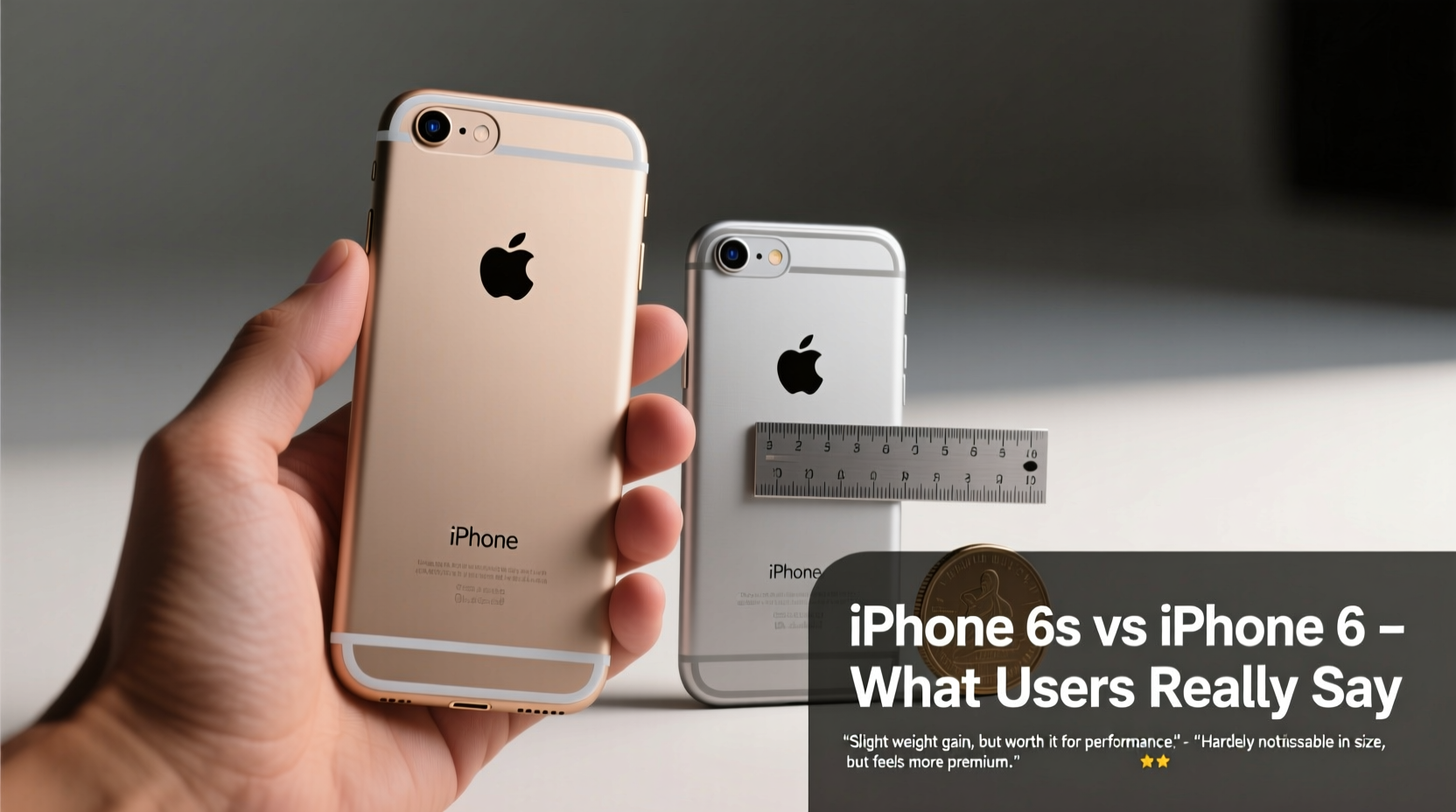
At first glance, the iPhone 6 and iPhone 6s look almost indistinguishable. They both feature a 4.7-inch Retina HD display, rounded aluminum bodies, and a minimalist aesthetic. However, when measured precisely, slight variations emerge.
| Specification | iPhone 6 | iPhone 6s |
|---|---|---|
| Height | 138.1 mm (5.44 inches) | 138.3 mm (5.44 inches) |
| Width | 67.0 mm (2.64 inches) | 67.1 mm (2.64 inches) |
| Thickness | 6.9 mm (0.27 inches) | 7.1 mm (0.28 inches) |
| Weight | 129 grams (4.55 oz) | 143 grams (5.04 oz) |
| Display Size | 4.7 inches | 4.7 inches |
| Material | Aluminum (6000 series) | Aluminum (7000 series) |
The numbers reveal that the iPhone 6s is only marginally taller and wider—by less than 0.3 mm—and slightly thicker. The most significant difference is in weight: the 6s is 14 grams heavier, which equates to about a 10% increase. While this may not sound like much, it can be perceptible in hand, especially during prolonged use.
User Experience: What Real Owners Say
Online forums, Reddit threads, and customer reviews paint a consistent picture: most users don’t notice a dramatic size difference between the iPhone 6 and 6s when viewing them side by side or slipping them into a case. However, when held back-to-back, several report the 6s feels “denser” or “more solid.”
“I upgraded from a 6 to a 6s and didn’t think there’d be any difference,” shared Mark T., a long-time iPhone user from Portland. “But after using both for a week, I realized the 6s just feels sturdier. It’s not bigger per se, but it doesn’t feel as flimsy.”
This sentiment echoes across multiple user testimonials. The switch to a stronger 7000-series aluminum frame—similar to that used in the Apple Watch—gave the 6s a more premium, rigid feel, even if the external footprint remained nearly identical.
“The iPhone 6s wasn’t about radical redesign—it was about refinement. Slightly thicker, yes, but built better. You feel the quality before you see it.” — David Kim, Mobile Device Analyst at TechPulse
Functional Upgrades That Influence Perceived Size
While physical dimensions changed only slightly, internal upgrades on the 6s contributed to how users perceived its size and usability. The inclusion of 3D Touch, a stronger Taptic Engine, and improved internal shielding added bulk without altering the outer shell significantly.
- 3D Touch: Introduced pressure-sensitive input, making interactions more dynamic. Some users reported needing to adjust their grip to avoid accidental presses.
- Battery and Camera: The 6s features a larger battery and a 12MP rear camera (vs. 8MP on the 6), requiring minor internal re-engineering that contributed to increased thickness and weight.
- Antenna Lines: Redesigned for better signal reception, the bands on the back are slightly different in placement and texture, affecting tactile feedback.
These changes didn’t make the phone objectively larger, but they altered how people interacted with it. Users accustomed to the lighter, thinner iPhone 6 sometimes described the 6s as “slightly more demanding to hold comfortably,” particularly during extended video sessions or gaming.
Mini Case Study: Sarah’s Upgrade Dilemma
Sarah L., a freelance photographer based in Austin, relied on her iPhone 6 for daily communication, social media posting, and quick photo edits. When her battery began degrading in early 2016, she considered upgrading to the 6s. She visited an Apple Store to compare both models in person.
“I picked up both phones blindfolded—one in each hand,” she recalled. “I could tell the heavier one was the newer model instantly. But when I opened my eyes, I couldn’t spot any visual difference. I ended up choosing the 6s because of the better camera and longer software support, even though it felt a bit chunkier.”
Sarah’s experience highlights a common trend: while the size difference is negligible visually, the weight and build quality shift user perception. For professionals or heavy users, the trade-off in heft is often worth the performance gains.
Do’s and Don’ts When Comparing the Two Models
For those still deciding whether the upgrade matters, here’s a practical checklist based on user behavior and expert recommendations:
- Do test both phones in-hand before deciding—weight matters more than specs suggest.
- Do consider case compatibility—most third-party cases fit both models interchangeably.
- Do factor in long-term software support—the 6s received updates for years longer than the 6.
- Don’t expect major ergonomic improvements—the screen size and shape are unchanged.
- Don’t overlook battery life—the 6s has modestly better efficiency despite similar capacity.
- Don’t assume durability is the same—the 6s is less prone to bending (unlike the infamous ‘Bendgate’ issue).
Frequently Asked Questions
Can I use my iPhone 6 case on the iPhone 6s?
Yes, in most cases. Due to nearly identical dimensions and button placement, third-party cases designed for the iPhone 6 typically fit the 6s. However, some precision-cut cases may have slight misalignments around the rear camera or ports due to minor design tweaks.
Does the extra weight of the 6s affect one-handed use?
For users with smaller hands, the added 14 grams and slightly thicker profile can make one-handed operation marginally harder. However, most adapt within a few days. Using a grip-enhancing case or enabling Reachability mode helps mitigate this.
Was the iPhone 6s actually more durable than the 6?
Yes. Apple addressed the “Bendgate” concerns by using 7000-series aerospace-grade aluminum, which is significantly more resistant to deformation. Independent lab tests confirmed the 6s withstands greater pressure before bending compared to the 6.
Conclusion: Size Isn’t Everything
The iPhone 6s isn’t meaningfully larger than the iPhone 6 in terms of footprint or screen real estate. The height, width, and display size are virtually identical. The key differences lie in thickness, weight, material quality, and internal enhancements—all of which contribute to a more robust, responsive, and future-proof device.
Users who prioritize longevity, camera quality, and tactile feedback tend to appreciate the 6s despite its slight heft. Those seeking the lightest, thinnest option might prefer the original 6—but should weigh that against shorter software support and lower durability.




 浙公网安备
33010002000092号
浙公网安备
33010002000092号 浙B2-20120091-4
Comments
No comments yet. Why don't you start the discussion?