
In 2024, smartphones evolve at a relentless pace. Flagships push boundaries with AI integration and advanced cameras, but budget and older models still attract users seeking value. Two devices often mentioned in secondhand markets are the Apple iPhone 7 and the Samsung Galaxy A10. Released nearly seven years apart—the iPhone 7 in 2016 and the Galaxy A10 in 2019—they represent different generations of mobile technology. But for someone on a tight budget or looking for a basic phone, is the iPhone 7 still a viable option today when stacked against the more modern-feeling Galaxy A10?
The answer isn’t straightforward. While both phones are outdated by current standards, their real-world usability depends on individual needs: operating system preference, app usage, software updates, and long-term reliability. Let’s dissect these two handsets across key categories to determine which offers better value in 2024.
Performance and Hardware Comparison
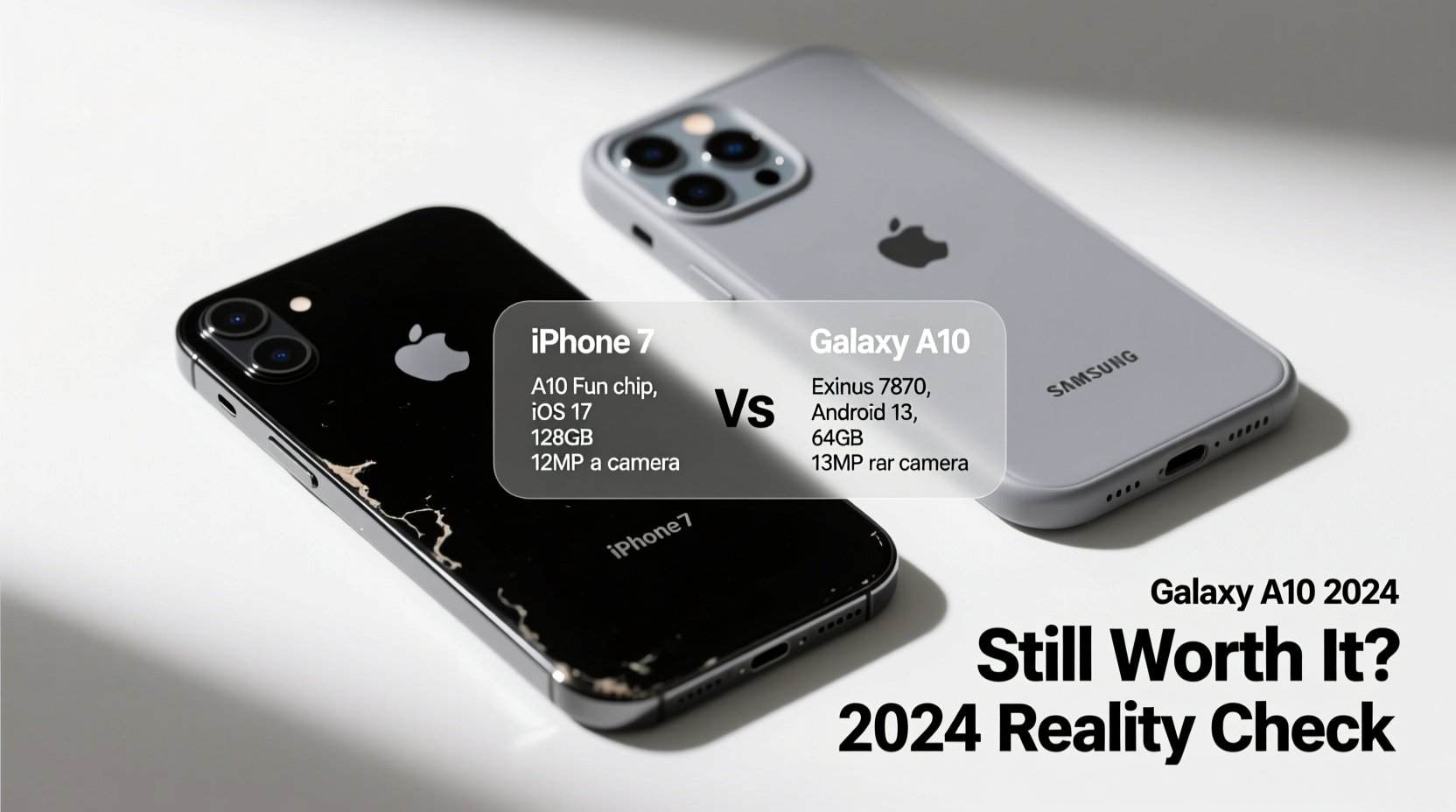
The iPhone 7 runs on Apple’s A10 Fusion chip, a 64-bit quad-core processor that was groundbreaking in its time. Paired with 2GB of RAM, it delivered smooth multitasking and efficient power management. Even today, iOS optimization allows the A10 to handle light tasks like web browsing, messaging, and music streaming without major hiccups—assuming the battery has been replaced.
In contrast, the Galaxy A10 uses Samsung’s Exynos 7884 or MediaTek MT6739 (depending on region), both entry-level chips built on older architectures. With only 2GB of RAM and Android’s less aggressive background process management, the A10 struggles with multitasking. Apps reload frequently, animations stutter, and navigation feels sluggish even after a fresh boot.
Benchmark Reality Check
On paper, the A10 Fusion outperforms the Exynos 7884 significantly. In Geekbench 5 tests, the iPhone 7 scores around 360 (single-core) and 630 (multi-core), while the Galaxy A10 manages about 120 and 350 respectively. This means the iPhone 7 processes tasks up to three times faster per core—a crucial advantage for app responsiveness.
Software Support and Longevity
This is where the comparison shifts dramatically. The iPhone 7 launched with iOS 10 and received updates all the way through iOS 16, released in 2022. However, it is **not compatible** with iOS 17, cutting off official security patches and new features as of late 2023. That makes it functionally obsolete in Apple’s ecosystem.
Samsung promised four years of security updates for select Galaxy devices, but the A10 series wasn’t part of that commitment. It shipped with Android 9 (Pie) and received updates only until 2021. Today, it runs outdated Android versions vulnerable to known exploits, lacks Google Play Protect certification, and cannot install newer apps requiring higher API levels.
“Phones stuck on unsupported operating systems become security liabilities, not just performance laggards.” — David Lin, Mobile Security Analyst at TechShield Labs
While neither phone receives active software support, the iPhone 7 benefits from tighter app compatibility due to iOS’s consistent architecture. Many developers still optimize for older iPhones because of Apple’s extended update cycles—unlike Android, where fragmentation renders low-end devices obsolete faster.
Camera Quality and Multimedia Use
The iPhone 7 features a 12MP rear camera with optical image stabilization (OIS), f/1.8 aperture, and Apple’s signature color science. Even in 2024, under good lighting, it captures sharp, well-balanced photos with natural skin tones and excellent dynamic range. Video recording tops out at 4K@30fps, impressive for its era.
The Galaxy A10 comes with an 13MP rear shooter (f/1.9) and no OIS. Low-light performance is poor, images appear oversharpened, and autofocus is slow. Video maxes out at 1080p@30fps, but stabilization is minimal, resulting in shaky footage. The front-facing 5MP camera struggles with facial detail and noise reduction.
| Feature | iPhone 7 | Galaxy A10 |
|---|---|---|
| Rear Camera | 12MP, f/1.8, OIS | 13MP, f/1.9, No OIS |
| Front Camera | 7MP, Retina Flash | 5MP |
| Video Recording | 4K@30fps | 1080p@30fps |
| Low-Light Performance | Moderate (aided by OIS) | Poor |
If photography matters—even casually—the iPhone 7 remains superior. Its computational photography algorithms, though aged, still produce more consistent results than the Galaxy A10’s hardware-limited setup.
Battery Life and Daily Usability
The iPhone 7 has a modest 1,960mAh battery. Out of the box, it lasted about a day with moderate use. After six+ years, most units have batteries with less than 70% health, leading to frequent charging—sometimes twice daily. Replacing the battery costs $49 at Apple or $30–$40 at third-party shops and dramatically improves usability.
The Galaxy A10 packs a larger 3,400mAh cell and generally lasts longer per charge, especially given its lower-resolution display (720p). However, inefficient software and background bloatware drain power quickly over time. Users report needing midday top-ups even with light use.
Mini Case Study: Maria’s Experience
Maria, a retiree in Portland, bought a used iPhone 7 in early 2022 for $70. She uses it mainly for calls, texts, and FaceTiming her grandchildren. After replacing the battery for $35, she found the phone responsive enough for her needs. “It doesn’t crash like my old Android did,” she says. “And the camera is good enough for pictures of the garden.” When offered a free Galaxy A10 by her grandson, she tried it for two weeks but returned to the iPhone. “Everything loads slower, and I kept getting pop-up ads I couldn’t stop.”
Should You Buy Either Phone in 2024?
For most people, the answer is no. Both phones lack modern essentials: secure OS updates, app compatibility, fast charging, and reliable connectivity. However, if you’re choosing between the two, the iPhone 7 holds a narrow edge for specific users.
- Choose the iPhone 7 if: You need a basic iOS device for iMessage, FaceTime, or iCloud access; prefer smoother performance; plan to replace the battery; and don’t rely on cutting-edge apps.
- Consider the Galaxy A10 only if: You must have a SIM-only Android device for temporary use, require microSD expansion (it supports up to 512GB), or need a spare phone for a child with parental controls already set up on a Samsung account.
Checklist: What to Verify Before Buying Either Phone
- Confirm battery health (ideally above 80% or budget for replacement).
- Test all ports: charging, headphone jack (iPhone 7 only), speakers.
- Check for water damage indicators (if visible).
- Ensure the device isn’t iCloud or Google locked.
- Verify Wi-Fi, Bluetooth, and cellular signal strength.
- Boot the phone and confirm no persistent lag or crashes.
- Update to the latest possible OS version before finalizing purchase.
Frequently Asked Questions
Can the iPhone 7 run modern apps in 2024?
Some can, but many newer apps—including TikTok, Instagram, and banking apps—have dropped support for iOS 16 and earlier. These may fail to install or crash frequently. Lightweight alternatives (e.g., Firefox instead of Chrome) may work, but functionality is limited.
Which phone has better build quality?
The iPhone 7 wins here too. It features an aluminum unibody with IP67 water resistance—still rare in budget phones of its time. The Galaxy A10 uses plastic throughout and lacks any official dust or water protection, making it fragile and prone to scratches.
Is either phone safe to use in 2024?
Security is a concern for both. Without official updates, they’re vulnerable to unpatched exploits. Avoid storing sensitive data, using banking apps, or connecting to public Wi-Fi networks. If used, disable unnecessary permissions and avoid downloading unknown apps.
Final Verdict: Value vs. Viability
The iPhone 7, despite its age, demonstrates how superior hardware design and software optimization can extend a device’s useful life. In 2024, it’s not “worth it” as a primary phone for most users—but as a secondary device, emergency phone, or starter smartphone for someone with minimal digital needs, it outperforms the Galaxy A10 in speed, camera, and overall polish.
The Galaxy A10, while newer, reflects the pitfalls of ultra-budget Android devices: weak processors, bloated software, and short support windows. It becomes frustrating quickly, even for basic tasks.




 浙公网安备
33010002000092号
浙公网安备
33010002000092号 浙B2-20120091-4
Comments
No comments yet. Why don't you start the discussion?