
For dedicated readers who’ve spent years with an older Kindle—whether it’s the original Paperwhite, the basic Kindle, or even a second-generation Voyage—the question isn’t just about new features. It’s about whether those upgrades translate into meaningful improvements in daily reading. After all, e-readers are built to last. So when Amazon releases a newer Kindle Paperwhite, how do you know if it's time to upgrade? This article dives deep into real-world usage, comparing older models with the current Kindle Paperwhite (11th generation, 2021) based on feedback from long-term users, technical specs, and practical benefits.
Key Upgrades That Make a Difference
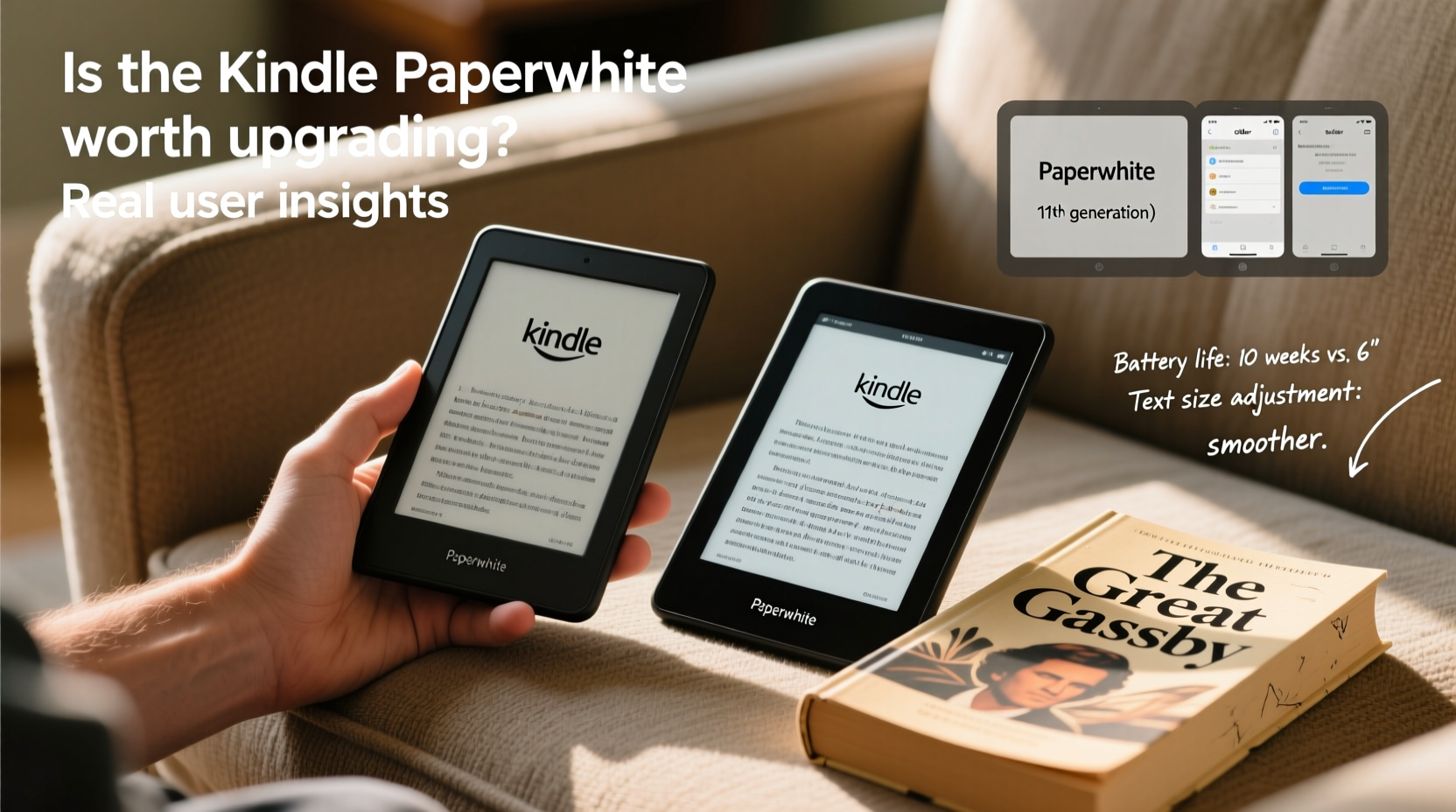
The latest Kindle Paperwhite isn’t just a minor refresh—it brings several tangible improvements over its predecessors. If you're using a Kindle from before 2018, the changes may be more impactful than you expect.
- Larger 6.8-inch display: Compared to the older 6-inch screen, this gives more text per page and reduces scrolling during PDF or comic viewing.
- Flush-front design: Eliminates the bezel gap, making the screen feel more modern and easier to clean.
- USB-C charging: A major usability win. No more fumbling with proprietary cables or carrying extra adapters.
- Improved front lighting: Even brightness distribution across the screen, reducing eye strain in low-light conditions.
- Water resistance (IPX8): Can survive submersion in up to 2 meters of water for 60 minutes—ideal for beach reads or bath-time reading.
- Faster processor: Page turns are nearly instantaneous, especially noticeable with large files or dense formatting.
Real User Experiences: Who Benefits Most?
Not every reader will notice a dramatic shift when upgrading. The value depends heavily on your habits, environment, and which older model you’re coming from.
From Basic Kindle (7th–9th Gen)
Users moving from the non-Paperwhite base models report the biggest leap. The switch from uneven lighting and lower contrast to the Paperwhite’s glare-free, adjustable warm light system feels transformative. One user shared: “I used to get headaches after 30 minutes on my old Kindle. With the Paperwhite, I can read for hours without discomfort.”
From Paperwhite 3 (2015 Model)
This group is more divided. While they appreciate USB-C and water resistance, some note that the screen quality was already excellent. However, the larger screen size often wins them over. As Sarah T., a librarian and avid reader, put it: “I didn’t think I needed a bigger screen until I got one. Now I can’t go back. It’s like switching from standard to widescreen TV.”
From Kindle Voyage
Voyage owners tend to be picky. Many loved the ergonomic design and auto-brightness feature, which the current Paperwhite lacks. But the lack of USB-C and water resistance in the Voyage makes the upgrade compelling despite the loss of some premium touches. “I miss the contoured grip,” said Mark R., “but being able to toss my Kindle in the pool bag without worry? That’s peace of mind I didn’t know I needed.”
“Upgrading isn’t always about raw specs—it’s about how the device fits into your life. For most readers, the 2021 Paperwhite strikes the perfect balance between durability, comfort, and functionality.” — David Lin, Digital Reading Analyst at TechPage
Feature Comparison: Old vs. New
| Feature | Kindle Paperwhite (2021) | Kindle Paperwhite 3 (2015) | Basic Kindle (9th Gen) |
|---|---|---|---|
| Screen Size | 6.8 inches | 6 inches | 6 inches |
| Resolution | 300 ppi | 300 ppi | 167 ppi |
| Battery Life | Up to 10 weeks | Up to 8 weeks | Up to 4 weeks |
| Charging Port | USB-C | Micro-USB | Micro-USB |
| Water Resistance | IPX8 rated | No | No |
| Adjustable Warm Light | Yes | No | No |
| Storage Options | 8GB or 32GB | 4GB | 8GB |
| Weight | 205g | 205g | 174g |
Note: While the 2021 Paperwhite is slightly heavier due to the larger screen, most users don’t notice the difference during extended reading sessions.
When the Upgrade Makes Sense: A Decision Checklist
Before spending $140+ on a new device, ask yourself the following. Check off what applies to your situation:
- ✅ I still use Micro-USB and hate not being able to charge with my phone cable.
- ✅ I’ve damaged a previous Kindle by spilling water or dropping it in the bath.
- ✅ I read PDFs, textbooks, or comics where extra screen space would help.
- ✅ I want longer battery life between charges.
- ✅ I read in bed and would benefit from warm light to reduce blue exposure at night.
- ✅ My current Kindle feels slow when turning pages or syncing.
- ✅ I carry multiple books and need more storage for audiobooks or large libraries.
If you checked three or more items, the upgrade is likely worthwhile. Fewer than that? You might be better off saving your money—or waiting for a future model with features like auto-brightness return.
A Mini Case Study: From Paperwhite 3 to 2021 Model
Jamie L., a college professor and daily commuter, had used her 2015 Paperwhite 3 for seven years. She read academic papers, novels, and news articles across multiple devices but preferred e-ink for long-form content. Her old Kindle still worked fine, but she found herself frustrated by the lack of water resistance when reading outdoors and the short battery life when traveling.
After upgrading to the 2021 Paperwhite, she noticed immediate differences:
- The USB-C port made charging effortless—she could use the same cable as her phone and tablet.
- The larger screen reduced vertical scrolling in research PDFs by nearly 30%, according to her estimate.
- She accidentally left the Kindle in her rain-soaked backpack. After drying it off, it powered on without issue—a moment she called “a relief.”
- Warm lighting improved her evening reading comfort, helping her fall asleep faster.
“It wasn’t broken, so I didn’t think I needed to fix it,” Jamie said. “But now that I have the new one, I realize how much friction the old model added to my routine.”
What You Might Lose in the Upgrade
While the 2021 Paperwhite improves in many areas, it doesn’t surpass every older model in every way. Here’s what some users miss:
- Voyage’s auto-brightness: The sensor adjusted light levels automatically based on ambient lighting—an elegant feature removed in later models.
- Tactile page turns: The Voyage’s flush-button design provided subtle physical feedback; the Paperwhite relies solely on touchscreen taps.
- Slightly lighter weight: Some find the newer model bulkier, though the difference is minimal (about 10–15 grams).
- Premium materials: The Voyage had a soft-touch finish and metal backing, while the Paperwhite uses matte plastic.
Amazon has prioritized mass accessibility and durability over niche premium features. For most users, this trade-off is acceptable—but if you valued the Voyage’s sophistication, you may feel the downgrade in build quality.
Step-by-Step: How to Decide If You Should Upgrade
- Assess your current device’s condition. Is it malfunctioning, slow, or showing screen degradation? If yes, replacement is logical.
- List your pain points. Do you struggle with charging, fragility, small screen size, or eye strain?
- Compare those issues to the new Paperwhite’s strengths. Does it solve your main frustrations?
- Check resale or trade-in options. Amazon offers credit toward a new device when trading in old Kindles—sometimes up to $50.
- Wait for a sale if timing allows. The Paperwhite often drops to $100 during Prime Day or Black Friday.
- Back up your library. Ensure all purchased books are synced to your Amazon account before transferring.
- Transfer settings via registration. Log into your Amazon account on the new device to restore purchases, collections, and highlights.
Frequently Asked Questions
Will my old Kindle books work on the new Paperwhite?
Yes. All purchased Kindle content is tied to your Amazon account. Once you log in, your entire library syncs automatically. Personal documents can be transferred via USB or email.
Is the warm light feature worth it?
For many users, yes—especially those who read at night. The ability to shift from cool white to amber tones reduces blue light exposure, which can improve sleep quality. Studies suggest reduced blue light in evening reading supports melatonin production.
Can I use audiobooks on the Kindle Paperwhite?
The 2021 Paperwhite supports Audible playback through Bluetooth headphones or speakers. This is only available on the 32GB model. If you enjoy switching between reading and listening, this integration adds significant value.
Final Verdict: Is the Upgrade Worth It?
The answer depends on your starting point and lifestyle. If you’re coming from a pre-2018 Kindle without water resistance, USB-C, or a high-resolution screen, the upgrade delivers real, lasting benefits. The combination of durability, modern charging, and enhanced readability makes the 2021 Paperwhite the most well-rounded Kindle Amazon has ever released for mainstream readers.
However, if you own a recent Paperwhite (like the 2018 model) and are happy with its performance, the improvements may not justify the cost. In that case, consider waiting for a future iteration that might reintroduce auto-brightness or offer adjustable stands.
For those on older devices—especially basic Kindles or first-gen Paperwhites—the jump in comfort, convenience, and resilience is substantial. Readers who spend hours immersed in books deserve tools that support their passion without friction. The current Paperwhite removes enough barriers to make that possible.




 浙公网安备
33010002000092号
浙公网安备
33010002000092号 浙B2-20120091-4
Comments
No comments yet. Why don't you start the discussion?