
If you've been using a Fitbit Charge for years—maybe even since the original or Charge 2—you’ve likely noticed how much wearable tech has evolved. The latest Fitbit Charge model promises longer battery life, advanced health tracking, improved sleep analysis, and sleeker design. But does that mean it’s time to upgrade? For many users, the answer isn’t automatic. It depends on your current device, health goals, and how deeply you rely on fitness data.
This article examines whether the newest Fitbit Charge delivers meaningful improvements over older models. We’ll compare features, analyze real-world performance, and help you determine if the upgrade justifies the cost—especially if your current tracker still powers through daily workouts and sleep cycles without issue.
Key Upgrades in the Latest Fitbit Charge
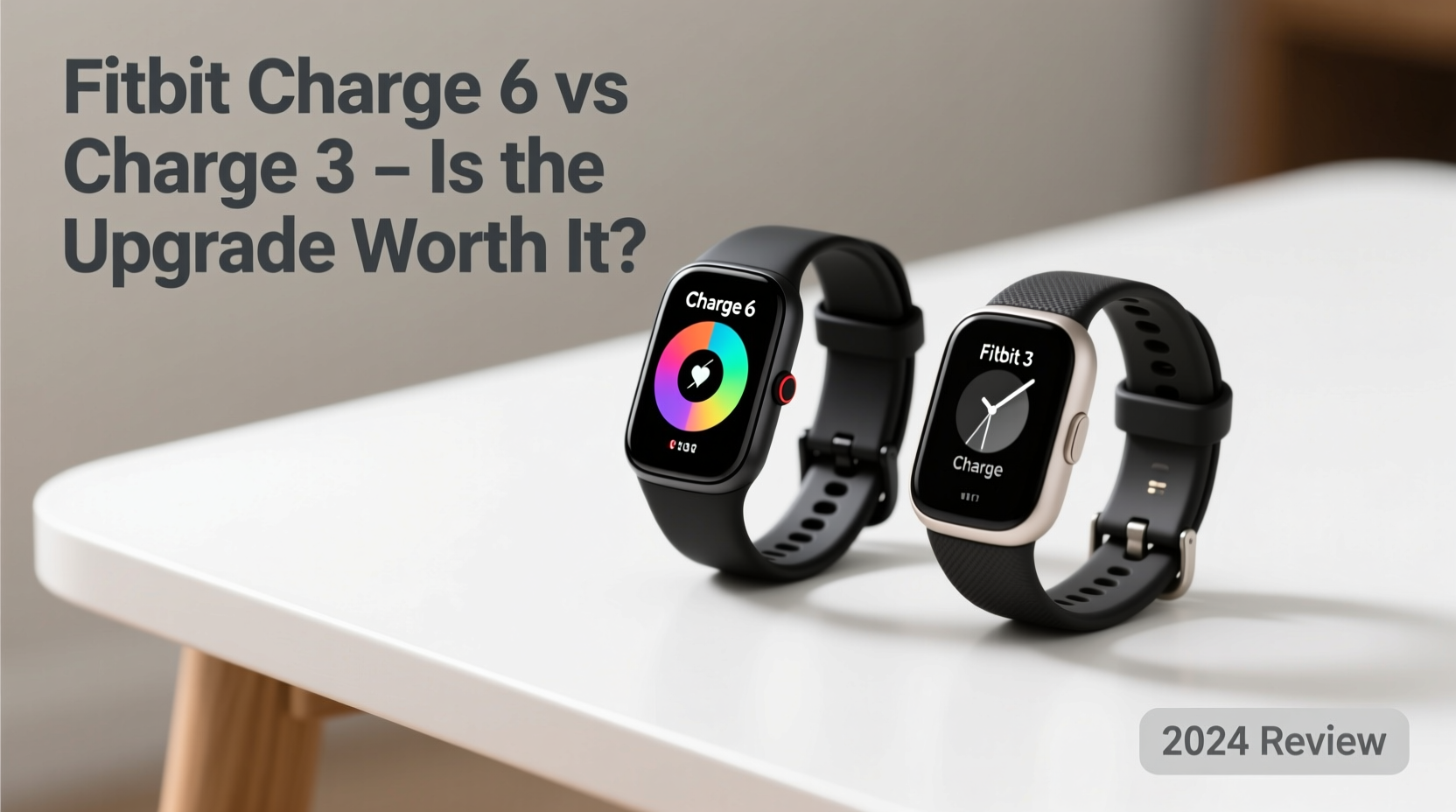
The most recent iteration of the Fitbit Charge series introduces several notable enhancements. While earlier versions laid the groundwork with step counting, heart rate monitoring, and basic sleep tracking, the latest model integrates more sophisticated sensors and analytics designed to support holistic health management.
- Advanced Sleep Tracking: Uses Sleep Stages (light, deep, REM) with personalized insights and Sleep Score breakdowns.
- 24/7 Heart Rate Monitoring with Alerts: Includes high and low heart rate notifications, plus irregular rhythm screening.
- Built-in GPS: Tracks outdoor runs and walks without needing a phone nearby—a major leap from older models that relied solely on connected GPS.
- Stress Management Tools: Features like Daily Readiness Score and Stress Management Score use heart rate variability (HRV), sleep, and activity data to suggest when to push or rest.
- Longer Battery Life: Up to 7 days on a single charge, compared to 4–5 days on older models.
- Smoother Interface: Larger color touchscreen with swipe navigation and better responsiveness.
These upgrades aren't just cosmetic—they represent a shift from simple fitness tracking to proactive wellness monitoring. But their value depends heavily on how you use your device today.
Should You Upgrade? A Feature Comparison
To assess whether an upgrade makes sense, let’s compare core capabilities across three generations: the Fitbit Charge 3 (a common older model), Charge 4, and the latest Charge 5 (representing current tech).
| Feature | Fitbit Charge 3 | Fitbit Charge 4 | Fitbit Charge 5 |
|---|---|---|---|
| Built-in GPS | No | Yes | Yes (improved accuracy) |
| Heart Rate Monitoring | Basic 24/7 | Continuous + alerts | Enhanced EDA sensor + ECG app |
| Sleep Tracking | Stages + Sleep Score | Improved staging | Deeper analysis + SpO2 |
| Stress & Readiness Metrics | Limited | Basic stress score | Daily Readiness Score + HRV analysis |
| Battery Life | Up to 7 days | Up to 7 days | Up to 7 days (but shorter with GPS) |
| Display | Grayscale OLED | Color touch display | Larger AMOLED color screen |
| Smart Features | Notifications only | Quick replies (Android) | Google Wallet, voice assistant, apps |
| Price at Launch | $149 | $149 | $179 |
The table shows clear progression—especially between Charge 3 and Charge 4—but diminishing returns between Charge 4 and Charge 5 unless you prioritize wellness insights. If you're coming from a Charge 2 or earlier, nearly every aspect is a significant improvement. However, if you already own a Charge 4, the gains are subtler: a sharper screen, ECG functionality, and slightly refined algorithms.
Real-World Impact: Who Benefits Most?
Not all upgrades matter equally to every user. Consider these scenarios:
Fitness Enthusiasts and Runners
For runners who log miles outdoors, built-in GPS is a game-changer. Older Fitbits required carrying a phone to map routes accurately. With the latest Charge, you can leave your phone behind and still get precise distance, pace, and route data. This alone may justify the upgrade for serious athletes.
Sleep-Focused Users
If improving sleep quality is a priority, the enhanced sleep staging and consistency scoring in newer models offer deeper insight. The Charge 5 correlates sleep efficiency with daytime activity and stress levels, offering actionable feedback such as “You had less deep sleep after intense evening workouts.” That level of integration wasn’t available in earlier versions.
Health-Conscious Individuals with Chronic Conditions
Users managing hypertension, anxiety, or arrhythmias benefit from continuous heart rate alerts and ECG readings. The ability to take an electrocardiogram directly from the wrist—and share results with a doctor—adds clinical-grade utility absent in pre-Charge 4 devices.
“Wearables like the latest Fitbit Charge provide longitudinal heart and sleep data that can complement medical evaluations,” says Dr. Lena Torres, cardiologist and digital health researcher at Stanford Medicine. “They won’t replace diagnostics, but they empower patients with trends over time.”
When an Upgrade Isn’t Worth It
Despite its advancements, the latest Fitbit Charge isn’t essential for everyone. Here are situations where holding onto your current tracker makes financial and practical sense:
- You’re satisfied with basic tracking: If you primarily use your Fitbit to count steps, monitor general heart rate, and check sleep duration, the extra features may go unused.
- Your current device still works reliably: Many Charge 2 and 3 units continue functioning well past two years. Replacing a working device contributes to e-waste unnecessarily.
- You don’t want a subscription: To access advanced metrics like Daily Readiness and Wellness Reports, you now need Fitbit Premium ($9.99/month). Without it, some Charge 5 features are locked or limited.
- You prefer third-party apps: If you rely on Strava, MyFitnessPal, or Apple Health rather than Fitbit’s ecosystem, the platform-specific optimizations may not add value.
Step-by-Step: How to Decide Whether to Upgrade
Follow this decision framework to evaluate your personal needs:
- Assess Your Current Tracker’s Condition: Is the battery degrading? Does the screen respond poorly? Physical limitations are stronger reasons to upgrade than feature envy.
- List What You Use Daily: Track which features you interact with—sleep stats, workout summaries, notifications. Are any missing from your current model that could improve your routine?
- Identify Gaps in Data Accuracy: Do you frequently question step counts or heart rate spikes? Newer optical sensors reduce inaccuracies during high-intensity intervals.
- Evaluate Lifestyle Changes: Have you started running more, practicing mindfulness, or focusing on recovery? Align upgrades with evolving habits.
- Calculate Total Cost: Include the device price and potential Premium subscription. Over one year, that’s nearly $300—equivalent to higher-end competitors like Garmin or Apple Watch SE.
- Test Alternatives: Consider trying other wearables. Some users find Garmin offers better fitness metrics without requiring subscriptions, while others prefer Apple Watch integration if already in the iOS ecosystem.
Mini Case Study: Sarah’s Upgrade Journey
Sarah used a Fitbit Charge 2 for four years. It tracked her daily walks, logged sleep, and reminded her to move. When the band cracked and sync issues arose, she considered upgrading. Initially drawn to the Charge 5’s sleek look, she paused when learning about the Premium requirement for full insights.
Instead, she reviewed her usage: she rarely checked detailed reports, didn’t run outdoors without her phone, and preferred free tools like Google Fit. She opted for a refurbished Charge 4 at half the price, gaining GPS and better heart rate tracking without paying for Premium. Her decision saved money while addressing actual needs—not marketing promises.
Sarah’s story highlights a crucial point: upgrades should solve real problems, not chase novelty.
Checklist: Is the Latest Fitbit Charge Right for You?
Answer these questions honestly before purchasing:
- ☐ Does my current Fitbit fail to track workouts accurately (e.g., missing heart rate spikes)?
- ☐ Do I exercise away from my phone and need standalone GPS?
- ☐ Am I interested in understanding my stress levels and recovery state?
- ☐ Would I pay $10/month for deeper health insights (Fitbit Premium)?
- ☐ Is my current device physically worn out or no longer supported?
- ☐ Do I want contactless payments and voice assistant access on my wrist?
If you answered “yes” to three or more, especially those related to GPS, health monitoring, or device condition, the upgrade is likely worthwhile. Otherwise, extending the life of your existing tracker remains a smart, sustainable choice.
Frequently Asked Questions
Can I use the latest Fitbit Charge without Fitbit Premium?
Yes, but with limitations. Core tracking—steps, heart rate, sleep duration—remains accessible. However, advanced features like Daily Readiness Score, Wellness Reports, guided programs, and detailed trend analysis require a Premium subscription.
How much longer does the battery last compared to older models?
On paper, battery life is similar—around 7 days. In practice, using GPS regularly reduces it to 4–5 days. Older models lasted 5–7 days under normal use. So while rated the same, heavier feature usage drains the latest model faster due to additional sensors.
Is the ECG feature medically accurate?
The ECG app on the Fitbit Charge 5 is FDA-cleared and designed to detect signs of atrial fibrillation (AFib). It’s not a diagnostic tool but can flag potential issues. Always consult a healthcare provider for medical evaluation. It provides peace of mind, not definitive answers.
Final Verdict: Upgrade Only If It Adds Real Value
The latest Fitbit Charge is undeniably the most advanced in the line. It combines elegant design with powerful health sensors and intelligent feedback systems. But technological superiority doesn’t automatically translate to personal necessity.
For users stuck on pre-GPS models or those seeking deeper wellness insights, the upgrade delivers tangible benefits. Built-in GPS alone transforms outdoor activity tracking. Enhanced sleep and stress metrics help build healthier routines. And modern conveniences like contactless payments add everyday utility.
Yet for casual users or those with functional older devices, the investment may not pay off. The reliance on Fitbit Premium to unlock full potential changes the value proposition. What was once a self-contained tracker now functions best as part of a paid ecosystem.
Ultimately, the decision shouldn’t hinge on having the newest gadget. It should center on whether the new features align with your lifestyle, health goals, and willingness to engage with the data. Technology serves us best when it enhances our lives—not when it gathers dust because we bought into hype.




 浙公网安备
33010002000092号
浙公网安备
33010002000092号 浙B2-20120091-4
Comments
No comments yet. Why don't you start the discussion?