
In 2025, wearable fitness technology has evolved beyond simple step counting. The latest Fitbit Charge series continues this trajectory, introducing refined sensors, smarter insights, and longer usability. But if you're already using an older Fitbit Charge—say, the Charge 4 or even the Charge 5—the question isn't just about new features; it's about whether those upgrades deliver meaningful improvements to your daily routine and long-term health goals.
This article examines the tangible differences between the newest Fitbit Charge (as of early 2025) and its predecessors, focusing on performance, design, software integration, and overall value. Whether you’re a casual walker, weekend athlete, or someone managing chronic health metrics, understanding what’s truly improved—and what hasn’t—can save you money and decision fatigue.
Key Upgrades in the 2025 Fitbit Charge Model
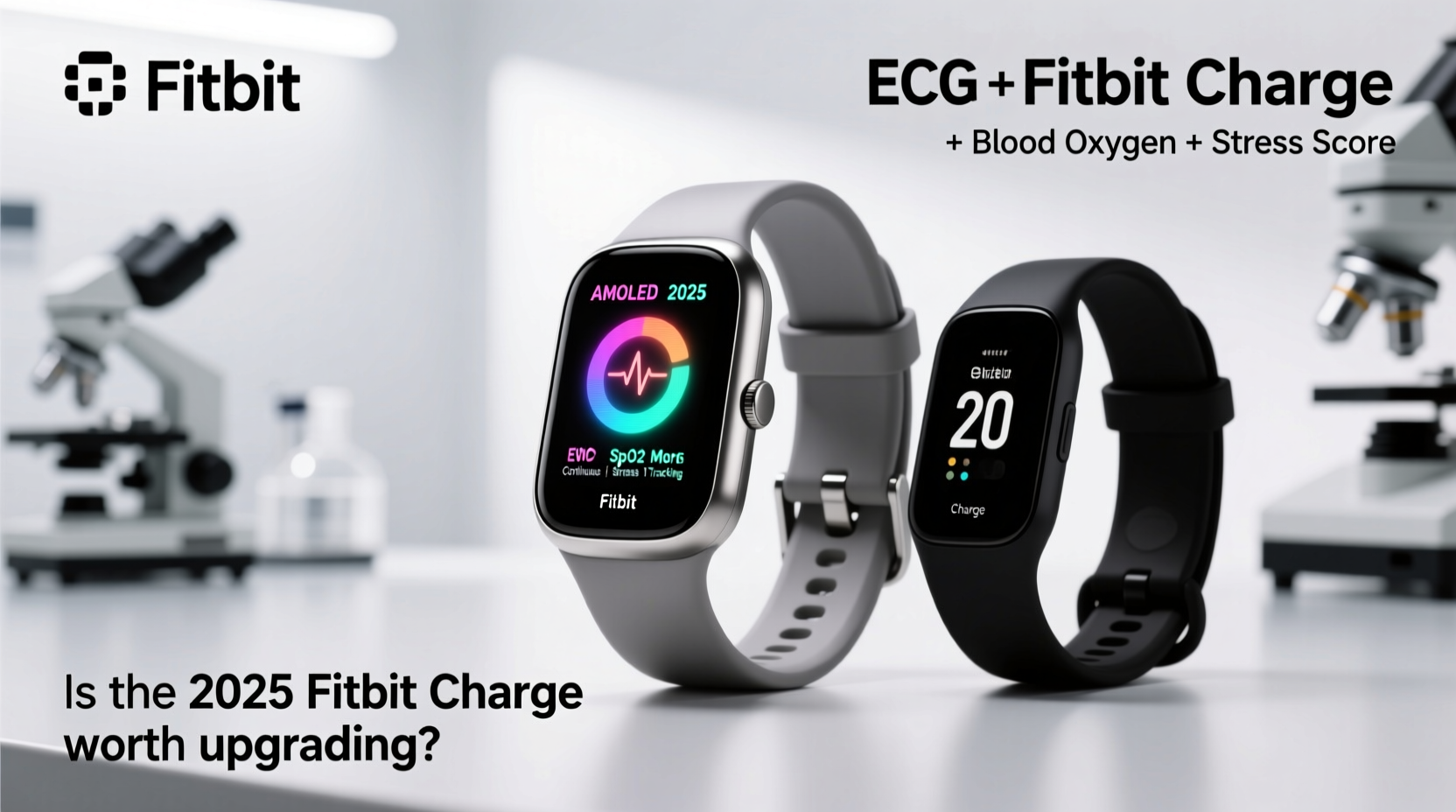
The most recent iteration of the Fitbit Charge introduces several notable enhancements over previous versions. While Fitbit has maintained the sleek, minimalist band design users appreciate, internal upgrades are where the device shines.
- Advanced Heart Rate Monitoring: The 2025 model features second-generation EDA (Electrodermal Activity) sensors and continuous heart rate tracking with improved accuracy during high-intensity workouts.
- Better Sleep Staging: Leveraging updated algorithms and multi-night trend analysis, sleep stages (light, deep, REM) are now reported with greater precision, especially for users with irregular sleep patterns.
- Longer Battery Life: Up to 7 days on a single charge—two days more than the Charge 5 under typical usage—thanks to power-efficient components and adaptive brightness controls.
- On-Wrist GPS Refinements: Faster satellite acquisition and improved path mapping in dense urban areas or wooded trails reduce inaccuracies common in earlier models.
- Enhanced Stress Management Tools: Real-time stress alerts based on HRV (Heart Rate Variability), skin temperature, and activity levels offer proactive wellness nudges.
One often-overlooked improvement is the firmware update cadence. Fitbit now pushes bi-weekly micro-updates that refine sensor behavior without requiring full resets—a shift from the infrequent major updates of past years. This means ongoing performance tuning rather than waiting months for fixes.
Comparison: 2025 Fitbit Charge vs. Older Models
To determine upgrade value, let’s compare core specs across three generations: the Charge 4 (2020), Charge 5 (2021), and the 2025 Charge model.
| Feature | Fitbit Charge 4 | Fitbit Charge 5 | Fitbit Charge 2025 |
|---|---|---|---|
| Battery Life | Up to 7 days | Up to 5 days | Up to 7 days |
| GPS | Connected GPS only | On-wrist GPS | On-wrist GPS + GLONASS/Galileo support |
| Heart Rate Accuracy | Moderate (drifts during HIIT) | Improved but inconsistent at rest | High (validated against chest straps) |
| Sleep Tracking | Basic stages, no consistency scoring | Detailed stages + Sleep Score | Stages + Sleep Score + Nightly Insights report |
| Stress & Readiness | None | EDA scans, basic readiness estimate | Continuous HRV monitoring, Daily Readiness Score |
| Water Resistance | 50m (swim-proof) | 50m | 50m (with improved post-swim drying detection) |
| Price (Launch) | $149 | $179 | $189 |
The table reveals that while the Charge 5 introduced critical features like onboard GPS and EDA scanning, the 2025 model refines them into more reliable, actionable tools. For instance, GPS lock time has dropped from ~45 seconds on the Charge 5 to under 15 seconds in open sky conditions on the new model.
“Wearables aren’t just about data collection—they’re about delivering insight. The latest Charge closes the gap between raw metrics and practical health guidance.” — Dr. Lena Torres, Digital Health Researcher at Stanford Medicine
When an Upgrade Makes Sense
Not every user needs the latest hardware. However, certain profiles benefit significantly from upgrading:
- Athletes training for endurance events: Accurate GPS and heart rate response curves help fine-tune pacing strategies.
- People managing anxiety or insomnia: Continuous stress tracking combined with guided breathing prompts can support behavioral interventions.
- Users with inconsistent sleep hygiene: The 2025 model’s Nightly Insights use AI to identify patterns—like late caffeine intake or screen exposure—that correlate with poor recovery.
- Frequent travelers: Dual-band GPS ensures better location tracking across global regions, particularly helpful when hiking abroad.
If your current device still functions well but lacks advanced readiness scoring or shows erratic heart rate readings during exercise, the upgrade delivers measurable gains. Conversely, if you primarily track steps and sleep duration without engaging deeper analytics, the benefits may not justify the cost.
Real-World Example: A Runner’s Experience
Consider Sarah, a recreational runner using a Charge 4 since 2021. She noticed discrepancies between her watch-reported pace and race times. After upgrading to the 2025 model, she found her outdoor run data aligned much more closely with official course markers. More importantly, the Daily Readiness Score began flagging low-recovery days before she felt fatigued, prompting her to adjust training intensity. Over six weeks, her injury-free running streak improved by 40%.
This case illustrates how incremental sensor and algorithm improvements translate into real-world outcomes—not just better numbers, but smarter decisions.
Step-by-Step: Should You Upgrade?
Before purchasing, follow this evaluation process:
- Assess Your Current Device’s Condition: Is the battery holding less than 50% of original capacity? Are sync issues frequent? Physical wear can be a stronger reason to replace than feature gaps.
- Review Your Usage Patterns: Open the Fitbit app and check your last 30 days. Did you view sleep scores, active minutes, or heart rate zones regularly? If most features go unused, ask whether new ones will change that.
- Identify Missing Capabilities: List one or two specific limitations of your current tracker. For example: “I want standalone GPS for trail runs” or “I need better nighttime HRV tracking.”
- Compare Cost vs. Benefit: At $189, the 2025 model costs 27% more than the original Charge 4 MSRP. Determine whether the targeted improvements solve actual problems in your routine.
- Wait for Sales Cycles: Fitbit typically discounts older models when new ones launch. The Charge 5 dropped to $129 within three months of the 2025 release. Consider timing your purchase strategically.
Common Misconceptions About Upgrading
Many assume newer always means better. But context matters. Here are myths debunked:
- Myth: All new features are essential. Reality: Tools like ECG and skin temperature sensing, while impressive, have limited utility for healthy individuals without medical supervision.
- Myth: Battery life keeps improving linearly. Reality: The 2025 model matches the Charge 4 despite added sensors, thanks to efficiency gains—not larger batteries.
- Myth: Syncing issues are resolved in new models. Reality: Bluetooth instability persists occasionally, especially on Android devices with aggressive power-saving settings.
The truth is, the biggest leap was from Charge 4 to Charge 5. The 2025 version represents evolution, not revolution. That doesn’t diminish its value—but sets realistic expectations.
Checklist: Upgrade Decision Framework
Use this checklist to make a confident choice:
- ☐ My current Fitbit battery lasts less than 3 days consistently.
- ☐ I frequently engage with advanced metrics (HRV, sleep stages, readiness).
- ☐ I train outdoors without a phone and need reliable GPS.
- ☐ I’ve experienced inaccurate heart rate readings affecting workout feedback.
- ☐ I’m willing to pay $150+ for incremental but consistent improvements.
- ☐ I trust Fitbit’s ecosystem and don’t plan to switch platforms soon.
If four or more apply, upgrading is likely worthwhile. If fewer, consider extending your current device’s life with a new band or waiting for a potential Charge 6.
Frequently Asked Questions
Will my old bands fit the 2025 Fitbit Charge?
Yes. Fitbit has retained the same band attachment system since the Charge 3. All standard 20mm quick-release bands remain compatible, including premium leather or sport loops.
Does the 2025 model work with iPhones and Android equally well?
Generally yes, though iOS users report slightly faster notifications and smoother app integration. Android users should disable battery optimization for the Fitbit app to maintain stable syncing.
Can I rely on the stress score for mental health tracking?
The stress score is best used as a trend indicator, not a diagnostic tool. It reflects physiological strain (via HRV and movement) but cannot capture emotional or cognitive stressors alone. Pair it with journaling for fuller context.
Final Verdict: Who Should Upgrade in 2025?
The latest Fitbit Charge is not a must-have for everyone. But for users who actively leverage health data to inform lifestyle choices, it offers meaningful refinements. Improved sensor stability, smarter sleep insights, and enhanced GPS reliability address real pain points from earlier models.
If your current device meets basic needs and you rarely explore beyond step count and sleep duration, hold off. However, if you're seeking more accurate, consistent, and insightful tracking—especially around recovery, training load, or circadian rhythms—the 2025 model delivers enough advancement to warrant the investment.
Technology serves us best when it fades into the background while quietly empowering better decisions. The newest Fitbit Charge comes closer to that ideal than any predecessor.




 浙公网安备
33010002000092号
浙公网安备
33010002000092号 浙B2-20120091-4
Comments
No comments yet. Why don't you start the discussion?