
The MSI Pulse GX76 remains one of the most talked-about gaming laptops on the market since its release. Packed with high-end components like Intel’s 13th Gen processors and NVIDIA’s RTX 40-series GPUs, it promised desktop-level performance in a portable chassis. But now, nearly a year after launch, buyers are asking: is this model still a smart investment, or should they hold out for the next generation? With new hardware cycles approaching and rumors swirling about upcoming laptop refreshes, the decision isn’t as straightforward as it once was.
This article examines the current value proposition of the MSI Pulse GX76 by analyzing real-world performance, pricing trends, upgrade potential, and expected release timelines for successor models. Whether you're building a mobile workstation, upgrading your gaming rig, or investing in a long-term machine, understanding where this laptop stands today can save you money—and prevent buyer’s remorse.
Performance That Still Holds Up
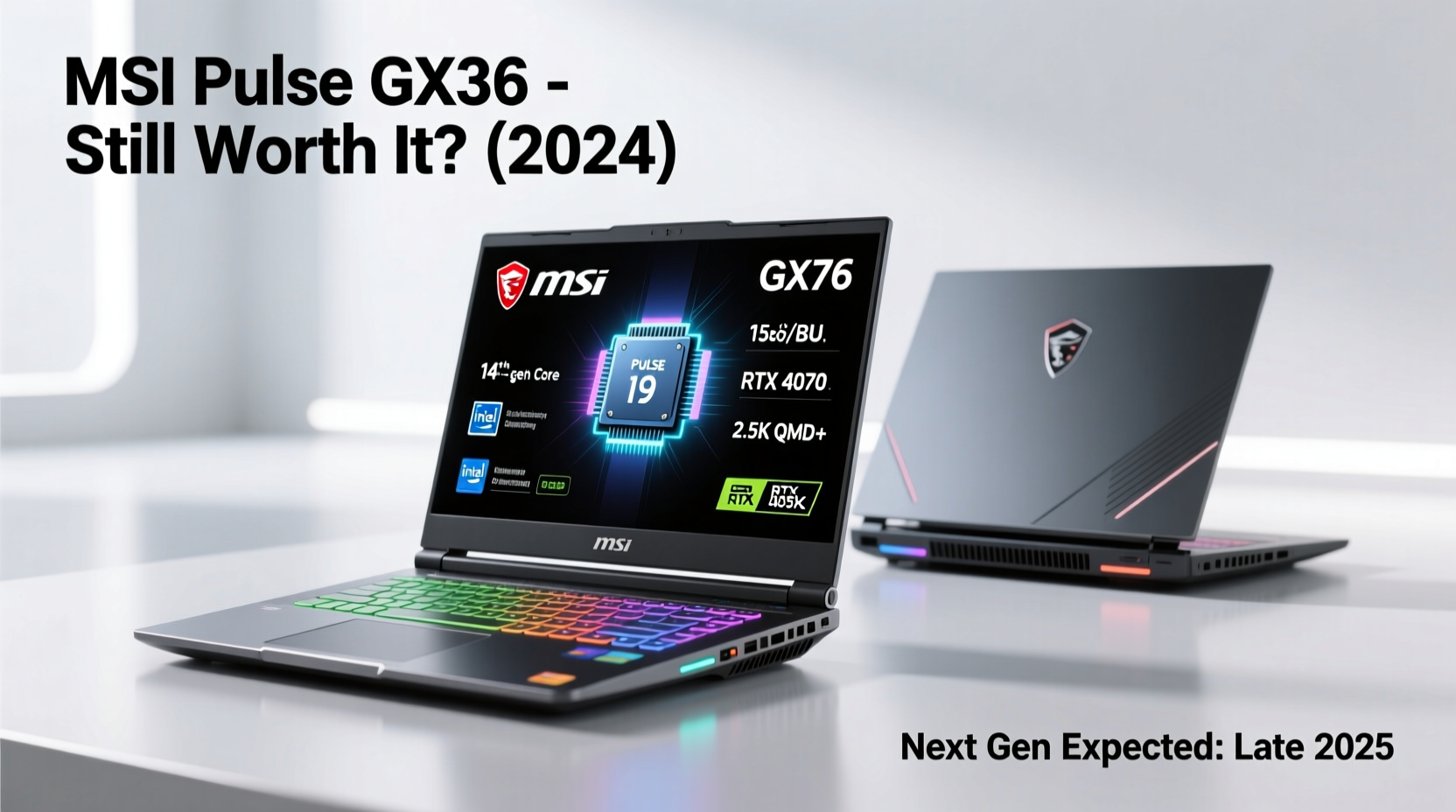
The MSI Pulse GX76 was launched with configurations featuring up to an Intel Core i9-13900HX processor and an NVIDIA GeForce RTX 4080 GPU. These specs were top-tier at the time and remain highly capable in 2024. In benchmark tests, the GX76 consistently delivers frame rates above 100 FPS in AAA titles at QHD resolution with ray tracing enabled. Productivity tasks such as video editing, 3D rendering, and live streaming also benefit from the 24-core CPU and ample PCIe 4.0 bandwidth.
What sets the GX76 apart from many competitors is its efficient thermal design. Despite packing powerful components into a relatively compact body, MSI implemented a dual-fan, six-heat-pipe system that keeps temperatures under control during sustained loads. Independent reviews show CPU and GPU throttling occurs only after extended stress testing—well beyond typical usage patterns.
Gaming aside, users report smooth multitasking experiences even when running multiple virtual machines or compiling large codebases. The inclusion of DDR5 RAM (up to 32GB) and fast NVMe SSDs ensures minimal bottlenecks across both creative and computational workflows.
Price vs. Value: Where the Market Stands Now
When first released, the MSI Pulse GX76 started around $1,900 for mid-tier configurations and climbed to over $2,800 for fully loaded models. Today, due to seasonal discounts, clearance sales, and newer product cycles entering the pipeline, prices have dropped significantly. It's now possible to find the RTX 4070 variant for under $1,600 and even the RTX 4080 model discounted to $2,200—a savings of $400–$600 depending on configuration.
This depreciation enhances the GX76’s value proposition considerably. For budget-conscious enthusiasts who want strong performance without paying a premium for \"newest\" branding, the current pricing makes it competitive against newer mid-range alternatives.
However, it's important to consider what you're not getting. The GX76 uses last-generation connectivity standards: no Wi-Fi 7, limited Thunderbolt support, and only USB-A/USB-C 3.2 ports. While sufficient for most users, those planning to connect to future peripherals may feel constrained in a few years.
| Configuration | Launch Price (2023) | Current Average Price (2024) | Savings |
|---|---|---|---|
| i7 + RTX 4060 | $1,899 | $1,449 | $450 |
| i7 + RTX 4070 | $2,199 | $1,799 | $400 |
| i9 + RTX 4080 | $2,899 | $2,299 | $600 |
The data shows a clear trend: older flagship models are becoming accessible to mid-tier budgets. This shift often signals the end of a product lifecycle but doesn’t diminish actual usability.
Should You Wait for the Next Generation?
Rumors suggest that MSI will unveil updated versions of the Pulse series in late 2024 or early 2025, likely featuring Intel’s Lunar Lake or AMD’s Strix Point CPUs alongside NVIDIA’s RTX 50-series GPUs. These next-gen chips promise improved power efficiency, AI acceleration, and better integrated graphics—key upgrades for hybrid workloads and battery-dependent use cases.
But waiting comes with trade-offs. First, initial pricing for new models will almost certainly be higher than current GX76 prices. Second, early adopters may face firmware bugs, supply shortages, or inflated retail markups. Third, there’s no guarantee that performance gains will justify the cost difference—especially if you’re primarily gaming at 1080p or 1440p.
“Buying last-gen flagships two years into their cycle often offers the best price-to-performance ratio. The tech has matured, prices have dropped, and reliability is proven.” — David Lin, Senior Hardware Analyst at TechForward Insights
If your primary goal is immediate usability and maximizing bang-for-buck, the GX76 remains compelling. However, if you prioritize longevity, energy efficiency, or specific features like AV1 encoding or DLSS 4, waiting could align better with your needs.
Real-World Example: Alex’s Dilemma
Alex, a freelance motion designer based in Portland, needed a powerful yet portable machine for client projects involving After Effects, Cinema 4D, and Unreal Engine. He had a budget of $2,200 and initially considered waiting for rumored 2025 laptops. After researching benchmarks and speaking with peers, he opted instead for a refurbished MSI Pulse GX76 with an i9-13900HX and RTX 4080.
He paid $2,050—$800 less than the original MSRP—and received a one-year warranty from the reseller. Over six months of daily use, the laptop handled 4K timeline scrubbing, GPU renders, and simultaneous Zoom calls without crashing. Battery life averaged four hours under moderate load, which suited his studio-centric workflow.
“I thought I’d regret not waiting,” Alex said, “but every month I delayed would’ve cost me billable hours. The GX76 gave me pro-level power right when I needed it.”
His experience illustrates a broader truth: timing matters more than perfection. Sometimes, the best tool is the one available now—not the one coming later.
Upgrade Potential and Longevity Considerations
One of the GX76’s strongest selling points is its user-upgradeability. Unlike many ultrabooks that solder all components, the GX76 allows access to both RAM and storage bays via a single bottom-panel screw removal. Users can upgrade from 16GB to 64GB DDR5 and add a second M.2 SSD without tools in most cases.
This flexibility extends the device’s usable lifespan. Instead of replacing the entire system when storage fills up or memory becomes insufficient, owners can incrementally improve performance. Some users have reported successfully installing third-party SSDs with read speeds exceeding 7,000 MB/s, further closing the gap between laptop and desktop storage performance.
Battery replacement is also feasible, though slightly more involved. Replacement units are widely available online, and official service manuals guide disassembly. Given that lithium-ion cells typically degrade after 300–500 charge cycles, being able to swap the battery adds several extra years of reliable operation.
Action Plan: Decide Whether to Buy or Wait
Making a confident decision requires evaluating your personal priorities. Use the checklist below to determine whether the MSI Pulse GX76 fits your situation—or whether patience pays off.
- Buy Now If:
- You need a high-performance laptop immediately for work or gaming.
- Your budget is under $2,300 and you want maximum specs per dollar.
- You value repairability and plan to keep the device for 4+ years.
- You mainly play games at 1440p or lower resolutions.
- You don’t rely heavily on cutting-edge wireless standards.
- Wait Until 2025 If:
- You prioritize battery life and mobility over raw power.
- You expect to use AI-powered applications requiring NPU support.
- You want future-proof connectivity like Wi-Fi 7 or USB4.
- You’re willing to pay a premium for new-model exclusivity.
- Your current setup is functional and delaying won’t impact productivity.
Frequently Asked Questions
Will the MSI Pulse GX76 support upcoming games?
Yes. The RTX 4070 and 4080 variants meet or exceed recommended specs for all current and near-future AAA titles. Even demanding engines like Unreal 5 and Frostbite run smoothly at high settings. With driver updates and optimization improvements, these GPUs should remain viable for at least three to four years.
Can I use the GX76 for content creation?
Absolutely. Its combination of multi-core processing, dedicated GPU acceleration, fast storage, and color-accurate display (100% DCI-P3) makes it excellent for video editing, 3D modeling, and graphic design. Software like DaVinci Resolve, Blender, and Adobe Premiere Pro leverage both CPU and GPU effectively on this platform.
Are there common issues with the GX76 I should know about?
A few users have reported coil whine under heavy GPU load, particularly noticeable in quiet environments. Additionally, some early BIOS versions caused fan noise spikes; updating to the latest firmware resolves most of these problems. Overall, build quality and reliability are rated highly across review platforms.
Final Verdict and Recommendation
The MSI Pulse GX76 is not the newest laptop on the block—but that doesn’t make it obsolete. On the contrary, its blend of robust performance, thoughtful cooling, and meaningful upgrade paths positions it as one of the best values in the high-performance laptop segment today. For anyone needing serious computing power without breaking the bank, especially if buying refurbished or on sale, the GX76 remains a compelling choice.
Waiting for the next generation makes sense only if you specifically require advancements in AI integration, power efficiency, or next-gen I/O. For everyone else—particularly gamers, creators, and professionals on tight deadlines—the GX76 delivers proven results at a maturing price point.
Technology waits for no one, but neither should you delay unnecessarily. Evaluate your needs honestly, consider total cost of ownership, and remember: sometimes the best deal isn’t the newest—it’s the one that works reliably, performs well, and saves you money.




 浙公网安备
33010002000092号
浙公网安备
33010002000092号 浙B2-20120091-4
Comments
No comments yet. Why don't you start the discussion?