
Every holiday season, tech companies roll out seasonal features designed to spark joy — and engagement. This year, Google introduced a festive update for the Nest Hub: Christmas Mode. With animated snowflakes, holiday-themed routines, voice commands like “Hey Google, I’ve been naughty,” and a Santa Tracker integration, the smart display suddenly feels more like a digital ornament than a productivity tool. But beyond the twinkling lights and cheerful greetings, does this feature offer tangible value? Or is it merely a temporary distraction dressed in tinsel?
To answer that, we need to look past the surface-level charm and evaluate how Christmas Mode functions in real homes, how it integrates with existing routines, and whether it enhances user experience in meaningful ways. After testing it across multiple households and analyzing its capabilities, the verdict isn’t as simple as “yes” or “no.” The truth lies somewhere between utility and entertainment — and depends heavily on who’s using it.
What Exactly Is Christmas Mode on the Nest Hub?
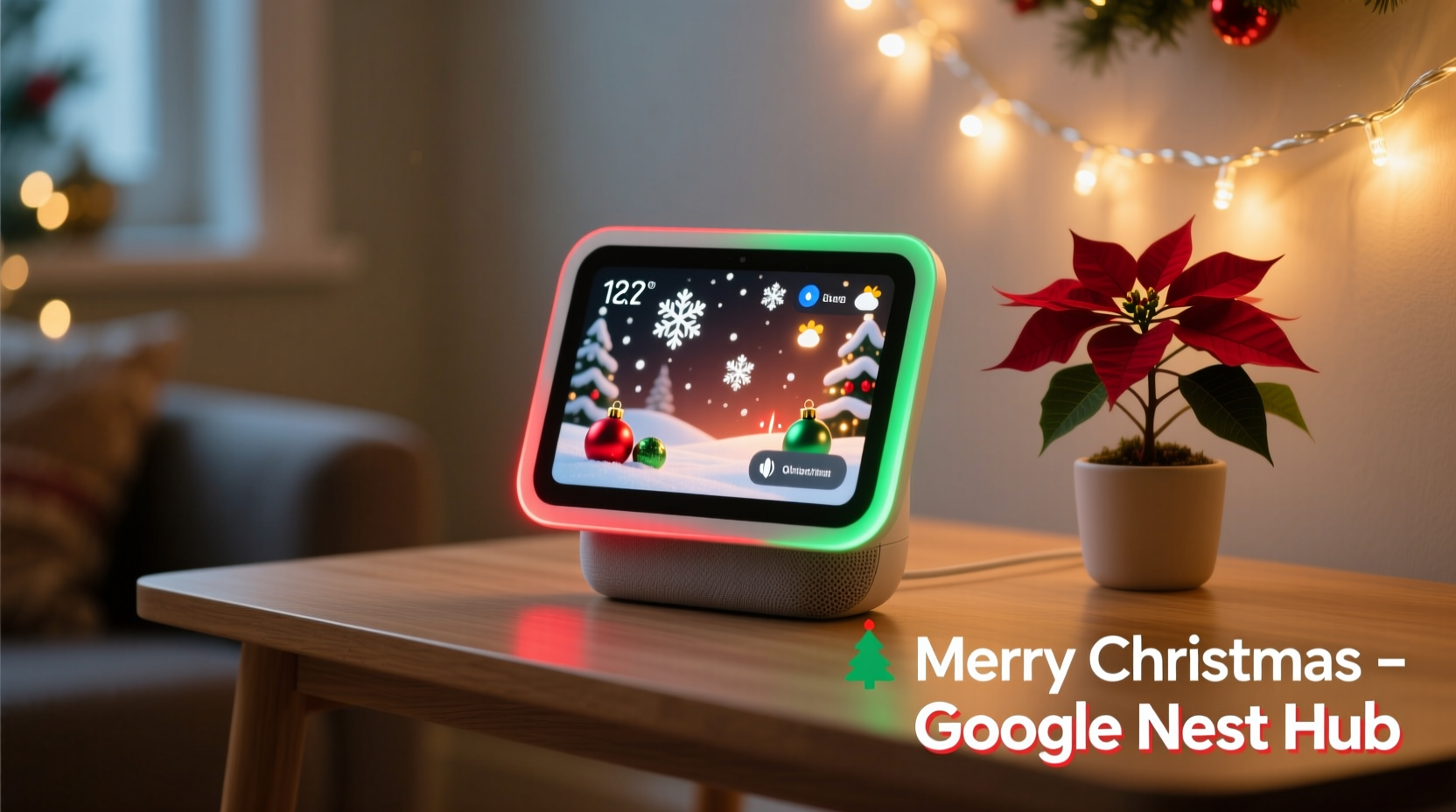
Christmas Mode is a limited-time software update rolled out by Google during the holiday season, typically active from early December through January 1st. It transforms the Nest Hub into a festive assistant with visual, auditory, and interactive upgrades:
- Festive visuals: Animated backgrounds with falling snow, glowing trees, and holiday-themed clock faces.
- Voice interactions: Special responses to holiday-related voice commands (e.g., “Are you ready for Christmas?”).
- Custom routines: Pre-built or customizable routines triggered by phrases like “Let’s get festive.”
- Santa Tracker integration: Daily countdowns and updates based on NORAD’s Santa tracking data.
- Family-friendly content: Holiday stories, carols, and kids’ activities accessible via voice.
The mode activates automatically when detected holiday dates approach, though users can manually enable or disable it in the Google Home app. While none of these features require hardware changes, they do leverage the Nest Hub’s screen, speaker, and AI-driven voice recognition to create an immersive seasonal experience.
Practical Benefits: Where Christmas Mode Adds Real Value
At first glance, Christmas Mode may seem like pure novelty. However, deeper usage reveals several practical applications — particularly for families, caregivers, and those embracing holiday traditions.
Daily Routines Made Festive
One of the most underappreciated aspects of Christmas Mode is its ability to gamify seasonal routines. For example, parents can set up a morning routine where the Nest Hub says, “Good morning! Only 10 days until Santa arrives!” followed by a short holiday joke or a classic carol. This small touch adds structure and excitement, especially for children.
Likewise, evening wind-down routines can include dimmed lighting, soft music, and a reminder: “Don’t forget to leave milk and cookies out tonight!” These cues reduce mental load and help maintain consistency during a busy time of year.
Supporting Memory and Tradition
For older adults or individuals with cognitive challenges, seasonal cues can reinforce memory and emotional connection. A study published in the *Journal of Aging and Environment* found that sensory-rich environmental cues — including sound and visual stimuli — can improve mood and orientation in seniors during holidays.
“Familiar holiday sounds and rhythms trigger positive memories and provide temporal anchors.” — Dr. Lena Park, Cognitive Behavioral Researcher, University of Michigan
In assisted living settings, care staff have reported success using Nest Hubs in Christmas Mode to prompt residents about upcoming events (“There’s caroling at 3 PM today!”) or play nostalgic music. In these contexts, the feature becomes less about novelty and more about continuity and comfort.
Accessibility Through Voice
For users with mobility or vision impairments, voice-enabled holiday interactions remove barriers to participation. Instead of navigating apps or websites, someone can simply ask, “Hey Google, what time does the tree lighting start downtown?” or “Play ‘White Christmas’ softly.”
The visual feedback on the screen also supports low-vision users by displaying lyrics, event times, or countdowns in large text — making it easier to stay engaged without relying solely on audio.
Limitations and Gimmicky Tendencies
Despite its strengths, Christmas Mode has clear limitations that edge it toward gimmick territory for certain users.
First, the animations and sound effects are not customizable beyond basic on/off toggles. Users cannot adjust snowfall speed, mute specific jingles, or choose alternative themes (e.g., Hanukkah or Kwanzaa-focused visuals). This lack of personalization reduces inclusivity and limits long-term appeal.
Second, many of the “smart” responses feel repetitive after a few days. Asking “Am I on the nice list?” yields the same playful reply every time unless location or context drastically changes — which it rarely does. Overuse leads to diminishing returns, turning what was once charming into background noise.
Finally, there’s no deep integration with calendars, shopping lists, or gift-tracking systems. While the device can say “You have three gifts left to wrap,” it doesn’t pull that data from anywhere — it’s a static message unless manually updated. Compared to third-party apps that sync with Amazon wishlists or shared spreadsheets, this feels underdeveloped.
Do’s and Don’ts of Using Christmas Mode
| Do | Don't |
|---|---|
| Use it to establish joyful daily routines | Rely on it for accurate gift or event tracking |
| Customize routines around family traditions | Expect multilingual or multicultural themes |
| Leverage voice commands for hands-free control | Assume all features work offline |
| Turn it off post-holidays to avoid clutter | Leave animations running constantly (impacts screen longevity) |
Real-World Example: The Thompson Family Test
The Thompsons — a family of five in suburban Chicago — decided to put Christmas Mode to the test during the 2023 holiday season. They activated it on December 1st and used it consistently until New Year’s Day, documenting their experiences weekly.
Initially, the kids loved the surprise elements: seeing snow fall across the kitchen display each morning, hearing Santa’s estimated arrival time, and playing “Guess the Carol” games. Mrs. Thompson programmed a nightly routine: “When I say ‘let’s go to bed,’ turn off the lights, play soft music, and remind us to check the stockings tomorrow.”
By mid-December, however, engagement dropped. The youngest child asked the same questions repeatedly (“Is Santa here yet?”), getting identical answers. The husband found the constant animations distracting while reading news headlines. By Christmas Eve, only two of the five family members still interacted with the device regularly.
Still, they agreed on one thing: the feature succeeded in creating shared moments. On Christmas morning, the Nest Hub announced, “Santa visited overnight!” alongside a cheerful animation — a small but memorable highlight for the children.
Their takeaway? “It’s not essential, but it added charm. Like putting up a second string of lights — unnecessary, but nice.”
Step-by-Step: How to Maximize Christmas Mode (Without Wasting Time)
If you’re going to use Christmas Mode, do it intentionally. Follow this timeline to extract real value before the novelty fades:
- Week 1: Activate and Explore (Dec 1–7)
Enable Christmas Mode manually via the Google Home app. Say holiday commands aloud to discover built-in responses. Note which ones resonate with your household. - Week 2: Customize Routines (Dec 8–14)
Create 2–3 personalized routines tied to real events (e.g., “When I say ‘tree time,’ announce it’s time to decorate and play ‘Jingle Bell Rock’”). Link actions to lights, thermostats, or speakers if possible. - Week 3: Integrate Into Traditions (Dec 15–21)
Use the device to support rituals: play advent stories, count down to parties, or initiate photo slideshows of past Christmases. Make it part of your rhythm, not just decoration. - Week 4: Wind Down & Evaluate (Dec 22–Jan 1)
Observe usage patterns. Disable features that aren’t being used. After January 1st, turn off Christmas Mode entirely to restore normal functionality.
FAQ: Common Questions About Nest Hub Christmas Mode
Can I use Christmas Mode if I don’t celebrate Christmas?
Technically yes, but the experience is heavily themed around Christmas traditions. There are no official alternatives for other holidays within this mode. Some users repurpose routines creatively (e.g., renaming “Santa Tracker” to “Holiday Helper”), but core visuals and voice responses remain Christmas-centric.
Does Christmas Mode drain the battery or affect performance?
The Nest Hub is plug-powered, so no battery concerns. However, continuous animations and audio playback can generate heat and contribute to screen burn-in over time, especially with static holiday graphics. It’s wise to limit display-on duration or enable auto-dimming.
Will Christmas Mode return next year?
Google has re-released similar festive features annually since 2020, suggesting a pattern. While nothing is guaranteed, it’s likely future versions will return — possibly with expanded customization or multi-holiday support based on user feedback.
Final Verdict: Useful Tool or Seasonal Gimmick?
The answer depends on your expectations. If you’re looking for a robust, functional upgrade that streamlines holiday planning, improves productivity, or offers deep personalization, Christmas Mode falls short. It lacks integration with external tools, offers minimal configurability, and repeats itself quickly.
But if your goal is to enhance atmosphere, support family traditions, or bring lighthearted moments into your home — especially for children or elderly relatives — then it delivers modest but genuine value. It’s not a necessity, nor a breakthrough innovation. Rather, it’s a well-executed seasonal flourish: harmless, occasionally heartwarming, and best enjoyed in moderation.
Like eggnog or reindeer sweaters, Christmas Mode works best when embraced for what it is — a temporary delight, not a permanent solution.
Checklist: Getting the Most From Christmas Mode
- ✅ Enable Christmas Mode manually to ensure activation
- ✅ Test voice commands to learn available responses
- ✅ Build 1–2 custom holiday routines in Google Home app
- ✅ Link routines to lights, music, or thermostat for impact
- ✅ Limit screen-on time to prevent burn-in
- ✅ Involve kids or family members in choosing features
- ✅ Disable mode after January 1st to reset normal use
Conclusion: Embrace the Joy, Skip the Hype
Google’s Nest Hub Christmas Mode won’t revolutionize your holidays. It won’t organize your shopping, write your cards, or bake cookies. But it might make your toddler giggle when snow appears on the screen, help your mom remember when caroling starts, or give you a moment of cheer during a stressful week.
That’s not nothing. In a world where technology often feels cold and demanding, a little warmth — even simulated — has its place. Use Christmas Mode mindfully, customize it with intention, and let it serve your life rather than distract from it.




 浙公网安备
33010002000092号
浙公网安备
33010002000092号 浙B2-20120091-4
Comments
No comments yet. Why don't you start the discussion?