
In 2025, flagship smartphones from 2018 may seem like relics in an industry driven by rapid innovation. Yet, devices like the OnePlus 6T and Samsung Galaxy S10e continue to surface in secondhand markets, refurbished listings, and budget-conscious buyer discussions. Both phones were once top-tier contenders—sleek, powerful, and packed with features. But nearly seven years after their release, how do they stack up against each other now? More importantly, is the OnePlus 6T still a better value than the S10e when considering longevity, software support, and daily usability?
The answer isn’t straightforward. While both devices have aged, their legacy, ecosystem integration, and hardware resilience differ significantly. This deep dive examines real-world performance, user experience, and practical considerations for anyone weighing these two models as affordable options in 2025.
Performance and Hardware: A Tale of Two Flagships
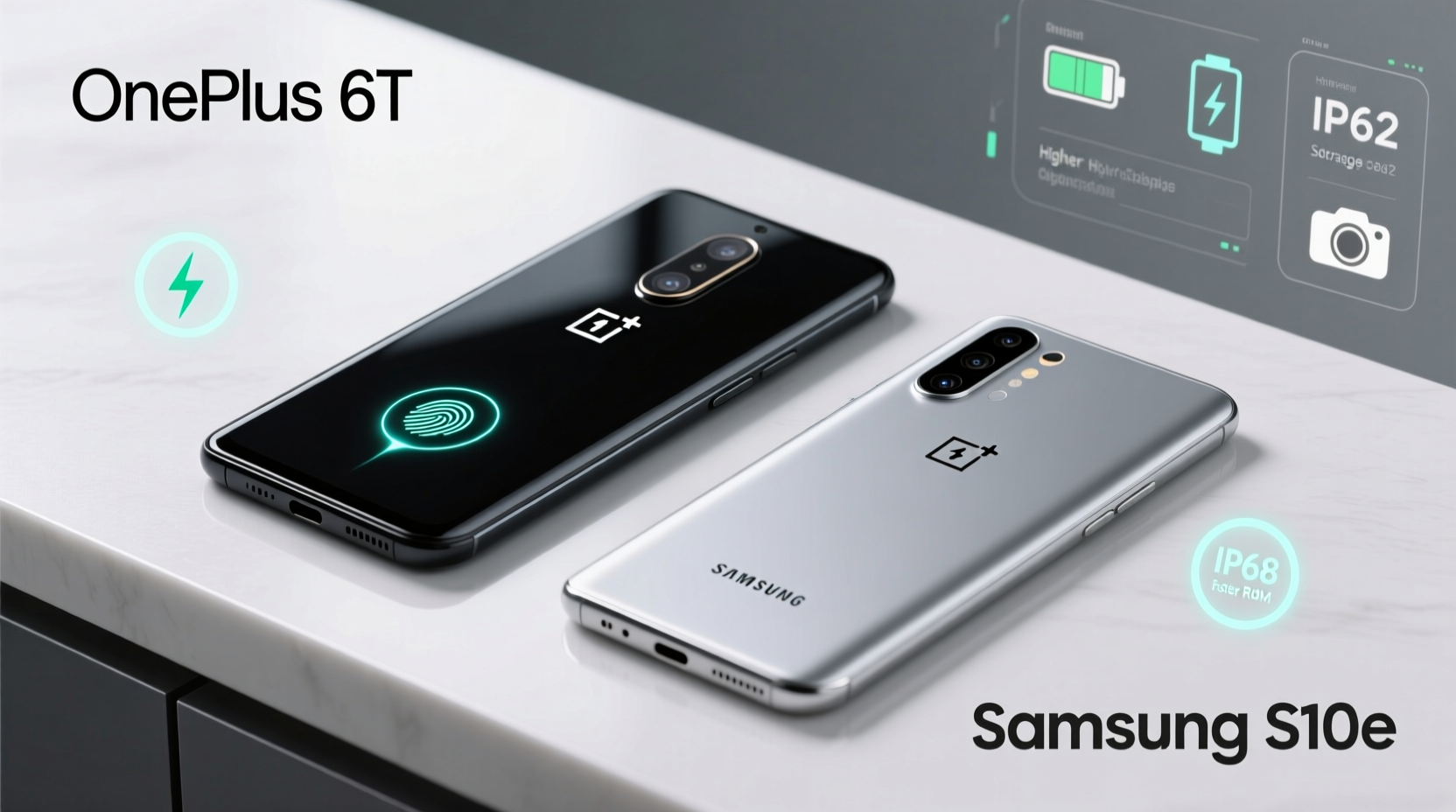
At launch, both phones featured Qualcomm’s Snapdragon 845 chipset—a powerhouse in its time. The OnePlus 6T paired it with up to 8GB of RAM and UFS 2.1 storage, while the S10e offered similar specs but capped at 6GB of RAM in most regions. On paper, the 6T had a slight edge in multitasking and sustained performance.
In 2025, neither device handles modern apps with the fluidity expected from current mid-range phones. However, the 6T often feels snappier in day-to-day tasks due to OxygenOS’s lightweight design. Samsung’s One UI, while feature-rich, has grown heavier over the years, making the S10e feel sluggish when navigating dense menus or running background processes.
Thermal throttling is common on both devices during extended use. Gaming, video editing, or even prolonged camera use can cause noticeable slowdowns. The lack of modern optimizations means apps like Instagram, TikTok, or Google Maps load slower and occasionally crash.
Software Support and Security: The Critical Divide
This is where the OnePlus 6T falls behind decisively. OnePlus ended official Android updates for the 6T with Android 11, and security patches ceased in 2022. While custom ROMs like LineageOS extend its life, they require technical know-how and void any remaining warranty or trust in app compatibility.
In contrast, the Samsung S10e received four major Android upgrades (up to Android 13) and five years of security updates—Samsung’s longest commitment at the time. Though no longer receiving official patches in 2025, its final firmware was more modern and secure than the 6T’s last build.
“Security isn’t just about new features—it’s about patching vulnerabilities. A phone without updates becomes a liability.” — Marcus Lin, Mobile Security Analyst at TechShield Labs
For users concerned about data privacy or using banking and communication apps, the S10e’s later update cutoff provides a safer baseline. Even if both phones are technically unsupported now, the S10e ran newer software for longer, which translates to better app compatibility today.
Display and Design: Compact vs. Full-Screen Experience
The S10e stands out with its 5.8-inch Dynamic AMOLED display, HDR10+ support, and vibrant color accuracy. Even in 2025, watching videos or reading text on this screen remains a pleasure. Its flat display also makes screen protector application easier than on curved models.
The OnePlus 6T, meanwhile, uses an Optic AMOLED panel at 6.4 inches with a teardrop notch and slim bezels for its era. While larger, the display lacks HDR support and automatic brightness tuning has degraded on many aging units. Fingerprint sensor issues under the screen are also increasingly common due to wear.
| Feature | OnePlus 6T | Samsung S10e |
|---|---|---|
| Display Size | 6.4” Full HD+ | 5.8” Full HD+ |
| Panel Type | Optic AMOLED | Dynamic AMOLED |
| HDR Support | No | Yes (HDR10+) |
| Fingerprint Sensor | In-display (optical) | Ultrasonic (under display) |
| Battery Capacity | 3700 mAh | 3100 mAh |
| Charging Speed | 30W (Dash Charge) | 15W (Adaptive Fast Charging) |
The S10e’s ultrasonic fingerprint sensor, though not perfect, is more reliable in wet conditions than the 6T’s optical sensor, which struggles with screen protectors and ambient light. However, the 6T’s faster charging remains a practical advantage—going from 0 to 70% in 30 minutes versus the S10e’s 50% in the same window.
Battery Life and Long-Term Usability
Battery degradation is inevitable after six years. Most replacement batteries for these models are third-party and vary in quality. That said, the OnePlus 6T’s 3700 mAh battery typically lasts a full day with light use in 2025, especially when calibrated and paired with dark mode and reduced refresh rate tricks.
The S10e’s smaller 3100 mAh battery, combined with a heavier OS, often requires midday charging. Users report shorter standby times due to background processes in older versions of One UI. However, Samsung’s adaptive battery management historically extended lifespan better than OnePlus’s approach.
Mini Case Study: Alex’s Secondhand Experiment
Alex, a college student in Portland, bought a refurbished OnePlus 6T for $80 in early 2024 to use as a backup phone. After three months, he replaced the battery and installed LineageOS 20 (Android 13). The phone performed adequately for messaging, music, and offline navigation. However, he encountered issues with WhatsApp verification and Google Pay compatibility. After switching to an unlocked S10e ($95, with original battery at 82% health), he found banking apps worked flawlessly, GPS was more accurate, and the camera performed better in low light. “The Samsung just felt more trustworthy,” he said. “Like it wasn’t going to fail me during an important call.”
Checklist: Is This Phone Right for You in 2025?
Before purchasing either device, consider the following:
- ✅ Do you need reliable access to banking, healthcare, or work-related apps? → Choose S10e
- ✅ Are you comfortable installing custom ROMs or troubleshooting boot loops? → 6T possible
- ✅ Will this be your primary phone? → Neither is ideal, but S10e edges ahead
- ✅ Do you value fast charging and clean software? → 6T wins on speed and simplicity
- ✅ Is camera quality important in varied lighting? → S10e’s dual-pixel front cam and better processing win
- ✅ Are you buying new or refurbished? → Avoid used units with swollen batteries or cracked screens
FAQ
Can the OnePlus 6T run Android 13 safely?
Yes, via custom ROMs like LineageOS, but without Google Play Services certification, some apps may malfunction or refuse to run. Security updates depend on the ROM maintainer, so risk remains.
Why does the S10e hold value better than the 6T?
Samsung’s longer software support, stronger brand presence in enterprise and carrier channels, and superior display technology contribute to higher residual value and user trust.
Are either of these phones suitable for kids or elderly users?
Possibly, with limitations. The S10e’s simpler interface (with Samsung’s Easy Mode) and better app compatibility make it more suitable. Both lack modern safety features like SOS satellite or advanced fall detection.
Final Verdict: Value vs. Viability
The OnePlus 6T was once praised for its “flagship killer” value—offering premium specs at a lower price. In 2025, that narrative no longer holds. While it charges faster and runs lighter software, its outdated security, lack of updates, and declining hardware reliability undermine its appeal.
The Samsung S10e, despite a smaller battery and slightly older design language, offers a more complete package. Its superior display, longer update cycle, better app compatibility, and stronger ecosystem integration (especially with Samsung Wearables or SmartThings) give it an edge in long-term usability.
If both phones are priced similarly, the S10e is the smarter choice for most users—even in 2025. The 6T might appeal to tinkerers or those seeking a secondary device for media consumption, but it’s no longer the better deal for average consumers.




 浙公网安备
33010002000092号
浙公网安备
33010002000092号 浙B2-20120091-4
Comments
No comments yet. Why don't you start the discussion?