
For years, the Roku Premiere has been a go-to streaming device for budget-conscious cord-cutters who still want reliable 4K HDR performance. Released in 2017 with support for HDR10 and Dolby Vision, it offered an affordable entry into high-quality streaming without sacrificing interface smoothness or app availability. But as we move deeper into 2025, technology has advanced rapidly—newer models offer faster processors, Wi-Fi 6, voice remotes with earbuds, and improved energy efficiency. So, if you're still using a Roku Premiere today, is it still a capable device, or has the time come to upgrade?
This article breaks down real-world performance, compatibility with modern streaming demands, and whether your current setup can keep up—or if investing in a newer model makes sense for your viewing habits.
Performance and Hardware: How the Roku Premiere Holds Up
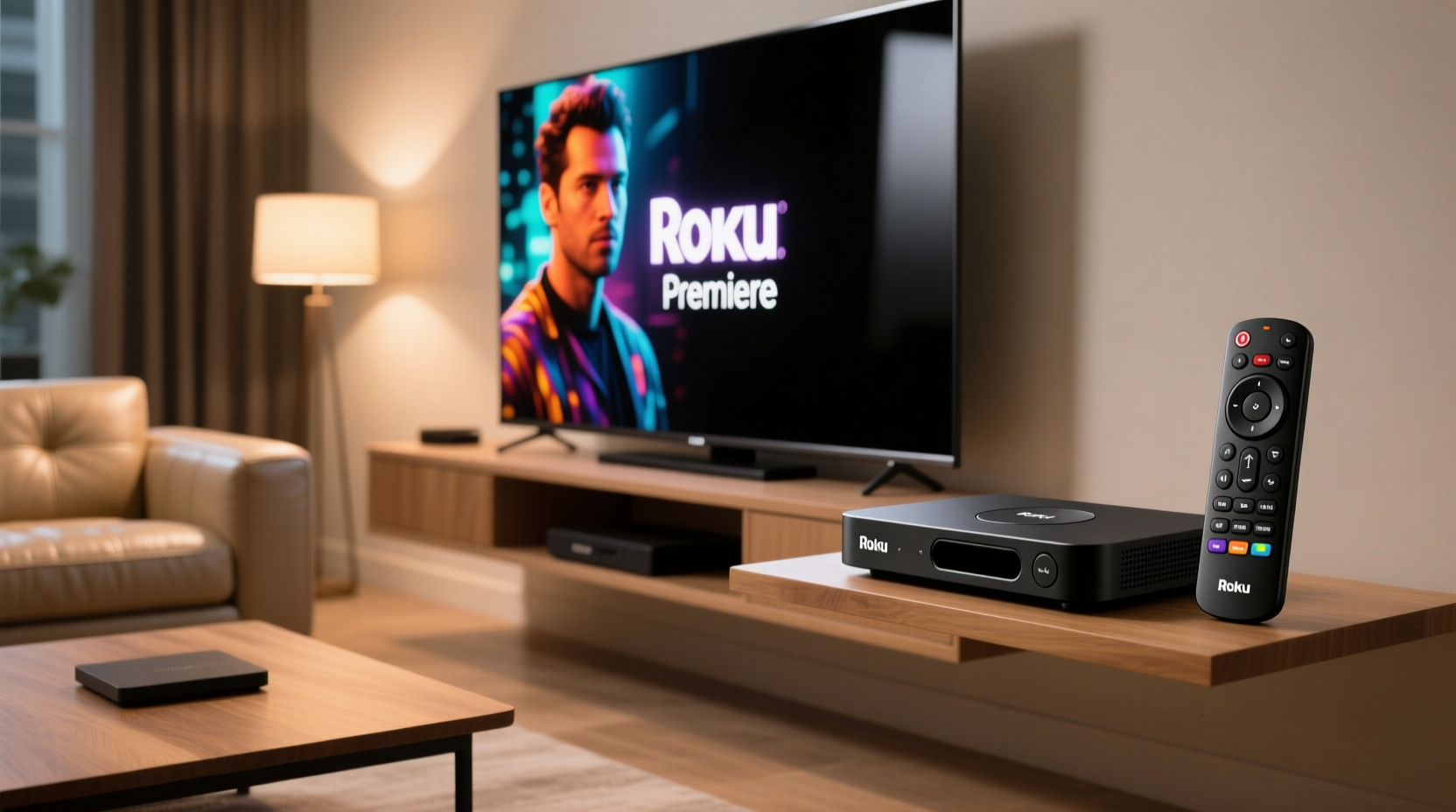
The Roku Premiere (model 3930) was designed during a transitional period in streaming tech. It supports 4K Ultra HD and HDR10/Dolby Vision, which were premium features at the time. Under the hood, it runs on a Broadcom processor with 512MB of RAM—a modest configuration even by 2017 standards, but sufficient for basic navigation and video playback.
In 2025, most major streaming platforms—including Netflix, Disney+, Amazon Prime Video, and Apple TV+—deliver content in 4K with dynamic metadata (HDR10+) and increasingly complex bitrates. While the Premiere can technically access these streams, its older Wi-Fi chipset (802.11n) and limited processing power can lead to buffering, slower load times, and occasional stutters during scene transitions or ad breaks.
Users report that while core apps like Netflix and Hulu remain functional, newer interfaces with richer graphics (such as YouTube’s updated UI or Max’s interactive menus) feel sluggish. Additionally, the lack of Wi-Fi 5 (802.11ac) means weaker signal penetration in homes with thick walls or multiple devices competing for bandwidth.
Streaming Ecosystem Changes Since 2017
The way we stream has evolved significantly since the Roku Premiere launched. Back then, most services capped their output at 4K60 with static HDR. Today, adaptive streaming technologies like AV1 encoding, variable refresh rate (VRR), and Dolby Atmos audio are becoming standard—features absent from the Premiere’s hardware capabilities.
Roku has continued updating its OS, adding new channels and improving search functionality across all supported devices. However, older models like the Premiere no longer receive firmware updates beyond security patches and minor bug fixes. This means they miss out on key enhancements such as:
- Advanced Voice Search: Newer remotes allow natural language queries (“Find action movies from the 90s starring Keanu Reeves”).
- Cross-Service Recommendations: Personalized home screen suggestions based on viewing history across platforms.
- Sleep Timer & Private Listening: Features now standard on newer remotes with headphone jacks or Bluetooth audio pairing.
Moreover, some apps have begun phasing out support for legacy hardware. For example, YouTube TV dropped support for certain pre-2018 Roku models in late 2023 due to API changes requiring more robust decoding capabilities.
“Hardware lifespan in the streaming world is about five years under normal use. After that, software bloat and service deprecations make older devices feel obsolete—even if they still technically work.” — Jordan Lee, Senior Analyst at StreamInsight Research
Comparison: Roku Premiere vs. Current Models (2025)
| Feature | Roku Premiere (2017) | Roku Express 4K+ (2023) | Roku Streaming Stick 4K (2022) | Roku Ultra (2023) |
|---|---|---|---|---|
| Max Resolution | 4K HDR / Dolby Vision | 4K HDR / Dolby Vision | 4K HDR / Dolby Vision | 4K HDR / Dolby Vision |
| Wi-Fi Standard | 802.11n (2.4GHz only) | Wi-Fi 5 (Dual-band) | Wi-Fi 5 (Dual-band) | Wi-Fi 6 (Dual-band) |
| Processor | Broadcom (Unknown model) | Newer quad-core | Faster quad-core | High-performance quad-core |
| RAM | 512MB | 1GB | 1GB | 2GB |
| Remote Features | Basic IR remote | Voice remote (no headphones) | Voice remote with headphone jack | Voice remote with earbuds, lost remote finder |
| Ethernet Support | No | No | No | Yes (via included adapter) |
| Price (MSRP) | $69 (discontinued) | $39 | $49 | $99 |
As shown above, even the entry-level Roku Express 4K+ released in 2023 offers dual-band Wi-Fi, double the RAM, and a much smoother user experience compared to the Premiere. The jump in responsiveness alone makes upgrading worthwhile for users frustrated with laggy menus or delayed voice commands.
When the Roku Premiere Is Still Enough
Despite its age, the Roku Premiere remains usable in specific scenarios. If your household primarily watches lower-resolution content (e.g., cable simulcasts, news channels, or older shows), doesn’t rely heavily on fast menu navigation, and has strong Wi-Fi coverage near the TV, the device may continue serving you well.
Additionally, secondary TVs—like those in guest rooms, kitchens, or kids’ bedrooms—don’t always require cutting-edge specs. In these cases, keeping the Premiere avoids unnecessary spending. Many users report stable performance when streaming at 1080p or limiting usage to lightweight apps like Pluto TV, Tubi, or The Roku Channel.
However, consider this: as of 2025, Roku officially lists the Premiere as “discontinued” and no longer includes it in active firmware development cycles. While it won’t stop working overnight, long-term reliability and app compatibility will degrade over time.
Real-World Example: Sarah’s Living Room Dilemma
Sarah purchased her Roku Premiere in 2018 and used it daily with her 55-inch 4K TV. By early 2024, she began noticing delays when launching Netflix, especially after automatic profile switches. Ads took longer to buffer, and sometimes the audio would desync during action scenes. She tested her internet speed and confirmed she had 100 Mbps download—more than enough for 4K streaming.
After researching, she upgraded to the Roku Streaming Stick 4K. The difference was immediate: apps loaded nearly twice as fast, voice search returned results instantly, and she could finally use private listening through her remote’s headphone jack. Though the picture quality remained similar (same TV, same content), the overall experience felt modern again.
Her old Premiere was moved to a bedroom TV where only casual viewing occurs. There, it continues to perform adequately—proving that context matters when evaluating whether to upgrade.
Step-by-Step Guide: Should You Upgrade in 2025?
If you're unsure whether to hold onto your Roku Premiere or invest in a new device, follow this decision-making process:
- Assess Your Internet Speed: Run a speed test near your TV. If you’re below 25 Mbps, buffering may stem from connectivity, not the device.
- Test App Load Times: Time how long it takes to open Netflix, YouTube, and one niche channel. If any take more than 8 seconds consistently, hardware limitations are likely.
- Check for Audio/Video Sync Issues: Play a dialogue-heavy scene. If lips don’t match speech, especially after ads, the decoder may be struggling.
- Evaluate Remote Responsiveness: Try voice commands like “Open HBO Max” or “Search for documentaries about space.” Delayed responses suggest outdated firmware.
- Determine Usage Frequency: Is this your main TV or a backup? Primary setups benefit more from upgrades.
- Compare Upgrade Cost: Entry-level 4K sticks now start at $39. Weigh this against ongoing frustration.
- Decide and Repurpose: If upgrading, transfer your old device to another room or sell it secondhand.
Upgrade Checklist: What to Look for in a New Roku Device
Before purchasing a replacement, ensure the new model meets your needs. Use this checklist:
- ✅ Supports Wi-Fi 5 or Wi-Fi 6 for better stability
- ✅ Includes a voice-enabled remote with headphone jack (for private listening)
- ✅ Offers dual-band Wi-Fi (5GHz support reduces interference)
- ✅ Has at least 1GB RAM for smooth multitasking
- ✅ Compatible with Dolby Vision and HDR10+ (if your TV supports it)
- ✅ Recent release date (2022 or later) for longer software support
- ✅ Affordable price point (<$60 for mid-tier options)
The Roku Streaming Stick 4K strikes the best balance between cost and capability for most users. For audiophiles or gamers, the Roku Ultra adds Ethernet, S/PDIF output, and enhanced remote features worth considering.
Frequently Asked Questions
Can the Roku Premiere play Dolby Atmos?
No. While it supports Dolby Vision video, it does not decode Dolby Atmos audio. Even if a title streams with Atmos, the Premiere will fall back to standard 5.1 or stereo sound. To enjoy immersive audio, you’ll need a newer Roku model connected to an Atmos-compatible soundbar or AV receiver.
Will the Roku Premiere stop working in 2025?
Not immediately. Roku hasn’t announced end-of-life support, so core functions should continue. However, expect fewer app updates, reduced performance over time, and eventual incompatibility with next-gen streaming standards like AV1-only content (already used by YouTube and expected to expand).
Is it worth upgrading for better Wi-Fi?
Yes, especially if you stream in 4K frequently. The Premiere’s single-band 2.4GHz Wi-Fi is prone to congestion from other household devices (smartphones, tablets, IoT gadgets). Dual-band models reduce interference and provide more consistent speeds, minimizing rebuffering events.
Final Verdict: Time to Move On?
The Roku Premiere was an excellent value in its era, bringing true 4K HDR streaming to the masses at an accessible price. But eight years in tech time is a lifetime. As streaming becomes more demanding—both in bandwidth and interface complexity—older hardware inevitably lags behind.
If you're satisfied with occasional 1080p viewing and don’t mind slower navigation, the Premiere can still serve as a secondary player. But for primary entertainment systems, upgrading to a current-generation Roku ensures smoother performance, better audiovisual fidelity, and longer-term usability.
Today’s most affordable 4K streaming sticks offer superior specs and smarter features at prices lower than what the Premiere originally cost. With models starting under $40, the financial barrier to upgrading has never been lower.




 浙公网安备
33010002000092号
浙公网安备
33010002000092号 浙B2-20120091-4
Comments
No comments yet. Why don't you start the discussion?