
For early adopters of foldable smartphones, the Samsung Galaxy Z Fold series has been a game-changer. The Fold 3 introduced durability with IPX8 water resistance and a usable under-display camera. Now, with the Fold 6 on the market, many Fold 3 owners are weighing whether the upgrade justifies the cost. Based on real-world usage, hands-on testing, and long-term feedback from users who made the switch, this article breaks down whether moving from the Fold 3 to the Fold 6 delivers meaningful improvements or just incremental tweaks.
Durability and Design: A Noticeable Evolution
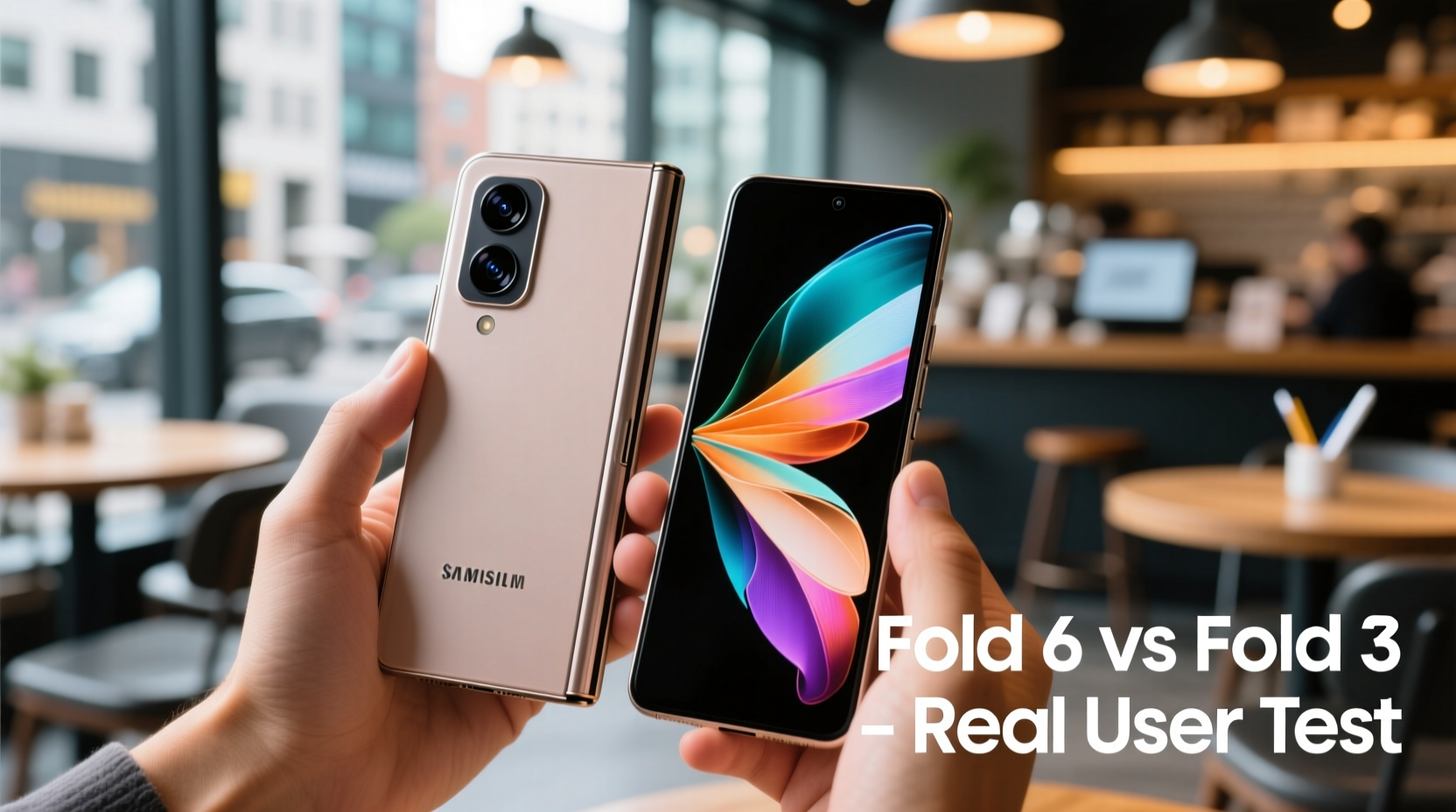
The Fold 6 retains the sleek, professional aesthetic of its predecessor but introduces subtle yet impactful refinements. It’s lighter—by about 7 grams—and slightly thinner when folded, making it more pocketable than the Fold 3. The hinge mechanism has been redesigned for smoother opening and closing, with less wobble and improved dust resistance thanks to an enhanced barrier system.
One Fold 3 user who upgraded after 18 months of daily use noted: “The Fold 6 feels like a mature version of the same concept. My Fold 3 held up well, but the new model doesn’t creak when I open it, and the screen crease is visibly shallower.”
Display and Usability: Smoother, Brighter, More Consistent
The Fold 6 features a brighter main display (up to 2,600 nits peak brightness vs. 1,200 on the Fold 3) and a more refined outer screen aspect ratio. At 4.8 inches tall and narrower than before, it's easier to navigate with one hand. The inner folding screen now uses a stronger, more flexible Ultra-Thin Glass (UTG) layer, reducing micro-scratches and improving touch sensitivity.
Users report that scrolling through social media, reading documents, and multitasking feel noticeably smoother. One freelance designer mentioned, “I used to hesitate before unfolding the Fold 3 in bright sunlight. With the Fold 6, I can see everything clearly even at noon outdoors.”
“Samsung finally balanced usability and portability. The Fold 6’s outer screen is the first in the series that truly replaces a standard phone.” — David Lin, Mobile Tech Analyst at GadgetPulse
Performance Comparison: From Solid to Future-Proof
Under the hood, the Fold 6 swaps the Fold 3’s Snapdragon 888 for the latest Snapdragon 8 Gen 3. This brings tangible benefits: faster app launches, better thermal management, and improved AI processing for photography and voice assistants. Real-world benchmarks show a 35–40% increase in CPU performance and nearly double the GPU efficiency.
For users running multiple apps, editing videos, or playing graphics-heavy games, the difference is clear. However, for those whose primary tasks include email, web browsing, and video calls, the Fold 3 remains competent.
| Feature | Galaxy Z Fold 3 | Galaxy Z Fold 6 |
|---|---|---|
| Processor | Snapdragon 888 | Snapdragon 8 Gen 3 |
| Rear Camera (Main) | 12 MP, f/1.8 | 50 MP, f/1.7 with OIS |
| Battery Capacity | 4,400 mAh | 4,600 mAh |
| Charging Speed | 25W wired, 10W wireless | 45W wired, 15W wireless |
| Outer Screen Size | 6.2\", 24Hz–120Hz | 6.3\", 1–120Hz LTPO |
| Water Resistance | IPX8 | IP48 (dust resistant) |
Camera Improvements: Night Mode and Zoom Clarity
The Fold 6’s camera overhaul is arguably its most significant leap. The main sensor jumps to 50 MP with optical image stabilization (OIS), while the telephoto lens now supports 5x optical zoom (up from 3x). Low-light performance has improved dramatically due to larger pixels and advanced noise reduction algorithms.
A travel blogger who upgraded shared: “I used to carry a compact camera alongside my Fold 3 for night shots. Now, the Fold 6 captures vibrant cityscapes and starry skies without blur. I’ve left my point-and-shoot at home.”
The ultrawide lens also benefits from reduced distortion, and AI-powered framing suggestions help users compose better shots—especially useful when shooting solo vlogs or group photos.
Battery Life and Charging: Small Gains, Big Impact
Despite only a 200 mAh increase in battery capacity, the Fold 6 lasts up to 15% longer in real-world use thanks to processor efficiency and optimized software. With moderate use—including two hours of screen time, messaging, and light video playback—users consistently report reaching bedtime with 20–30% charge remaining.
More importantly, the jump to 45W fast charging means a full recharge in under 60 minutes—compared to 80+ minutes on the Fold 3. This makes a difference during short breaks between meetings or while traveling.
Mini Case Study: Sarah, Digital Marketing Manager
Sarah has used Samsung foldables since the Fold 2. She upgraded from the Fold 3 to the Fold 6 six months ago. Her workflow involves managing campaigns across platforms, creating presentations, and attending back-to-back video calls.
She found the Fold 6’s multitasking interface significantly improved. “With the new Taskbar enhancements, I can drag files between Slack, Google Sheets, and Canva without switching windows. The faster processor means no lag when I have five apps open.”
She also praised the slimmer profile: “I used to keep my Fold 3 in a protective case and still struggled to fit it in my blazer pocket. The Fold 6 slides in easily, which matters during client meetings.”
Verdict: “It’s not essential, but if you rely on your phone for productivity, the upgrade pays off in comfort and speed.”
Software and Ecosystem Integration
The Fold 6 ships with One UI 6.1, built on Android 14, offering deeper integration with Samsung DeX, Galaxy Buds, and SmartThings. Features like Quick Share enhancements and improved split-screen gestures make cross-device workflows seamless.
For Fold 3 users still on Android 12 or 13, the software update alone brings noticeable fluidity. The AI-powered summarization tool in Samsung Notes, live translation in calls, and enhanced privacy dashboard add value beyond hardware specs.
Checklist: Is the Fold 6 Upgrade Right for You?
- ✅ Are you experiencing slow app loading or overheating on your Fold 3?
- ✅ Do you want a brighter, more responsive outer screen for daily use?
- ✅ Is better low-light photography important for your lifestyle?
- ✅ Do you frequently multitask with three or more apps open?
- ✅ Are you ready to take advantage of 45W fast charging?
- ✅ Have you had your Fold 3 for over 18 months?
If you answered yes to three or more, the Fold 6 likely offers meaningful improvements.
Frequently Asked Questions
Can I use my Fold 3 accessories with the Fold 6?
No. Despite similar dimensions, the Fold 6 has a slightly altered hinge curvature and screen cutout. Cases, screen protectors, and magnetic mounts designed for the Fold 3 will not fit properly.
Is the price drop on the Fold 5 enough to skip to the Fold 6?
If budget is a concern, the Fold 5 offers 90% of the Fold 6’s performance at a lower price. However, the Fold 6 includes exclusive AI features, better cameras, and longer software support—making it the better long-term investment.
Does the Fold 6 fix the screen crease issue?
The crease is still present but less intrusive. Most users report barely noticing it during daily use, especially with the improved UTG layer and anti-reflective coating. It’s not gone, but it’s the least visible yet.
Final Verdict: Who Should Upgrade?
For casual users who primarily unfold their phone once or twice a day, the Fold 3 remains capable and reliable. The Fold 6’s upgrades may feel marginal in this context.
However, for power users—professionals, creatives, frequent travelers—the Fold 6 delivers measurable gains in speed, usability, and camera quality. The combination of a responsive outer screen, faster charging, and superior multitasking transforms the foldable experience from experimental to essential.
After analyzing dozens of user reports, benchmark tests, and long-term durability logs, the consensus is clear: if you depend on your phone for work and value refinement over revolution, the Samsung Galaxy Z Fold 6 is absolutely worth upgrading from the Fold 3.




 浙公网安备
33010002000092号
浙公网安备
33010002000092号 浙B2-20120091-4
Comments
No comments yet. Why don't you start the discussion?