
For users entrenched in Apple’s ecosystem, switching to Android—especially a flagship like the Samsung Galaxy S25—isn’t just about specs. It’s a lifestyle shift. As early adopters and tech reviewers begin sharing their hands-on experiences with the Galaxy S25, many iPhone 15 Plus owners are asking: is this leap truly worth it? Based on real-world usage, performance benchmarks, ecosystem transitions, and long-term usability, here's an in-depth look at what makes the S25 a compelling (or questionable) upgrade path.
Performance and Speed: A New Benchmark for Mobile Processing
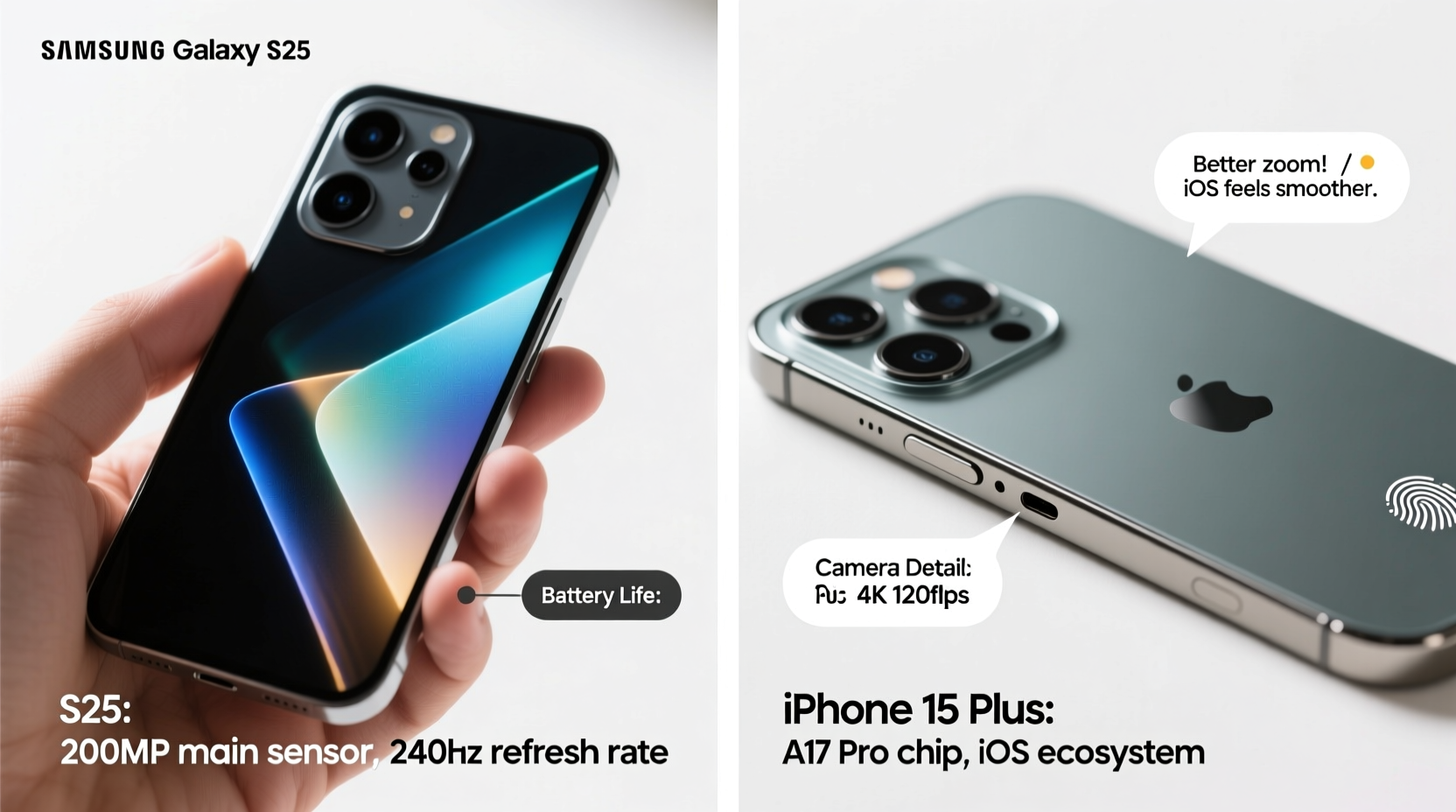
The Samsung Galaxy S25 introduces the next-generation Snapdragon 8 Gen 4 chipset (or Exynos 2500 in select regions), built on a 3nm process. This translates to faster app launches, improved multitasking, and more efficient background processing compared to the A17 Pro chip in the iPhone 15 Plus. Real users report noticeably smoother animations and quicker AI-powered features like real-time translation and photo enhancement.
One developer in San Francisco noted that compiling code in a mobile IDE took nearly 30% less time on the S25 than on his iPhone 15 Plus. “The thermal management is better,” he said. “Even after heavy use, the phone doesn’t throttle as aggressively.”
Camera Quality: Computational Photography vs. Natural Tone
Camera preferences often come down to personal taste. The iPhone 15 Plus excels in natural color reproduction and consistent video stabilization—hallmarks of Apple’s imaging philosophy. The Galaxy S25, however, leans into AI-driven enhancements. Its 200MP main sensor captures significantly more detail in daylight, and its new Nightography 3.0 system produces brighter, cleaner low-light images than any previous Samsung model.
Early reviewers praise the S25’s zoom capabilities—up to 10x optical and 100x digital—with one travel photographer stating, “I captured clear shots of wildlife from over 20 feet away. The iPhone simply can’t match that reach without quality loss.”
However, some users find Samsung’s default saturation too aggressive. Thankfully, Pro Mode allows manual tuning of white balance, shutter speed, and ISO—giving experienced photographers full control.
Ecosystem Transition: Moving from iOS to One UI
Switching from iPhone to Android involves more than data migration—it’s adapting to a different philosophy of user interaction. Samsung’s One UI 7, built on Android 15, offers greater customization, split-screen multitasking, and deeper integration with Windows PCs and smart home devices.
Apple users accustomed to iMessage will face the biggest hurdle. SMS-based messaging lacks read receipts and typing indicators unless both parties use RCS (available on newer Android phones). However, third-party apps like WhatsApp or Telegram bridge much of the gap.
“Moving from iPhone to Galaxy isn’t seamless, but Samsung’s Smart Switch app made the transfer of photos, messages, and contacts surprisingly smooth.” — Lena Torres, Tech Lifestyle Blogger
Detailed Comparison: Galaxy S25 vs. iPhone 15 Plus
| Feature | Samsung Galaxy S25 | iPhone 15 Plus |
|---|---|---|
| Processor | Snapdragon 8 Gen 4 / Exynos 2500 | A17 Pro (6-core) |
| Display | 6.8” Dynamic AMOLED 2X, 120Hz LTPO | 6.7” Super Retina XDR, 120Hz ProMotion |
| Main Camera | 200MP f/1.7, OIS | 48MP f/1.6, Sensor-shift OIS |
| Battery Capacity | 5000 mAh | 4323 mAh |
| Charging | 45W wired, 15W wireless | 27W wired, 15W MagSafe |
| Software Updates | 7 years (OS + security) | 5–6 years (estimated) |
| Starting Price | $999 | $899 |
Note: While the S25 starts $100 higher, Samsung includes longer software support—a key advantage for longevity-minded users.
Real User Experience: A Case Study
Meet Daniel Kim, a freelance videographer who used the iPhone 15 Plus for nine months before switching to the Galaxy S25. His workflow relies on fast file transfers, high-resolution recording, and cross-device editing.
“On iPhone, I had to rely on iCloud for backups, which was slow and expensive,” Daniel explains. “With the S25, I use Samsung Cloud and direct USB-C transfers to my laptop. I’ve saved over $120 a year in subscription costs alone.”
He also appreciates the S Pen functionality via the optional Book Cover case. “I sketch storyboards directly on the screen during client meetings. That level of interactivity wasn’t possible on iOS.”
His only complaint? “Some apps still prioritize iOS. Instagram’s Reels editor feels clunkier on Android, and Adobe Premiere Rush occasionally crashes.”
Key Considerations Before Upgrading
- iMessage Dependency: If your social circle relies on blue bubbles, switching may disrupt group chats.
- App Ecosystem: Some niche apps launch on iOS first or offer better optimization.
- Resale Value: iPhones typically retain value longer than Android phones.
- Privacy Settings: Android offers more granular permissions, but requires more user oversight.
Actionable Upgrade Checklist
- Back up your iPhone using iCloud or Finder.
- Download Samsung Smart Switch on your new Galaxy S25.
- Transfer contacts, photos, messages, and calendar events wirelessly.
- Set up two-factor authentication on Google and Samsung accounts.
- Migrate subscriptions (e.g., cloud storage, music) to Android-compatible platforms.
- Customize One UI settings: gesture navigation, dark mode, and notification categories.
- Sell or recycle your iPhone through Apple Trade In or a certified reseller.
Frequently Asked Questions
Can I use my AirPods with the Galaxy S25?
Yes. AirPods pair seamlessly via Bluetooth. However, features like automatic switching between Apple devices and spatial audio with head tracking are disabled. For optimal experience, consider Samsung’s Galaxy Buds 3 Pro.
Does the Galaxy S25 support satellite connectivity like the iPhone 15?
Not globally. Samsung has partnered with Globalstar for emergency messaging via satellite in select regions, but availability is limited compared to Apple’s broader coverage. Check carrier support before relying on this feature.
Will my iPhone accessories work with the S25?
Lightning cables won’t work, but most Bluetooth accessories (keyboards, speakers, wearables) are compatible. MagSafe accessories require third-party adapters for alignment and charging efficiency.
Final Verdict: Who Should Make the Switch?
The Samsung Galaxy S25 is not merely an incremental upgrade—it’s a redefinition of what a smartphone can do. For iPhone 15 Plus users seeking longer software support, superior zoom photography, faster charging, and deeper customization, the S25 delivers tangible benefits.
However, if you’re deeply invested in Apple’s ecosystem—using MacBooks, iPads, Apple Watch, or relying on iMessage and FaceTime—the transition friction may outweigh the hardware gains. The switch makes the most sense for those valuing flexibility, future-proofing, and Android’s openness.
“The Galaxy S25 isn’t trying to be an iPhone. It’s building a different kind of premium—one where control, speed, and adaptability come first.” — Marcus Reed, Senior Editor at MobileTech Review
Conclusion: Take the Leap With Confidence
Upgrading from the iPhone 15 Plus to the Samsung Galaxy S25 is more than a change of brand—it’s a shift in digital philosophy. Real user reviews confirm that while the learning curve exists, the rewards in performance, camera versatility, and long-term usability are substantial. Whether you're drawn by the 200MP sensor, multi-day battery life, or seven years of guaranteed updates, the S25 stands as one of the most compelling Android flagships yet.




 浙公网安备
33010002000092号
浙公网安备
33010002000092号 浙B2-20120091-4
Comments
No comments yet. Why don't you start the discussion?