
In 2024, flagship smartphones have evolved dramatically—folding displays, AI-powered cameras, and blazing-fast 5G connectivity are now standard. But not everyone needs the latest tech. For budget-conscious buyers, older models like the Samsung Galaxy S8 and Huawei Nova 3e still surface in secondhand markets and online listings. Both phones were once mid-to-high-tier devices, but nearly a decade after their release, the question arises: do they still hold up? And more importantly, which one offers better value today?
This isn't just about nostalgia—it's about practicality. Can either of these devices handle daily tasks like messaging, web browsing, light photo editing, and social media without constant frustration? Or are they better off as spare phones or emergency backups? Let’s break down the real-world usability of both phones in 2024.
Performance and Hardware: A Reality Check
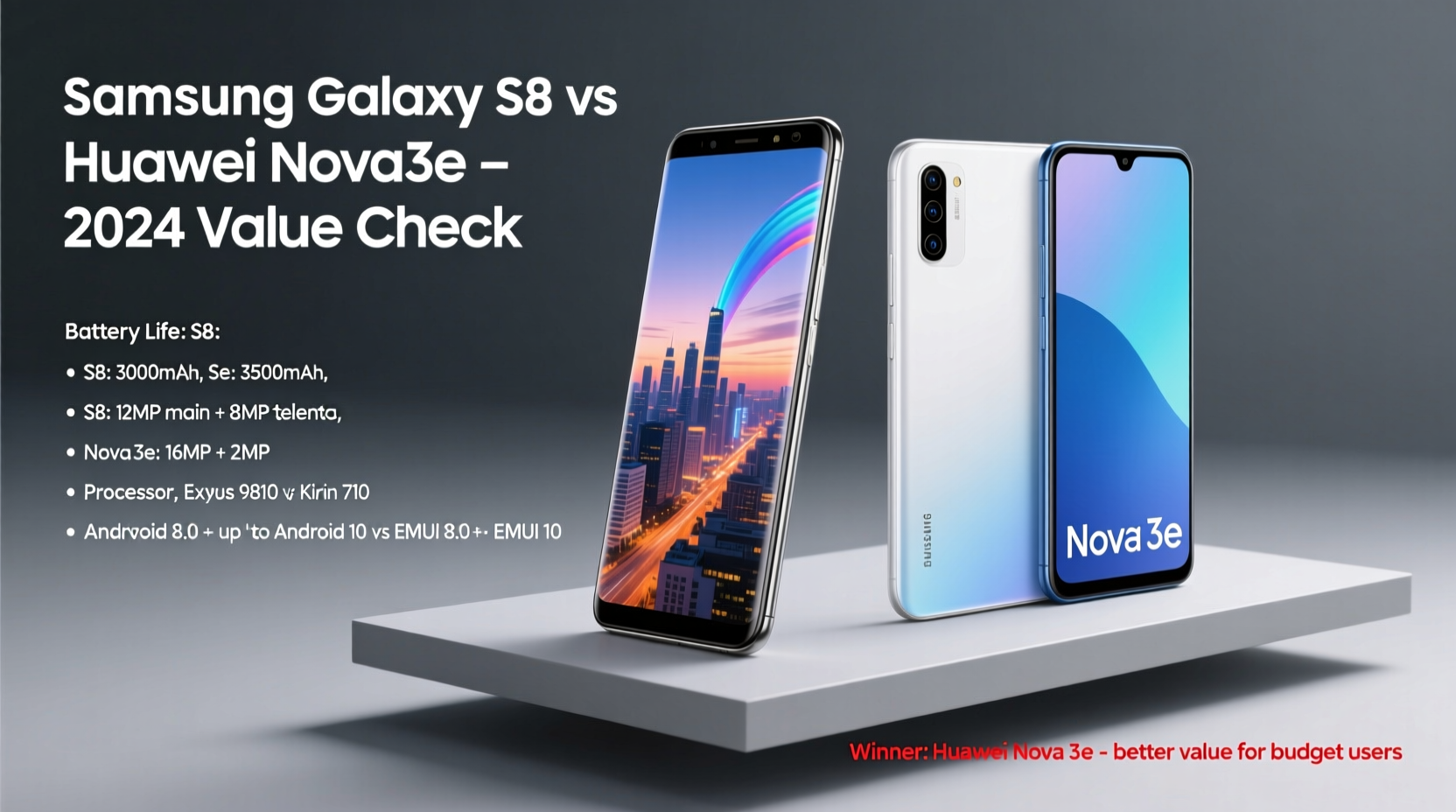
The Samsung Galaxy S8 launched in 2017 with the Qualcomm Snapdragon 835 (or Exynos 9810 in some regions), 4GB of RAM, and 64GB of storage. At the time, this was top-tier hardware. Today, that same configuration struggles with multitasking and modern app demands. While it can open WhatsApp, Chrome, and even Instagram, users will notice delays when switching between apps or loading media-heavy pages.
In contrast, the Huawei Nova 3e, released in 2018, came with the Kirin 659 processor, 4GB of RAM, and 64GB of storage. The Kirin 659 is significantly weaker than the Snapdragon 835—designed for entry-level to mid-range use. It performs adequately for basic functions but stutters under heavier loads. Neither phone supports expandable storage via microSD, limiting long-term usability.
Battery life is another concern. The Galaxy S8 has a 3000mAh battery; the Nova 3e, slightly larger at 3340mAh. However, battery health degrades over time. After six to seven years, even if the phone powers on, expect reduced capacity—often below 70%. This means frequent charging, especially with background apps running.
Software and Security: The Hidden Cost of Aging Phones
One of the most critical factors in 2024 is software support. The Galaxy S8 received its last major Android update with Android 9 Pie and security patches until 2020. It never got Android 10 or later. Similarly, the Nova 3e shipped with Android 8.0 Oreo and EMUI 8.0, and Huawei discontinued updates shortly after U.S. trade restrictions began in 2019.
This lack of updates presents two major issues: security vulnerabilities and app compatibility. Modern apps like banking platforms, ride-sharing services, and productivity tools often require newer OS versions. Google Play Protect may block installation on unsupported systems. Worse, outdated software leaves devices exposed to malware—especially if sideloading apps from third-party sources.
“Phones without regular security updates become liability risks within three years. By 2024, the S8 and Nova 3e are well past that threshold.” — David Lin, Mobile Security Analyst at CyberShield Labs
Additionally, neither phone supports Google Mobile Services (GMS) out of the box today. While the S8 originally had full Google access, reactivating a used unit may trigger Factory Reset Protection (FRP), locking the device unless you have the original owner’s Google account. The Nova 3e, being a Huawei model post-sanctions, lacks GMS entirely—meaning no Google Play Store, Gmail, or YouTube by default. Alternatives like Huawei AppGallery or APK downloads introduce complexity and risk.
Camera Comparison: How Do They Hold Up?
Cameras age differently than processors. While lens quality remains unchanged, image processing relies heavily on software and computational photography—areas where both phones fall short today.
The Galaxy S8 features a 12MP rear sensor with Dual Pixel autofocus and an f/1.7 aperture. In good lighting, it produces sharp, color-accurate photos. Low-light performance is passable but noisy. The front-facing 8MP camera includes autofocus, making selfies clearer than average for its time.
The Nova 3e has a 16MP main sensor (f/2.2) and a secondary 2MP depth sensor. Photos appear less detailed, especially in dim conditions. The 16MP front camera uses pixel binning and soft focus effects, resulting in overly smoothed selfies. Video recording tops out at 1080p on both devices, but stabilization is minimal.
| Feature | Samsung Galaxy S8 | Huawei Nova 3e |
|---|---|---|
| Processor | Snapdragon 835 / Exynos 9810 | Kirin 659 |
| RAM & Storage | 4GB + 64GB | 4GB + 64GB |
| Rear Camera | 12MP f/1.7 (OIS) | 16MP f/2.2 + 2MP depth |
| Front Camera | 8MP f/1.7 | 16MP f/2.0 |
| Battery | 3000mAh | 3340mAh |
| Last OS Version | Android 9 (Pie) | Android 8.0 (Oreo) |
| Google Services | Yes (legacy) | No (blocked post-2019) |
| Fingerprint Sensor | Rear (slightly offset) | Front (integrated home button) |
Real-World Use Case: Can Either Phone Serve as a Daily Driver?
Consider Maria, a freelance translator who needed a backup phone while her primary device was under repair. She bought a refurbished Galaxy S8 for $40, hoping it would last a few months. Initially, it worked fine for calls, texts, and using offline translation apps. But after installing Google Translate, Gmail, and WhatsApp, the phone slowed noticeably. Background sync failed intermittently, and WhatsApp Web wouldn’t connect due to outdated TLS support. Within six weeks, the battery dropped from 100% to 30% in two hours under moderate use.
She switched to a Nova 3e she found for $35, attracted by the larger battery and newer design. But downloading apps became a chore—no Play Store meant manually installing APKs, which triggered antivirus warnings. She eventually gave up trying to set up her cloud accounts securely and reverted to her repaired phone.
This scenario reflects a broader truth: even if the hardware turns on, the ecosystem around these phones has moved on. App developers optimize for current APIs and security standards. Older devices get left behind—not because they’re broken, but because they’re incompatible.
When (and Only When) These Phones Make Sense
There are narrow scenarios where buying an S8 or Nova 3e might be acceptable:
- As a dedicated offline device: Use it solely for music, notes, or as a GPS navigator without logging into personal accounts.
- For parts or repair practice: Technicians or hobbyists might find value in sourcing screens or practicing soldering.
- For children or elderly relatives with limited digital needs: If someone only needs to make calls and view photos, and you disable Wi-Fi/data, risks are minimized.
But for anyone relying on email, social media, banking, or messaging apps, these phones are more trouble than they’re worth.
Smartphone Value Checklist: What to Prioritize in 2024
- ✅ Android 10 or higher (ensures app compatibility)
- ✅ Regular security updates (at least quarterly)
- ✅ Google Play Services support (critical for core apps)
- ✅ Minimum 4GB RAM with efficient software (e.g., Android Go or stock Android)
- ✅ Battery health above 80% (ask for diagnostic reports when buying used)
- ✅ Functional biometric unlock (fingerprint or face recognition)
- ✅ Support for modern connectivity (Wi-Fi 5+, Bluetooth 5.0)
Frequently Asked Questions
Can I still get WhatsApp on the Galaxy S8 or Nova 3e?
Technically yes, but functionality may be limited. WhatsApp officially supports Android 5.0 and up, but newer features and end-to-end encryption protocols may not work properly on outdated OS versions. Some users report login failures or syncing issues.
Are these phones safe to use in 2024?
Not recommended for sensitive tasks. Without security patches, they’re vulnerable to known exploits. Avoid entering passwords, credit card details, or accessing cloud accounts on them. If used, keep internet access disabled when possible.
What budget phones offer better value today?
Modern alternatives like the Samsung Galaxy A14 5G ($130), Motorola Moto G Power (2023), or Nokia G22 offer updated Android versions, longer support cycles, and better performance—all at prices comparable to what the S8 and Nova 3e once cost new.
Final Verdict: Time to Move On
The Samsung Galaxy S8 was a landmark device—its Infinity Display redefined smartphone design. The Huawei Nova 3e offered stylish looks and a high-resolution selfie camera for its segment. But in 2024, neither is a sensible purchase for daily use.
The S8 holds a slight edge in raw performance and build quality, but both suffer from obsolete software, security risks, and poor app compatibility. Any savings upfront are quickly outweighed by frustration, instability, and potential data exposure.




 浙公网安备
33010002000092号
浙公网安备
33010002000092号 浙B2-20120091-4
Comments
No comments yet. Why don't you start the discussion?