
In 2024, flagship smartphones are more powerful and feature-rich than ever. But for budget-conscious buyers or those who prefer older models with proven reliability, questions arise about whether devices like the Samsung Galaxy S8 or Motorola Droid Turbo still hold up. Both were top-tier phones in their time—released within a year of each other—but how do they fare today? This isn't just about nostalgia; it's about practicality, usability, and value.
The Galaxy S8 launched in 2017 as a design revolution with its edge-to-edge display and facial recognition. The Motorola Droid Turbo (also known as the Moto Maxx outside the U.S.) arrived earlier, in 2014, but was notable for its massive battery and premium build. While neither device receives official software updates anymore, some users still rely on them daily. So, is either phone still viable in 2024—or should you look elsewhere?
Performance and Hardware: A Reality Check
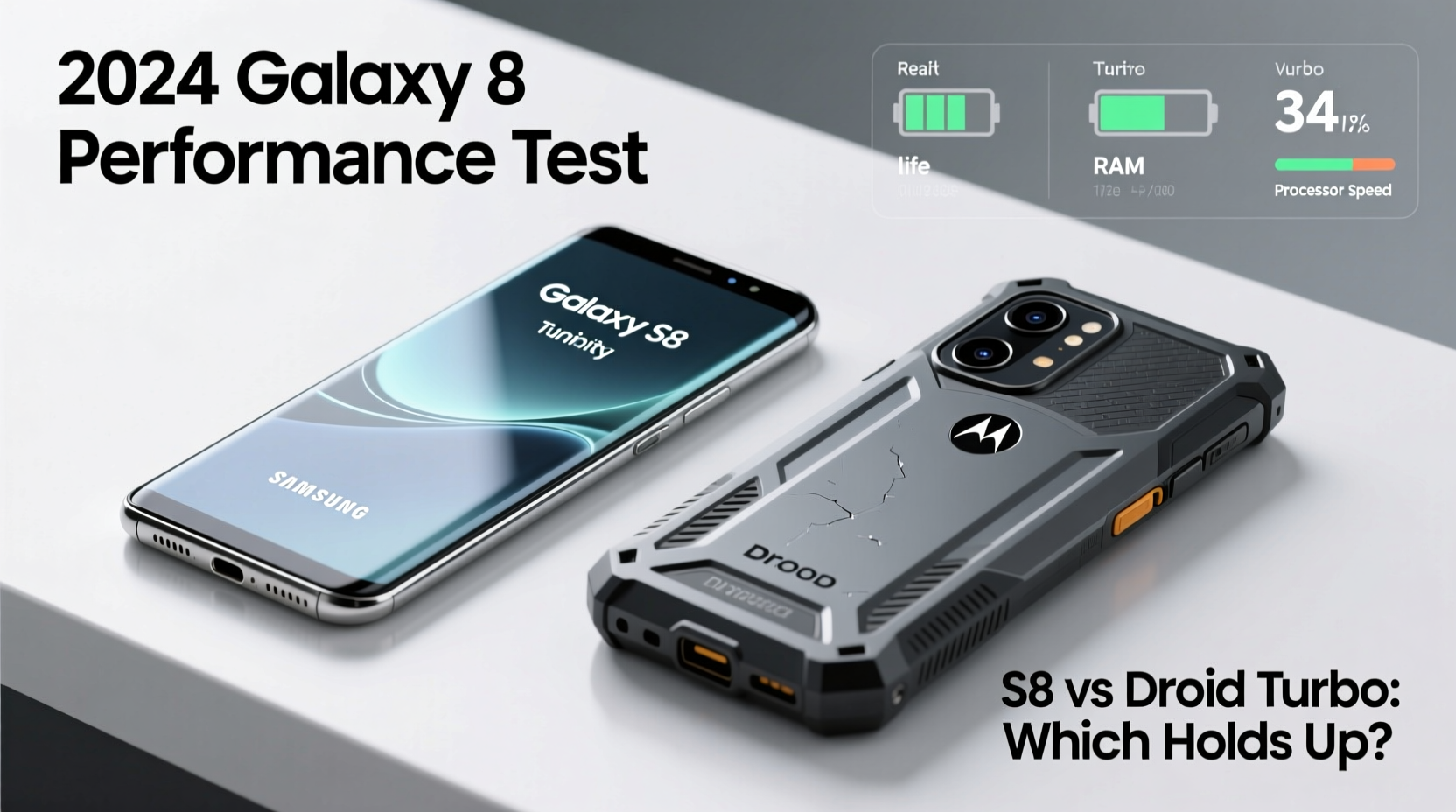
By modern standards, both phones are underpowered. The Galaxy S8 runs on the Qualcomm Snapdragon 835 or Exynos 9810 (depending on region), paired with 4GB of RAM. That was excellent in 2017, allowing smooth multitasking and strong gaming performance. Today, however, even mid-range phones come with 6GB+ RAM and newer chipsets that outperform the 835 by a wide margin.
The Droid Turbo uses the older Snapdragon 805, which already felt dated by 2016. With only 3GB of RAM, it struggles with current apps, especially those requiring background processes like messaging, social media, and navigation. Even basic web browsing can feel sluggish due to limited processing power and aging storage speeds.
While the S8 handles light tasks reasonably well—messaging, email, music streaming—it stumbles when running multiple apps or using camera-intensive features. Background app refresh fails often, and newer versions of Android apps may not install at all due to compatibility issues.
Software and Security: The Hidden Risk
Software support is where both phones fall short. The Galaxy S8 received its final major update with Android 9 Pie and security patches until 2020. The Droid Turbo stopped receiving updates shortly after 2015, topping out at Android 5.1 Lollipop.
This means no access to critical security fixes, leaving both devices vulnerable to malware, phishing attacks, and data breaches. Google Play Protect frequently flags outdated apps, and many services—including banking apps, ride-sharing platforms, and secure work portals—now require recent OS versions to function.
“Using an unsupported smartphone in 2024 is like driving a car without airbags. It might get you from point A to B, but one incident could have serious consequences.” — Lena Patel, Mobile Security Analyst at CyberShield Labs
Even if you sideload apps or use alternative stores, you’re exposing yourself to unverified code and potential spyware. For anyone handling personal data, emails, or online transactions, this risk outweighs any cost savings.
Battery Life and Charging: Aging Batteries Take a Toll
The Droid Turbo was legendary for its 3900mAh battery—massive for 2014—and could last two days under moderate use. But after nearly a decade, lithium-ion degradation means most units now hold less than 60% of their original capacity. Swelling, slow charging, and sudden shutdowns are common.
The Galaxy S8’s 3000mAh battery was average even in 2017. After years of charge cycles, few remain reliable beyond a single day of light use. Fast charging via USB-C helps, but heat buildup accelerates wear. Wireless charging works, but efficiency drops significantly on aged hardware.
| Device | Original Battery | Expected Capacity in 2024 | Charging Options |
|---|---|---|---|
| Samsung Galaxy S8 | 3000mAh | 50–65% | Fast charging, Wireless, USB-C |
| Motorola Droid Turbo | 3900mAh | 40–60% | Quick Charge 2.0, Micro-USB |
If you plan to use either phone daily, expect to replace the battery—or carry a power bank constantly.
Camera and Display Comparison
The S8’s 12MP rear camera was class-leading in 2017, with excellent low-light performance and dynamic range. It still takes decent photos in daylight, though autofocus lags and HDR processing is slow. Video caps at 4K@30fps, but stabilization is inconsistent.
The Droid Turbo’s 21MP shooter had high resolution but poor sensor quality. Images appear soft, over-sharpened, and lack detail in shadows. No 4K recording, and front-facing video is limited to 1080p with noticeable lag.
On the display front, the S8 shines—literally. Its 5.8-inch Quad HD+ Super AMOLED screen remains vibrant, with deep blacks and accurate colors. Viewing angles are excellent, making it suitable for media consumption. In contrast, the Droid Turbo’s 5.2-inch Quad HD AMOLED panel, while sharp, suffers from dimming and color drift over time.
Mini Case Study: Sarah’s Experience with a Refurbished S8
Sarah, a college student in Austin, bought a refurbished Galaxy S8 in early 2023 for $75, hoping to save money. At first, it worked fine for texting and listening to podcasts. But within months, she noticed apps crashing, GPS failing during commutes, and her bank app refusing login. She eventually switched to a used Pixel 4a after realizing the S8 couldn’t handle essential tools like Google Maps and Zoom reliably.
“I thought I was being smart,” she said. “But I ended up spending extra on a portable charger and wasted time troubleshooting. For $100 more, I got a phone that actually works every day.”
What Should You Do Instead?
Rather than choosing between two obsolete devices, consider modern alternatives that offer better longevity and support. Here’s a checklist to guide your decision:
- ✅ Runs Android 12 or higher (security baseline)
- ✅ Receives regular security updates (at least 2 years remaining)
- ✅ Has at least 4GB RAM and 64GB storage
- ✅ Supports modern connectivity (Wi-Fi 5+, Bluetooth 5.0)
- ✅ Compatible with current Google services and apps
- ✅ Available with affordable repair or replacement options
Phones like the Google Pixel 6a, Samsung Galaxy A14 5G, or iPhone SE (2022) offer far superior performance, cameras, and software support—all within $200–$300. Even heavily discounted refurbs from 2020–2022 outperform the S8 and Droid Turbo in every category.
Frequently Asked Questions
Can I still use WhatsApp on a Galaxy S8 in 2024?
Yes, but with limitations. WhatsApp officially supports Android 5.0 and up, so the S8 can run it. However, frequent crashes, notification delays, and backup failures are common due to outdated background process management.
Is the Droid Turbo waterproof?
No. Unlike the Galaxy S8, which has IP68 water resistance, the Droid Turbo lacks any official water or dust protection. Exposure to moisture can permanently damage internal components.
Are these phones safe for children to use?
Not recommended. Without updated parental controls, app filtering, and security patches, both devices expose young users to inappropriate content and online risks. Modern kids’ phones or tablets offer safer, supervised environments.
Final Verdict: Skip the Past, Invest in the Present
The emotional appeal of holding a once-cutting-edge device is understandable. The Galaxy S8 was beautiful. The Droid Turbo was durable. But in 2024, neither meets the minimum standard for a functional, secure smartphone. Performance bottlenecks, security vulnerabilities, degraded batteries, and incompatible apps make them poor choices—even as backups or emergency phones.
Technology evolves quickly, and clinging to legacy hardware costs more in frustration than savings. For under $200, you can own a phone that receives updates, runs modern apps smoothly, and keeps your data safe. That’s not just smarter—it’s essential.




 浙公网安备
33010002000092号
浙公网安备
33010002000092号 浙B2-20120091-4
Comments
No comments yet. Why don't you start the discussion?