
If you’ve been loyal to your Redmi Note 10 Pro—praised for its solid mid-range performance and impressive display—the idea of stepping up to the Samsung Galaxy S23 Ultra might feel both exciting and overwhelming. Priced in a completely different league, the S23 Ultra promises flagship-tier power, photography, and build quality. But does it deliver enough tangible benefits to justify the steep price jump? For users coming from budget or mid-range devices, this decision isn’t just about specs—it’s about real-world value.
The answer depends on how you use your phone, what features matter most to you, and whether the premium experience translates into meaningful improvements in daily life. Let’s break down the key differences and evaluate if the upgrade is truly worth it.
Performance: From Capable to Class-Leading
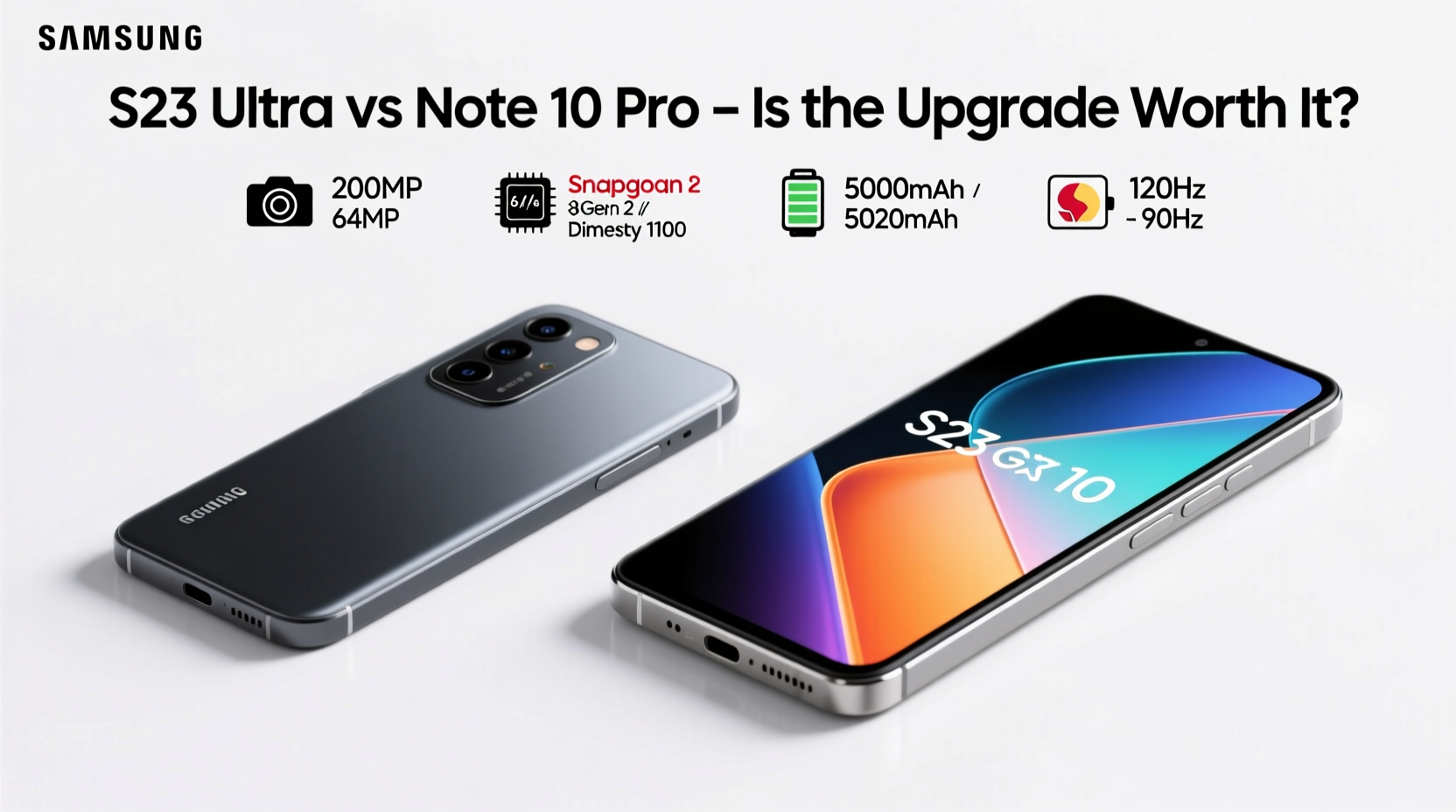
The Redmi Note 10 Pro runs on Qualcomm’s Snapdragon 732G, a reliable chip that handles everyday tasks with ease—browsing, social media, HD video streaming, and even light gaming. However, multitasking under heavy loads or running demanding games at high settings can expose its limitations over time.
In contrast, the Samsung S23 Ultra is powered by the Snapdragon 8 Gen 2 for Galaxy—a top-tier processor optimized for peak performance and efficiency. This means near-instant app launches, seamless multitasking across dozens of tabs and apps, and buttery-smooth gameplay even in graphics-intensive titles like Genshin Impact or Call of Duty Mobile at max settings.
Beyond raw speed, the S23 Ultra includes 8GB or more of RAM (vs. 6GB/8GB on the Note 10 Pro), faster UFS 4.0 storage, and superior thermal management. These components work together to ensure long-term responsiveness, even after months of continuous use.
Camera Comparison: Night and Day Difference
The Redmi Note 10 Pro has a competent quad-camera setup led by a 64MP main sensor. It performs decently in daylight but struggles in low light, lacks optical zoom, and produces inconsistent dynamic range. Video recording caps at 1080p@30fps, limiting creative flexibility.
The S23 Ultra changes the game entirely. Its quad-camera array includes:
- 200MP main sensor with advanced pixel binning
- 12MP ultra-wide lens
- Dual telephoto lenses: 10MP periscope with 10x optical zoom and 3x optical zoom
- 8K video recording at 24/30fps
This configuration allows for professional-grade photography. You can capture sharp, detailed images in nearly any lighting condition, zoom in on distant subjects without losing clarity, and shoot cinematic-quality videos. Features like Expert RAW mode, AI-enhanced nightography, and enhanced portrait lighting give creative control previously reserved for DSLRs.
“Smartphones are now primary cameras for most consumers. The S23 Ultra sets a new benchmark in computational photography.” — David Pierce, Editor-at-Large, The Verge
If photography or videography plays a significant role in your lifestyle—whether for travel, social media, or remote work—the leap from the Redmi Note 10 Pro to the S23 Ultra is transformative.
Battery and Charging: Efficiency vs. Endurance
The Redmi Note 10 Pro packs a 5020mAh battery with 33W fast charging. In typical usage, it easily lasts a full day and charges from 0 to 100% in about 60 minutes. However, it lacks wireless charging and reverse charging capabilities.
The S23 Ultra, despite higher power demands, delivers similar all-day endurance thanks to a 5000mAh battery and highly efficient chipset. What sets it apart is the charging ecosystem: 45W wired fast charging (with compatible charger sold separately), 15W wireless charging, and 4.5W reverse wireless charging to power accessories like earbuds or smartwatches.
| Feature | Redmi Note 10 Pro | Samsung S23 Ultra |
|---|---|---|
| Battery Capacity | 5020 mAh | 5000 mAh |
| Wired Charging | 33W | 45W |
| Wireless Charging | No | Yes (15W) |
| Reverse Charging | No | Yes (4.5W) |
| Estimated Daily Use | 1 day | 1+ day |
While total battery life may seem comparable, the S23 Ultra offers greater versatility and faster recharge speeds when needed—especially valuable during travel or busy workdays.
Display and Build Quality: Premium Feel Matters
The Redmi Note 10 Pro features a 6.67-inch Super AMOLED display with FHD+ resolution and a 120Hz refresh rate—an excellent screen for its class. However, it uses Gorilla Glass 5 and a plastic frame, making it less resistant to drops and scratches over time.
The S23 Ultra boasts a 6.8-inch Dynamic AMOLED 2X display with QHD+ resolution, 120Hz adaptive refresh rate (ranging from 1–120Hz), HDR10+ support, and peak brightness exceeding 1750 nits. Combined with Corning Gorilla Glass Victus 2 and an aluminum frame, the result is a brighter, smoother, and far more durable screen ideal for outdoor visibility and media consumption.
Moreover, the S23 Ultra is IP68-rated for dust and water resistance—something the Note 10 Pro lacks. This added protection provides peace of mind in wet conditions or accidental spills.
Software and Long-Term Support
Xiaomi’s MIUI, while feature-rich, often includes bloatware and receives major Android updates slowly. The Redmi Note 10 Pro launched with Android 11 and is expected to receive up to two major OS upgrades and three years of security patches.
Samsung, on the other hand, guarantees four major Android OS upgrades and five years of security updates for the S23 Ultra. With One UI 5.1 (upgradable to newer versions), the software experience is cleaner, more intuitive, and better integrated with Samsung’s ecosystem—especially useful if you own Galaxy Buds, a Galaxy Watch, or a Windows PC.
This extended support ensures the S23 Ultra remains secure, functional, and compatible with future apps longer than most mid-range phones, increasing its lifespan and resale value.
Mini Case Study: Priya’s Upgrade Journey
Priya, a freelance photographer and digital content creator, used her Redmi Note 10 Pro for over two years. While satisfied initially, she found herself frustrated by slow export times when editing photos on her phone, poor low-light shots during evening shoots, and limited zoom capability when capturing distant landmarks.
After upgrading to the S23 Ultra, her workflow transformed. She could shoot in 200MP mode for maximum detail, edit high-res images directly using Adobe Lightroom without lag, and send client previews immediately—all from her phone. The ability to wirelessly charge her earbuds during meetings and use DeX mode to mirror her phone to a monitor further boosted her productivity.
For Priya, the upgrade wasn’t just about luxury—it was a professional necessity that saved time and elevated her output.
Checklist: Is the S23 Ultra Right for You?
Ask yourself the following before making the switch:
- Do you regularly take photos or videos in challenging lighting?
- Are you frustrated by app loading times or multitasking delays?
- Do you own other Samsung or Android ecosystem devices?
- Do you want a phone that will receive updates until 2028?
- Is wireless charging or water resistance important to your lifestyle?
- Are you willing to pay a premium for long-term durability and performance?
If you answered “yes” to three or more, the S23 Ultra is likely a worthwhile investment.
Frequently Asked Questions
Can I notice the difference in daily use?
Absolutely. The S23 Ultra feels faster, smoother, and more responsive in every interaction—from scrolling through feeds to launching apps. The camera improvements are especially noticeable, and the brighter screen enhances viewing in sunlight.
Is the price justified compared to the Redmi Note 10 Pro?
If you prioritize longevity, camera excellence, and ecosystem integration, yes. But if your needs are basic—calls, messaging, streaming—the upgrade may be overkill. Consider refurbished models or waiting for sales to reduce the cost gap.
Will my accessories work with the S23 Ultra?
Most Bluetooth accessories (earbuds, speakers) will pair seamlessly. However, chargers and cases are not interchangeable due to different dimensions and charging standards.
Final Verdict: When the Upgrade Makes Sense
Upgrading from the Redmi Note 10 Pro to the Samsung S23 Ultra isn’t just a step up—it’s a leap into a different category of smartphone experience. You’re paying not only for better hardware but for future-proofing, ecosystem synergy, and professional-grade tools packed into one device.
For casual users who mainly browse, message, and watch videos, the Redmi Note 10 Pro still holds up well, and the S23 Ultra would be excessive. But for creatives, professionals, tech enthusiasts, or anyone who relies heavily on their phone for productivity and content creation, the S23 Ultra delivers measurable returns on investment.




 浙公网安备
33010002000092号
浙公网安备
33010002000092号 浙B2-20120091-4
Comments
No comments yet. Why don't you start the discussion?