
The Samsung Galaxy Tab S9 has emerged as one of the most compelling Android tablets for digital creators, students, and professionals who rely on handwritten input. With its upgraded S Pen, high-refresh-rate display, and robust software ecosystem, it promises a near-paper experience for note takers and artists alike. But does it truly deliver in real-world use? For those weighing whether to invest $800 or more into a tablet primarily for handwriting and sketching, the answer isn’t just about specs—it’s about how seamlessly it integrates into daily workflows.
This deep dive examines the Tab S9’s performance across key areas: stylus precision, screen quality, app support, ergonomics, and long-term usability. Whether you're a medical student annotating PDFs, a designer sketching concepts, or a professional capturing meeting notes, understanding the nuances of this device can help determine if it’s the right tool for your creative or academic life.
S Pen Precision: Closest Thing to Writing on Paper
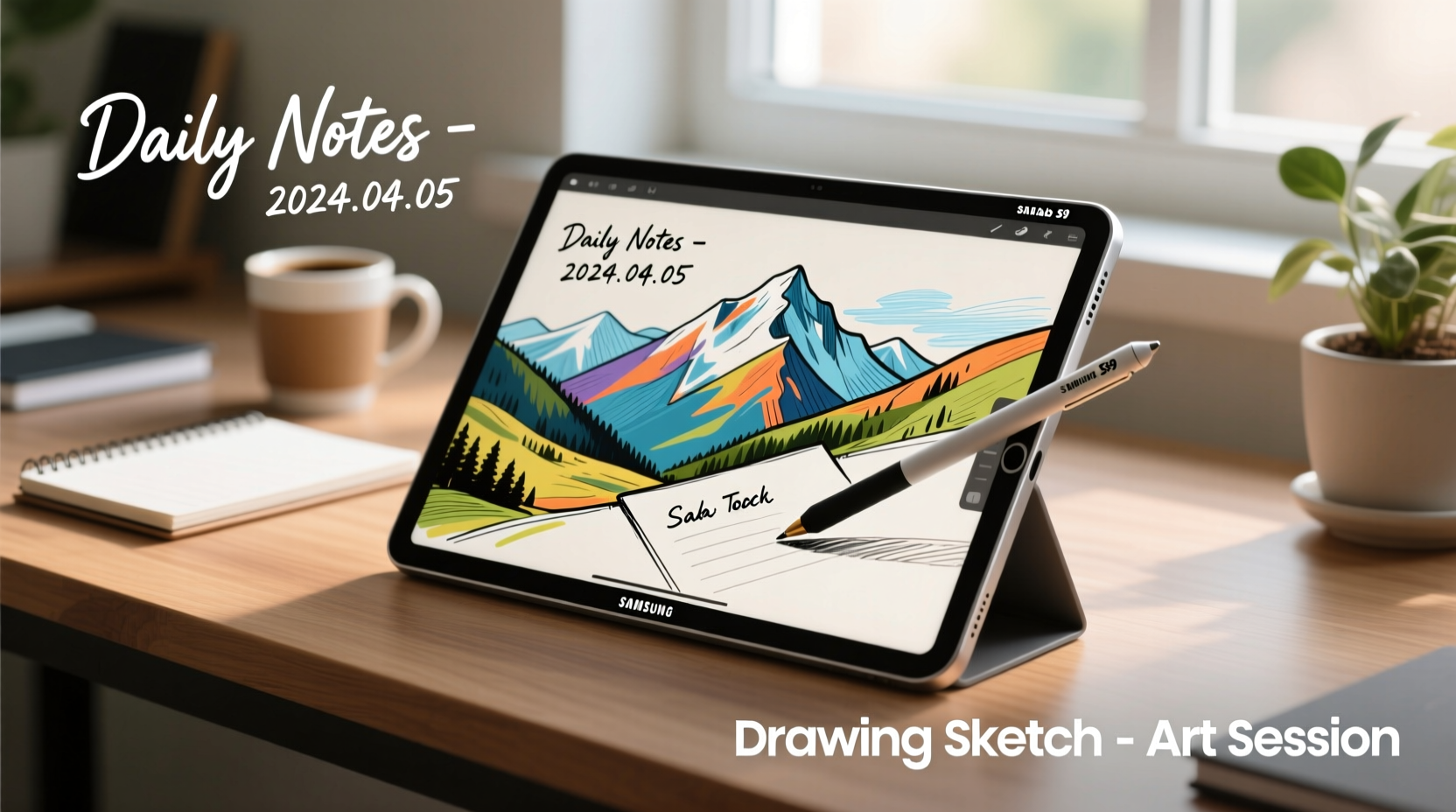
The S Pen remains one of the standout features of the Tab S9, especially for users prioritizing natural writing and drawing. This iteration supports 4,096 levels of pressure sensitivity and boasts a latency as low as 2.3 milliseconds—numbers that rival dedicated graphics tablets like Wacom’s Intuos series. In practice, this means strokes appear on-screen almost instantly, eliminating the distracting lag that plagues many budget styluses.
The pen itself is magnetic, attaches securely to the back of the tablet, and charges wirelessly via Bluetooth. Unlike earlier models, it no longer requires battery replacements; instead, it draws power from the tablet when docked. The matte finish and balanced weight contribute to a premium feel, reducing hand fatigue during extended sessions.
In real-world testing, writing with the S Pen on the Tab S9 feels remarkably close to using a fine-tip pen on paper. The micro-textured glass option (available at an added cost) enhances friction slightly, adding tactile feedback that mimics the resistance of paper. While not identical, it significantly reduces the “slippery” sensation common on glossy screens.
Display Quality and Screen Real Estate
The Tab S9 features a 11-inch LTPS TFT display with a 120Hz refresh rate and HDR10+ support. For note takers and artists, the high refresh rate translates to smoother ink flow—each stroke appears fluid and uninterrupted, even during fast cursive writing or rapid sketching.
Resolution sits at 2560 x 1600 pixels, offering sharp text and clean lines. When using vector-based apps like Samsung Notes or Adobe Illustrator Draw, this clarity ensures that fine details remain crisp, which is crucial for technical drawings or dense annotations.
One often-overlooked advantage is the aspect ratio. At 16:10, the screen provides ample vertical space—ideal for reading academic papers, legal documents, or long-form articles while leaving room for side-by-side note-taking. Compared to narrower devices like iPads, the Tab S9 allows users to view more content without constant scrolling, enhancing productivity during research-heavy tasks.
“Low latency and high screen fidelity are non-negotiables for digital artists. The Tab S9 delivers both, making it a serious contender in the creative tablet space.” — Lena Park, Digital Illustration Instructor at Seoul Arts Academy
Software Ecosystem: Where Function Meets Flexibility
Hardware excellence means little without capable software. The Tab S9 runs Android 13 with Samsung’s One UI 5.1.3, optimized for multitasking and pen input. Key apps include Samsung Notes, Clip Studio Paint, Autodesk SketchBook, GoodNotes (via beta), and Microsoft OneNote—all of which leverage the S Pen’s capabilities.
Samsung Notes stands out as a powerhouse for academics and professionals. It supports handwriting-to-text conversion, shape recognition, audio-linked notes (where audio recordings sync with written timestamps), and PDF annotation with layer support. You can write directly on scanned documents, highlight text, and export everything as searchable PDFs—a feature particularly useful for law students or researchers.
For artists, Clip Studio Paint offers desktop-grade tools on a mobile platform. With pressure-sensitive brushes, customizable palettes, and support for PSD exports, it enables full comic or illustration workflows directly on the tablet. The Tab S9’s 8GB of RAM ensures smooth performance even with large canvases and multiple layers.
App Comparison Table: Note-Taking & Drawing Tools
| App | Best For | S Pen Support | Cloud Sync | Export Options |
|---|---|---|---|---|
| Samsung Notes | Students, professionals | Full (pressure, tilt) | Yes (Samsung Cloud) | PNG, PDF, Text |
| Clip Studio Paint | Digital artists, illustrators | Advanced (brush dynamics) | Yes (CSP Cloud) | PSD, PNG, JPEG, PDF |
| GoodNotes (Beta) | Academic note-taking | Limited (no tilt) | Yes (iCloud sync via web) | PDF, Word, Text |
| Microsoft OneNote | Cross-platform users | Moderate | Yes (OneDrive) | PDF, Print, Share |
Despite strong native support, Android still lags behind iPadOS in terms of specialized note-taking apps. However, Samsung’s partnership with Microsoft and Adobe helps bridge the gap. For example, exporting a Samsung Notes file directly to Word or PowerPoint maintains formatting integrity, enabling seamless integration into office environments.
Ergonomics and Real-World Use: A Day in the Life
To assess long-term usability, consider a typical day for a university student named Daniel, majoring in architecture. He attends three lectures, works on concept sketches between classes, and reviews building codes in the evening.
In his morning lecture, Daniel opens a PDF of the course syllabus in Samsung Notes. He uses the S Pen to underline key dates, add margin comments, and sketch quick diagrams. Thanks to split-screen mode, he keeps the syllabus on one side and a blank notebook on the other for spontaneous ideas. During a break, he switches to Clip Studio Paint to refine a floor plan idea, using palm rejection and zoom gestures naturally.
Later, at the library, he props the tablet on a stand with a folio keyboard. The lightweight design (498g for Wi-Fi model) makes it easy to carry in a backpack. After six hours of intermittent use—including 90 minutes of continuous drawing—the battery remains at 45%, demonstrating solid endurance.
Daniel’s experience highlights the Tab S9’s versatility: it functions equally well as a digital notebook, a portable studio, and a productivity hub. The only limitation he notes is occasional app instability with third-party beta versions, such as early Android ports of GoodNotes. But for core tasks, reliability is excellent.
Step-by-Step Guide: Optimizing Your Tab S9 for Note Taking and Drawing
Getting the most out of your Tab S9 requires more than just unboxing. Follow these steps to tailor the device to your creative or academic needs:
- Install Essential Apps: Download Samsung Notes, Clip Studio Paint, Adobe Acrobat Reader, and OneNote. Enable auto-sync across devices.
- Enable Palm Rejection: Go to Settings > Advanced Features > S Pen > Palm Rejection and ensure it’s turned on to avoid accidental touches.
- Customize Pen Shortcuts: Assign the S Pen button to actions like “Create note” or “Screen write” for instant access.
- Use Dark Mode: Reduces eye strain during late-night study sessions and improves contrast for ink visibility.
- Organize with Notebooks: In Samsung Notes, create separate notebooks for each subject or project. Use tags for quick searchability.
- Backup Regularly: Set up automatic cloud backups to prevent data loss. Samsung Cloud offers 15GB free, but consider Google Drive for larger archives.
- Adjust Display Settings: Lower blue light emission via Eye Comfort Shield and enable adaptive brightness for outdoor use.
Common Pitfalls to Avoid
- Ignoring screen protectors: While the Gorilla Glass Victus 2 is durable, a matte screen protector enhances grip and reduces glare—especially beneficial for artists.
- Overloading widgets: Too many home screen widgets slow down response time. Keep the interface minimal for faster app launches.
- Using incompatible styluses: Third-party pens lack pressure sensitivity and palm rejection. Stick to the S Pen or certified alternatives.
- Neglecting storage management: High-resolution drawings consume space quickly. Regularly offload files to external drives or cloud storage.
Frequently Asked Questions
Can the Tab S9 replace a laptop for note taking?
For most students and professionals, yes—especially when paired with a keyboard cover. The multitasking features (split-screen, pop-up windows) and document editing tools make it viable for writing essays, filling forms, and managing emails. However, heavy coding or video editing may still require a full PC.
How accurate is handwriting recognition?
Samsung Notes converts handwriting to text with over 90% accuracy for printed characters and standard cursive. Accuracy drops slightly with messy handwriting or complex symbols. Users report best results when writing clearly in block letters.
Is the micro-textured screen worth the extra cost?
If you prioritize tactile feedback, absolutely. The textured glass adds subtle resistance, improving control during detailed drawing or fast note-taking. However, if you prefer a smooth glide or use screen protectors anyway, the standard version performs nearly as well.
Final Verdict: Who Should Buy the Tab S9?
The Samsung Tab S9 is not just “worth it” for note taking and drawing—it sets a new benchmark in the Android tablet space. Its combination of ultra-low latency, precise stylus tracking, expansive app support, and ergonomic design makes it ideal for:
- University and medical students needing reliable digital note-taking
- Freelance illustrators seeking a portable drawing solution
- Professionals who annotate contracts, schematics, or presentations
- Anyone transitioning from paper notebooks to a sustainable digital workflow
That said, it’s not universally perfect. If you’re deeply embedded in the Apple ecosystem (owning an iPad and Mac), switching may introduce sync complications. Additionally, the base model starts at $799, and adding the keyboard ($199) and micro-textured screen bump pushes the total past $1,000—making it a significant investment.
Yet for those committed to maximizing digital creativity and efficiency, the Tab S9 delivers exceptional value. It transforms passive consumption into active creation, turning every session into an opportunity to think, write, and draw with confidence.




 浙公网安备
33010002000092号
浙公网安备
33010002000092号 浙B2-20120091-4
Comments
No comments yet. Why don't you start the discussion?