
Every year, millions of homes come alive with the warm glow of Christmas lights. Yet, despite the best intentions, many trees end up looking more chaotic than charming. The culprit? Poor light placement. While stringing lights may seem like a simple task, it’s one of the most impactful — and commonly botched — aspects of holiday decorating. A poorly lit tree can undermine even the finest ornaments and most elegant tinsel. But what exactly counts as a \"design sin\"? And how can you avoid them?
The truth is, yes—there absolutely is a wrong way to place Christmas lights on a tree. From clumping and uneven spacing to incorrect wiring direction and mismatched color temperatures, small missteps compound into big visual flaws. The good news: with a few expert-backed techniques and mindful practices, anyone can achieve that coveted, professionally decorated glow.
The Anatomy of a Well-Lit Tree
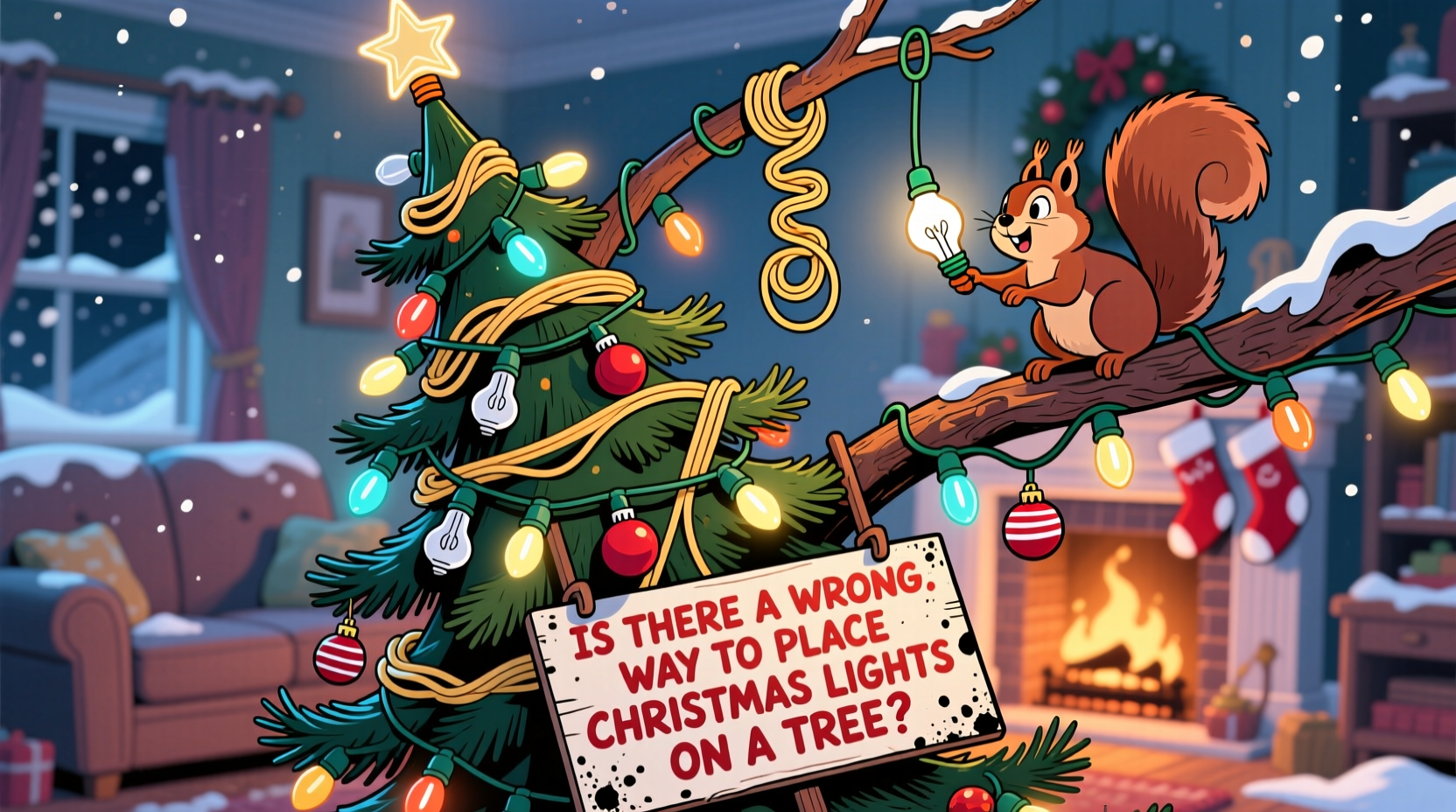
A beautifully lit Christmas tree isn’t just about brightness—it’s about balance, depth, and rhythm. Professional decorators approach lighting as the foundation of the entire design, not an afterthought. Lights should enhance the tree’s shape, create dimension, and set the mood before ornaments are even added.
Consider this: a well-lit tree uses light to sculpt space. It draws the eye inward, highlights layers of branches, and provides a soft backdrop that makes every ornament pop. In contrast, a poorly lit tree feels flat, disjointed, or even aggressive in its brightness.
The key lies in technique—not cost. You don’t need expensive LED strands or designer bulbs. What matters is consistency, coverage, and intentionality.
5 Common Lighting Design Sins (And How to Avoid Them)
Mistakes happen, especially when decorating is rushed or done without a plan. Below are the most frequent errors that turn festive dreams into tangled nightmares.
1. Clumping Instead of Distributing
One of the most glaring issues is bunching lights at the ends of branches or clustering them in certain sections while leaving others bare. This creates hotspots of brightness and dark voids, breaking visual harmony.
Clumping often occurs when decorators work too quickly, wrapping lights around branch tips without pushing them inward. The result? A tree that looks like it’s wearing glowing lollipops instead of being gently illuminated from within.
“Lighting should feel organic, like fireflies nestled in the foliage—not like spotlights aimed at the outer shell.” — Marcus Lang, Interior Stylist & Holiday Decor Consultant
2. Ignoring Depth: Only Lighting the Surface
Many people treat the tree like a 2D canvas, draping lights only along the outer edges. But a Christmas tree is three-dimensional. True radiance comes from layering light deep within the branches, starting near the trunk and spiraling outward.
When lights are confined to the surface, the interior remains shadowy, making the tree appear hollow. By weaving strands inward, you create volume and warmth, giving the illusion that the light is emanating from the heart of the tree.
3. Random Direction & Spiral Confusion
Another subtle but significant mistake is inconsistent spiral direction. If some strands go clockwise and others counterclockwise, the eye struggles to follow a natural flow. This visual dissonance makes the tree feel restless rather than serene.
Choose one direction—clockwise or counterclockwise—and stick with it across all strands. This creates a cohesive rhythm that guides the viewer’s gaze smoothly around the tree.
4. Mismatched Color Temperatures
Not all white lights are the same. Mixing warm white (yellowish glow) with cool white (bluish tint) creates a jarring effect, as if two different trees are sharing space. Even slight mismatches can disrupt the ambiance.
This often happens when using old strands with new ones, or combining lights from different brands. Always test color temperature before installation. For a unified look, use bulbs from the same product line or batch.
5. Overloading or Underlighting
Too few lights make a tree look sparse and sad; too many overwhelm the design and obscure ornaments. The goal is balance—enough illumination to create a glow, but not so much that it competes with other elements.
A general rule is 100 lights per foot of tree height, but density varies by tree fullness and bulb size. Fuller trees may require more strands to penetrate deeper layers.
Step-by-Step Guide: The Right Way to Place Lights
Follow this proven method to achieve a balanced, professional-grade lighting job.
- Start with a Plan: Unplug all strands and inspect for damage. Decide on color temperature and bulb size. Calculate how many sets you’ll need (approx. 100 lights per foot).
- Begin at the Base: Plug the first strand into a power source near the tree stand. Start wrapping from the bottom third of the trunk, working upward.
- Spiral Inward First: Feed the first few bulbs deep into the inner branches, close to the trunk. This anchors the light source at the core.
- Move Outward in a Consistent Spiral: Wrap the strand outward in a steady spiral—clockwise or counterclockwise—maintaining even spacing (about 4–6 inches between wraps).
- Layer Multiple Strands: When one strand ends, begin the next where it left off, maintaining the same direction. Overlap slightly at connection points to avoid dark gaps.
- Focus on Coverage, Not Speed: Take time to weave lights through mid-layer branches. Avoid letting strands dangle or rest only on surface tips.
- Test Before Finalizing: Once all strands are in place, plug them in. Walk around the tree to check for dark spots, clumps, or flickering.
- Adjust as Needed: Reposition any problematic sections. Tuck stray wires and secure loose ends with twist ties or floral pins.
“The difference between amateur and pro-level lighting is patience. Pros spend 70% of their time on lights alone.” — Lila Tran, Award-Winning Holiday Display Designer
Do’s and Don’ts: Lighting Placement Checklist
- ✅ Do test all light strands before installation
- ✅ Do start from the inside and work outward
- ✅ Do maintain consistent spiral direction
- ✅ Do use matching color temperatures
- ✅ Do space wraps evenly (4–6 inches apart)
- ❌ Don’t cluster lights at branch tips
- ❌ Don’t mix warm and cool white bulbs
- ❌ Don’t skip inner branch coverage
- ❌ Don’t rush the process—take breaks if needed
- ❌ Don’t forget to step back and assess from multiple angles
Comparison Table: Common Lighting Mistakes vs. Best Practices
| Mistake | Why It’s a Problem | Correct Approach |
|---|---|---|
| Lights only on outer branches | Creates flat appearance; interior looks empty | Weave lights from trunk outward, covering inner and mid-layer branches |
| Mixed warm and cool white bulbs | Causes visual tension; looks uncoordinated | Use uniform color temperature across all strands |
| Inconsistent spiral direction | Disrupts eye movement; appears chaotic | Spiral all strands in the same direction |
| Clumped or bunched lights | Creates glare zones and dark areas | Space wraps evenly, adjusting by hand for consistency |
| Too few or too many lights | Undermines balance and aesthetic harmony | Aim for 100 lights per foot of tree height, adjusting for fullness |
Real Example: The Overlit Apartment Tree
Sarah, a graphic designer in Chicago, prided herself on her annual tree display. One year, she decided to “go big” with 12 strands of bright cool-white LEDs on her 6-foot pre-lit tree. She wrapped each strand tightly, focusing on the outer branches for maximum sparkle. But when she turned off the lights, guests squinted. The tree felt harsh, almost clinical. Ornaments were lost in the glare, and the living room took on a fluorescent vibe.
After consulting a decorator, Sarah learned she had committed three major sins: overlighting, surface-only placement, and using cool white on a tree meant for warm, cozy ambiance. She replaced half the strands with warm white mini LEDs, rewired them to spiral inward first, and spaced them more generously. The transformation was instant—softer, richer, and far more inviting.
Frequently Asked Questions
How many strings of lights do I need for a 7-foot tree?
For a standard 7-foot tree, aim for 700–800 mini lights. If using larger C7 or C9 bulbs, reduce the count to 350–450 due to higher brightness. Adjust based on tree density—fuller trees may need more strands to achieve even coverage.
Should I put lights on before or after ornaments?
Always install lights before adding ornaments. This prevents damage to both lights and decorations, allows you to see how light interacts with branch structure, and ensures ornaments are placed where they’ll catch the glow effectively.
Can I mix colored and white lights on the same tree?
Yes, but with caution. Mixing colored and white lights can work in themed designs (e.g., winter wonderland or retro kitsch), but it risks visual clutter. If combining, use white as the base layer and add colored lights sparingly as accents. Ensure all whites match in temperature to avoid discord.
Conclusion: Elevate Your Holiday Aesthetic
The way you place Christmas lights on your tree is not just a matter of preference—it’s a design decision with real impact. Avoiding common pitfalls like clumping, inconsistent spirals, and mismatched colors transforms your tree from ordinary to exceptional. With deliberate placement, attention to detail, and a bit of patience, you can achieve a luminous, layered look that feels both joyful and sophisticated.
Remember, great lighting isn’t about quantity—it’s about quality of distribution, warmth of tone, and respect for the tree’s form. Whether you’re decorating a towering spruce or a compact tabletop fir, the principles remain the same. Apply these insights this season, and watch your tree become the centerpiece of admiration.




 浙公网安备
33010002000092号
浙公网安备
33010002000092号 浙B2-20120091-4
Comments
No comments yet. Why don't you start the discussion?