
For many long-time Apple users, clinging to early-generation iPhones is a mix of nostalgia, reliability, and reluctance to embrace rapid tech cycles. But as we navigate the 2020s, holding onto an original iPhone 1—released in 2007—is more than just sentimental; it’s a significant technological handicap. The question isn’t whether the iPhone 1 works—it does, in the most basic sense—but whether stepping up to an iPhone 7, released nearly a decade later in 2016, offers enough improvement to justify the upgrade today.
The answer, in short: yes, but with caveats. While the iPhone 7 is no longer Apple’s flagship, it remains a functional device capable of handling modern tasks. Upgrading from the iPhone 1 to the iPhone 7 isn’t just an incremental change—it’s a quantum leap in computing power, connectivity, and user experience. However, timing, cost, and long-term usability must be considered before making the move.
A Quantum Leap in Performance and Design
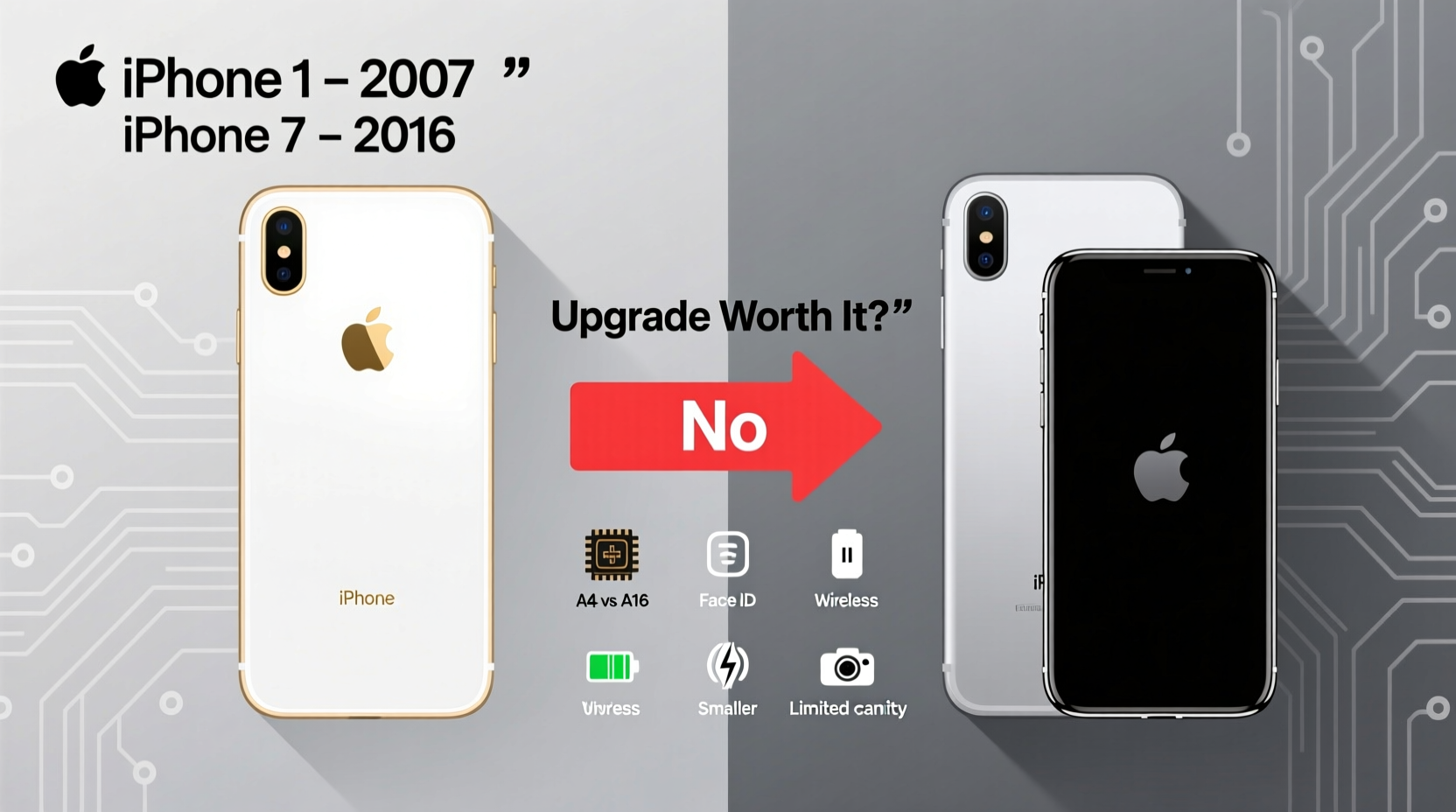
The original iPhone was revolutionary for its time. It introduced the world to capacitive touchscreens, multi-touch gestures, and a mobile operating system built around apps. But by today’s standards, its hardware is archaic. The iPhone 1 ran on a 412 MHz ARM11 processor with 128 MB of RAM and shipped with iOS 1.0—none of which support modern apps or web standards.
In contrast, the iPhone 7 features Apple’s A10 Fusion chip, a 64-bit quad-core processor that delivers over 10 times the CPU performance and significantly better graphics. With 2 GB of RAM and storage options up to 128 GB (compared to the iPhone 1’s max of 16 GB), the iPhone 7 can run iOS 16—the last version it supports—and handle multitasking, streaming, and app usage smoothly.
Software and App Compatibility: A Critical Divide
This is where the upgrade becomes essential. The iPhone 1 runs iOS 3.1.3 at maximum—software released in 2009. Most modern websites won’t load properly, and nearly all current apps, including Gmail, WhatsApp, Instagram, and banking tools, are completely incompatible.
The iPhone 7, while no longer receiving new iOS updates after iOS 16, still supports the vast majority of apps available on the App Store. It includes security patches through 2023 and will likely remain functional into 2025 for basic use. This means access to email, messaging, maps, ride-sharing, mobile banking, and even video calls via FaceTime or Zoom.
“Moving from first-gen iOS devices to even a five-year-old iPhone like the 7 opens up a new digital life. It’s not just about speed—it’s about participation.” — David Lin, Mobile Technology Analyst at TechInsight Group
Camera and Multimedia Capabilities
The iPhone 1 came with a 2-megapixel rear camera—no flash, no front-facing camera, and no video recording beyond 30 seconds at 30fps. Photos were grainy, slow to process, and limited in sharing options (no native social media integration).
The iPhone 7 introduced a 12-megapixel rear camera with optical image stabilization (on the Plus model), faster autofocus, and improved low-light performance. It also added a 7-megapixel front camera for selfies and FaceTime. More importantly, it supports HD video recording at 1080p and 60fps, slow-motion video, and basic editing—all within the native Photos app.
If you value capturing memories, scanning documents, or simply reading QR codes, the iPhone 7’s camera alone makes the upgrade worthwhile.
Connectivity and Modern Features
The iPhone 1 supported only 2G EDGE networks—data speeds so slow they’re practically unusable today. Loading a single webpage could take minutes, and streaming audio or video was impossible. Wi-Fi was limited to 802.11b/g, with no Bluetooth file transfer capabilities.
The iPhone 7 supports LTE Advanced, offering download speeds up to 300 Mbps—fast enough for HD video streaming. It includes Bluetooth 4.2, NFC (used in Apple Pay), and dual-band Wi-Fi (802.11ac). It also features water resistance (IP67 rating), allowing survival in up to 1 meter of water for 30 minutes—a far cry from the iPhone 1’s fragile build.
| Feature | iPhone 1 (2007) | iPhone 7 (2016) |
|---|---|---|
| Processor | 412 MHz ARM11 | A10 Fusion (2.34 GHz) |
| RAM | 128 MB | 2 GB |
| Storage | 4/8/16 GB | 32/128/256 GB |
| Camera | 2 MP (rear only) | 12 MP rear, 7 MP front |
| Network | 2G EDGE | LTE Advanced |
| OS Support | iOS 3.1.3 (2009) | iOS 16 (2022–2023) |
| Battery Life | ~5 hours talk time | ~14 hours talk time |
Real-World Example: Sarah’s Upgrade Journey
Sarah, a 68-year-old retiree, had used her original iPhone 1 since 2008. She appreciated its simplicity and kept it primarily for phone calls and occasional notes. Over time, she found herself increasingly isolated—unable to join family group chats on WhatsApp, view photo albums shared via iCloud, or schedule telehealth appointments.
In 2023, she upgraded to a refurbished iPhone 7 after her grandson helped set it up. Within days, she was sending photos, using FaceTime, and managing prescriptions through her pharmacy’s app. “It felt like I finally rejoined the world,” she said. “The screen is brighter, everything loads fast, and I don’t have to wait two minutes just to open a message.”
Sarah’s story reflects a broader truth: technology isn’t just about convenience. For many, especially older adults, staying connected means maintaining independence and relationships.
Step-by-Step Guide to Making the Upgrade
If you’re considering the jump from iPhone 1 to iPhone 7, follow this practical timeline:
- Backup your iPhone 1 data – Use iTunes on a compatible computer to extract contacts, notes, and call logs. Note: syncing with modern iCloud is not possible.
- Purchase a refurbished iPhone 7 – Look for certified pre-owned models from reputable sellers like Apple, Best Buy, or Swappa. Avoid units with cracked screens or battery health below 80%.
- Set up the iPhone 7 – Turn it on, connect to Wi-Fi, and choose “Set Up as New iPhone” unless you have an active iCloud account.
- Transfer essential data – Manually re-enter contacts or import from a CSV file. Use email or cloud services to retrieve old notes.
- Install essential apps – Download messaging, email, maps, and any health or finance apps you need.
- Optimize settings – Enable auto-brightness, reduce motion, and turn on Larger Text for easier reading.
- Learn core functions – Practice using the camera, Safari, and Siri to build confidence.
Checklist Before You Upgrade
- ✅ Confirm your computer can run iTunes versions compatible with iPhone 1 backup
- ✅ Research refurbished iPhone 7 pricing (expect $80–$150 USD)
- ✅ Ensure Wi-Fi access at home for setup and downloads
- ✅ Identify which apps you’ll need (e.g., banking, messaging, health)
- ✅ Consider accessibility settings if needed (voiceover, magnifier, etc.)
- ✅ Prepare to charge the iPhone 7 regularly—older batteries degrade
Frequently Asked Questions
Can the iPhone 7 still get security updates?
No. Apple ended major iOS updates for the iPhone 7 with iOS 16. Security patches may still be issued occasionally, but no new features or OS upgrades will be released. For most users, this is acceptable for light usage, but avoid storing sensitive financial data if possible.
Is the iPhone 7 too old to buy in [current year]?
It depends on your needs. If you want a reliable secondary phone, gift for a child, or entry-level smartphone with full app support, the iPhone 7 is still viable. However, if you plan to use it long-term or rely on newer apps, consider upgrading to an iPhone 8 or later for better future-proofing.
Will apps start breaking on the iPhone 7 soon?
Gradually, yes. As developers optimize for newer iOS versions, some apps may drop support for iOS 16 and earlier. However, core services like Gmail, WhatsApp, and Apple’s own apps will likely remain functional for several more years.
Final Verdict: Yes, But Plan Ahead
Upgrading from the iPhone 1 to the iPhone 7 in the current year is absolutely worth it—not because the iPhone 7 is cutting-edge, but because the iPhone 1 is functionally obsolete. The difference between these two devices spans over a decade of innovation. The iPhone 7 offers secure browsing, app access, high-quality communication, and integration with modern digital life.
However, this should be viewed as a transitional upgrade. The iPhone 7 won’t receive further iOS updates, and battery replacement may be necessary. For sustained usability, consider saving toward an iPhone SE (3rd gen) or iPhone 11, which offer modern performance and support through 2027 or beyond.




 浙公网安备
33010002000092号
浙公网安备
33010002000092号 浙B2-20120091-4
Comments
No comments yet. Why don't you start the discussion?