
For millions of iPhone 8 users still relying on a device released in 2017, the question isn’t just about desire—it’s about necessity. After nearly six years, even the most durable tech begins to show its age. The iPhone 12, launched in 2020, brought sweeping changes to Apple’s smartphone lineup. But is making the jump in 2024—or beyond—still worthwhile? The answer depends on your usage, expectations, and how much modern features matter to you. Let’s break down exactly what you gain by upgrading and whether the leap justifies the cost.
Performance: A Generational Leap in Speed and Efficiency
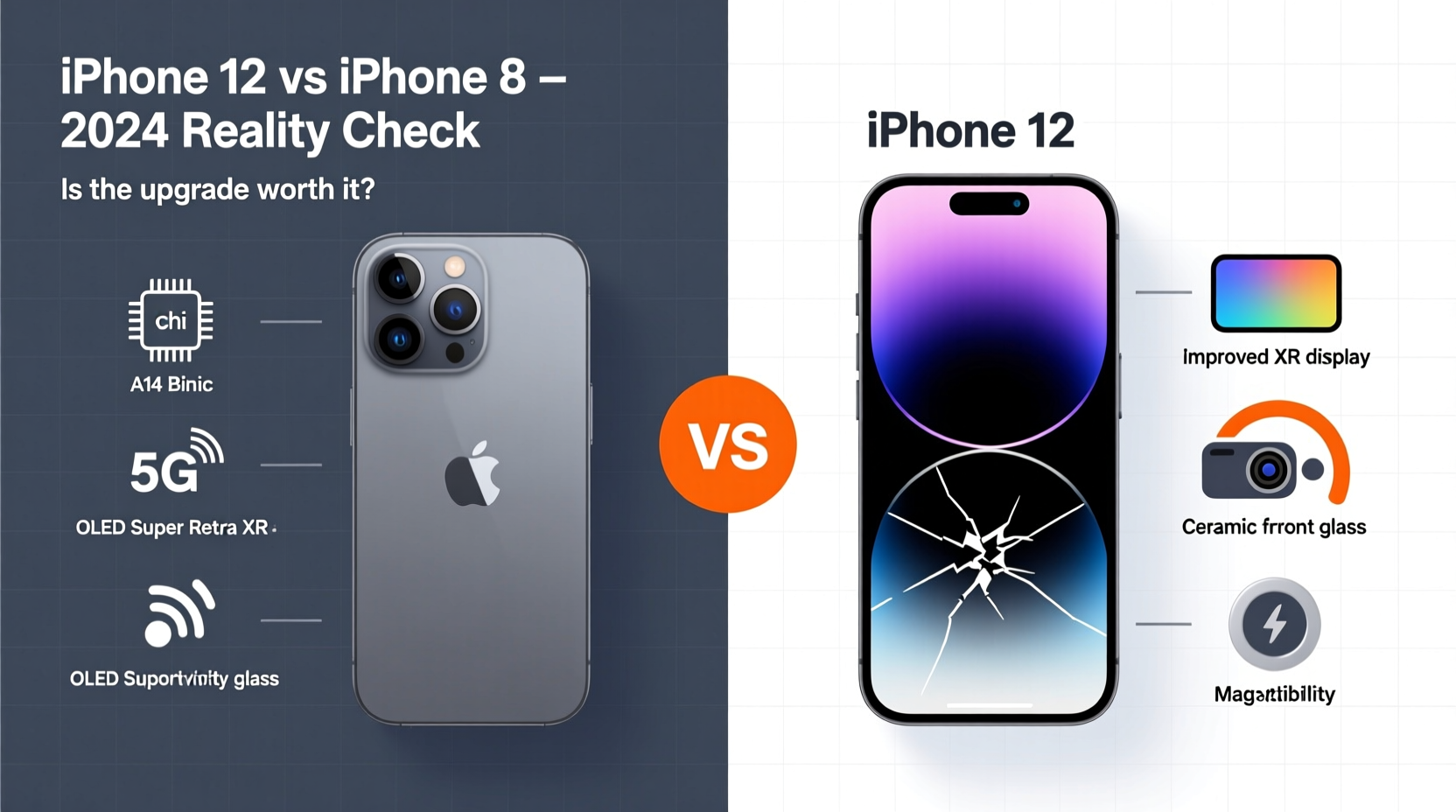
The iPhone 8 runs on Apple’s A11 Bionic chip, which was groundbreaking at the time but now struggles with multitasking, app loading, and background processes. In contrast, the iPhone 12 features the A14 Bionic chip—the first 5-nanometer processor in any smartphone. This isn't just an incremental upgrade; it's a massive leap in processing power, neural engine capability, and energy efficiency.
Benchmarks show the A14 delivers roughly 60% faster CPU performance and over 100% better GPU performance than the A11. What does that mean in real life?
- Faster app launches—even heavy apps like Adobe Lightroom or video editors respond instantly.
- Smoother scrolling through social media feeds and photo libraries.
- Better handling of augmented reality (AR) experiences and gaming.
- Improved AI tasks such as Face ID recognition, photo sorting, and voice processing.
Display and Design: From LCD to Super Retina XDR
The iPhone 8 uses a 4.7-inch Retina HD LCD display with thick bezels and a home button. By today’s standards, it feels cramped and outdated. The iPhone 12 introduces a 6.1-inch Super Retina XDR OLED display—a dramatic improvement in clarity, color accuracy, and contrast ratio (up to 2,000,000:1).
OLED technology enables true blacks, deeper contrast, and HDR support for streaming services like Netflix and Apple TV+. Whether you're watching videos, editing photos, or reading in low light, the visual experience is significantly enhanced.
Design-wise, the iPhone 12 adopts a flat-edge aerospace-grade aluminum frame reminiscent of the iPhone 4 and 5, giving it a more modern, premium feel. It also supports MagSafe accessories—something completely absent on the iPhone 8.
“Switching from an iPhone 8 to a newer model isn’t just about speed—it’s about immersion. The screen alone transforms how you interact with content.” — David Lin, Mobile Technology Analyst at TechPulse Insights
Camera Upgrades That Actually Matter
Apple marketed the iPhone 8’s camera as excellent for its time, and it was. But the iPhone 12 brings meaningful improvements that affect everyday photography:
- Dual-camera system: The iPhone 8 has a single 12MP wide lens. The iPhone 12 adds a second 12MP ultra-wide lens, allowing for wider landscapes, group shots, and creative framing.
- Night mode: Available on both rear and front cameras, this feature captures dramatically brighter and clearer photos in low light.
- Deep Fusion and Smart HDR 3: These computational photography tools enhance texture, reduce noise, and balance lighting across complex scenes.
- 4K Dolby Vision HDR video recording: The iPhone 12 can record cinematic-quality video, a feature the iPhone 8 lacks entirely.
If you take frequent photos or share moments on social media, the difference is immediately noticeable. Low-light shots are no longer grainy, colors pop naturally, and dynamic range handles bright skies and dark shadows simultaneously.
Real Example: Sarah’s Upgrade Experience
Sarah, a freelance photographer based in Portland, used her iPhone 8 for client previews and social media content. She noticed increasing lag when editing RAW files and frustration with blurry night shots. After upgrading to the iPhone 12, she found she could shoot directly in challenging lighting, apply edits in Lightroom Mobile without freezing, and deliver higher-quality previews—all from her phone. “It’s not just a new phone,” she said. “It became part of my toolkit.”
Network, Battery, and Longevity Considerations
One of the most impactful upgrades is connectivity. The iPhone 8 supports only up to LTE Advanced, while the iPhone 12 includes 5G (both mmWave and sub-6GHz). In areas with strong 5G coverage, download speeds can be 5–10x faster, improving cloud backups, streaming quality, and remote work capabilities.
Battery life is another key factor. Despite having a smaller battery capacity than some competitors, the iPhone 12 benefits from more efficient components and iOS optimizations. Real-world testing shows it lasts 40–50% longer on a charge compared to the iPhone 8, especially under mixed usage.
Perhaps most importantly, software support plays a major role. As of 2024, the iPhone 8 is no longer receiving major iOS updates (it topped out at iOS 16). The iPhone 12 continues to receive updates—including security patches and new features—with expected support until at least 2027. This longevity ensures compatibility with future apps and services.
Checklist: Is It Time to Upgrade?
Ask yourself these questions before deciding:
- Do apps frequently crash or load slowly?
- Is your battery drained within half a day?
- Have you stopped receiving iOS updates?
- Do you struggle taking good photos in dim light?
- Are you unable to use newer features like FaceTime spatial audio or SharePlay?
- Do you want access to 5G for faster downloads or better video calls?
If you answered “yes” to three or more, the upgrade is likely justified.
Comparison Table: iPhone 8 vs iPhone 12
| Feature | iPhone 8 | iPhone 12 |
|---|---|---|
| Release Year | 2017 | 2020 |
| Chipset | A11 Bionic | A14 Bionic |
| Display | 4.7\" LCD (Retina HD) | 6.1\" OLED (Super Retina XDR) |
| Rear Cameras | 12MP Wide | 12MP Wide + 12MP Ultra-Wide |
| Front Camera | 7MP | 12MP with Night Mode |
| Video Recording | 4K up to 60fps | 4K Dolby Vision HDR up to 60fps |
| Connectivity | LTE Only | 5G (mmWave & Sub-6GHz) |
| Face ID / Touch ID | Touch ID | Face ID |
| MagSafe Support | No | Yes |
| Expected Software Support | Ended (iOS 16) | Until ~2027 (iOS 17+) |
FAQ
Will my accessories work with the iPhone 12?
Most Lightning cables and headphones will work, but cases won’t fit due to different dimensions and the flat-edge design. Wireless charging is supported on both, but MagSafe accessories only work with iPhone 12 and later.
Is the iPhone 12 still available new?
Apple discontinued the iPhone 12 after the release of the iPhone 13, but it remains widely available through carriers, refurbished retailers, and third-party sellers. Certified refurbished models often come with warranties and are priced competitively.
Can the iPhone 12 handle modern games and AR apps?
Absolutely. The A14 Bionic chip and improved thermal management allow the iPhone 12 to run demanding titles like Genshin Impact and AR navigation apps smoothly—something the iPhone 8 cannot do reliably.
Final Verdict: Yes, the Upgrade Still Makes Sense
Even in 2024, moving from an iPhone 8 to an iPhone 12 represents one of the most impactful upgrades possible within the Apple ecosystem. You’re not just getting a newer phone—you’re gaining a faster processor, a vastly superior display, a professional-grade camera system, 5G connectivity, longer software support, and access to modern features that shape daily usability.
The investment pays off in smoother performance, better photo quality, extended battery life, and peace of mind knowing your device will remain secure and functional for years to come. While newer models like the iPhone 15 exist, the iPhone 12 strikes an ideal balance between cutting-edge capabilities and affordability—especially if purchased refurbished.




 浙公网安备
33010002000092号
浙公网安备
33010002000092号 浙B2-20120091-4
Comments
No comments yet. Why don't you start the discussion?