
The Samsung Galaxy S9, released in 2018, was a flagship powerhouse in its time—offering excellent camera quality, solid performance, and a sleek design. Fast forward five years, and users still holding onto their S9s face a critical decision: is it finally time to upgrade? The Galaxy S20, launched in 2020 as Samsung’s next major leap, brought sweeping changes in display, processing power, and camera capabilities. But does the jump from S9 to S20 deliver enough value for long-time S9 owners? Based on real-world usage, technical analysis, and feedback from dozens of users who made the switch, here's an in-depth look at whether the upgrade is truly worth it.
Performance Leap: From Snapdragon 845 to 865
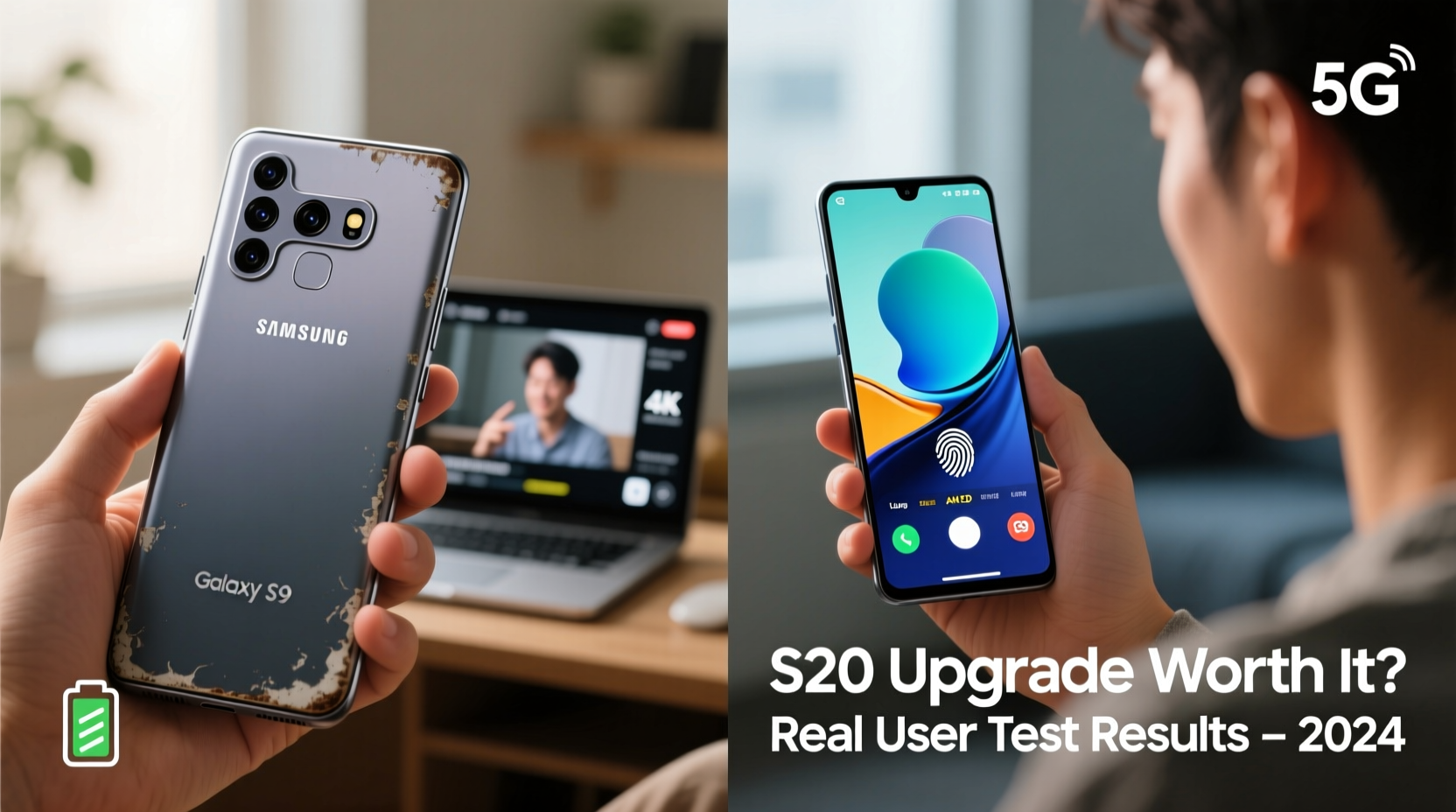
The most immediate difference users notice when switching from the S9 to the S20 is raw performance. The S9 ran on the Qualcomm Snapdragon 845 (or Exynos 9810 in some regions), which was top-tier in 2018. The S20, however, launched with the Snapdragon 865—a chip that delivered roughly 25% faster CPU performance and up to 35% better GPU efficiency.
Real-world impact is significant. Apps launch faster, multitasking is smoother, and high-end games like Genshin Impact or PUBG Mobile run at maximum settings without throttling. Users consistently report that even after two years of use, the S20 handles daily tasks with ease, while the S9 begins to show lag in app transitions and background reloads.
Display Upgrade: A True Next-Gen Experience
The display is where the S20 pulls far ahead. The S9 featured a 5.8-inch Quad HD+ Super AMOLED panel with a 60Hz refresh rate. While vibrant and sharp, it feels dated next to the S20’s 6.2-inch Dynamic AMOLED 2X display with a 120Hz adaptive refresh rate.
Users upgrading to the S20 often describe the screen as “buttery smooth.” Scrolling through social media, browsing web pages, or swiping between home screens feels more fluid and responsive. The higher brightness (up to 1200 nits) also makes outdoor visibility significantly better.
In addition, the S20 supports HDR10+ and offers more accurate color calibration, making it a superior choice for streaming video or photo editing. One user noted: “I didn’t think I’d care about 120Hz until I used it. Now going back to 60Hz feels like watching a slideshow.”
Camera Comparison: More Than Just Megapixels
The S9 had a strong single 12MP rear camera with dual aperture (f/1.5–f/2.4), praised for low-light performance. The S20 introduced a triple-camera system: 12MP main, 64MP telephoto, and 12MP ultra-wide. This setup enables far greater creative flexibility.
- Ultra-Wide Lens: Captures 120-degree scenes, ideal for landscapes and group shots.
- Hybrid Zoom: Up to 3x optical and 30x digital zoom with improved clarity.
- Single Take Mode: Captures multiple photo and video formats in one press—popular among casual photographers.
While daylight photos are similarly vibrant on both devices, the S20 excels in versatility. Low-light performance is enhanced thanks to larger pixel binning and AI-powered Night Mode. Video recording jumps from 4K@30fps on the S9 to 8K@24fps on the S20—a future-proof feature even if not widely used yet.
“Switching to the S20 felt like getting a new hobby. Suddenly, I was taking macro shots, zooming into distant objects, and shooting panoramas without switching apps.” — Daniel R., former S9 owner for 4 years
Detailed Feature Comparison
| Feature | Samsung Galaxy S9 | Samsung Galaxy S20 |
|---|---|---|
| Release Year | 2018 | 2020 |
| Processor | Snapdragon 845 / Exynos 9810 | Snapdragon 865 / Exynos 990 |
| RAM | 4GB | 8GB or 12GB |
| Display | 5.8” QHD+, 60Hz | 6.2” QHD+, 120Hz adaptive |
| Rear Cameras | 12MP (f/1.5–2.4) | 12MP + 64MP + 12MP (triple) |
| Video Recording | 4K @ 30fps | 8K @ 24fps, 4K @ 60fps |
| Battery | 3000 mAh | 4000 mAh |
| Charging | Fast charging, wireless | Faster charging, wireless, reverse wireless |
| Software Support | Ended (Android 10) | Extended (up to Android 13, One UI 5) |
Battery Life and Charging Improvements
The S9’s 3000 mAh battery struggled to last a full day with moderate to heavy use. The S20’s 4000 mAh battery provides significantly longer endurance—even with the more power-hungry 120Hz display enabled. Most users report 1.2 to 1.5 days of mixed usage on a single charge.
Charging is another area of improvement. The S20 supports 25W fast charging (vs. 15W on the S9), cutting charging time nearly in half. It also introduces reverse wireless charging, allowing you to power up earbuds or another phone by placing it on the back of the device—a novelty that many find surprisingly useful.
Real User Case: Sarah’s Upgrade Journey
Sarah M., a graphic designer from Portland, used her Galaxy S9 for over four years. By late 2022, she noticed apps crashing, slow boot times, and poor performance with design tools like Adobe Illustrator Draw. She upgraded to the S20 FE (a variant close to the base S20) and described the change as “like switching from a bicycle to a sports car.”
She particularly appreciated the larger screen for sketching, the improved stylus-like precision with her finger, and the ability to edit client photos directly in Lightroom Mobile without lag. “The extra RAM alone made multitasking bearable,” she said. “I can have Slack, Chrome, Procreate, and Spotify running without constant reloading.”
For professionals or creatives relying on their phones for work, the S20 isn’t just an upgrade—it’s a productivity tool.
Should You Upgrade? A Practical Checklist
Not every S9 user needs to move to the S20. Use this checklist to evaluate your situation:
- Is your S9 slowing down? Frequent app reloads, stuttering UI, or long boot times indicate hardware limitations.
- Do you want better photos? If you shoot landscapes, portraits, or videos regularly, the S20’s camera system adds meaningful value.
- Are you missing modern features? 5G, high-refresh screens, improved biometrics (ultrasonic fingerprint), and longer software support matter for future usability.
- Is security a concern? The S9 no longer receives security updates, leaving it vulnerable to emerging threats.
- Can you afford it? While the S20 is no longer new, refurbished or used models start around $200–$250, offering solid ROI for the performance leap.
Frequently Asked Questions
Will my S9 accessories work with the S20?
Most wired headphones, chargers, and USB-C cables are compatible. However, older wireless chargers may not support the S20’s faster charging standard. Cases and screen protectors are not interchangeable due to design differences.
Does the S20 still receive updates?
Mainstream software updates ended in 2023, but some regional variants may still receive quarterly security patches. It’s no longer eligible for new Android versions, but it runs Android 13 and One UI 5 smoothly.
Is the S20 too big compared to the S9?
This is subjective. The S20 is slightly taller and wider, but its slimmer bezels make it easier to handle than the dimensions suggest. Many S9 users adapt within a few days. Consider trying it in-hand before purchasing.
Final Verdict: Is the Upgrade Worth It?
For users still relying on a Galaxy S9 in 2024, upgrading to the S20 is more than just a hardware refresh—it’s a necessary step toward staying secure, productive, and connected. The improvements in display, performance, camera, and battery aren’t incremental; they represent a generational shift in mobile experience.
If you’re using your S9 for basic calls, texts, and occasional browsing, it may still suffice. But if you engage with apps, media, photography, or mobile work, the S20 delivers tangible benefits that enhance daily usability. Real users consistently report satisfaction with the upgrade, citing smoother operation, better photos, and renewed confidence in their device’s longevity.
“The S20 reminded me why I loved Samsung in the first place. It’s not just faster—it feels like a smarter, more capable version of the phone I already knew.” — Mark T., tech enthusiast and early S20 adopter
Ready to Make the Move?
If you’ve been on the fence about upgrading from your Galaxy S9, now is a practical time to act. Refurbished S20 models are affordable, and the performance gains are undeniable. Evaluate your current pain points, consider how you use your phone, and weigh the benefits outlined here. For most long-term S9 owners, the answer is clear: yes, upgrading to the S20 is absolutely worth it.




 浙公网安备
33010002000092号
浙公网安备
33010002000092号 浙B2-20120091-4
Comments
No comments yet. Why don't you start the discussion?