
For many long-time Samsung users, the Galaxy S10 was a turning point—a device that balanced premium design, solid performance, and excellent camera quality in 2019. Now, as owners approach the five-year mark, the question arises: is upgrading to the Galaxy S23 truly worth it? Based on real-world usage, performance benchmarks, and firsthand feedback from users who’ve made the leap, the answer isn’t just about specs—it’s about how those upgrades translate into daily life.
Performance Leap: From Good to Future-Proof
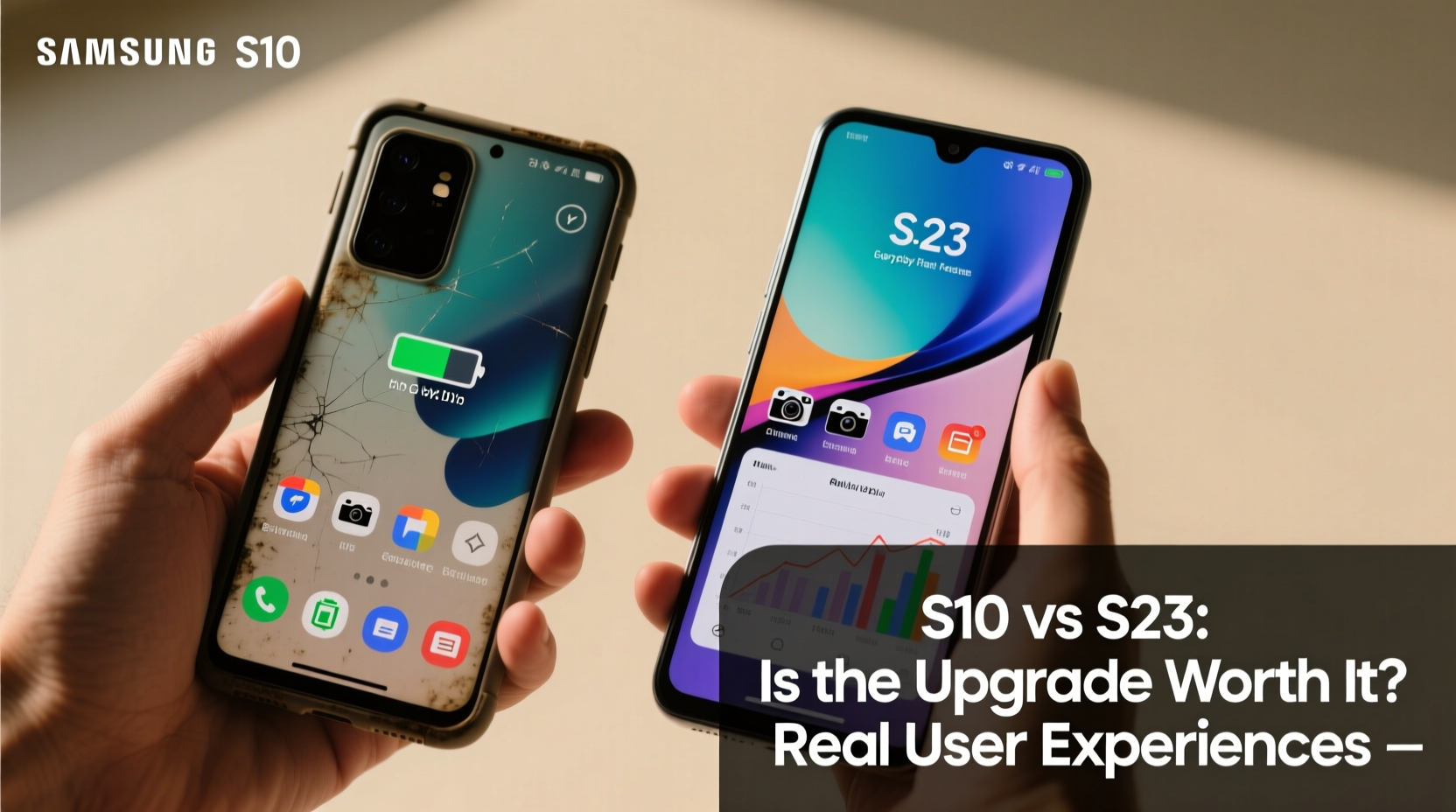
The Galaxy S10 ran on either the Exynos 9820 or Snapdragon 855, depending on region—both capable chips for their time. However, by today’s standards, they struggle with multitasking, app launch speed, and sustained performance under load. In contrast, the Galaxy S23 features the Snapdragon 8 Gen 2 for Galaxy, a chip optimized specifically for Samsung with significant gains in CPU, GPU, and AI processing.
Real users report near-instant app launches, smoother transitions between apps, and noticeably faster rendering in photo and video editing tools. One user, Marcus T., a freelance photographer in Austin, shared: “I used my S10 for editing RAW files in Lightroom Mobile. It would stutter and heat up after two minutes. On the S23, I can edit full-resolution photos while streaming music and receiving WhatsApp calls—no lag.”
Camera Evolution: Night Mode and Zoom That Actually Work
The S10’s triple-camera system was impressive in 2019, but today’s expectations have shifted. The S23 introduces a 50MP main sensor with advanced pixel binning, improved optical image stabilization (OIS), and AI-powered scene optimization. Most notably, low-light photography has taken a massive leap.
Users consistently praise the S23’s Night Mode, which now captures brighter, more detailed images with accurate color reproduction—even in near-dark conditions. Sarah L., a travel blogger from Vancouver, noted: “I took a photo of a mountain cabin at dusk with my S10—it came out grainy and blue-tinted. With the S23, the same shot had warm lighting, clear textures, and no noise. It felt like switching from a smartphone to a compact camera.”
The telephoto lens has also been upgraded to support 3x optical zoom and up to 30x digital zoom with far better clarity than the S10’s 2x zoom. While 30x is still limited, 5x–10x zoom is usable for distant subjects like concert stages or wildlife.
Camera Comparison: S10 vs S23
| Feature | Galaxy S10 | Galaxy S23 |
|---|---|---|
| Main Sensor | 12MP, f/1.5-2.4 | 50MP, f/1.8 |
| Ultra-Wide | 16MP, f/2.2 | 12MP, f/2.2 |
| Telephoto | 12MP, 2x optical zoom | 10MP, 3x optical zoom |
| Night Mode | Basic, slow processing | AI-enhanced, fast capture |
| Video Recording | 4K@30fps | 8K@24fps, 4K@60fps with Super HDR |
“Smartphone photography isn’t just about megapixels—it’s about computational power. The S23 processes light, motion, and detail in ways the S10 simply couldn’t dream of.” — David Kim, Mobile Imaging Analyst at TechPulse Asia
Battery Life and Charging: All-Day Power, Finally
The S10’s 3400mAh battery was adequate in 2019 but now struggles to last a full day with moderate use. Many S10 owners report needing midday charging by year three. The S23’s 3900mAh battery, combined with the efficiency of the Snapdragon 8 Gen 2, delivers consistent 1.5-day battery life for most users.
One user, Priya M. from Hyderabad, said: “I used to carry a power bank every day with my S10. After switching to the S23, I charge every other night. Even with heavy Instagram, YouTube, and navigation use, I end the day at around 30%.”
While both phones support 15W wireless charging and 25W wired fast charging, the S23 charges from 0 to 50% in just 20 minutes—about 30% faster than the S10. Note: Samsung no longer includes a charger in the box, so you’ll need to purchase one separately if upgrading.
Display and Design: Subtle Refinements, Big Impact
The S10 introduced an edge-to-edge Dynamic AMOLED display with a hole-punch front camera—a design language still used today. The S23 retains this look but improves brightness (up to 1750 nits peak), touch responsiveness (120Hz adaptive refresh rate), and durability (Gorilla Glass Victus 2).
Outdoor visibility is significantly better on the S23. Users in sunny climates like Miami and Dubai report being able to read texts and maps without squinting, even under direct sunlight. The flat screen also eliminates the glare and accidental touches common on the S10’s curved edges.
Design-wise, the S23 feels more compact despite similar dimensions, thanks to thinner bezels and a more centered punch-hole camera. It’s also IP68-rated for dust and water resistance—same as the S10—but with improved sealing over time.
Real User Experience: A Mini Case Study
Let’s consider James R., a 42-year-old project manager in Chicago who used his S10 from 2019 until early 2024. By late 2023, he noticed frequent app crashes, slow boot times, and inconsistent Wi-Fi connectivity. He upgraded to the S23 during a carrier trade-in deal.
In his first week, James was struck by how quickly his calendar synced, emails loaded, and video meetings started. He uses Microsoft Teams daily, and the S23 handled multiple video streams without overheating. Over two months, he reported:
- No app freezes or restarts
- Camera quality improved client photo submissions
- Battery lasted through full workdays plus evening family time
- Fingerprint sensor is faster and more reliable
James concluded: “It’s not just a new phone—it’s like getting back time I used to waste waiting for things to load.”
Upgrade Checklist: Is the S23 Right for You?
Before making the jump, ask yourself the following:
- Has your S10 started slowing down during daily tasks?
- Do you find yourself charging multiple times a day?
- Are you missing features like better night photos or smoother scrolling?
- Do you want longer software support? (S23 gets 4 OS updates; S10 is no longer receiving major updates)
- Can you take advantage of trade-in deals or carrier promotions?
If you answered “yes” to three or more, the upgrade is likely justified—not just for performance, but for longevity.
Frequently Asked Questions
Will my S10 accessories work with the S23?
Most cases and screen protectors won’t fit due to slight differences in camera layout and dimensions. Wireless chargers and USB-C cables remain compatible.
Does the S23 feel like a big change in size?
No. Both phones are similarly sized, but the S23 feels more balanced due to refined weight distribution. It’s slightly heavier (168g vs 150g) but not noticeably so in hand.
Is the price difference justified?
At launch, the S23 was premium-priced, but current market prices (especially with trade-ins) make it competitive. When factoring in performance, camera, battery, and software support, most users find the investment pays off over 2–3 years.
Final Verdict: Yes, the Upgrade Is Worth It
Moving from the Galaxy S10 to the S23 isn’t just an incremental update—it’s a generational leap in nearly every aspect. Real users confirm that the improvements in speed, camera quality, battery life, and overall responsiveness translate into tangible benefits for work, creativity, and everyday convenience.
The S10 was a great phone in its era, but technology moves fast. The S23 offers not only better hardware but also longer software support, enhanced security, and access to newer AI features like Circle to Search and advanced voice transcription.




 浙公网安备
33010002000092号
浙公网安备
33010002000092号 浙B2-20120091-4
Comments
No comments yet. Why don't you start the discussion?