
It starts with a spill—a red wine splash during movie night, a toddler’s juice box tipping over, or a pet tracking in mud after rain. Suddenly, your once-pristine sofa bears the evidence. In that moment of panic, you remember: there’s a fitted sheet in the linen closet. Could it really be that easy? Just stretch it over the cushions and call it protection?
The idea of using a fitted sheet as a makeshift couch cover has gained traction online—especially in frugal living circles and parenting communities. It's quick, accessible, and requires zero sewing skills. But is it actually effective? Or is it just a temporary fix masquerading as a solution? Let’s take a closer look at whether this trend is genuinely smart or simply a lazy hack with hidden drawbacks.
The Appeal of the Fitted Sheet Hack
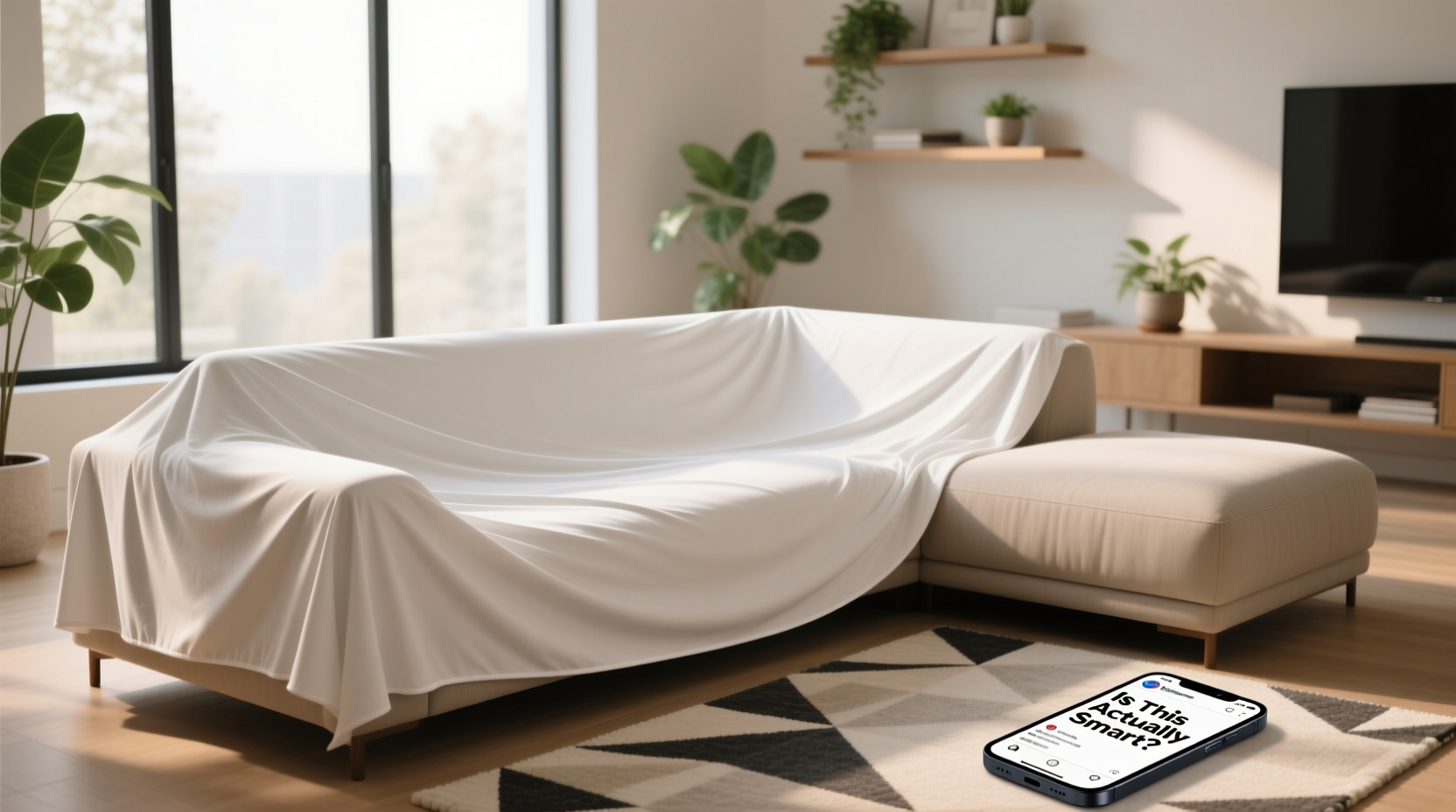
The fitted sheet method is undeniably convenient. Most households already own multiple fitted sheets, making this an instantly available option when upholstery protection is needed fast. Unlike custom slipcovers or professional cleaning, no investment is required beyond what’s already in your drawer.
People turn to this method for several reasons:
- Speed: No measuring, ordering, or waiting for delivery.
- Cost: Free if you already own the sheet.
- Versatility: Sheets come in various sizes and fabrics, allowing for quick swaps based on season or decor.
- Temporary protection: Useful during messy events, houseguests, or pet recovery periods.
For renters or those who frequently change furniture, the low-commitment nature of the hack is especially appealing. There’s no permanent alteration to the couch, and removal takes seconds.
Pros and Cons: A Balanced View
Like any DIY solution, the fitted sheet approach comes with trade-offs. Understanding both sides helps determine whether it’s right for your situation.
| Advantages | Drawbacks |
|---|---|
| Immediate availability – No shopping or shipping delays. | Poor fit – Sheets may slip, bunch, or expose edges of cushions. |
| Low cost – Uses existing household items. | Limited durability – Not designed for heavy wear; fabric tears easily. |
| Easy to wash – Can be laundered with regular bedding. | Unattractive appearance – Often looks haphazard or unfinished. |
| Great for short-term use – Ideal for parties or spills. | Not breathable – Traps moisture, potentially leading to mildew. |
| Customizable by color/pattern – Rotate styles seasonally. | Slippage risk – Especially with pets or active kids. |
While the benefits are practical, the aesthetic and functional limitations become apparent over time. The sheet may slide off when someone sits down, revealing stained fabric underneath. Worse, constant friction can damage delicate upholstery fibers.
When It Works—and When It Doesn’t
The success of the fitted sheet hack depends largely on context. Consider these scenarios:
Situations Where It Makes Sense
- Short-term protection: Hosting guests, painting a room, or recovering from surgery with limited mobility.
- Testing fabric preferences: Trying out a color before buying a permanent slipcover.
- Budget emergencies: When funds are tight but immediate protection is needed.
When You Should Avoid It
- Daily use: Regular sitting causes constant shifting, reducing effectiveness.
- Valuable or delicate upholstery: Sliding fabric can abrade silk or microfiber.
- Homes with pets: Claws catch on loose material, increasing tear risk.
- Rental agreements: Some landlords prohibit alterations—even temporary ones.
“Improvisation has its place, but long-term furniture care requires intentional solutions.” — Lena Torres, Interior Design Consultant
How to Do It Right: A Step-by-Step Guide
If you decide to try the fitted sheet method, doing it properly increases both functionality and appearance.
- Choose the right sheet: Opt for deep-pocket (15”+), tightly woven cotton or jersey knit. Avoid thin, worn-out sheets.
- Measure your cushions: Compare mattress size (twin, full, queen) to seat dimensions. A queen sheet often fits a standard loveseat.
- Pre-wash the sheet: Prevents future shrinkage and removes excess dye.
- Secure each cushion individually: Stretch corners snugly over foam. Tuck excess fabric neatly.
- Smooth seams: Position seams downward or along outer edges to reduce visibility.
- Add grip (optional): Place non-slip rug pads between the sheet and cushion to prevent sliding.
- Inspect daily: Adjust positioning and check for wear, especially after use.
Real-Life Example: The Parenting Test
Sarah, a mother of two toddlers in Denver, turned to the fitted sheet hack after her youngest spilled oatmeal on the cream-colored sectional—twice in one week. With no budget for a new slipcover and a baby nap schedule dictating her time, she grabbed a navy blue king-sized sheet from storage.
She covered the main seating area, securing each corner manually and placing rubber shelf liner underneath for grip. For three weeks, it held up during snack time, playdates, and even a minor crayon incident. “It wasn’t pretty,” she admitted later, “but it bought me time to research proper covers without panicking every time someone sat down.”
Once she ordered a tailored cotton twill slipcover, she removed the sheet without damage to the original fabric. In her case, the hack served its purpose—not as a replacement, but as a bridge to a better solution.
Better Alternatives to Consider
While the fitted sheet trick works in a pinch, several alternatives offer improved durability and aesthetics:
- Custom-fit slipcovers: Tailored to your sofa model, available in washable fabrics.
- Universal stretch covers: Designed for sofas, made from spandex-blend materials.
- Throw blankets with anti-slip backing: Stylish, removable, and machine-washable.
- Removable cushion covers: Sew or order replacements using durable upholstery fabric.
- Protective sprays: Fabric sealants that resist stains and liquids (e.g., Scotchgard).
For under $100, many of these options provide longer-term value and peace of mind compared to repeated sheet replacements.
FAQ
Can I leave a fitted sheet on my couch permanently?
Technically yes, but not recommended. Prolonged use can lead to trapped moisture, fabric degradation, and a disheveled appearance. It’s best used temporarily.
Will a fitted sheet protect against pet claws?
No. While it may shield against spills, sheets offer little defense against tearing from claws. A tightly woven slipcover or denim-based protector is far more effective.
What kind of sheet works best?
Deep-pocket, high-thread-count cotton or jersey knit sheets perform best. Avoid flimsy percale or old, stretched-out sheets that lack elasticity.
Final Verdict: Smart Hack or Lazy Shortcut?
The truth lies in intent. Using a fitted sheet on your couch isn’t inherently lazy—it’s resourceful when done thoughtfully. As a temporary, emergency, or transitional solution, it demonstrates practical problem-solving. However, treating it as a permanent fix undermines both comfort and furniture longevity.
Smart home management isn’t about perfection—it’s about adaptability. The fitted sheet hack earns its place in the toolkit, but only as one tool among many. Knowing when to use it, and when to upgrade, separates clever improvisation from neglect.




 浙公网安备
33010002000092号
浙公网安备
33010002000092号 浙B2-20120091-4
Comments
No comments yet. Why don't you start the discussion?