
For many families, decorating the Christmas tree is one of the most cherished holiday traditions. The goal is not only to create a festive centerpiece but also to ensure every ornament gets its moment in the spotlight. In recent years, rotating tree stands have gained popularity as a solution to uneven ornament viewing—especially in homes where furniture or room layout limits sightlines. But while these motorized bases promise 360-degree access to your tree’s decor, they also raise valid concerns about balance, safety, and long-term reliability.
The central question remains: Is the convenience and visual benefit of a rotating tree stand worth the potential trade-offs in stability? To answer this, we need to examine real-world performance, engineering principles, user experiences, and practical alternatives.
How Rotating Tree Stands Work
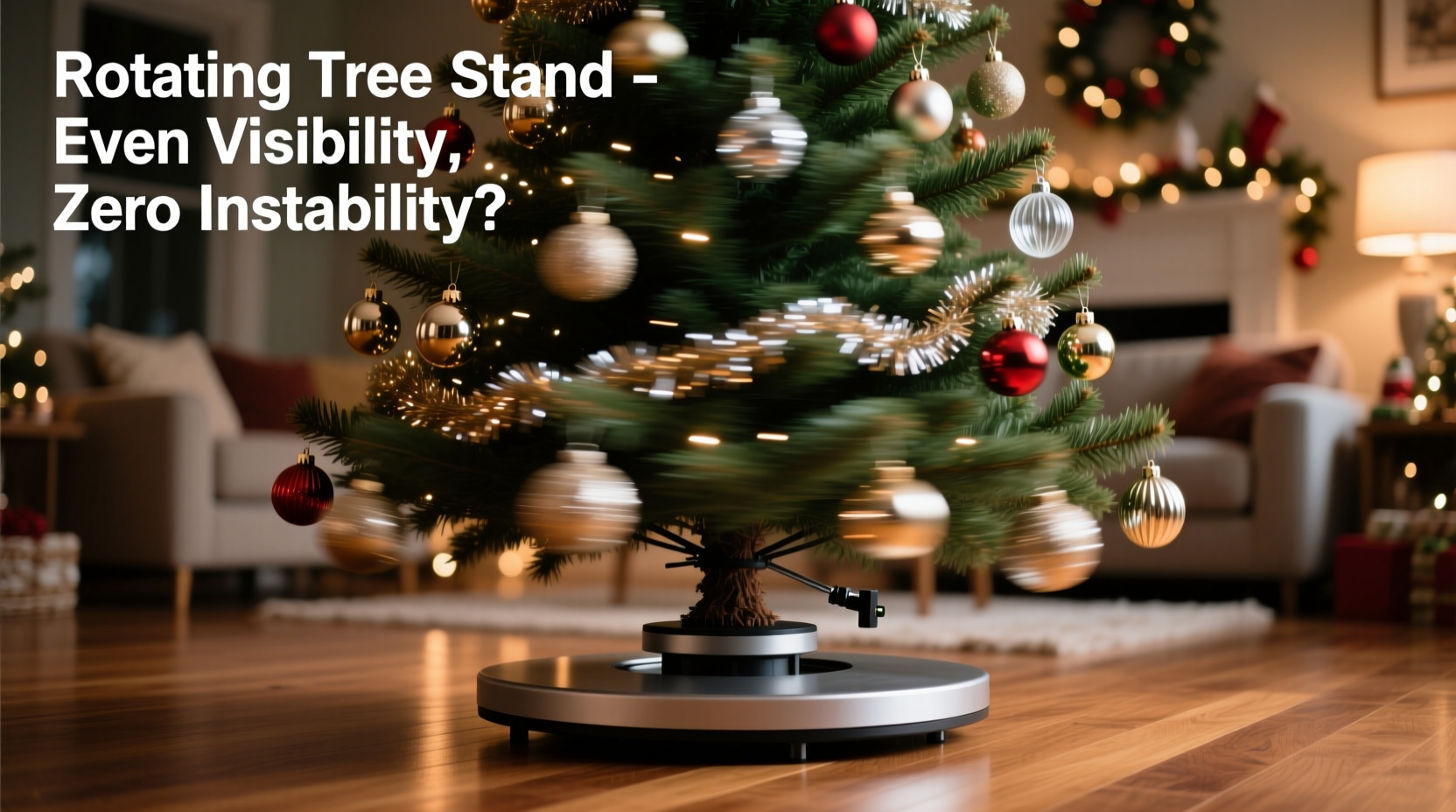
A rotating tree stand operates on a simple mechanical principle: a motorized base slowly turns the entire tree at a controlled speed, typically completing one full rotation every 30 to 60 seconds. These stands are designed to hold standard-sized Christmas trees—usually up to 9 feet tall and weighing under 150 pounds—and often include water reservoirs to keep real trees fresh throughout the season.
The rotation mechanism is powered by an electric motor housed within the base. Once plugged in, the stand rotates smoothly, allowing viewers to see all sides of the tree without needing to walk around it. Some models offer adjustable speeds or manual override options, giving users control over how fast—or whether—the tree spins.
From a design standpoint, rotating stands aim to solve a common frustration: ornaments hidden behind sofas, bookshelves, or other large furniture pieces. For those with limited floor space or asymmetric living rooms, a rotating tree can provide a more inclusive viewing experience, especially during gatherings when guests may be seated in one primary area.
Advantages: Why People Choose Rotating Stands
The appeal of a rotating tree stand lies in its ability to enhance visual accessibility. Here are the key benefits that make them attractive to homeowners:
- Even Ornament Visibility: Every decoration gets equal exposure, eliminating the “back side” problem where half the tree goes unseen.
- Ideal for Open-Concept Living: In modern homes with kitchen-living-dining layouts, a rotating tree ensures people in different zones catch glimpses of all sides.
- Great for Photography and Video: Content creators and social media enthusiasts appreciate the cinematic effect of a gently spinning tree.
- Child and Elderly-Friendly Viewing: Kids seated on the floor or elderly relatives in armchairs don’t need to get up to enjoy the full display.
- Festive Ambiance: The slow motion adds a dynamic, almost magical quality to the tree, enhancing the overall holiday atmosphere.
According to interior designer Laura Simmons, who specializes in seasonal home styling, “A rotating stand transforms the tree from a static object into a living part of the room. It draws attention naturally and keeps the energy moving.”
“The right tree placement matters—but so does movement. A well-balanced rotating stand can elevate a good display into something truly memorable.” — Laura Simmons, Interior Stylist & Holiday Design Consultant
Potential Drawbacks: Stability Concerns and Practical Limits
Despite their charm, rotating tree stands come with notable drawbacks—many centered around structural integrity and safety.
The primary concern is instability. Any rotating system introduces centrifugal forces, however minimal. When combined with top-heavy loads (ornaments, lights, tinsel), even slight imbalances can lead to wobbling, vibration, or, in extreme cases, tipping. This risk increases significantly if:
- The tree is not straight in the stand
- The surface beneath is uneven (e.g., carpet over padding)
- The branches are unevenly weighted (more decorations on one side)
- The tree exceeds the stand’s recommended height or weight limit
Additionally, mechanical failure is a known issue. Motors can burn out, gears can jam, or power cords can become tripping hazards. One homeowner in Minnesota reported her stand failing after just two weeks, leaving the tree stuck at a 45-degree angle until manually reset—a stressful situation with pets and children nearby.
Another limitation is noise. While manufacturers claim “whisper-quiet” operation, some users report low humming or grinding sounds, particularly as the motor ages or bears heavier loads.
Real Example: The Johnson Family Experience
The Johnsons, a family of five in suburban Ohio, purchased a high-end rotating stand for their 8-foot Fraser fir last holiday season. Excited by online videos showing elegant, slow-turning trees, they invested $180 in a model boasting quiet motors and dual stabilization bars.
Initially, the setup worked beautifully. Guests admired how the lights shimmered as the tree turned, and their young daughter loved watching her handmade ornaments pass by. However, by mid-December, they noticed increased wobbling during rotation. After adding several heavy glass balls to the left side, the tree began tilting slightly forward.
One evening, while the family was watching a movie, the motor stalled with a loud click. The tree remained off-center for days until they unplugged it and stabilized it manually. They eventually disabled the rotation feature altogether and used the stand as a regular water-holding base for the remainder of the season.
“It looked amazing in photos,” said Mark Johnson, “but the reality was more hassle than magic. I wouldn’t buy another unless it had much stronger support.”
Comparison: Rotating vs. Fixed Tree Stands
| Feature | Rotating Stand | Fixed Stand |
|---|---|---|
| Ornament Visibility | Excellent (full 360° view over time) | Fair to Good (depends on room layout) |
| Stability | Moderate (prone to wobble if unbalanced) | High (no moving parts) |
| Noise Level | Low to Moderate (motor hum) | Silent |
| Maintenance | Moderate (motor checks, alignment) | Low (water refill only) |
| Price Range | $80–$250 | $20–$70 |
| Lifespan | 3–5 years (motor wear) | 5+ years (durable metal/plastic) |
| Safety Risk | Moderate (tipping, electrical cord) | Low |
This comparison highlights the core trade-off: enhanced visibility versus reduced reliability and increased complexity.
When a Rotating Stand Makes Sense—And When It Doesn’t
Rotating stands are not universally unsuitable—they simply require careful consideration of your environment and expectations.
Best suited for:
- Small to medium trees (under 8 feet)
- Evenly decorated trees with balanced ornament distribution
- Hard, level flooring (tile, hardwood, laminate)
- Spaces where seating is primarily on one side of the room
- Families who value novelty and visual dynamics over simplicity
Poor fits include:
- Tall, dense trees (like Balsam firs) exceeding 9 feet
- Carpets over thick padding (reduces traction and increases sway)
- Households with active pets or toddlers (increased tip-over risk)
- Those prioritizing low maintenance and long-term durability
Step-by-Step Guide: Safely Using a Rotating Tree Stand
If you decide a rotating stand is right for your home, follow these steps to maximize safety and performance:
- Choose the Right Model: Select a stand rated for your tree’s height and weight. Look for reinforced bases and anti-tip features.
- Prepare the Floor: Ensure the surface is flat and stable. Avoid thresholds or transitions between flooring types.
- Secure the Tree: Insert the trunk firmly into the stand’s clamp system. Use all locking screws and check tightness periodically.
- Balance the Load: Decorate gradually, stepping back to assess symmetry. Alternate heavy and light ornaments across quadrants.
- Test Rotation Slowly: Start the motor and observe for vibrations. Stop immediately if shaking occurs.
- Monitor Daily: Check water levels, motor function, and tree alignment each day.
- Unplug When Unattended: Turn off the stand overnight or when leaving the house to reduce fire and tipping risks.
Expert Recommendations and Alternatives
While rotating stands offer unique benefits, many experts suggest simpler, safer alternatives for achieving even ornament visibility.
“Instead of relying on mechanics,” says holiday safety inspector Daniel Ruiz, “I recommend strategic placement and thoughtful decoration patterns. Position the tree near a corner so two sides are visible from multiple angles, then decorate with a ‘viewing arc’ in mind.”
Ruiz also advises using reflective elements like mirrored ornaments, metallic garlands, or strategically placed lighting to draw attention to less-visible areas.
Other effective alternatives include:
- Corner Tree Holders: Designed specifically for angled spaces, maximizing visibility from two directions.
- Turntable Add-Ons: Manual rotating platforms (like lazy Susans) that allow you to spin the tree by hand occasionally.
- Light Zoning: Use brighter lights or color contrasts on the far side of the tree to compensate for limited sightlines.
“Technology should serve tradition—not complicate it. A tree should feel joyful, not like a machine you’re babysitting.” — Daniel Ruiz, Home Safety Inspector & NFPA Contributor
FAQ
Can I use a rotating stand with an artificial tree?
Yes, most rotating stands are compatible with both real and artificial trees, provided the trunk diameter fits the clamp mechanism. Artificial trees may actually perform better due to consistent weight distribution and lack of water absorption shifts.
Do rotating stands work on carpet?
They can, but with caution. Thick or plush carpets increase instability. Use a hard underlayment (such as a plastic tray or plywood sheet) to create a stable foundation and prevent the base from sinking or shifting.
Are rotating tree stands safe around pets and kids?
With supervision, yes—but extra precautions are necessary. Keep cords out of reach, disable rotation when unsupervised, and consider anchoring the stand to a wall if tipping is a concern. Many models have open gears that could pinch small fingers.
Final Checklist Before Buying a Rotating Tree Stand
- ✅ Confirm your tree’s height and weight are within the stand’s limits
- ✅ Measure your floor space and ensure there’s clearance for smooth rotation
- ✅ Inspect the motor warranty and customer reviews for reliability
- ✅ Plan for daily monitoring and maintenance
- ✅ Evaluate flooring type and prepare stabilization aids if needed
- ✅ Consider disabling rotation after initial setup if issues arise
Conclusion: Weighing Magic Against Mechanics
A rotating tree stand can deliver a captivating holiday experience—one where every ornament dances into view and the tree feels alive with motion. For those with the right setup, disciplined decorating habits, and an appetite for innovation, it can be a worthwhile addition.
But it’s not a plug-and-forget solution. The added complexity, potential instability, and maintenance demands mean it’s not ideal for every household. In many cases, thoughtful placement, balanced decorating, and simple alternatives offer comparable results with greater peace of mind.
In the end, the best tree is one that brings joy without stress. Whether it spins or stands still, what matters most is the warmth it creates, the memories made around it, and the care put into every ornament hung.




 浙公网安备
33010002000092号
浙公网安备
33010002000092号 浙B2-20120091-4
Comments
No comments yet. Why don't you start the discussion?