
Sedentary office work has long been linked to chronic back pain, poor circulation, and declining energy levels. In response, standing desks have surged in popularity over the past decade as a solution to counteract the physical toll of sitting for hours. Many professionals now believe that standing all day is inherently healthier—better for posture, more energizing, and a surefire way to avoid the pitfalls of prolonged sitting. But is this assumption accurate? Is standing at your desk from morning to evening truly beneficial, or could it introduce new problems?
The truth lies somewhere in between. While standing desks offer real advantages, especially when used correctly, standing all day is not a one-size-fits-all fix. In fact, excessive standing without proper balance can lead to its own set of musculoskeletal issues. The key isn’t to eliminate sitting entirely but to find a dynamic rhythm between postures that supports both spinal health and sustained mental clarity.
The Posture Problem: Sitting vs. Standing
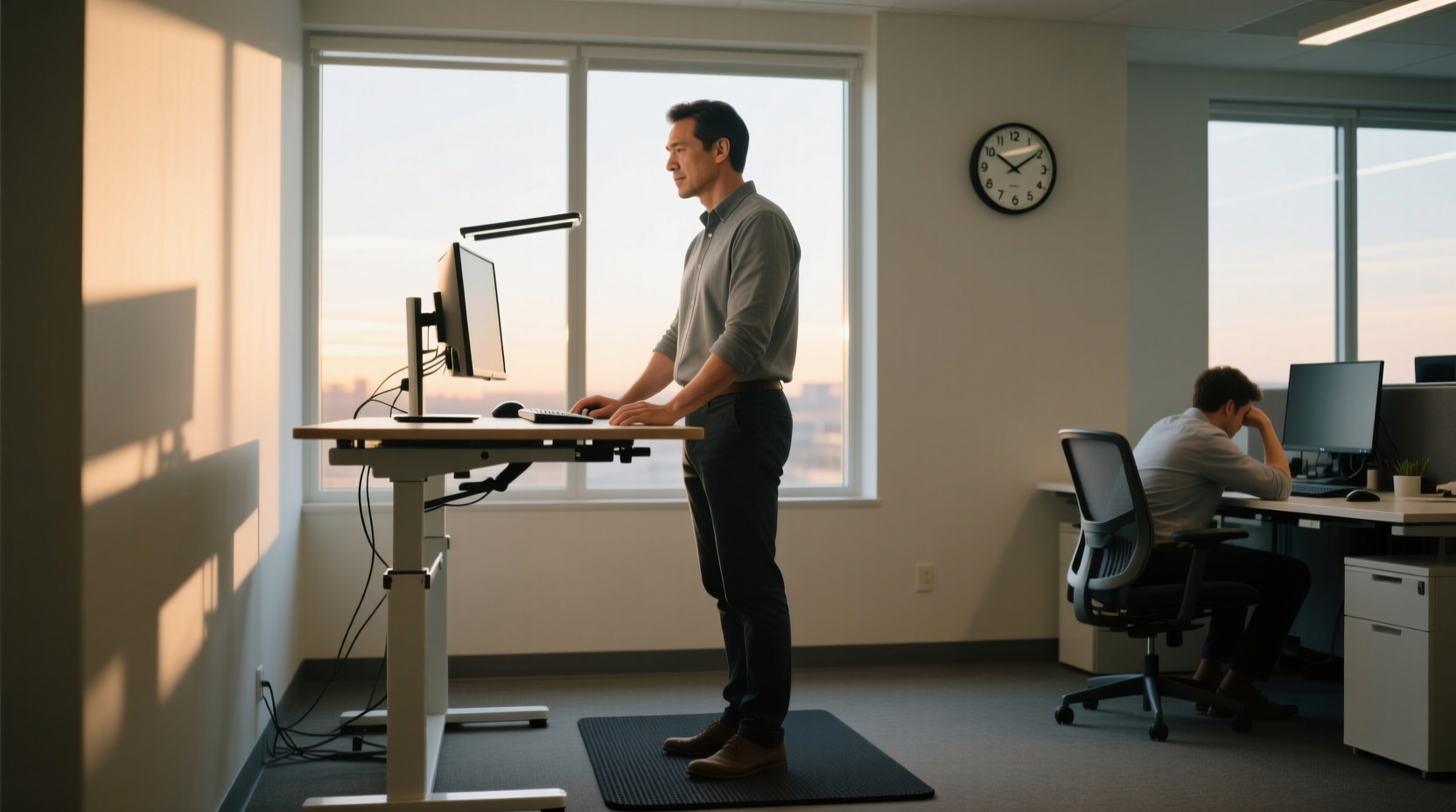
Prolonged sitting—especially in poorly designed chairs or with slouched positioning—places significant strain on the lower back and pelvis. It shortens hip flexors, weakens glutes, and encourages forward head posture, which contributes to neck and shoulder tension. Over time, these imbalances can lead to chronic discomfort and reduced mobility.
Standing, on the other hand, naturally engages core stabilizers, encourages spinal alignment, and reduces pressure on intervertebral discs. When done with awareness, standing promotes a more neutral spine and activates postural muscles that remain dormant during sitting.
However, simply replacing eight hours of sitting with eight hours of standing does not guarantee improved posture. Poor standing habits—such as locking the knees, shifting weight to one leg, or hunching over a monitor—can be just as detrimental as bad sitting form. The body thrives on movement, not static positions, regardless of whether they are seated or upright.
Energy Levels and Cognitive Performance
One of the most frequently cited benefits of standing desks is increased alertness and mental energy. Research supports this claim to an extent. A 2016 study published in the International Journal of Environmental Research and Public Health found that participants who used standing desks reported higher vigor and focus compared to those who remained seated throughout the day.
The mechanism behind this boost is partly physiological. Standing increases blood flow and oxygen delivery to the brain. It also stimulates subtle muscle contractions in the legs and core, which help pump venous blood back to the heart and maintain cardiovascular efficiency—something that slows during extended sitting.
Additionally, standing can reduce the mid-afternoon energy slump by preventing the metabolic slowdown associated with sedentariness. Glucose metabolism improves when you're upright, helping stabilize energy levels and reduce insulin spikes that contribute to fatigue.
Yet, the energy benefits diminish if standing becomes monotonous or uncomfortable. Standing too long leads to fatigue in the feet, legs, and lower back, ultimately decreasing concentration and increasing irritability. The goal is not constant standing but strategic variation that keeps the body engaged without overloading it.
“Movement is medicine. The human body evolved to move, not to stay in one position for hours. Alternating between sitting and standing throughout the day supports both physical and cognitive resilience.” — Dr. Lena Torres, Biomechanist and Ergonomics Consultant
Do’s and Don’ts of Standing Desk Use
To maximize the benefits of a standing desk while minimizing risks, consider the following guidelines. These recommendations are based on ergonomic research and clinical observations from physical therapists and workplace wellness experts.
| Do’s | Don’ts |
|---|---|
| Adjust your desk so your elbows are at 90 degrees and wrists neutral when typing | Stand with locked knees or shift weight unevenly between legs |
| Use an anti-fatigue mat to reduce foot and joint stress | Wear unsupportive footwear (e.g., flip-flops or flat shoes) |
| Alternate between sitting and standing every 30–60 minutes | Stand for more than two consecutive hours without a break |
| Keep your monitor at eye level to avoid neck strain | Hunch over your keyboard or lean on your arms |
| Incorporate gentle movements like shifting weight, calf raises, or micro-stretches | Remain completely still while standing |
Real-World Example: Sarah’s Transition to a Standing Desk
Sarah, a 34-year-old software developer, switched to a standing desk after experiencing persistent lower back pain and afternoon fatigue. Initially enthusiastic, she stood for six to seven hours daily, believing more standing equaled better health. Within three weeks, her back pain improved slightly, but she developed new discomfort: achy feet, swollen ankles, and sharp knee pain after lunch.
She consulted an occupational therapist, who assessed her setup and routine. The therapist noted several issues: Sarah was wearing dress shoes without arch support, her desk was slightly too high causing shoulder elevation, and she wasn’t moving while standing. More critically, she had eliminated sitting almost entirely.
After adjusting her workstation, investing in supportive footwear, and adopting a sit-stand schedule (30 minutes sitting, 30 minutes standing), Sarah noticed dramatic improvements. Her energy stabilized, foot pain disappeared, and her posture became more natural. She now views her desk as a tool for movement, not a mandate for constant standing.
Sarah’s experience illustrates a common misconception: that standing is superior to sitting in all contexts. The reality is that both postures have roles, and misuse of either can lead to injury.
A Balanced Approach: The Sit-Stand Protocol
The most effective strategy isn’t to choose between sitting and standing—it’s to integrate both into a sustainable daily rhythm. Experts recommend a balanced approach that prioritizes movement variety over rigid adherence to one posture.
Here’s a practical step-by-step guide to implementing a healthy sit-stand routine:
- Set up your desk ergonomically: Ensure your monitor is at eye level, your elbows bent at 90 degrees, and your wrists straight when typing. Your standing surface should allow your forearms to rest comfortably without raising your shoulders.
- Start gradually: Begin with 15–20 minutes of standing per hour. Use a smartwatch, phone reminder, or desktop app to prompt transitions.
- Invest in support: Use an anti-fatigue mat and wear supportive shoes even indoors. Avoid standing barefoot on hard floors.
- Move intentionally: While standing, engage in small movements—shift your weight, perform heel raises, or do gentle shoulder rolls every 10 minutes.
- Listen to your body: If you feel fatigue, swelling, or pain in your legs or back, sit down. Discomfort is a signal, not a challenge to push through.
- Stretch regularly: Incorporate two-minute stretches every hour—forward folds, chest openers, or hip flexor stretches—to counteract stiffness.
- Track your progress: After two weeks, assess how you feel. Adjust ratios based on energy, comfort, and productivity.
Frequently Asked Questions
Can standing all day cause varicose veins?
Yes, prolonged standing without movement increases venous pressure in the legs, which may contribute to the development or worsening of varicose veins, especially in individuals with a genetic predisposition. Regular movement, compression socks, and alternating with sitting can reduce this risk.
How much standing is ideal during an 8-hour workday?
There’s no universal standard, but research and ergonomic guidelines suggest standing for 30 to 60 minutes per hour is sustainable and beneficial for most people. This means 4 to 6 hours of total standing, broken into intervals. The exact ratio should be personalized based on comfort and job demands.
Will a standing desk help me lose weight?
Standing burns slightly more calories than sitting—about 0.15 extra calories per minute—but this alone won’t lead to significant weight loss. However, when combined with regular movement, reduced snacking due to increased alertness, and overall improved metabolic function, standing desks can support broader lifestyle goals.
Final Thoughts and Action Plan
Using a standing desk all day is not inherently better for posture or energy. In fact, it can lead to new physical challenges if approached without intention. The real benefit of a standing desk lies in its ability to expand your range of motion during the workday—not to replace sitting, but to disrupt prolonged immobility.
Posture improves not from standing alone, but from conscious alignment and frequent shifts in position. Energy levels rise not because you’re upright, but because movement stimulates circulation, respiration, and neurological engagement.
The most effective users of standing desks are those who treat them as part of a larger strategy for workplace wellness—one that includes ergonomic design, mindful posture checks, scheduled movement breaks, and self-awareness.
If you're considering a standing desk or already use one, don’t aim for perfection in posture or endurance. Instead, aim for variability. Let your body move, adapt, and reset throughout the day. That’s where true resilience begins.




 浙公网安备
33010002000092号
浙公网安备
33010002000092号 浙B2-20120091-4
Comments
No comments yet. Why don't you start the discussion?