
Virtual reality (VR) gaming has evolved from a futuristic concept into a tangible home entertainment option. With headsets like Meta Quest 3, PlayStation VR2, and Valve Index on the market, immersive gameplay is more accessible than ever. But for casual players—those who game a few hours a week or prefer relaxed experiences over hardcore sessions—the question remains: is the investment in hardware, space, and time truly justified? The answer isn’t straightforward. While VR offers unparalleled immersion, it comes with financial and logistical considerations that may not align with every player’s habits.
This article examines the real value of VR for casual gamers by analyzing upfront costs, available content, physical requirements, long-term usability, and personal enjoyment. Whether you're curious about trying VR or have hesitated at the price tag, understanding these factors can help determine whether it's a worthwhile addition to your entertainment routine—or just another expensive gadget gathering dust.
The Real Cost of Entry
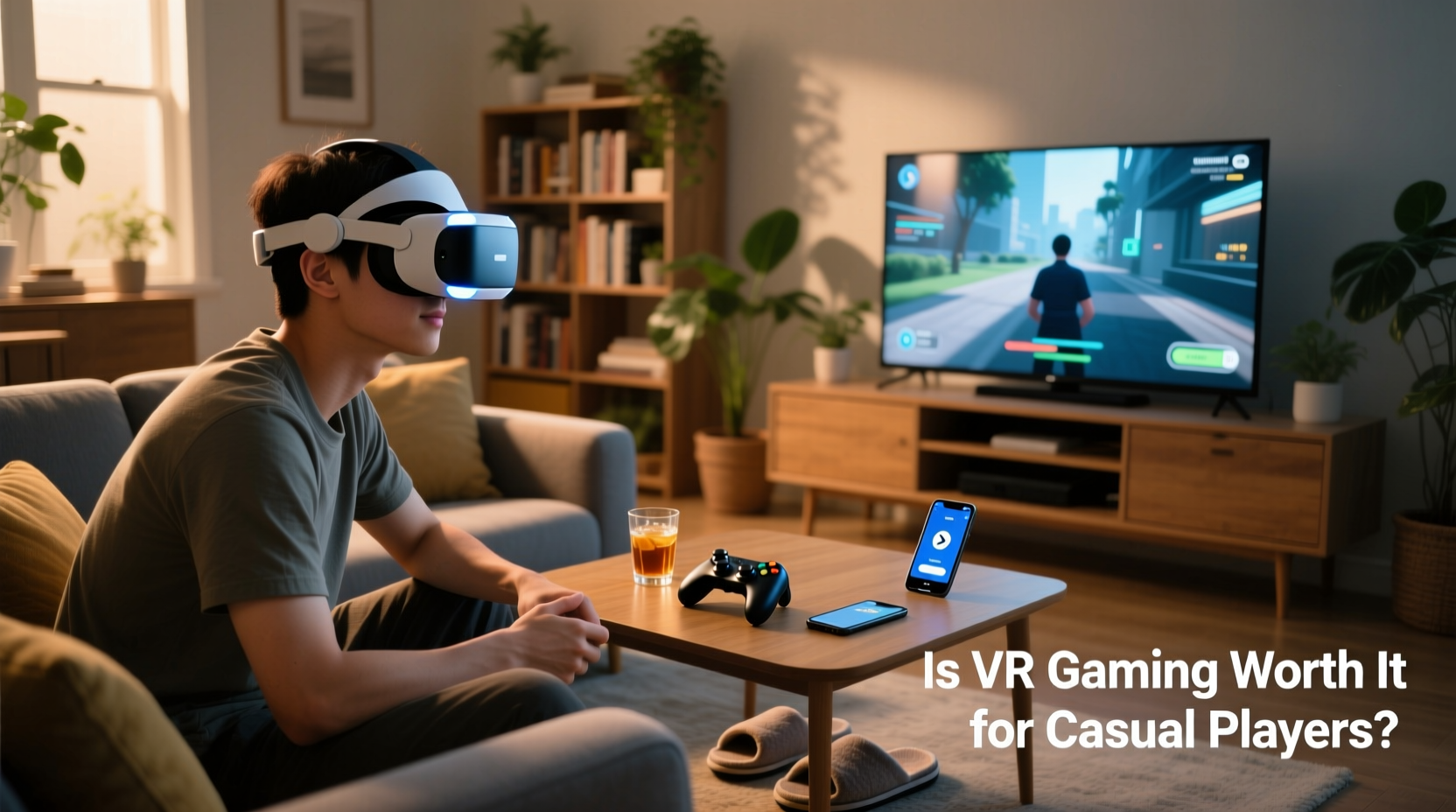
One of the most immediate barriers to VR adoption is cost. While entry-level standalone headsets have reduced prices significantly, the full experience often demands additional investments. A breakdown of typical expenses reveals that \"affordable\" doesn't always mean \"low-cost.\"
| Component | Example Products | Average Price Range |
|---|---|---|
| Standalone Headset | Meta Quest 3, Pico 4 | $499–$649 |
| PC-Based Headset | Valve Index, HTC Vive | $700–$1,200+ |
| Gaming PC (if needed) | Mid-range build | $800–$1,500 |
| Accessories | Extra controllers, charging dock | $50–$150 |
| Games & Apps | Beat Saber, Half-Life: Alyx | $20–$60 each |
For a casual player, spending $500–$1,000 on a system used only occasionally raises concerns about return on investment. Even the more affordable Meta Quest 3 starts at $499 for the 128GB model—a sum equivalent to several traditional console games or a year of streaming subscriptions. If you play casually once a week, that’s roughly $10–$20 per session just to break even on hardware over two years.
Content Availability and Casual-Friendly Experiences
Another critical factor is whether there are enough enjoyable, low-commitment games suited to casual play. Early VR libraries were limited, but today’s platforms offer diverse genres—from fitness apps and puzzle games to social spaces and passive storytelling.
Titles like Wander, which lets users explore real-world locations in 360°, or Tetris Effect: Connected, deliver relaxing, visually stunning experiences without requiring intense reflexes. Similarly, Walkabout Mini Golf and Cosmic Comedy provide light-hearted fun ideal for short sessions. These games emphasize accessibility and comfort, minimizing motion sickness and steep learning curves.
However, high-quality VR content still lags behind traditional gaming in volume. AAA titles are rare, and many experiences are shorter than standard games. For example, Half-Life: Alyx is critically acclaimed but requires 12–15 hours to complete—longer than most casual players might want to commit in VR. Moreover, frequent updates or ongoing support aren’t guaranteed, especially for smaller studios.
“VR works best when it complements your existing interests—whether that’s fitness, exploration, or creative expression—not as a replacement for all gaming.” — Dr. Lena Torres, Human-Computer Interaction Researcher, MIT Media Lab
Space, Setup, and Lifestyle Fit
Unlike traditional gaming, VR requires physical space and setup time. Most systems need a clear area of at least 6.5 x 5 feet (2 x 1.5 meters), free of furniture and obstacles. This can be a challenge in small apartments or shared living environments.
Additionally, while standalone headsets like the Quest 3 simplify setup, PC-based systems involve cables, base stations, and driver installations. Even wireless PC VR via Air Link or Virtual Desktop adds latency risks and technical troubleshooting. For someone who values convenience, putting on a headset, calibrating boundaries, and launching an app can feel like too much effort for a 20-minute play session.
Comfort also plays a role. Headsets range from 0.6 to over 1 pound in weight. Extended use can cause neck strain, eye fatigue, or discomfort, particularly for users with glasses. Battery life on standalone devices averages 2–3 hours, limiting spontaneous use unless you keep it charged.
Step-by-Step: Assessing Your Space and Routine
- Measure your available space: Use tape or string to mark a 6.5 x 5 ft rectangle in your preferred room.
- Test daily usability: Try clearing this area quickly. Can you do it regularly without disrupting household routines?
- Simulate a session: Put on a bag or wear something bulky for 30 minutes to mimic headset weight and assess comfort.
- Track your current gaming habits: Over one week, log how often and how long you play. Is it consistent or sporadic?
- Evaluate motivation: Are you excited about specific VR experiences, or just curious in general?
Real-World Example: Sarah’s Experiment with VR
Sarah, a 34-year-old graphic designer and occasional gamer, decided to test whether VR was worth it for her lifestyle. She typically played mobile puzzles or indie games on her laptop for 1–2 hours on weekends. Curious after seeing friends enjoy Beat Saber, she purchased a Meta Quest 3 during a holiday sale for $449 (originally $499).
She spent the first weekend setting up, choosing apps, and exploring demos. She loved Wander and found Supernatural’s guided meditation sessions surprisingly calming. However, after three weeks, her usage dropped. Clearing space in her studio apartment felt disruptive, and wearing the headset left her slightly dizzy. After two months, she averaged only one 25-minute session per week.
By month four, she resold the headset for $320, concluding that while the tech was impressive, it didn’t fit her low-effort, flexible routine. Her takeaway: “It wasn’t bad—it was just *too much* for what I wanted out of gaming.”
Sarah’s experience reflects a common pattern among casual users: initial excitement followed by declining engagement due to friction between expectations and real-world constraints.
When VR Makes Sense for Casual Gamers
Despite the challenges, VR can be a rewarding investment—if aligned with specific preferences and lifestyles. Consider the following checklist before buying:
- ✅ You’re interested in fitness, meditation, or virtual travel—not just traditional games.
- ✅ You have a dedicated or easily cleared space for regular use.
- ✅ You own or plan to buy a compatible gaming PC (for higher-end experiences).
- ✅ You enjoy novelty and experiential content over replayable mechanics.
- ✅ You’re open to joining social VR platforms like VRChat or Rec Room.
If most of these apply, VR could enhance your downtime meaningfully. Standalone headsets now support multitasking—watching movies in virtual theaters, attending concerts, or working in virtual desktops—adding non-gaming value.
Conversely, if you primarily play story-driven console games or prefer quick mobile sessions, VR may offer diminishing returns. Immersion is its strength, but also its limitation: it demands presence, both physically and mentally.
Frequently Asked Questions
Can I try VR before buying?
Yes. Many electronics stores like Best Buy have demo units. Libraries, community centers, and VR arcades also offer rental experiences. Some developers release free demos on platforms like SideQuest or the Meta Store.
Do I need a powerful PC for VR?
Only if you want high-fidelity PC VR. Standalone headsets like the Meta Quest 3 run independently. You can connect them to a PC later for advanced games, but it’s optional. Check your PC’s specs against recommended requirements if planning wired use.
Is VR safe for kids or older adults?
Manufacturers recommend VR for ages 13+ due to visual development concerns. Older adults can use VR safely, but should start with seated or static experiences to avoid balance issues. Always supervise younger users and limit session length to 20–30 minutes.
Final Verdict: Weighing Value Against Lifestyle
For casual players, the worth of VR hinges less on technology and more on alignment with personal habits. It’s not inherently “worth it” or “not worth it”—the answer depends on how you define value. If enjoyment comes from deep immersion, sensory richness, and trying new forms of interactive media, then yes, VR can justify its cost even with infrequent use. The feeling of standing atop a virtual mountain, painting in 3D space, or dancing through neon rhythms can be transformative—even in short bursts.
But if your goal is efficient entertainment—maximizing fun per dollar and minute—then traditional gaming or streaming likely offers better ROI. VR’s setup time, spatial demands, and niche content library make it a specialty tool, not a universal upgrade.
The smart approach is to treat VR like any hobby investment: evaluate your actual behavior, not your aspirations. Ask not “Could I see myself using this?” but “Will I realistically use this, given my current routine?”




 浙公网安备
33010002000092号
浙公网安备
33010002000092号 浙B2-20120091-4
Comments
No comments yet. Why don't you start the discussion?