
Vitamin C serums have become a staple on bathroom shelves and dermatologist recommendations alike. Marketed as a miracle ingredient for brightening skin, fading dark spots, and fighting signs of aging, they’ve earned a near-cult following. But with so many products promising dramatic results, it’s worth asking: is vitamin C serum actually necessary in your daily regimen, or has it simply been elevated beyond its true capabilities by aggressive marketing and social media hype?
The answer isn’t a simple yes or no. Vitamin C—specifically L-ascorbic acid—is one of the few topical ingredients with decades of clinical research supporting its efficacy. However, its real-world performance depends heavily on formulation, concentration, stability, and individual skin needs. Understanding what vitamin C can—and cannot—do will help you decide whether it deserves a permanent spot in your skincare lineup or if you're better off investing in alternatives that suit your skin goals more effectively.
The Science Behind Vitamin C in Skincare
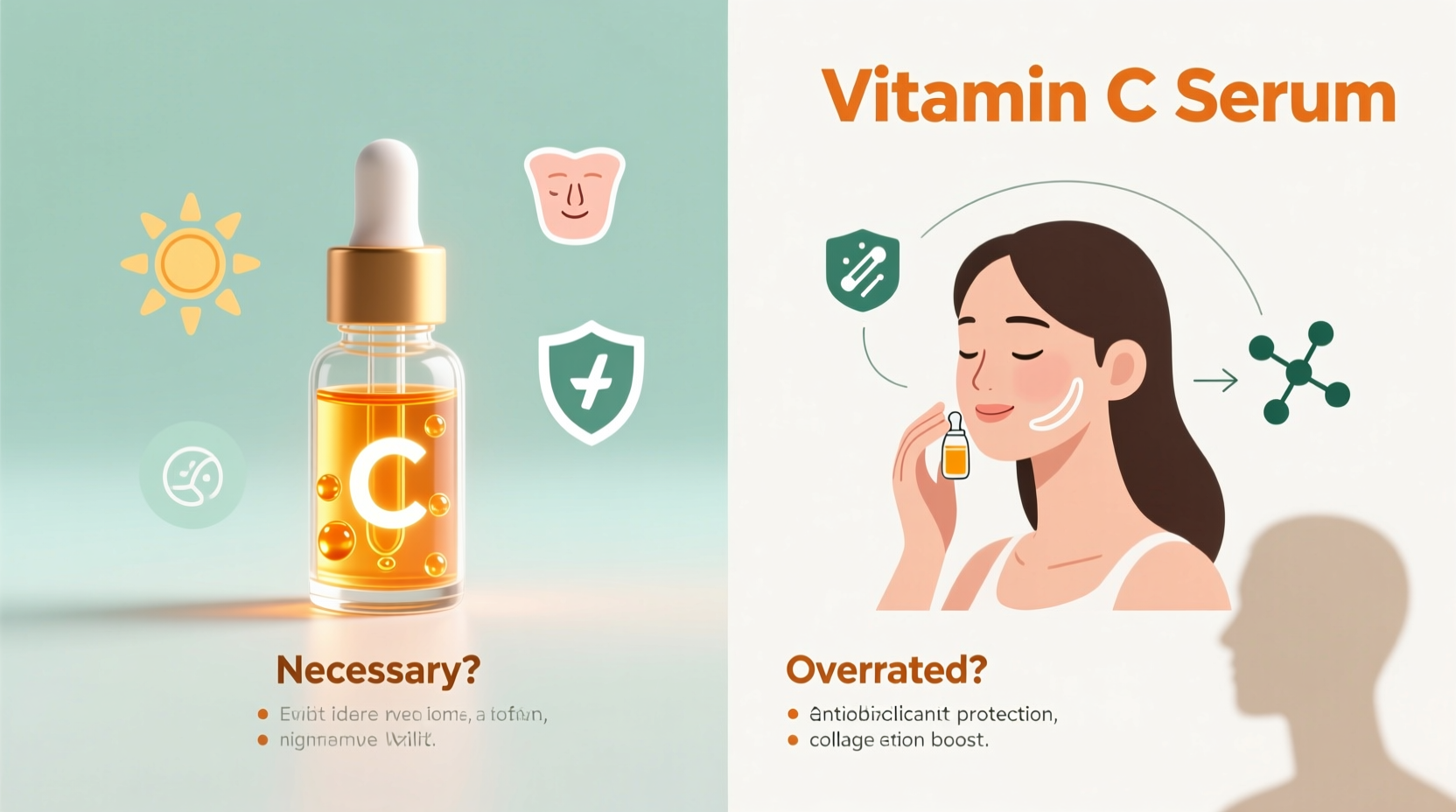
Vitamin C, or ascorbic acid, is a potent antioxidant naturally present in healthy skin. Its primary role in the body includes collagen synthesis, wound healing, and protection against oxidative stress caused by UV radiation and environmental pollutants. When applied topically, it delivers these benefits directly to the skin, where oral supplementation cannot guarantee sufficient delivery.
One of the most well-documented effects of topical vitamin C is its ability to neutralize free radicals. These unstable molecules are generated by sun exposure, pollution, and even internal metabolic processes. Left unchecked, they damage skin cells, break down collagen, and accelerate aging. Antioxidants like vitamin C donate electrons to stabilize free radicals, reducing their harmful impact.
Additionally, vitamin C plays a direct role in collagen production. It acts as a cofactor for enzymes involved in synthesizing collagen fibers, helping maintain skin firmness and elasticity. Studies show that consistent use of 5–10% L-ascorbic acid formulations can increase collagen density over time, leading to visibly smoother texture and reduced fine lines.
“Topical vitamin C remains one of the most effective antioxidants available. When properly formulated, it delivers measurable improvements in photodamage and skin tone.” — Dr. Leslie Baumann, Board-Certified Dermatologist and Skincare Researcher
Beyond structural support, vitamin C inhibits tyrosinase, an enzyme involved in melanin production. This makes it effective in treating hyperpigmentation, including sunspots, melasma, and post-inflammatory discoloration. Unlike harsh bleaching agents, it lightens without damaging surrounding tissue, making it suitable for long-term use.
Benefits vs. Realistic Expectations
While the science supports several key benefits of vitamin C, expectations must be tempered by practical realities. Many consumers report underwhelming results, often due to misconceptions about how quickly or dramatically vitamin C works.
Brightening effect: One of the most noticeable changes users report is improved radiance. This isn’t instant illumination but rather a gradual reduction in dullness caused by dead cell buildup and oxidative stress. Results typically appear after 4–8 weeks of consistent morning application.
Pigmentation correction: Clinical trials show that 10–20% L-ascorbic acid can reduce hyperpigmentation by up to 60% over 12 weeks when paired with sunscreen. However, deeper or hormonally driven pigmentation (like melasma) may require additional treatments such as hydroquinone or lasers.
Anti-aging support: While vitamin C boosts collagen, it won’t erase deep wrinkles or replace retinoids in anti-aging regimens. Instead, think of it as a preventive measure—slowing future damage rather than reversing existing sagging or volume loss.
When Vitamin C Serum Is Truly Necessary
Not every skin type or concern requires vitamin C. However, there are specific scenarios where incorporating it into your routine offers clear advantages:
- Daily sun exposure: Even with sunscreen, incidental UV exposure generates free radicals. Vitamin C provides an added layer of defense, especially during daytime.
- Dull, tired-looking skin: If your complexion lacks vibrancy despite good hygiene and hydration, oxidative stress may be depleting natural antioxidants. Replenishing them topically can restore clarity.
- Post-procedure recovery: After chemical peels, microneedling, or laser treatments, skin is vulnerable. Antioxidants like vitamin C support healing and reduce inflammation.
- Early signs of aging: Fine lines, mild laxity, and uneven texture respond well to antioxidant-rich regimens. Starting early maximizes long-term benefits.
In these cases, vitamin C isn’t just cosmetic—it serves a functional role in maintaining skin health. For individuals living in polluted urban environments or those frequently exposed to blue light from screens, the antioxidant buffer becomes even more valuable.
Common Pitfalls That Make Vitamin C Seem Overrated
Many negative experiences with vitamin C stem not from the ingredient itself, but from poor product choices or incorrect usage. Several factors contribute to its reputation as “overhyped”:
| Issue | Impact | Solution |
|---|---|---|
| Unstable formulations | Oxidizes quickly; turns yellow/brown and loses potency | Choose air-tight, opaque packaging; check expiration dates |
| Incorrect pH (above 3.5) | Limits penetration and effectiveness | Look for products specifying low pH or buffered acids |
| Too low concentration (<5%) | Minimal biological activity | Aim for 10–20% L-ascorbic acid for optimal results |
| Combination with incompatible ingredients | Causes irritation or degradation (e.g., niacinamide in high pH) | Use separately or choose stabilized derivatives |
Another common mistake is expecting overnight transformation. Unlike exfoliants that reveal immediate smoothness, vitamin C operates at a cellular level. Patience and consistency are required—most studies define success over 8 to 12 weeks.
Real Example: The Office Worker’s Glow Journey
Sarah, a 34-year-old project manager in Chicago, spent years commuting through smog-filled streets and working under fluorescent lights. Despite using moisturizer and sunscreen, her skin looked perpetually gray and fatigued. She tried multiple “brightening” masks and scrubs with little improvement.
After consulting a dermatologist, she was advised to start a 15% L-ascorbic acid serum each morning, followed by SPF. Within six weeks, colleagues began commenting on her “healthy glow.” By week ten, her post-acne marks had faded noticeably, and fine lines around her eyes appeared softer. The change wasn’t drastic—but it was undeniable. Her experience highlights how targeted antioxidant therapy addresses concerns that cleansing and hydration alone cannot resolve.
Alternatives and Derivatives for Sensitive Skin
Not everyone tolerates pure L-ascorbic acid. Its low pH can cause stinging, redness, or flaking, particularly in those with rosacea, eczema, or compromised barriers. Fortunately, gentler vitamin C derivatives offer viable alternatives:
- Magnesium ascorbyl phosphate (MAP): Water-soluble, stable, less irritating. Effective for hydration and mild brightening.
- Ascorbyl glucoside: Gradually converts to active vitamin C in the skin. Suitable for sensitive types seeking gradual improvement.
- Tetrahexyldecyl ascorbate: Oil-soluble, penetrates deeply into dermis. Works well in anti-aging formulations and causes minimal irritation.
These forms sacrifice some potency for stability and comfort. They may take longer to produce visible results but are often more sustainable for long-term use.
Step-by-Step Guide to Incorporating Vitamin C Safely
- Assess your skin type: If you have sensitive or reactive skin, begin with a derivative instead of pure ascorbic acid.
- Start slowly: Apply every other morning for the first two weeks to build tolerance.
- Apply correctly: Use 3–5 drops on clean, dry skin before moisturizer and sunscreen. Do not mix with benzoyl peroxide or high-pH products.
- Store properly: Keep in a cool, dark place. Avoid leaving it in humid bathrooms or near windows.
- Evaluate at 8 weeks: Look for improvements in tone, texture, and resilience. If no change occurs, consider switching formulas or reevaluating your overall routine.
Frequently Asked Questions
Can I use vitamin C serum at night?
While possible, it's less ideal. Vitamin C’s primary function is antioxidant defense, which is most needed during daytime UV exposure. Nighttime is better reserved for repair-focused ingredients like retinoids or peptides. Some people do use it at night to avoid sunlight-triggered sensitivity, but morning application maximizes photoprotection.
Does vitamin C make my skin more sun-sensitive?
No—unlike AHAs or retinoids, vitamin C does not increase photosensitivity. In fact, it enhances protection when used under sunscreen. However, degraded (oxidized) serum may irritate skin, so always use fresh product.
How do I know if my vitamin C serum has gone bad?
Fresh L-ascorbic acid serums are clear or pale straw-colored. If the liquid turns dark yellow, amber, or brown, oxidation has occurred, and the formula has lost potency. Discard and replace it.
Checklist: Choosing an Effective Vitamin C Serum
- ✅ Contains 10–20% L-ascorbic acid (or equivalent derivative)
- ✅ Packaged in an opaque, air-tight container (preferably dropper or pump)
- ✅ Includes synergistic ingredients like vitamin E and ferulic acid
- ✅ Has a pH below 3.5 (check brand specifications)
- ✅ Stored away from heat and light
- ✅ Used consistently every morning
- ✅ Paired with daily broad-spectrum sunscreen
Conclusion: Necessity or Hype?
Vitamin C serum is neither universally essential nor entirely overrated. Its value lies in context. For individuals seeking protection from environmental aggressors, improving uneven tone, or supporting collagen integrity, it is a scientifically validated tool. For others—especially those with already balanced routines or who prioritize barrier repair over brightening—it may be redundant.
The key is thoughtful integration, not blind adherence to trends. A high-quality vitamin C serum, properly stored and correctly used, delivers tangible benefits backed by dermatology. But no single product can compensate for poor sun protection, inconsistent habits, or unrealistic expectations.
If you’re considering adding vitamin C to your regimen, approach it with informed intent. Choose a stable formula, commit to daily use, and pair it with SPF. Monitor your skin’s response over time. You may find it doesn’t deliver Hollywood-level transformations—but subtle, lasting improvements in clarity, resilience, and youthfulness are well within reach.




 浙公网安备
33010002000092号
浙公网安备
33010002000092号 浙B2-20120091-4
Comments
No comments yet. Why don't you start the discussion?