
In 2025, digital content is no longer just about reaching eyes—it's about capturing ears. With over 50% of U.S. adults using voice assistants daily and smart speaker ownership surpassing 165 million households globally, voice search has transitioned from a novelty to a dominant mode of information retrieval. For bloggers, this shift isn’t merely technological; it’s existential. Ignoring voice search optimization risks invisibility in an era where queries like “Hey Google, how do I fix a leaky faucet?” or “Alexa, what are the best hiking trails near me?” bypass traditional typed results entirely.
The way people search is evolving. Voice queries are longer, more conversational, and intent-driven. This changes how content must be structured, written, and optimized. While many bloggers still focus on short-tail keywords and desktop SERP rankings, the future belongs to those who anticipate natural language patterns and prioritize answer-based content. The data is clear: by 2025, nearly 75% of all searches will involve voice input in some form, according to Comscore. That means if your blog isn't optimized for voice, you're not just behind the curve—you're fading into silence.
The Rise of Voice Search in 2025
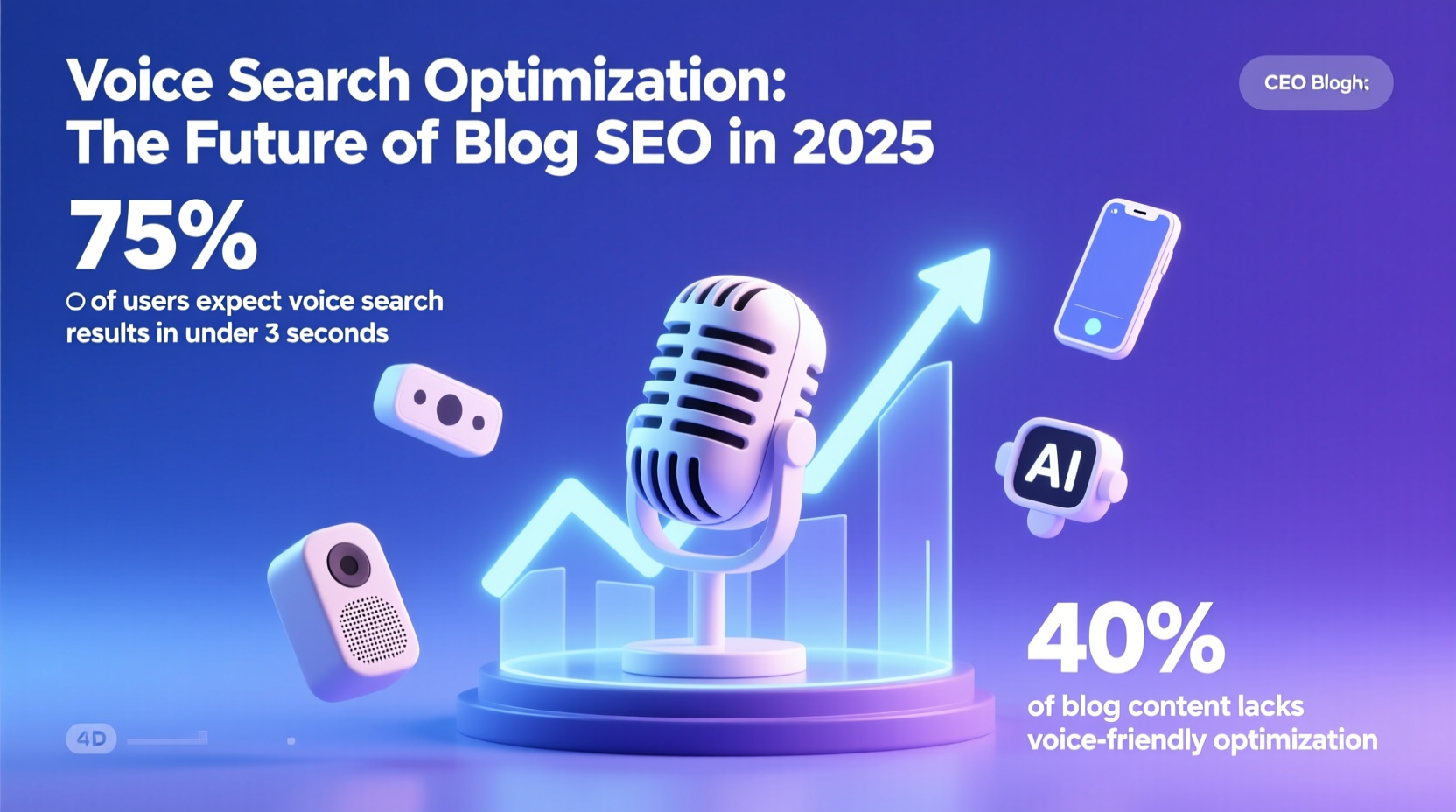
Voice search is not a trend—it’s infrastructure. Devices like Amazon Echo, Google Nest, Apple’s Siri-enabled gadgets, and built-in car systems have embedded voice interaction into everyday life. Users now expect instant, accurate answers without lifting a finger. This convenience drives behavior: voice searches are three times more likely to be action-oriented than text-based ones, as noted in a recent BrightLocal report.
Blogs that fail to adapt miss out on high-intent traffic. Consider this: when someone asks, “What’s the easiest vegan lasagna recipe for beginners?” they’re not browsing—they’re ready to cook. A blog post that directly answers this question in a concise, structured format stands a far greater chance of being read aloud by a smart assistant than one buried in a list of ten recipes with clickbait titles.
Moreover, local voice search continues to grow. Queries like “Find a coffee shop open now” or “Where can I get my laptop repaired nearby?” dominate mobile usage. For niche blogs focused on services, locations, or community advice, optimizing for proximity-based, spoken questions isn’t optional—it’s essential for survival.
How Voice Search Changes SEO Strategy
Traditional SEO relies heavily on keyword density, meta tags, and backlink profiles. Voice SEO demands a different playbook. First, it prioritizes featured snippets—the “Position Zero” results that virtual assistants often pull answers from. Over 40% of voice search responses come from featured snippets, per Ahrefs’ analysis. If your content doesn’t occupy this space, it’s unlikely to be selected.
Second, page speed and mobile responsiveness are non-negotiable. Voice search users expect immediate answers. Google’s Core Web Vitals play a critical role here. Pages that load slowly or aren’t mobile-friendly are deprioritized, even if their content is strong.
Third, semantic search and context matter more than ever. Instead of matching exact keywords, search engines interpret meaning. A query like “Tell me about blogs that help with gardening tips” could pull content from articles titled “Beginner’s Guide to Vegetable Gardening” because the system understands topical relevance, not just literal matches.
“Voice search rewards clarity, conciseness, and authority. It’s not enough to rank—you need to answer.” — Sarah Lin, Senior SEO Strategist at NexaRank
Key Optimization Techniques for Voice-Ready Blogs
To thrive in 2025’s voice-first landscape, bloggers must adopt new structural and linguistic approaches. Here are proven techniques to make your content voice-search friendly:
1. Optimize for Question-Based Queries
Use tools like AnswerThePublic, AlsoAsked, or Google’s “People Also Ask” section to identify common questions in your niche. Then create dedicated sections or entire posts answering them directly. Structure these answers in plain language, ideally within 20–40 words—the average length of a voice response.
2. Use Structured Data (Schema Markup)
Implement schema.org markup such as FAQPage, HowTo, or Article schema. This helps search engines understand your content’s purpose and increases eligibility for rich results. For example, marking up a cooking blog post with Recipe schema improves its chances of being read aloud with ingredients and steps.
3. Target Local Intent When Relevant
If your blog covers local topics—restaurants, events, services—embed location-specific modifiers naturally. Phrases like “best Italian restaurant in Portland” or “affordable yoga classes near downtown Seattle” align with how people speak locally. Include NAP (Name, Address, Phone) details if applicable, and ensure your Google Business Profile (if linked) is verified and updated.
4. Improve Readability and Sentence Flow
Voice assistants favor content that sounds natural when spoken. Avoid jargon, complex sentences, or passive voice. Aim for a Flesch Reading Ease score above 60 and use contractions (“you’re,” “it’s”) to mimic conversation.
| Factor | Voice Search Priority | Best Practice |
|---|---|---|
| Content Length | Short, direct answers | Answer questions in 20–40 words where possible |
| Keyword Type | Long-tail, question-based | Target “who,” “what,” “where,” “how” phrases |
| Page Speed | Critical | Load under 2 seconds on mobile |
| SSL Encryption | Required | Use HTTPS across all pages |
| Schema Markup | High impact | Add FAQ, HowTo, or Article schema |
Mini Case Study: The Blog That Tripled Traffic via Voice Search
Consider “UrbanPlantCare.com,” a small blog focused on indoor gardening. In early 2023, the site averaged 8,000 monthly visitors, mostly from social media referrals. After analyzing declining organic reach, the owner partnered with an SEO consultant to pivot toward voice search optimization.
The first step was identifying top voice queries in the houseplant niche: “Why are my plant leaves turning yellow?” “How often should I water a monstera?” and “Best low-light plants for apartments.” Each became the title of a new article, rewritten in conversational tone and formatted with bullet-point summaries at the top.
Next, FAQ schema was added to every post. Internal linking was improved to strengthen topical authority. Page speed was boosted by compressing images and deferring non-critical JavaScript. Within six months, the blog saw a 62% increase in organic traffic. More significantly, Google Search Console showed a 3x rise in impressions for question-based queries, and Alexa began citing the site as a source for plant care advice.
By 2025, UrbanPlantCare ranks in Position Zero for over 15 voice-triggered questions and generates over 30,000 monthly visits—proving that even niche blogs can leverage voice SEO for scalable growth.
Actionable Checklist for Voice Search Optimization
Follow this checklist to ensure your blog is prepared for the voice search revolution in 2025:
- ✅ Identify 10–15 common questions your audience asks using voice search tools
- ✅ Rewrite or create content that answers each question clearly in the first paragraph
- ✅ Add FAQ or HowTo schema markup to relevant posts
- ✅ Ensure all pages load in under 2 seconds on mobile devices
- ✅ Use HTTPS encryption site-wide
- ✅ Format answers in short paragraphs, lists, or tables for easy parsing
- ✅ Optimize for local intent if your content includes geographic relevance
- ✅ Monitor performance in Google Search Console under “Performance” filtered by query type
- ✅ Update old posts with voice-friendly language and structure
- ✅ Test your content by asking Google Assistant or Alexa, “What does [your site] say about [topic]?”
Common Mistakes That Hinder Voice Visibility
Even well-meaning bloggers make errors that limit their voice search potential. One of the most frequent is over-optimizing for desktop SERPs while neglecting conversational flow. Writing like a robot to satisfy outdated SEO rules guarantees failure in voice environments.
Another mistake is ignoring mobile experience. Many blogs look great on laptops but become sluggish or misaligned on phones. Since 90% of voice searches happen on mobile devices, this is a critical flaw.
Some bloggers also assume voice search only benefits large brands. But smaller sites with highly specific, authoritative content often outperform generic giants in voice results. Google values precision over popularity when delivering spoken answers.
Finally, failing to update content regularly undermines credibility. Outdated information may still rank, but voice assistants increasingly cross-check facts and prioritize fresh, reviewed content—especially in health, tech, and finance niches.
Frequently Asked Questions
Will voice search replace traditional SEO?
No—but it will redefine it. Traditional SEO remains vital for discovery, indexing, and ranking. However, voice search introduces new layers: natural language understanding, answer formatting, and delivery context. The two coexist, but voice requires additional optimization tactics focused on immediacy and clarity.
Do I need to change my entire blog to optimize for voice?
Not immediately. Start by updating high-potential posts—those already getting traffic or covering evergreen questions. Gradually apply voice-friendly principles across your archive. Focus on quality and user intent rather than overhauling everything at once.
Can blogs without e-commerce benefit from voice search?
Absolutely. Informational blogs—on topics like parenting, fitness, DIY, or education—are ideal for voice search. People ask questions constantly, and blogs that provide reliable, concise answers gain authority and visibility. Monetization follows through ads, affiliate links, or lead generation, even without direct sales.
Conclusion: Speak the Future, Don’t Just Write It
Voice search optimization isn’t a side project for 2025—it’s central to a blog’s longevity and reach. As artificial intelligence becomes more integrated into daily life, the line between searching and conversing blurs. Your blog must be ready to respond, clearly and confidently, when someone simply asks a question out loud.
The tools and strategies exist today. From refining content structure to implementing schema and improving technical performance, every action you take now compounds over time. Blogs that embrace voice-first thinking won’t just survive algorithm updates—they’ll become trusted sources in a world where answers are delivered by sound, not sight.




 浙公网安备
33010002000092号
浙公网安备
33010002000092号 浙B2-20120091-4
Comments
No comments yet. Why don't you start the discussion?