
In the early 2010s, voice search emerged as a revolutionary shift in how people interacted with search engines. With the rise of smart speakers, virtual assistants like Google Assistant, Siri, and Alexa, and hands-free mobile use, digital marketers scrambled to optimize content for natural language queries. But nearly a decade later, amid advancements in AI, visual search, and predictive algorithms, many are asking: Is voice search optimization still relevant for everyday Google queries?
The answer isn’t a simple yes or no. Voice search hasn't dominated the way some predicted, but it hasn’t disappeared either. Instead, its influence has subtly reshaped core SEO practices—especially around user intent, conversational language, and featured snippets. For businesses and content creators aiming to stay visible in an evolving digital landscape, understanding the current role of voice search is not just useful—it’s essential.
The Evolution of Voice Search: From Hype to Integration
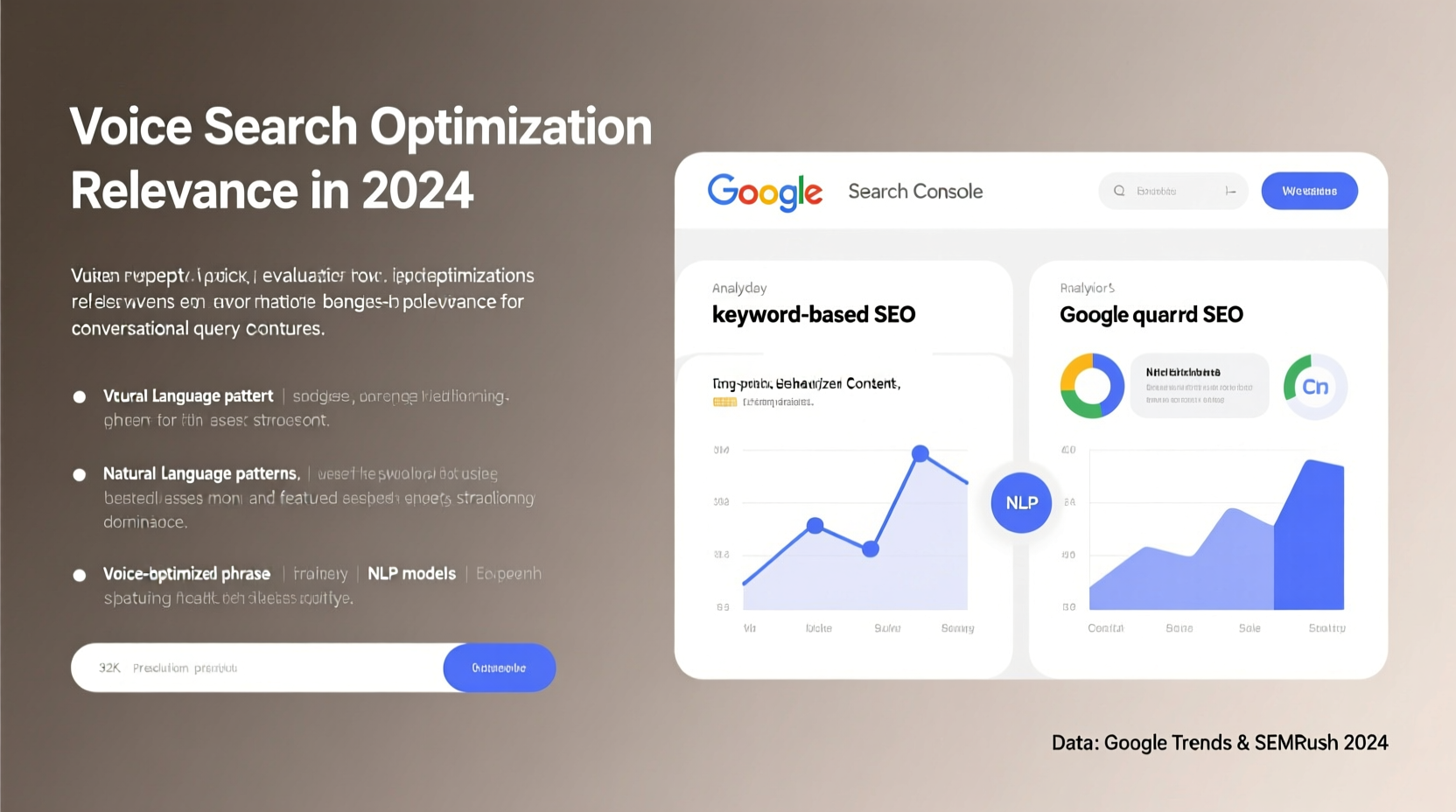
When Google launched voice search in 2010 and expanded it through Google Home and Android devices, usage surged. A 2017 study by ComScore predicted that 50% of all searches would be voice-based by 2020. That forecast didn’t materialize—current estimates suggest only about 20–27% of smartphone users regularly use voice search. However, this statistic doesn’t tell the full story.
Voice search didn’t replace text-based queries; it changed them. The technology forced search engines to prioritize natural language processing (NLP), context awareness, and semantic understanding. As a result, Google's algorithms evolved to better interpret conversational phrases, long-tail keywords, and question-based queries—many of which originated from voice input patterns.
Today, even if someone types “best coffee shop near me open now,” that query reflects the same structure as a spoken one. This blending of input methods means optimizing for voice isn’t about targeting a separate channel anymore—it’s about aligning with how modern search engines understand human language.
“Voice search didn’t win the battle for dominance, but it won the war for influencing how search works.” — Dr. Sarah Lin, Senior Researcher at the Center for Human-Computer Interaction, Stanford University
Why Voice Search Still Matters—Even If Usage Is Moderate
While daily reliance on voice commands remains inconsistent across demographics, certain behaviors keep voice search strategically important:
- Hands-free environments: Drivers, cooks, parents holding children, and multitaskers often prefer speaking over typing.
- Local search dominance: Over 58% of voice searches are location-based, such as “plumber near me” or “open pharmacies.”
- Smart home integration: Over 60 million U.S. households own smart speakers, where voice is the primary interface.
- Rising accessibility needs: Users with visual impairments or motor disabilities rely heavily on voice assistants.
Moreover, Google treats voice responses differently than text results. Most voice answers come from Position Zero—the featured snippet—meaning that ranking in this spot increases visibility across both voice and traditional search.
Core Optimization Strategies That Align With Voice Search
You don’t need a dedicated “voice SEO” strategy, but integrating voice-friendly techniques strengthens overall SEO performance. Here are key areas to focus on:
1. Target Question-Based Queries
Voice searches are typically longer and phrased as questions. Think: “How do I fix a leaky faucet?” rather than “fix leaky faucet.” Use tools like AnswerThePublic, AlsoAsked, or Google’s “People also ask” section to identify common question formats related to your niche.
2. Prioritize Natural Language and Conversational Tone
Write as people speak. Avoid stiff, overly technical prose unless required. Use contractions (“you’re,” “we’ll”), active voice, and direct address (“Here’s how you can…”). This improves readability and matches the linguistic patterns voice assistants expect.
3. Optimize for Local SEO
Nearly two-thirds of voice searches have local intent. Ensure your business is listed on Google Business Profile with accurate hours, address, phone number, and categories. Encourage customer reviews and include location-specific keywords naturally in your content.
4. Structure Content for Featured Snippets
Google pulls most voice answers from featured snippets. Format content using clear headings, bullet points, numbered lists, and concise definitions. For example:
Q: How long does it take to boil eggs?
A: It takes 9–12 minutes to boil eggs, depending on size and desired yolk consistency.
This format increases the likelihood of being selected as a direct answer.
5. Improve Page Speed and Mobile Experience
Voice searches occur predominantly on mobile devices. Pages that load slowly or aren’t mobile-friendly lose credibility with Google and users alike. Aim for sub-2-second load times and responsive design.
| Factor | Voice Search Impact | Best Practice |
|---|---|---|
| Query Length | Voice queries average 5–7 words longer than typed ones | Target long-tail, conversational phrases |
| Featured Snippets | Over 40% of voice answers come from Position Zero | Structure answers clearly under H2/H3 headers |
| Page Authority | Top 3 domains dominate voice results | Build backlinks and E-E-A-T signals |
| SSL Encryption | Non-HTTPS sites rarely appear in voice answers | Ensure HTTPS is active site-wide |
| Content Freshness | Google favors updated information for dynamic queries | Regularly audit and refresh old posts |
A Real-World Example: Boosting Visibility for a Local Plumbing Service
Consider “Maple City Plumbing,” a small business in Portland, Oregon. Despite decent website traffic, they weren’t appearing in voice searches like “emergency plumber near me” or “how much does a water heater repair cost?”
To improve their voice search visibility, they took the following steps:
- Updated their Google Business Profile with service areas, response times, and FAQs.
- Created a blog post titled “How Much Does Water Heater Repair Cost in Portland?” written in a conversational tone.
- Structured answers using bullet points and added schema markup for pricing.
- Optimized page speed from 4.2s to 1.7s using image compression and caching.
- Embedded frequently asked questions with direct, concise replies.
Within three months, the page began ranking in Position Zero for several plumbing-related questions. More importantly, customer intake calls increased by 35%, with multiple clients reporting they found the company via Google Assistant saying, “I found Maple City Plumbing—they explain costs clearly.”
This case illustrates that while voice search may not generate massive traffic volumes, it drives high-intent, qualified leads—especially in local services.
Actionable Checklist: Optimize for Voice-Influenced Search
Use this checklist to ensure your content aligns with current voice search trends:
- ✅ Identify 5–10 question-based keywords per topic cluster
- ✅ Rewrite meta descriptions and intros to answer questions directly
- ✅ Use header tags (H2, H3) to frame questions and provide immediate answers
- ✅ Implement FAQ or How-To schema markup
- ✅ Audit top-performing pages for snippet eligibility
- ✅ Test mobile load speed and fix critical rendering issues
- ✅ Claim and verify your Google Business Profile (for local businesses)
- ✅ Monitor analytics for increases in “position zero” impressions
Common Misconceptions About Voice Search Optimization
Several myths persist about voice search that can mislead marketers:
- Myth: You need to create separate “voice-only” content.
Reality: There’s no separate index for voice. Optimizing for clarity, conciseness, and relevance benefits all search types. - Myth: Voice search killed keyword research.
Reality: Keyword research evolved. Long-tail, natural language phrases are now more valuable than exact-match terms. - Myth: Only smart speaker owners affect voice search data.
Reality: Mobile voice input through smartphones accounts for the majority of voice queries.
The goal isn’t to chase voice search as a standalone trend, but to adopt its underlying principles—clarity, usefulness, and user-centricity—which are central to Google’s broader mission.
Frequently Asked Questions
Does voice search still affect SEO rankings?
Not directly. Google uses the same index for voice and text results. However, voice search rewards content that appears in featured snippets, loads quickly, and answers questions clearly—factors that indirectly boost rankings.
Should I optimize every page for voice search?
No. Focus on high-intent pages such as service descriptions, product details, FAQs, and location-based content. These are most likely to be triggered by voice queries.
Can I track voice search traffic in Google Analytics?
Not precisely. Voice search isn’t labeled separately in analytics tools. However, you can infer voice activity through increases in mobile traffic, featured snippet impressions in Search Console, and queries with question words (who, what, where, how).
Conclusion: Voice Search Optimization Isn’t Dead—It’s Invisible
Voice search optimization hasn’t vanished. Instead, it has been absorbed into the fabric of modern SEO. The habits it encouraged—writing conversationally, structuring answers clearly, prioritizing mobile experience—are now baseline expectations for any competitive website.
For everyday Google queries, whether typed or spoken, the winning formula remains the same: anticipate the user’s real need, deliver a precise answer, and present it in a format that’s easy for both humans and machines to digest.
If you’re already focusing on user intent, content clarity, and technical performance, you’re already optimizing for voice—even if you never say the word.




 浙公网安备
33010002000092号
浙公网安备
33010002000092号 浙B2-20120091-4
Comments
No comments yet. Why don't you start the discussion?