
For decades, the goal of 10,000 steps a day has been hailed as the golden rule for maintaining good health. Fitness trackers, smartphone apps, and wellness influencers have all reinforced this number as a non-negotiable benchmark. But recent scientific studies suggest that while walking is undeniably beneficial, the magic of 10,000 steps may be more marketing than medicine.
The origin of the 10,000-step target isn’t rooted in clinical research but in a 1960s Japanese pedometer marketing campaign. The device was called “Manpo-kei,” which literally translates to “10,000 steps meter.” It caught on globally, embedding itself into public health messaging despite lacking strong initial evidence. Now, modern epidemiology is re-evaluating this long-standing assumption—and the findings are reshaping how we think about daily movement.
The Science Behind Step Count and Health
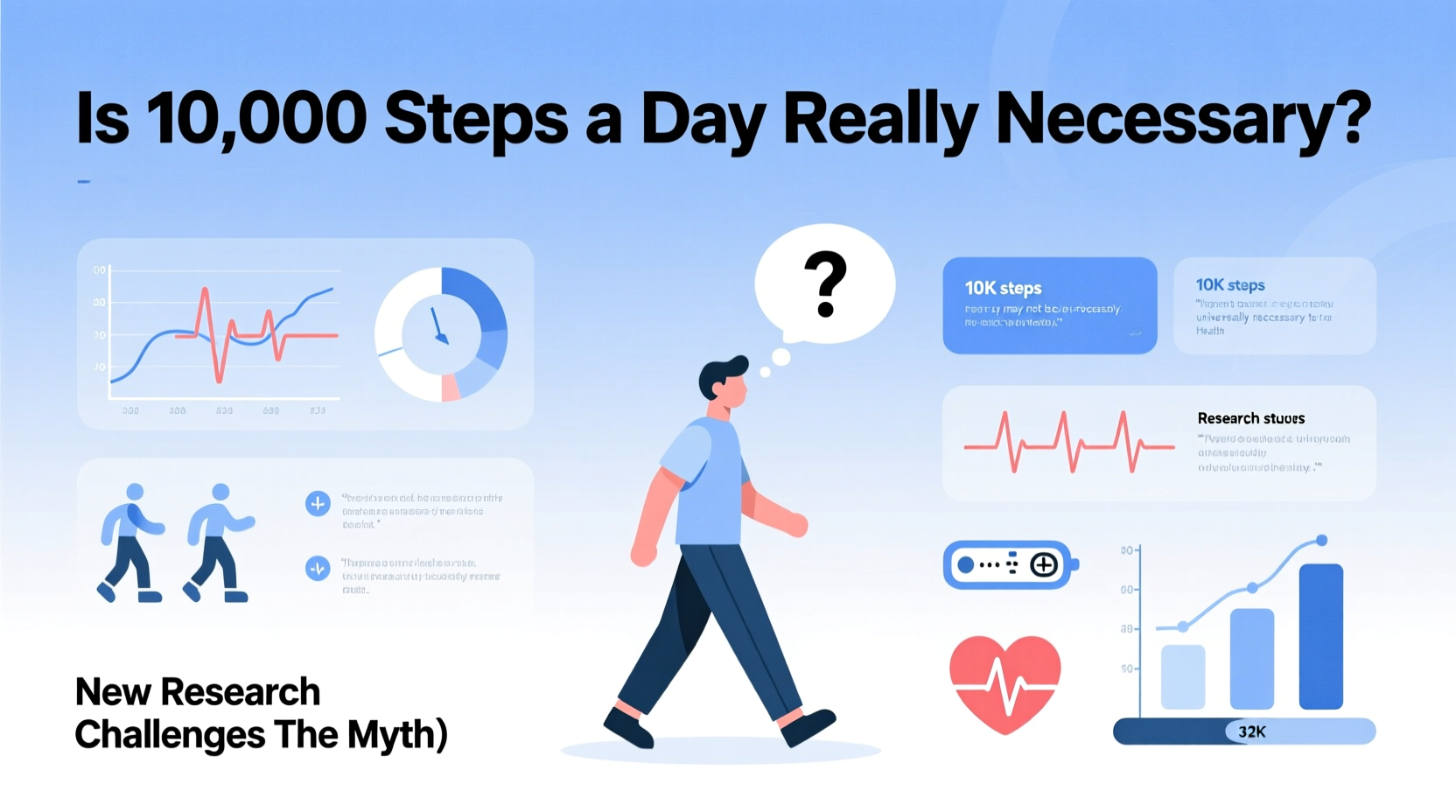
Multiple longitudinal studies have examined the relationship between daily step counts and health outcomes such as cardiovascular disease, mortality risk, and metabolic function. One pivotal 2020 study published in JAMA Internal Medicine followed over 16,000 older women and found that those averaging just 4,400 steps per day had significantly lower mortality rates than those who took fewer steps. Benefits continued up to around 7,500 steps, after which they plateaued.
A follow-up meta-analysis in 2023, incorporating data from nearly 150,000 individuals across multiple countries, confirmed these results: substantial health gains occur well below 10,000 steps. For most adults, especially those over 60, the sweet spot appears to be between 6,000 and 8,000 steps per day. Beyond that, additional steps offer diminishing returns in terms of longevity and chronic disease prevention.
“While 10,000 steps isn’t harmful, it’s not a one-size-fits-all prescription. We’re seeing that consistent, moderate activity—like 7,000 steps at a brisk pace—can deliver most of the cardiovascular and metabolic benefits people seek.” — Dr. I-Min Lee, Professor of Epidemiology, Harvard T.H. Chan School of Public Health
How Many Steps Do You Actually Need?
The ideal number of daily steps varies based on age, fitness level, and health goals. Here’s a breakdown by demographic group:
| Age Group | Recommended Daily Steps | Key Benefits Observed |
|---|---|---|
| Adults (18–60) | 7,000–9,000 | Improved insulin sensitivity, reduced BMI, lower stress |
| Older Adults (60+) | 6,000–8,000 | Lower mortality risk, better mobility, stronger bones |
| Children & Teens | 10,000–12,000 | Supports growth, bone density, cognitive development |
| Individuals with Chronic Conditions | 3,000–6,000 (gradually increasing) | Better glucose control, improved circulation, fatigue reduction |
Crucially, intensity matters. A 2022 study from the British Journal of Sports Medicine showed that walking at a moderate-to-vigorous pace (roughly 100 steps per minute) amplified cardiovascular benefits—even when total step count was below 10,000. This suggests that how fast you walk may be just as important as how many steps you take.
Why the 10K Myth Persists—and Why It Can Be Harmful
The 10,000-step standard endures because it’s simple, measurable, and motivating. However, rigid adherence can backfire. Some individuals develop obsessive behaviors around hitting the number, leading to overuse injuries or burnout. Others feel discouraged if they consistently fall short, interpreting their efforts as failures—even if they’re walking 7,000 steps regularly.
Moreover, fixating solely on step count distracts from other critical aspects of physical activity. Strength training, flexibility, balance exercises, and sedentary behavior patterns play equally vital roles in overall health. Walking 10,000 steps while sitting for 10 hours afterward doesn’t fully offset the risks of prolonged inactivity.
Public health messaging is slowly shifting toward a more holistic view. The World Health Organization now emphasizes “moving more and sitting less” rather than prescribing specific step targets. The focus is on consistency, enjoyment, and integration into daily life—not arbitrary numbers.
Mini Case Study: Sarah’s Realistic Approach to Daily Movement
Sarah, a 48-year-old office worker, struggled for years to hit 10,000 steps. She’d walk laps around her house late at night, feeling anxious if her tracker showed 9,800. After reading about newer research, she reset her goal to 7,500 steps with an emphasis on brisk walking during lunch breaks. She also started two weekly strength sessions.
Within three months, her resting heart rate dropped, her sleep improved, and she reported higher energy levels. Most importantly, she no longer felt guilty on days when she only reached 6,200 steps due to work demands. Her sustainable routine led to lasting change—something the pressure of 10,000 steps never achieved.
Practical Strategies for Building Sustainable Daily Movement
You don’t need to chase 10,000 steps to gain meaningful health benefits. Instead, adopt a flexible, personalized approach grounded in science and real-life feasibility.
Step-by-Step Guide to Optimizing Your Daily Walk Routine
- Assess your current baseline. Wear a pedometer or use your phone for one week without changing habits. Calculate your average daily steps.
- Set a realistic initial goal. If you average 4,000 steps, aim for 5,000 first. Increase by 500–1,000 steps every two weeks.
- Prioritize intensity over quantity. Try to include at least 20 minutes of brisk walking most days. Use the “talk test”—you should be able to speak but not sing comfortably.
- Incorporate movement into your routine. Take walking meetings, park farther away, use stairs, or walk during phone calls.
- Track progress beyond steps. Monitor energy levels, mood, sleep quality, and how clothes fit—these are often better indicators of health improvement.
- Combine walking with other activities. Add bodyweight exercises twice a week to build muscle and boost metabolism.
Checklist: Building a Balanced Movement Routine
- ✅ Aim for 30 minutes of moderate activity most days (walking included)
- ✅ Include at least 2 days of strength training weekly
- ✅ Break up long sitting periods every 60–90 minutes
- ✅ Focus on consistency, not perfection
- ✅ Choose enjoyable activities to increase adherence
- ✅ Listen to your body—rest when needed
FAQ: Common Questions About Step Goals and Health
Is walking 5,000 steps a day enough?
Yes, especially if done consistently and at a moderate pace. Research shows that 5,000 steps provide significant health benefits compared to sedentary lifestyles. For many, this is a realistic starting point to build from.
Do I have to walk 10,000 steps to lose weight?
No. Weight management depends more on overall energy balance—calories in versus calories out. While walking helps create a deficit, diet plays a larger role. Combining 7,000 steps with mindful eating is typically more effective and sustainable than forcing 10,000 steps alone.
Are steps counted during slow walking still valuable?
Yes. Even light-intensity walking contributes to reducing sedentary time and supports joint health, digestion, and mental clarity. However, for cardiovascular benefit, some portion of your daily steps should be at a brisk pace.
Reframing the Goal: From Numbers to Lifestyle
The broader takeaway from recent research is this: health isn’t determined by a single metric. Walking is one of the most accessible and effective forms of exercise, but its value lies in regularity and integration—not in hitting an arbitrary number.
Instead of asking, “Did I get 10,000 steps?” consider asking:
- Did I move my body today?
- Did I spend less time sitting than yesterday?
- Did I feel stronger, more energized, or more relaxed?
Conclusion: Move Mindfully, Not Just More
The idea that everyone must walk 10,000 steps a day is outdated. New research affirms that meaningful health improvements begin at far lower thresholds and depend more on consistency, intensity, and overall lifestyle than on a round number popularized by a marketing campaign.
Your body benefits from every step you take—whether you reach 5,000 or 10,000. The key is to build a routine that fits your life, feels sustainable, and includes a variety of movement types. Forget the pressure of perfection. Embrace progress, listen to your body, and prioritize joy in motion over numerical obsession.




 浙公网安备
33010002000092号
浙公网安备
33010002000092号 浙B2-20120091-4
Comments
No comments yet. Why don't you start the discussion?