
In the ongoing effort to reduce exposure to airborne particles—whether from viruses, pollution, or allergens—mask-wearing has become a routine part of daily life. As understanding of respiratory protection evolves, many people are asking: does layering two masks offer meaningful benefits over a single mask? The answer isn't a simple yes or no. It depends on mask type, fit, material quality, and personal comfort. This article examines the evidence behind double masking, evaluates its impact on filtration and breathability, and offers practical guidance for making informed choices.
The Science Behind Double Masking
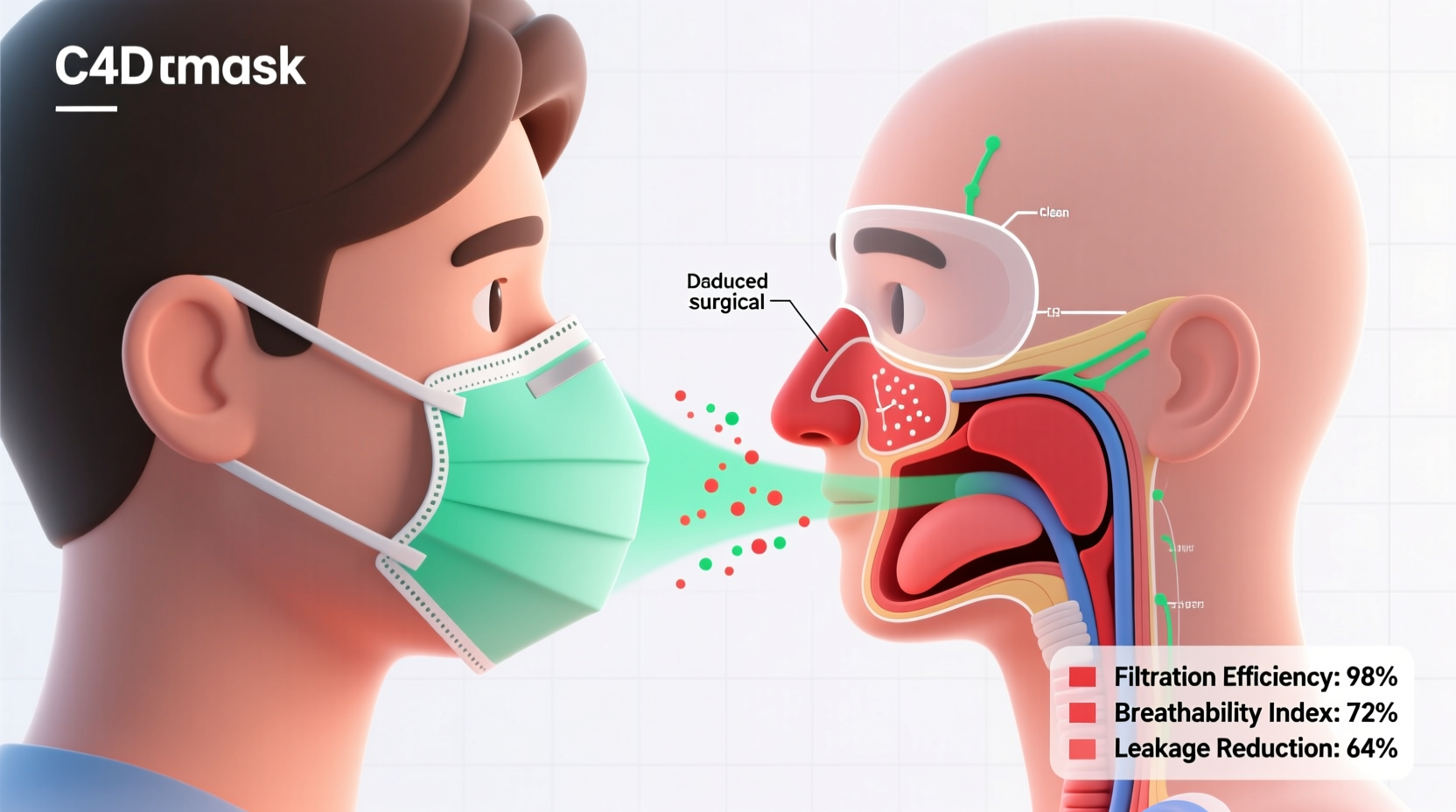
Double masking involves wearing one mask over another—typically a surgical mask underneath a cloth mask. The goal is to improve both filtration efficiency and facial seal. A single mask, even a well-made one, may have gaps around the nose, cheeks, or chin that allow unfiltered air to enter. Adding a second mask can compress the inner layer against the face, reducing leakage and increasing the total number of fibers through which air must pass.
A 2021 study by the Centers for Disease Control and Prevention (CDC) found that knotting the ear loops of a surgical mask and tucking in the sides improved fit significantly. When combined with a cloth mask worn over it, filtration effectiveness increased to nearly 95% in simulated environments. The outer cloth mask acts as a \"fit enhancer,\" pressing the surgical mask closer to the face and adding an extra filtration layer.
“Layering masks can improve source control and personal protection when high-quality respirators like N95s aren’t available.” — Dr. Anthony Fauci, Director of NIAID
However, not all combinations are equally effective. Pairing two poorly fitting or low-filtration masks may do little to enhance protection and could worsen breathability. The key lies in strategic layering—not just adding bulk.
Filtration Efficiency: How Much Protection Does Layering Add?
Filtration efficiency refers to a mask’s ability to capture particles of various sizes, particularly those between 0.3 and 5 microns—the range most relevant for respiratory droplets and aerosols. Different materials filter differently:
- Surgical masks: Filter about 60–80% of small particles but often fit loosely.
- Cloth masks: Vary widely; tightly woven cotton with multiple layers can reach 50–70% efficiency.
- N95 respirators: Filter at least 95% of airborne particles when properly fitted.
When two masks are worn together, their combined filtration isn’t simply additive. Instead, each layer captures a portion of escaping particles. For example, if a surgical mask filters 70% of particles and a cloth mask adds another 60% filtration of what gets through, the cumulative effect approaches 88%. However, this assumes minimal bypass due to poor fit.
Effective vs. Ineffective Combinations
| Combination | Filtration Gain | Breathability | Verdict |
|---|---|---|---|
| Surgical mask + Cloth mask (well-fitted) | High | Moderate | Recommended |
| Cloth mask + Cloth mask | Low to Moderate | Poor | Not Recommended |
| Surgical mask + KN95 | Minimal added benefit | Poor | Unnecessary |
| KN95 alone (properly fitted) | Very High | Good | Superior to double masking |
The table shows that not all double-masking strategies are worthwhile. The greatest gains come from combining a disposable medical mask with a well-fitting fabric mask designed to enhance seal. Stacking two cloth masks increases resistance without proportional filtration benefits and may encourage users to adjust or remove them more frequently, reducing overall protection.
Breathability: The Hidden Trade-Off
While filtration improves with additional layers, so does breathing resistance. Every added layer increases the pressure difference required to inhale and exhale. This can lead to discomfort, fatigue, and even reduced compliance—especially during prolonged wear or physical activity.
Breathability is measured in terms of airflow resistance, typically in Pascals (Pa). Healthy adults can tolerate moderate increases, but individuals with respiratory conditions such as asthma or COPD may find double masking challenging or unsafe.
A study published in the Annals of Internal Medicine found that while double masking increased filtration, it also raised breathing resistance by up to 40% compared to a single surgical mask. Over time, this can lead to:
- Increased moisture buildup inside the mask
- Higher likelihood of adjusting or removing the mask
- Greater discomfort, especially in warm environments
Moreover, excessive resistance may cause air to escape through side gaps, undermining the very purpose of layering. If a mask becomes too hard to breathe through, users may tilt it down, loosen straps, or stop using it altogether—nullifying any theoretical benefit.
Real-World Example: Commuter in a Crowded Subway
Consider Maria, a transit-dependent worker in a densely populated city. During peak flu season, she wears a surgical mask under a three-layer cotton mask on her daily commute. She notices that while she feels more protected, she begins to feel short of breath after 20 minutes. By midday, she finds herself pulling her mask below her nose to catch her breath, unknowingly exposing herself.
After switching to a well-fitted KN95, she reports better comfort, easier breathing, and greater confidence in her protection—even though she’s now wearing only one mask. Her experience illustrates a critical point: optimal protection balances filtration, fit, and usability.
Best Practices for Effective Mask Layering
If you choose to double mask, doing so correctly matters. Follow these steps to ensure maximum benefit without unnecessary strain:
- Select the right base layer: Start with a flat-fold or pleated surgical mask. Ensure it covers your nose, mouth, and chin without large gaps.
- Knot and tuck (optional): Tie the ear loops of the surgical mask and fold in the excess material to eliminate side gaps. This improves fit significantly.
- Add a snug-fitting cloth mask: Choose one with a flexible nose wire and secure ear loops (not ties). The fabric should press the surgical mask firmly against your face.
- Check the seal: Cup your hands around the edges while inhaling. If you feel air leaking, adjust the fit or try a different combination.
- Monitor comfort: If breathing feels labored after a few minutes, consider switching to a higher-grade single mask instead.
Checklist: Is Your Double Mask Working?
- ✅ Inner mask is a surgical or procedure mask
- ✅ Outer mask is tightly woven and fits snugly
- ✅ No visible gaps around nose or cheeks
- ✅ You can breathe comfortably for 15+ minutes
- ✅ Voice remains clear (muffled speech suggests good coverage)
- ✅ No frequent adjustments needed
When One Mask Is Better Than Two
In many cases, upgrading to a single high-performance mask outperforms double masking. Respirators like N95, KN95, or KF94 are designed to combine excellent filtration (≥95%) with reliable fit and reasonable breathability. Unlike improvised layering, they undergo standardized testing and certification.
These masks feature electrostatically charged fibers that attract and trap small particles, along with molded shapes or foam seals that conform to facial contours. A properly worn N95 eliminates the need for double masking entirely—and often provides superior comfort due to engineered airflow channels.
Public health agencies now emphasize “mask quality over quantity.” The CDC states that respirators offer the highest level of protection available to the general public, especially in high-risk settings like crowded indoor spaces, public transportation, or healthcare environments.
“The best mask is the one that fits well, is worn consistently, and provides adequate filtration. Often, that’s a single certified respirator.” — Linsey Marr, PhD, Airborne Virus Expert, Virginia Tech
Frequently Asked Questions
Does double masking protect others as well as myself?
Yes. Double masking enhances source control—reducing the number of particles you exhale into the environment. This protects others, especially in close-contact settings. However, a well-fitted respirator offers equal or better source control without the added bulk.
Can I reuse double masks?
Surgical masks are designed for single use or limited reuse if intact and dry. Cloth masks can be washed regularly. Do not reuse a damp or soiled surgical mask. Replace either layer immediately if damaged, wet, or visibly dirty.
Is double masking necessary for outdoor activities?
No. In open-air environments with good ventilation and physical distancing, the risk of transmission is low. A single mask is sufficient if required, and double masking is generally unnecessary outdoors unless in dense crowds.
Conclusion: Balancing Protection, Comfort, and Practicality
Wearing two masks can improve filtration and fit compared to a single loose-fitting mask—but only when done correctly. The combination of a surgical mask beneath a well-constructed cloth mask has been shown to block over 90% of aerosols in controlled studies. However, the added breathing resistance and potential for discomfort mean that double masking isn’t ideal for everyone or every situation.
For most people, upgrading to a single high-filtration, well-fitted respirator like an N95 or KN95 offers superior protection, better breathability, and greater ease of use. These masks represent the gold standard in non-medical respiratory protection and eliminate the guesswork of layering incompatible designs.
The ultimate goal is consistent, correct mask use. Whether you choose one mask or two, prioritize fit, filtration, and comfort. A mask that’s worn properly and kept in place throughout exposure is always better than a layered but ill-fitting alternative.




 浙公网安备
33010002000092号
浙公网安备
33010002000092号 浙B2-20120091-4
Comments
No comments yet. Why don't you start the discussion?