
Walk through any curated garden center, browse high-end landscape portfolios, or scroll through design-forward backyard accounts—and you’ll likely see it: mature trees with trunks swathed in coarse, earthy burlap. It reads as intentional, warm, grounded. A visual shorthand for “thoughtful stewardship” and “rural elegance.” But behind that texture lies a practical question many homeowners and landscapers hesitate to ask aloud: Does this actually do anything for the tree—or is it purely performative?
The answer isn’t binary. Burlap wrapping sits at the intersection of horticulture, aesthetics, and regional climate reality. It can protect—genuinely protect—under specific conditions. It can also invite pests, trap moisture, delay bark development, and create long-term dependency. What makes it worthwhile isn’t the material itself, but why, when, how long, and for which trees. This article cuts through the trend noise with science-backed insight, real-world trade-offs, and actionable guidance—not assumptions.
What Burlap Wrapping Actually Does (and Doesn’t Do)
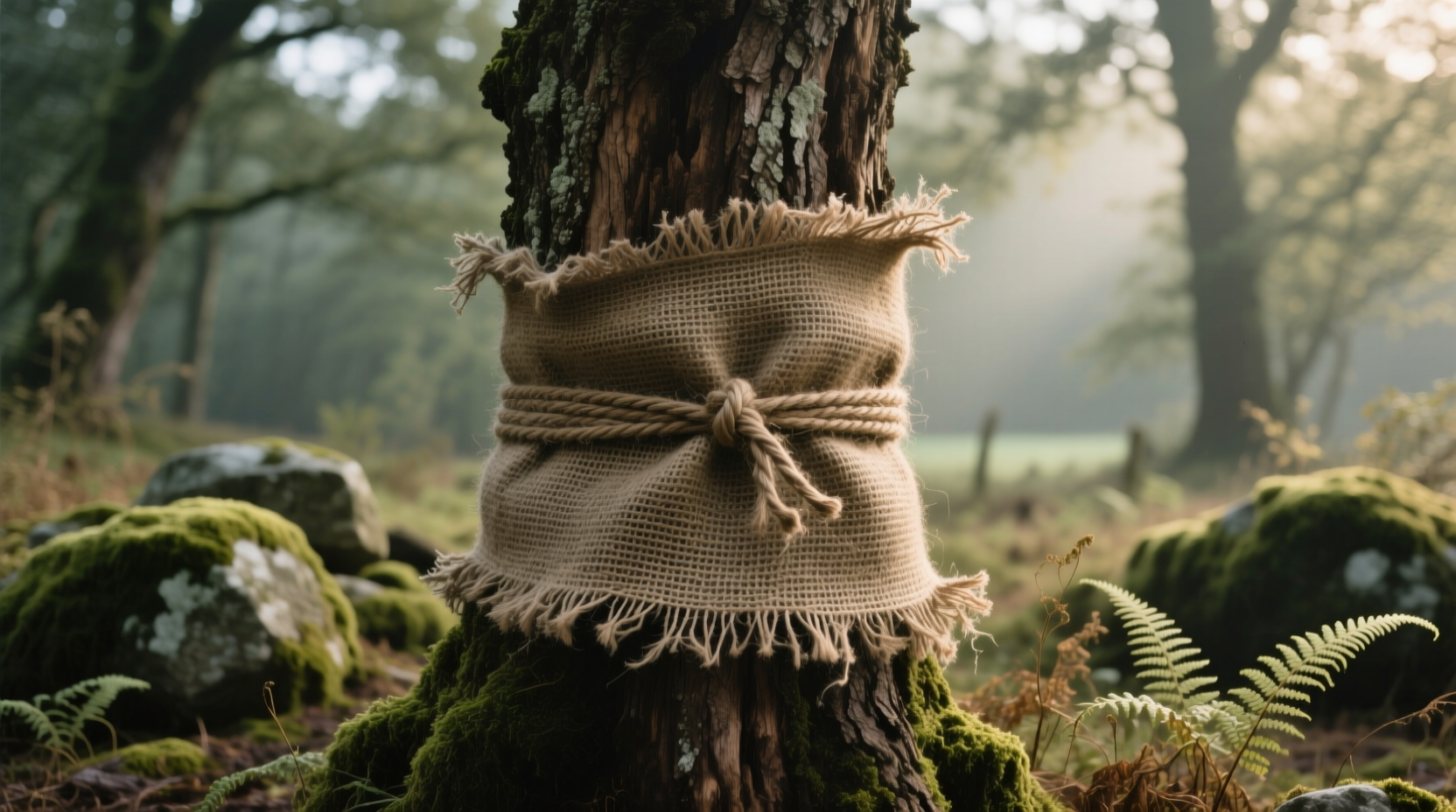
Burlap—a woven fabric made from jute or hemp fibers—is biodegradable, breathable, and moderately insulating. Unlike plastic wraps or vinyl tapes, it allows air and limited moisture exchange. That breathability is its greatest functional asset—and its most misunderstood limitation.
When applied correctly and temporarily, burlap can:
- Reduce winter sunscald on thin-barked species (e.g., young maples, lindens, cherries) by diffusing intense midday light that warms bark during freeze-thaw cycles;
- Shield tender bark from mechanical injury during mowing, string trimming, or equipment movement;
- Slow moisture loss in newly transplanted trees during dry, windy spring conditions;
- Deter light browsing by deer or rabbits—though not reliably against determined or hungry animals.
It does not:
- Prevent girdling by rodents (voles and mice easily tunnel beneath or chew through loose burlap);
- Provide meaningful frost protection below −15°F (−26°C);
- Correct structural defects or compensate for poor planting technique;
- Replace proper mulching, watering, or pest monitoring.
Crucially, burlap offers no disease resistance—and if left too long or applied too tightly, it becomes a moisture trap that encourages fungal growth, bark softening, and insect colonization. As Dr. Elena Torres, Urban Forestry Extension Specialist at Oregon State University, explains:
“Burlap is a short-term buffer—not a long-term solution. I’ve seen trees wrapped for three years develop chronic bark fissures and latent canker infections that only surfaced after removal. The wrap didn’t cause the disease, but it masked early symptoms and created ideal microclimates for pathogens to proliferate.” — Dr. Elena Torres, Urban Forestry Extension Specialist
When It’s Worth the Effort: A Practical Decision Framework
Not all trees benefit equally—and not all settings justify the labor. Use this framework before reaching for the staple gun or twine:
Here’s how scenarios break down:
| Scenario | Worth Wrapping? | Rationale & Duration |
|---|---|---|
| Newly planted maple (2–4 years old), planted in full-sun suburban yard | ✅ Yes | Sunscald risk is high; wrap from November to March. Remove completely by early April. |
| Mature oak (25+ years), thick furrowed bark, shaded woodland edge | ❌ No | Natural bark provides full protection. Wrapping adds zero benefit and invites unnecessary maintenance. |
| Young serviceberry in a high-traffic courtyard with frequent string-trimmer use | ✅ Yes (mechanical focus) | Wrap only the lowest 18 inches; remove each spring and reapply each fall. Inspect weekly for abrasion or tightness. |
| Established crabapple in a deer-heavy rural area | ⚠️ Marginal | Burlap alone won’t deter deer. Combine with approved repellents or physical fencing instead. |
| Tree planted in heavy clay soil with poor drainage | ❌ Strongly discouraged | Moisture retention + burlap = increased risk of collar rot and phytophthora infection. |
A Step-by-Step Guide to Proper Burlap Application (and Removal)
Improper installation negates every potential benefit—and introduces avoidable harm. Follow this sequence precisely:
- Select the right burlap: Use untreated, loosely woven jute burlap (not synthetic “burlap-style” fabric). Avoid dyed or chemically treated versions—residues can leach into bark.
- Clean the trunk: Gently brush away loose debris, moss, or lichen. Do not scrub or use water—wet bark increases mold risk.
- Measure and cut: Cut a strip wide enough to wrap snugly (not tightly) around the trunk once, plus 2 inches overlap. Height: 18–24 inches for young trees; 12 inches for mechanical protection only.
- Apply with space: Wrap starting at the base, overlapping each turn by ⅓. Leave a ¼-inch gap between layers—no compression. Secure top and bottom with biodegradable jute twine (never wire, plastic tape, or staples).
- Inspect weekly: Check for tightness (growth expands trunks), moisture accumulation, insect activity, or fraying edges.
- Remove seasonally: In early spring (before bud break), unwrap fully. Discard used burlap—do not reuse. Inspect bark for discoloration, soft spots, or weeping sap.
This process takes 8–12 minutes per tree—including inspection time. For five young trees, expect under an hour annually. Compare that to the cost of replacing a single sun-scorched maple ($250–$600+) or treating bark canker ($120+ in arborist fees).
Real-World Case Study: The Suburban Maple Experiment
In Portland, Oregon, homeowner Maya R. planted three ‘Crimson King’ maples in her front yard in fall 2021. All were 2.5-inch caliper, container-grown, and sited in full afternoon sun. She wrapped two with burlap (one with jute twine, one with plastic zip ties) and left the third unwrapped as a control.
By March 2022, the unwrapped tree showed faint vertical cracking on the southwest side—early sunscald. The jute-wrapped tree had intact, healthy bark and no visible stress. The zip-tie-wrapped tree developed a 3-inch band of discolored, slightly sunken bark where the tie compressed the cambium—despite identical burlap coverage.
Maya removed all wraps in early April, documented bark condition, and repeated the process only on the unwrapped and zip-tie trees in 2022–2023. By fall 2023, the jute-wrapped tree had 22% greater trunk diameter growth than the control—and zero bark lesions. The zip-tie tree required professional evaluation for girdling damage and was treated with a protective wound sealant.
Her takeaway: “The burlap wasn’t about charm. It was insurance. But the *way* I installed it mattered more than the burlap itself.”
Do’s and Don’ts: A Landscaper’s Field Checklist
Based on 12 years of municipal tree care records and arborist incident reports, here’s what consistently separates effective wrapping from harmful habit:
- ✓ Do inspect bark monthly—even when wrapped
- ✓ Do use only natural jute burlap and jute twine
- ✓ Do remove wraps by April 1st, regardless of weather
- ✓ Do prioritize mulch rings over trunk wraps for moisture regulation
- ✗ Don’t wrap trees older than 5 years unless mechanically vulnerable
- ✗ Don’t leave burlap on past bud break—delayed removal is the #1 cause of bark complications
- ✗ Don’t wrap over existing wounds, lichen, or fungal fruiting bodies
- ✗ Don’t combine with plastic mulch or weed barrier fabric beneath
FAQ: Addressing Common Misconceptions
Can I leave burlap on year-round for “continuous protection”?
No. Year-round burlap disrupts natural bark maturation, traps humidity against the trunk, and creates ideal conditions for boring insects like bronze birch borer or flatheaded appletree borer. Bark needs exposure to air, UV light, and seasonal temperature shifts to develop protective suberized layers. Continuous wrapping stunts this process—making trees more vulnerable over time.
Is decorative burlap wrapping (e.g., for weddings or photo shoots) safe for trees?
Short-term decorative use—under 72 hours—is generally low-risk if applied loosely, without fasteners, and removed carefully. However, avoid wrapping during active growth (spring/summer) or high-humidity periods. Never use adhesives, nails, or wire. And never wrap a stressed, diseased, or drought-impacted tree—even briefly—for aesthetics.
What’s better than burlap for sunscald prevention?
White latex paint (diluted 1:1 with water) applied to the south/southwest trunk surface is more effective, longer-lasting, and lower-maintenance than burlap for sunscald. It reflects light without altering airflow or requiring removal. Approved for use on young trees by the International Society of Arboriculture (ISA). Note: Only use interior-grade, non-toxic, zero-VOC paint—never oil-based or exterior paints.
Conclusion: Charm Has Its Place—But Stewardship Comes First
Rustic charm shouldn’t come at the expense of tree health. Burlap wrapping earns its place not as décor, but as a targeted, temporary intervention rooted in observable need—not Pinterest trends. When applied with botanical intent, seasonal discipline, and horticultural precision, it’s a modest investment of time that pays dividends in longevity, structure, and resilience. When applied for appearance alone, it’s extra work with hidden costs: compromised bark integrity, delayed diagnosis of pests or disease, and eroded trust in your own observation skills.
You don’t need to wrap every tree. You do need to know why you’re wrapping any tree—and whether that reason holds up under scrutiny. Start small: pick one young, thin-barked specimen exposed to winter sun. Apply burlap using the step-by-step guide. Document changes weekly. Remove it on schedule. Compare its condition next spring to an unwrapped peer. Let evidence—not aesthetics—guide your next decision.




 浙公网安备
33010002000092号
浙公网安备
33010002000092号 浙B2-20120091-4
Comments
No comments yet. Why don't you start the discussion?