
For many couples struggling with infertility, in vitro fertilization (IVF) offers hope for building a family. Yet, despite advances in reproductive medicine, not every IVF cycle results in a successful pregnancy. In fact, it's estimated that nearly 60–70% of IVF cycles do not lead to a live birth on the first attempt. Understanding why IVF fails is crucial—not to assign blame, but to empower patients with knowledge and guide medical decisions for future cycles.
IVF failure is rarely due to a single factor. Instead, it often stems from a complex interplay of biological, technical, and lifestyle-related elements. By identifying these causes, both patients and fertility specialists can adjust strategies to increase the odds of success in subsequent attempts.
Embryo Quality: The Most Critical Factor
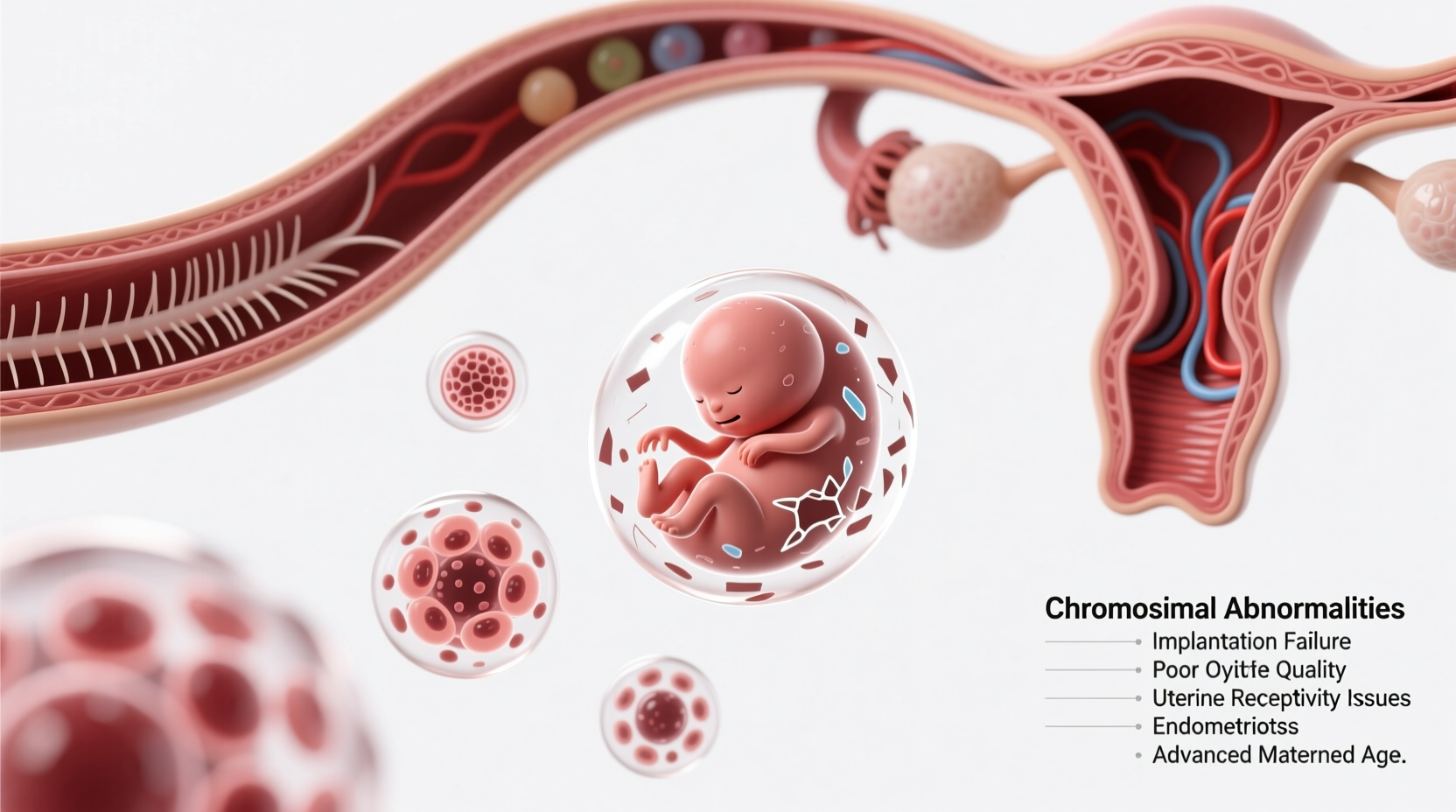
The quality of the embryo is one of the most significant determinants of IVF success. Even when fertilization occurs and embryos begin to develop, many do not possess the genetic or structural integrity needed to implant and grow into a healthy pregnancy.
Chromosomal abnormalities—also known as aneuploidy—are a leading cause of poor embryo quality. These occur when an embryo has too many or too few chromosomes, which typically prevents implantation or leads to early miscarriage. Aneuploidy risk increases significantly with maternal age, especially after 35.
In some cases, embryos may appear morphologically normal under the microscope but still carry genetic defects undetectable through standard grading. Preimplantation genetic testing for aneuploidy (PGT-A) can help identify chromosomally normal embryos, though it’s not a guarantee of success and isn’t recommended for all patients.
Uterine Receptivity and Implantation Issues
An embryo must not only be viable but also meet a receptive uterine environment at precisely the right time. The window of implantation—the brief period when the endometrium is ready to accept an embryo—is narrow and varies between individuals.
Several conditions can impair uterine receptivity:
- Endometrial thickness: An ideal lining is typically between 7–14 mm. Too thin or too thick may reduce implantation chances.
- Polyps, fibroids, or adhesions: Structural abnormalities in the uterus can physically block implantation or disrupt blood flow.
- Chronic endometritis: A low-grade inflammation of the uterine lining, often caused by infection, can hinder embryo attachment.
- Immune dysregulation: In rare cases, the immune system may reject the embryo as foreign tissue.
A hysteroscopy or saline sonogram can detect structural issues, while an endometrial biopsy may assess inflammatory markers or receptivity timing through tests like the ERA (Endometrial Receptivity Array), though the clinical benefit of ERA remains debated.
Ovarian Response and Egg Quality
The foundation of any IVF cycle begins with egg quality and quantity. Diminished ovarian reserve (DOR)—a decline in the number and quality of eggs—can severely impact outcomes, particularly in women over 40.
Poor response to ovarian stimulation may result in fewer eggs retrieved, limiting the number of embryos available for transfer. Conversely, excessive stimulation can lead to ovarian hyperstimulation syndrome (OHSS), disrupting cycle progression.
Egg quality is influenced by several factors:
- Age – the strongest predictor of egg health.
- Genetic predispositions – such as translocations or mutations affecting meiosis.
- Lifestyle factors – smoking, obesity, and chronic stress are linked to reduced oocyte competence.
- Medical conditions – PCOS, endometriosis, and autoimmune disorders can compromise egg development.
“Even with perfect lab conditions, if the starting material—eggs and sperm—is compromised, the likelihood of success drops significantly.” — Dr. Laura Chen, Reproductive Endocrinologist, UCLA Health
Male Factor Infertility and Sperm Quality
While much focus is placed on female factors, male infertility contributes to about 40–50% of IVF failures. Abnormal sperm parameters—including low count, poor motility, or high DNA fragmentation—can prevent proper fertilization or lead to early embryonic arrest.
Sperm DNA fragmentation, in particular, is increasingly recognized as a hidden cause of recurrent IVF failure. High levels of DNA damage can interfere with embryo development even when ICSI (intracytoplasmic sperm injection) is used.
Men can improve sperm quality through lifestyle changes:
- Avoiding tobacco, excessive alcohol, and recreational drugs
- Maintaining a healthy weight and exercising regularly
- Reducing exposure to heat (e.g., hot tubs, saunas)
- Taking antioxidants such as CoQ10, vitamin C, and zinc
| Sperm Parameter | Normal Threshold | Impact on IVF |
|---|---|---|
| Concentration | ≥15 million/mL | Low count reduces fertilization odds |
| Motility | ≥40% | Poor movement limits natural or ICSI success |
| DNA Fragmentation | <15% (low), >30% (high) | High levels linked to implantation failure and miscarriage |
Procedural and Laboratory Factors
Even with optimal biological conditions, technical aspects of the IVF process can influence outcomes. Embryo culture conditions, timing of transfer, and laboratory expertise play vital roles.
Potential procedural pitfalls include:
- Suboptimal embryo culture media or incubator conditions
- Incorrect timing of embryo transfer (too early or too late in the cycle)
- Technical difficulties during embryo transfer, such as cervical obstruction or trauma
- Inexperienced embryologists affecting fertilization or embryo grading accuracy
A skilled embryology team and a well-maintained lab are essential. Some clinics publish their success rates broken down by age and diagnosis—reviewing this data can help set realistic expectations.
Mini Case Study: Sarah’s Journey Through Multiple IVF Cycles
Sarah, 38, underwent three IVF cycles over two years. The first two ended in failed implantation despite transferring good-quality embryos. Comprehensive testing revealed moderate sperm DNA fragmentation in her partner and a slightly thin endometrial lining.
After addressing both issues—her partner began taking antioxidant supplements and avoided hot tubs, while Sarah used vaginal estrogen to improve her lining—her third cycle resulted in a successful pregnancy and live birth. This case highlights how seemingly minor factors, when combined, can derail IVF success—and how targeted interventions can make a difference.
Actionable Checklist for Improving Future IVF Outcomes
If you've experienced IVF failure, consider the following steps before proceeding to another cycle:
- Review embryology reports: Ask for details on fertilization rates, embryo development speed, and grading.
- Test for uterine abnormalities: Schedule a saline sonogram or hysteroscopy if not already done.
- Assess sperm quality: Request a semen analysis with DNA fragmentation testing.
- Optimize lifestyle: Both partners should adopt fertility-friendly habits—diet, sleep, stress reduction.
- Consider PGT-A: Especially if over 35 or with prior miscarriages.
- Change protocols: Discuss alternative stimulation plans (e.g., antagonist vs. long protocol).
- Seek a second opinion: Consult another fertility specialist for fresh insights.
Frequently Asked Questions
Can stress cause IVF to fail?
While everyday stress is unlikely to directly cause IVF failure, chronic psychological distress may influence hormonal balance and behavior (like poor sleep or diet), indirectly affecting outcomes. Mind-body programs such as yoga, meditation, or counseling can support emotional well-being during treatment.
How many IVF cycles should I try before considering other options?
Most experts suggest evaluating progress after 3–4 cycles. If no pregnancy occurs despite transferring good-quality embryos, it may be time to explore donor eggs, donor sperm, or gestational surrogacy. Individual circumstances vary, so personalized counseling is essential.
Is a failed IVF cycle the end of hope?
No. Many patients achieve success after initial failures. Studies show cumulative live birth rates increase with each additional cycle, especially when adjustments are made based on prior results.
Conclusion: Moving Forward with Clarity and Hope
IVF failure is painful, but it is not uncommon—and it does not define your potential to become a parent. By understanding the common reasons behind unsuccessful cycles, you gain the power to make informed decisions, advocate for comprehensive testing, and collaborate effectively with your medical team.
Every cycle provides valuable data. Use it to refine your approach, prioritize health, and stay engaged in your fertility journey. Success may not come on the first try, but with persistence, insight, and support, many do eventually welcome their baby home.




 浙公网安备
33010002000092号
浙公网安备
33010002000092号 浙B2-20120091-4
Comments
No comments yet. Why don't you start the discussion?