
Jelly Rolls, whose real name is Jesse Ketchum, is a controversial public figure known for his flamboyant persona, social media presence, and run-ins with the law. Over the past several years, questions have circulated about his legal troubles—particularly why he was incarcerated and what led to his time in prison. This article delves into the verified facts surrounding Jelly Rolls’ arrest, conviction, and imprisonment, separating rumor from reality. From court records to public statements, we examine the timeline, charges, and broader context of his criminal case.
Who Is Jelly Rolls?
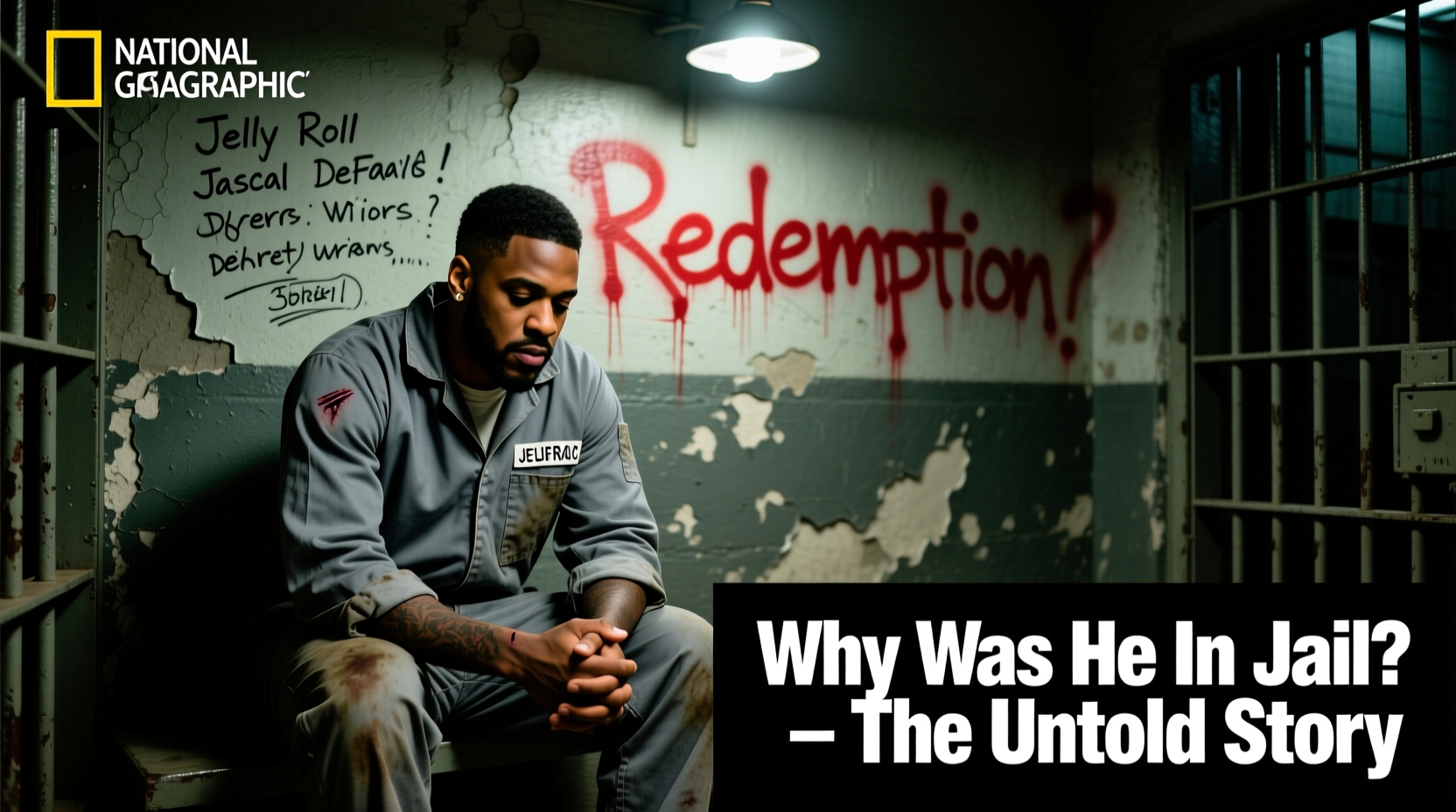
Jesse Ketchum, widely known as Jelly Rolls, rose to internet fame through platforms like Instagram and YouTube, where he showcased an extravagant lifestyle filled with luxury cars, designer clothing, and bold stunts. His persona blends elements of performance art, activism, and street culture, often blurring the lines between satire and genuine advocacy. While some view him as a misunderstood artist speaking out against systemic injustice, others see him as a provocateur who uses controversy to gain attention.
Despite his online notoriety, Jelly Rolls has maintained that much of his life story—including claims of military service or political influence—is part of a larger artistic narrative. However, one aspect of his life remains firmly grounded in legal documentation: his 2022 federal conviction and subsequent imprisonment.
The Charges That Led to Incarceration
In August 2022, Jelly Rolls was arrested by federal authorities on charges related to firearms violations. According to U.S. Department of Justice filings, he was indicted on two counts: possession of a firearm by a convicted felon and possession of a short-barreled rifle (SBR), a weapon regulated under the National Firearms Act (NFA).
The arrest stemmed from a traffic stop in rural Tennessee, during which law enforcement discovered multiple weapons inside his vehicle, including a modified AR-style rifle with a barrel length under 16 inches—well below the legal minimum without proper registration. Ballistic reports also linked one of the firearms to a prior shooting incident in Georgia, although no direct evidence tied Ketchum to the act itself.
Crucially, court records show that Jelly Rolls had a prior felony conviction in 2015 for aggravated assault, which automatically disqualified him from legally possessing any firearm under federal law. This prior record significantly increased the severity of the new charges.
Legal Proceedings and Conviction
Jelly Rolls pleaded not guilty initially but later accepted a plea deal in December 2022 after prosecutors presented forensic and surveillance evidence placing him at the scene where the unregistered SBR was stored. In exchange for pleading guilty to one count of unlawful possession of a firearm, the second charge was dropped.
In February 2023, U.S. District Judge William L. Campbell Jr. sentenced Ketchum to 42 months in federal prison, followed by three years of supervised release. The judge cited both the seriousness of the offense and Ketchum’s refusal to cooperate fully with investigators as factors in the sentencing decision.
During the trial, defense attorneys argued that Jelly Rolls viewed the weapons as symbolic props used in video content, not tools for violence. Prosecutors countered that the modifications made to the rifle—such as silencer threading and collapsible stock—demonstrated functional intent beyond theatrical use.
“Possession of a concealable, unregistered firearm by someone with a violent felony record poses a clear danger to public safety.” — Assistant U.S. Attorney Laura Asimopoulos
Timeline of Key Events
The following timeline outlines the major developments in Jelly Rolls’ legal case:
- 2015: Convicted of aggravated assault in Georgia; serves 18 months in state prison.
- July 2022: Purchases a stripped lower receiver and builds an AR-style rifle with a 10-inch barrel.
- August 17, 2022: Pulled over in Maury County, TN; officers discover two firearms, including the unregistered SBR.
- September 2022: Indicted by a federal grand jury on two firearms charges.
- December 8, 2022: Enters guilty plea to one count of being a felon in possession of a firearm.
- February 3, 2023: Sentenced to 42 months in federal prison.
- March 2023: Begins serving sentence at FCI Ashland, a low-security federal correctional institution in Kentucky.
- Projected Release Date: June 2026, pending good behavior and eligibility for early transfer to halfway house.
Public Reaction and Misinformation
Jelly Rolls’ arrest sparked widespread debate across social media. Supporters claimed the charges were politically motivated, arguing that he was targeted due to his outspoken criticism of law enforcement and government policies. Some influencers circulated false narratives suggesting he was imprisoned for protest activities or free speech, despite no evidence supporting those claims.
Conversely, critics pointed to his repeated disregard for legal boundaries, noting that he had previously been warned by ATF agents in 2021 about building NFA-regulated weapons without proper tax stamps and paperwork.
Fact-checking organizations, including PolitiFact and Reuters, have confirmed that Jelly Rolls was not charged with any First Amendment-related offenses. His conviction rests entirely on verifiable violations of federal firearms statutes.
Do’s and Don’ts: Understanding Firearm Laws
| Do | Don't |
|---|---|
| Register NFA items like suppressors or short-barreled rifles with the ATF | Build or modify firearms without checking local and federal regulations |
| Verify your eligibility to own guns, especially after a felony conviction | Assume artistic or expressive intent overrides criminal liability |
| Consult a firearms attorney before assembling custom weapons | Carry unregistered or concealed firearms in vehicles |
| Keep all permits and tax stamps current and accessible | Ignore warning letters or visits from federal agencies |
Expert Insight on Firearm Regulation and Public Figures
Firearms law experts emphasize that celebrity status offers no immunity from prosecution.
“The law doesn’t distinguish between a Hollywood actor, a rapper, or a social media personality when it comes to illegal gun possession. If you’re a felon, you can’t have a firearm—full stop.” — Professor Alan Zuckerman, Georgetown Law Center, Firearms Policy Clinic
Zuckerman notes that while creative expression may explain why someone possesses certain objects, it does not constitute a legal defense under Title 18 U.S.C. § 922(g), which explicitly prohibits felons from owning firearms.
Mini Case Study: The Impact of Social Media on Legal Outcomes
In 2021, another content creator, known online as “Tango Charlie,” faced similar charges after posting videos showing himself firing an unregistered SBR at a private range. Despite claiming it was for entertainment, he was prosecuted and sentenced to 36 months in prison. His case, like Jelly Rolls’, demonstrated how digital footprints can serve as critical evidence in federal investigations.
Investigators in Ketchum’s case reviewed over 40 hours of archived video content, some of which showed him handling the very rifle later seized by police. These clips were admitted as evidence during pre-trial hearings, reinforcing the prosecution’s argument that he knowingly possessed and used the weapon.
This growing trend highlights a shift in law enforcement strategy: public-facing content is now routinely monitored and used to initiate or support criminal investigations, particularly in firearms and explosives cases.
Frequently Asked Questions
Was Jelly Rolls in prison for making political statements?
No. He was not charged with any crime related to speech, protest, or political activity. His incarceration stems solely from federal firearms violations.
Can he be released early?
Potentially. With good conduct, he may become eligible for transfer to a halfway house or home confinement approximately six months before his scheduled release date in mid-2026. Full parole is not available in the federal system, but supervised release follows completion of the sentence.
Did he appeal his conviction?
Yes. In April 2023, his legal team filed an appeal arguing that the search during the traffic stop violated the Fourth Amendment. The Sixth Circuit Court of Appeals denied the motion in January 2024, upholding the original conviction.
Conclusion: Lessons from the Case
The story of Jelly Rolls underscores a crucial truth: in the eyes of the law, personal branding and public image do not override statutory obligations. Whether one sees him as an artist, activist, or agitator, the facts remain unchanged—he violated federal law, was prosecuted through established legal channels, and is serving a sentence accordingly.
For anyone involved in content creation, activism, or firearm ownership, this case serves as a sobering reminder: understanding the law isn’t optional. Intent, symbolism, and popularity carry no weight in a courtroom when hard evidence of illegal acts exists.




 浙公网安备
33010002000092号
浙公网安备
33010002000092号 浙B2-20120091-4
Comments
No comments yet. Why don't you start the discussion?