
For collectors, plush toys are no longer just childhood comforts—they’re curated investments. In recent years, two brands have risen to the forefront of this niche: Jellycat and Squishmallows. Both offer irresistibly soft, whimsical designs that appeal to children and adults alike. But when it comes to long-term collectible value—resale prices, demand stability, and rarity appreciation—one brand tends to outperform the other. Understanding the nuances between Jellycat and Squishmallows is essential for anyone building a plush collection with an eye toward future returns.
Market Position and Brand Identity
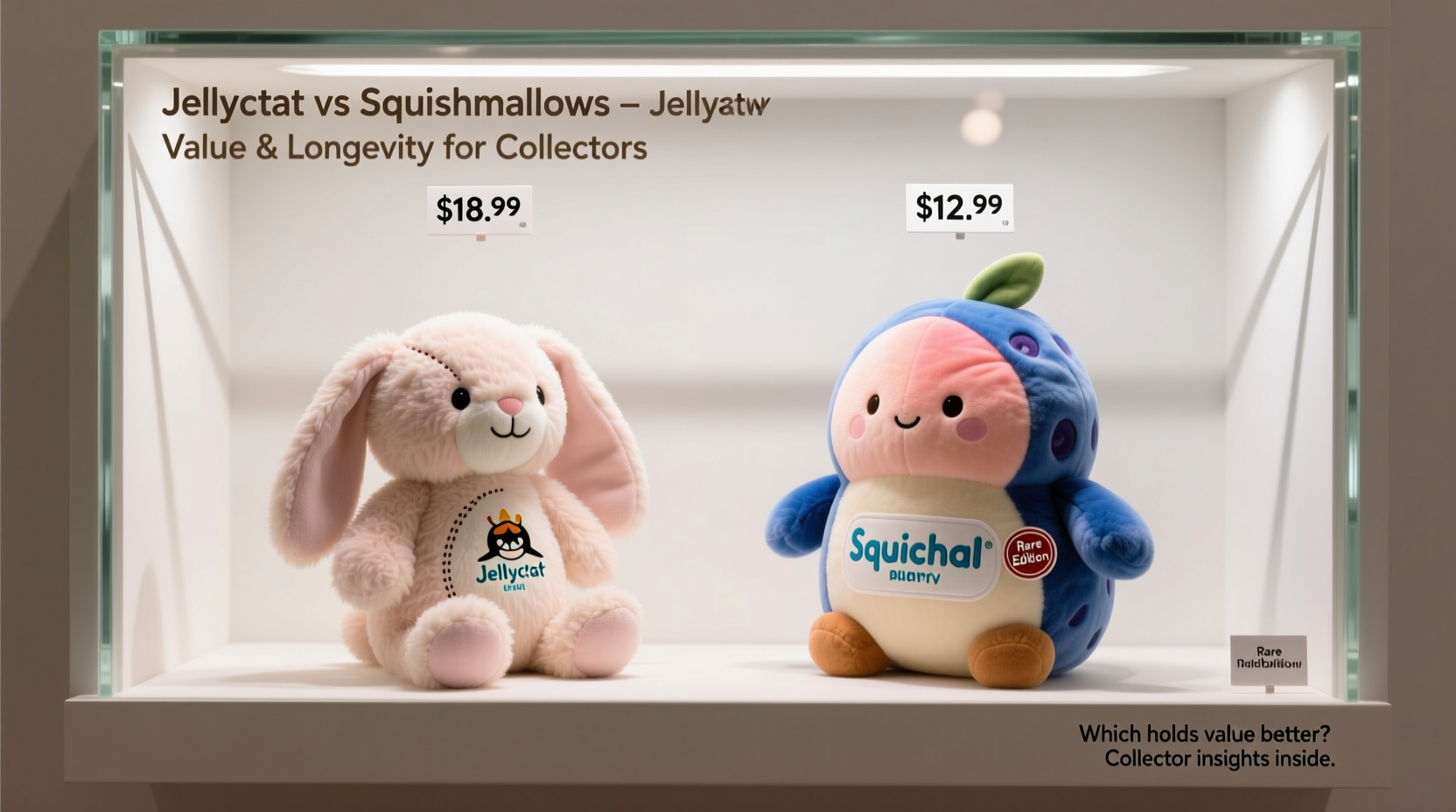
Jellycat, founded in London in 1999, built its reputation on luxury materials and minimalist yet expressive designs. Known for their ultra-soft fur and button-free safety features, Jellycats are often marketed as heirloom-quality keepsakes. Their limited edition releases—such as the \"Bashful Unicorn\" or seasonal holiday variants—are frequently retired after short runs, creating scarcity that fuels collector interest.
Squishmallows, introduced by KellyToys in 2017, gained viral popularity through social media platforms like TikTok and Instagram. With over 1,000 characters spanning animals, food items, and fantasy creatures, their charm lies in exaggerated cuteness and squishy texture. While widely available at major retailers like Target and Amazon, certain early editions and retired characters have seen significant price inflation on secondary markets.
The difference in origin stories shapes how each brand is perceived in collecting circles. Jellycat maintains a premium, boutique image, while Squishmallows thrive on mass appeal with pockets of exclusivity. This distinction plays a critical role in determining which line holds value more consistently over time.
Resale Performance: Data from Secondary Markets
To evaluate which plush line holds value better, one must examine real-world resale data. Platforms like eBay, Mercari, and dedicated Facebook collector groups provide insight into pricing trends over time.
Jellycat’s limited editions regularly command triple or quadruple their original retail price. For example, a retired “Bashful Peony Bunny” originally priced at $35 has sold for over $200 in mint condition. These spikes are driven not only by scarcity but also by consistent global demand across Europe, Asia, and North America.
Squishmallows show more volatility. While some early characters like “Cam the Camel” (from the original 2017 lineup) or “Sasha Squirrel” in rare sizes have reached $150–$300, many common characters remain near or below retail value. The widespread availability of restocks dampens long-term appreciation for non-retired models. However, special collaborations—like the Sanrio crossover series—have proven exceptions, selling out quickly and reselling at premiums within days.
A key factor in Jellycat’s favor is its controlled production model. The company rarely reissues retired designs, reinforcing the perception of permanence in discontinuation. In contrast, Squishmallows occasionally bring back “fan-favorite” characters, undermining the sense of urgency and rarity.
“Jellycat treats each release like a fine art drop—limited, intentional, and emotionally resonant. That philosophy translates directly into lasting value.” — Lydia Chen, Toy Market Analyst at Collectors Insight Group
Comparison Table: Key Factors Influencing Collectible Value
| Factor | Jellycat | Squishmallows |
|---|---|---|
| Production Volume | Low to moderate; tightly controlled | High; mass-produced with frequent restocks |
| Retirement Policy | Permanent retirement common | Occasional re-releases |
| Global Availability | Selective distribution; boutique stores | Widespread; major retailers and online |
| Collector Community Size | Smaller but highly dedicated | Very large; includes casual buyers |
| Average Resale Premium (retired items) | 200%–500% | 50%–300% (select items only) |
| Material Quality & Longevity | Luxury-grade fabrics; durable stitching | Soft polyester; prone to surface pilling over time |
Preservation Practices That Impact Value Retention
No matter the brand, condition is paramount in determining resale worth. A well-preserved plush retains—and can even increase—its value, while damage such as stains, odors, or torn seams drastically reduces marketability.
Jellycat’s higher material quality gives it an edge here. Its use of silk-like polyester blends and reinforced seams means older pieces often remain in excellent condition if stored properly. This durability supports long-term confidence among investors who view Jellycats as “set-and-forget” assets.
Squishmallows, though beloved for their marshmallow-like texture, are more vulnerable to wear. Their short-pile fabric attracts lint and can develop bald spots with frequent handling. Additionally, exposure to sunlight may cause fading, especially in pastel-colored variants.
Actionable Preservation Checklist
- Store plushies in sealed, climate-controlled containers away from direct light.
- Use acid-free tissue paper inside packaging to prevent fabric degradation.
- Avoid placing plush toys in high-traffic areas where pets or children might damage them.
- Never machine-wash unless absolutely necessary; spot-clean gently with mild detergent.
- Keep original tags and packaging—especially for limited editions, as these significantly boost resale value.
Real Collector Case Study: Two Paths, One Goal
In 2020, two collectors began similar journeys: acquiring plush toys with investment intent. Sarah focused exclusively on Jellycat, purchasing retired Bashfuls and holiday exclusives during clearance events. Mark chose Squishmallows, buying multiple units of early characters from Walmart and Target before they sold out.
By 2023, Sarah had accumulated 18 Jellycats, spending approximately $600 total. When she listed her “Bashful Lavender Bunny” (retired in 2021), it sold for $180—five times its original price. Her entire collection was appraised at nearly $1,400 based on active listings.
Mark owned 30 Squishmallows, spending about $550. While his “Luca Llama” and “Penny Penguin” in 16-inch size fetched $75 each, most others remained unsold or sold for under $25. Only four items appreciated significantly. His total return fell just under $900, heavily reliant on a few standout pieces.
The case illustrates a broader trend: Jellycat offers steadier, more predictable growth across a broader range of items. Squishmallows deliver explosive gains—but only for select, truly rare entries.
Expert Insights on Future Trends
Industry observers suggest that Jellycat’s strategy aligns closely with classic collectible models—think Beanie Babies in the 1990s or designer vinyl toys today. Limited mintage, emotional branding, and international desirability create a foundation for enduring value.
“The psychology of scarcity is stronger with Jellycat. When a design retires, there's finality. Collectors feel urgency because they know it won’t come back.” — Dr. Marcus Reed, Consumer Behavior Researcher at Stanford Graduate School of Business
Squishmallows occupy a different space—a hybrid of pop culture phenomenon and impulse buy. Their strength lies in community engagement and viral momentum, but this can be fleeting. As new characters launch monthly, older ones risk being overshadowed unless they achieve iconic status.
That said, both brands benefit from the growing adult collector market. According to NPD Group, 62% of plush purchases in 2023 were made by consumers aged 18–35, primarily for decorative or emotional comfort purposes. This demographic shift legitimizes plushes as serious collectibles, increasing overall market depth.
Step-by-Step Guide to Building a Valuable Plush Collection
- Research Current Releases: Monitor official websites and fan forums for upcoming launches. Set alerts for limited editions.
- Prioritize Retirement Potential: Look for signs of limited runs—holiday themes, charity collaborations, or regional exclusives.
- Buy Multiple Units (When Possible): For high-potential Squishmallows, purchasing duplicates increases chances of future profit.
- Maintain Impeccable Condition: Store items unopened or in protective cases. Never remove tags unless gifting.
- Track Sales Data Monthly: Use tools like Terapeak (on eBay) to analyze completed listings and identify rising trends.
- Join Collector Communities: Engage with Facebook groups, Reddit threads (e.g., r/Squishmallows or r/Jellycat), and Discord servers to stay ahead of news.
- Sell Strategically: List during peak seasons (holidays, Valentine’s Day) when demand surges.
Frequently Asked Questions
Are Jellycat or Squishmallows better for long-term investment?
Jellycat generally offers more reliable long-term appreciation due to limited production, permanent retirements, and superior material quality. While some Squishmallows gain value, the majority do not, making them riskier as pure investments.
Do Squishmallows ever become rare enough to be valuable?
Yes, but selectively. Early characters (pre-2019), discontinued collaborations (e.g., Pokémon or Care Bears), and larger sizes (16” and above) tend to hold or increase in value. However, mass availability limits broad-based rarity.
How can I tell if a Jellycat is retired?
Check the official Jellycat website—if a product page shows “Discontinued,” it will not return. Fan-maintained databases like Jellycat Wiki also track retirement dates and production details.
Conclusion: Making the Right Choice for Your Collection
When comparing Jellycat and Squishmallows for collectible value retention, the evidence points clearly toward Jellycat as the superior long-term asset. Its disciplined release schedule, commitment to retirement, and premium craftsmanship foster a market environment where scarcity drives steady appreciation. Squishmallows, while capable of generating impressive short-term gains, lack the structural consistency needed for dependable investment growth.
That doesn’t mean Squishmallows should be dismissed. For collectors who enjoy participating in a vibrant, fast-moving community, they offer excitement and occasional windfalls. But for those seeking stable, lasting value with minimal maintenance, Jellycat remains the gold standard in the plush world.




 浙公网安备
33010002000092号
浙公网安备
33010002000092号 浙B2-20120091-4
Comments
No comments yet. Why don't you start the discussion?