
When Jujutsu Kaisen Season 2 premiered, fans were immediately struck by a noticeable transformation in its visual presentation. The once fluid, hyper-detailed battle sequences of Season 1 gave way to a more stylized, expressive, and at times minimalist aesthetic. Backgrounds became bolder, character designs slightly abstracted, and motion took on a more theatrical quality. While some praised the bold new direction, others questioned whether the shift compromised the series’ identity. This article unpacks the reasons behind this dramatic art evolution—examining production choices, directorial intent, and the broader context of anime’s evolving visual language.
The Visual Shift: What Changed in Season 2?
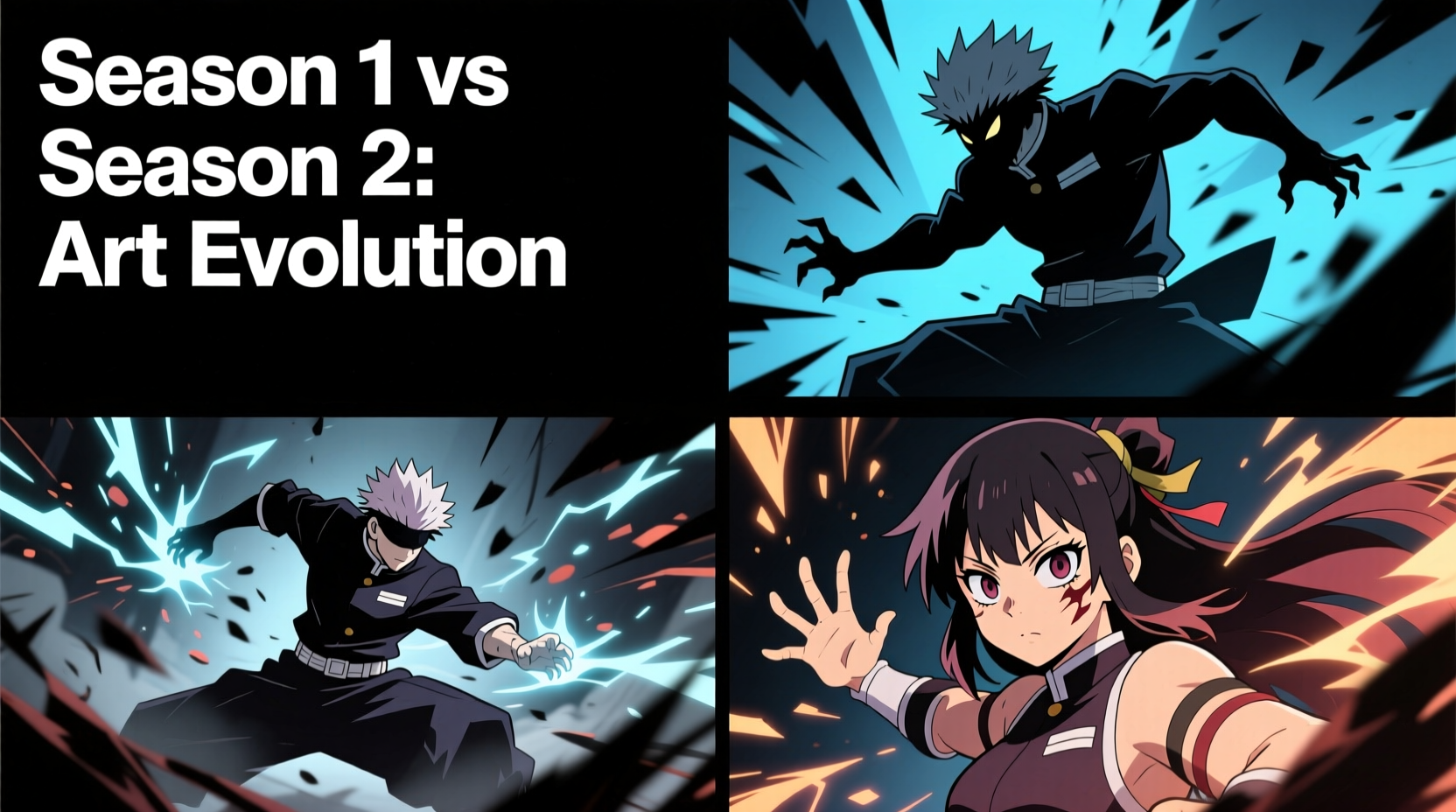
Season 1 of Jujutsu Kaisen, animated by MAPPA, was lauded for its cinematic action choreography, detailed linework, and seamless integration of CGI with traditional 2D animation. The Shibuya Incident arc in Season 2, however, marked a departure from that consistency. Several key changes stood out:
- Flatter color palettes – Reduced shading and gradients gave scenes a more graphic, poster-like appearance.
- Stylized character expressions – Faces were exaggerated with sharp angles and distorted proportions to emphasize emotion.
- Abstract backgrounds – Instead of realistic cityscapes, viewers saw surreal, painted environments that mirrored psychological states.
- Increased use of still frames and limited animation – Some dialogue-heavy scenes relied on static shots with minimal movement.
- Bold compositional framing – Angles became more dynamic, often breaking conventional perspective rules for dramatic effect.
This wasn’t just a technical downgrade—it was a deliberate artistic pivot. The question is not whether the animation “got worse,” but rather: what was the purpose behind these changes?
Directorial Vision: Hiroshi Seko and Shota Gosho’s Creative Intent
The most significant factor behind the shift lies in the change of directorial leadership. While Season 1 was directed by Sunghoo Park, Season 2 placed Shota Gosho at the helm—a decision that signaled a move toward thematic depth over kinetic spectacle.
Gosho, known for his work on Devilman Crybaby and Star Wars: Visions, favors expressionistic visuals. In interviews, he described the Shibuya arc as a “psychological descent” into chaos, where reality fractures under supernatural pressure. To reflect this, the animation team employed techniques borrowed from experimental theater and modern art:
“We wanted the audience to feel the instability of the world within Shibuya. The distortion in lines, the warped colors—they mirror Satoru Gojo’s perception during his imprisonment.” — Shota Gosho, Director of Jujutsu Kaisen Season 2
This approach aligns with a growing trend in anime: using visual deviation to externalize internal states. Rather than depicting events realistically, the team used abstraction to convey emotional weight, disorientation, and existential dread.
Key Influences Behind the New Style
The new aesthetic draws from several artistic movements:
- Kabuki Theater – Dramatic poses, exaggerated facial features, and stage-like lighting evoke traditional Japanese performance.
- Surrealism – Dreamlike distortions during Gojo’s flashback sequence resemble works by Salvador Dalí.
- Ukiyo-e Print Art – Flat color blocks and strong outlines reference Edo-period woodblock prints.
- Modern Graphic Design – Use of negative space and geometric shapes enhances narrative clarity in chaotic scenes.
These influences weren’t accidental. Production designer Tadayoshi Yamamuro confirmed that the team studied historical Japanese art to ground the new style in cultural authenticity while pushing boundaries.
Production Realities: Schedule, Budget, and Studio Priorities
While artistic vision played a central role, logistical constraints also shaped the outcome. MAPPA, the studio behind the series, has faced scrutiny over workload management and tight deadlines—especially given concurrent productions like Chainsaw Man and Attack on Titan: The Final Season.
Season 2 covered one of the most complex arcs in the manga—the Shibuya Incident—which spans over 50 chapters of densely packed action, character development, and lore exposition. Condensing this into 23 episodes required difficult trade-offs:
| Factor | Impact on Animation | Mitigation Strategy |
|---|---|---|
| Tight Production Schedule | Reduced frame count in non-action scenes | Prioritized key fight sequences (e.g., Yuki vs. Hanami) |
| Budget Allocation | More resources to CGI and effects animation | Limited hand-drawn motion in dialogue segments |
| Staff Overlap | Reuse of animation assets across projects | Streamlined background art via digital painting |
| Source Complexity | Need for visual shorthand to explain cursed techniques | Symbolic imagery over literal depiction |
It’s important to note that “limited animation” does not equate to lower quality. In fact, studios like MAPPA have mastered the art of strategic resource allocation—using stillness to heighten tension or focusing detail only where it matters most.
Case Study: The Gojo Blindfold Sequence
One of the most talked-about moments in Season 2 is Satoru Gojo’s imprisonment after being sealed by Sukuna’s technique. Visually, the scene abandons realism entirely. The screen fractures into jagged panels, colors invert, and time appears to loop. Characters speak in fragmented echoes.
This sequence could have been animated with smooth transitions and naturalistic lighting. Instead, the team chose dissonance. According to storyboard artist Yuki Hayashi, the goal was to simulate sensory deprivation and cognitive collapse:
“We didn’t want viewers to just see Gojo’s prison—we wanted them to *feel* trapped alongside him. The broken animation forces you to piece together meaning, just like he has to.”
The result was polarizing. Casual viewers found it confusing; longtime fans praised its psychological fidelity. This divergence underscores a critical point: stylistic evolution often alienates audiences expecting repetition, even when the change serves the story.
Fan Reactions and Misconceptions
Social media exploded when early episodes of Season 2 aired. Reddit threads debated whether MAPPA had “ruined” the franchise. YouTube videos titled “Jujutsu Kaisen Lost Its Soul” racked up millions of views. Much of the backlash stemmed from misunderstanding.
Common misconceptions included:
- “The art got worse due to budget cuts.” While budget pressures exist, the shift was primarily stylistic, not financial.
- “They’re reusing too many still frames.” In reality, many “still” shots were intentionally composed to mimic comic book panels, enhancing narrative rhythm.
- “The characters look deformed.” Exaggerated proportions were used to reflect emotional extremes, not poor drawing.
Industry analyst Rina Takahashi offered context:
“Anime fans often conflate consistency with quality. But innovation requires risk. Look at Evangelion or Ping Pong the Animation—both were initially criticized for their visuals, now considered masterpieces.” — Rina Takahashi, Anime Industry Analyst
The gap between expectation and execution widened because Season 1 set an exceptionally high bar for polished, Hollywood-grade action. Season 2 challenged that formula by prioritizing mood over momentum.
How Other Series Have Navigated Art Shifts
Jujutsu Kaisen isn’t alone in facing scrutiny over visual changes. History offers instructive parallels:
- Death Note – The transition from detailed character designs to simpler models in later episodes drew complaints, though the storytelling remained strong.
- Naruto: Shippuden – Studio shifts led to inconsistent animation, but key arcs (Pain’s assault) showcased how focused investment can elevate select episodes.
- Attack on Titan – WIT Studio to MAPPA handover altered the tone, yet the final seasons deepened thematic complexity through visual minimalism.
In each case, initial backlash softened over time as audiences recognized that evolution—not stagnation—keeps long-running series artistically vital.
Checklist: Evaluating Anime Art Changes Fairly
Before concluding that an art shift is negative, consider the following:
- ✅ Was there a change in director or key staff?
- ✅ Does the new style align with the arc’s themes (e.g., trauma, chaos, memory)?
- ✅ Are certain scenes receiving higher animation quality despite overall simplification?
- ✅ Is the storytelling clearer or more impactful despite visual differences?
- ✅ Has the studio released statements explaining creative choices?
Answering yes to most of these suggests the shift may be intentional and meaningful.
FAQ: Addressing Common Questions
Did MAPPA cut corners in Season 2?
Not uniformly. While some scenes use limited animation, others—like Yuki Tsukumo’s fight with Hanami—feature top-tier choreography and effects. Resources were redistributed, not reduced.
Will the art style return to Season 1’s look?
Unlikely. The new direction reflects a matured creative vision. Future seasons may blend styles, but a full regression would undermine the narrative progression established in Season 2.
Is the manga drawn differently than the anime?
No. Gege Akutami’s original artwork remains consistent. The anime’s deviations are interpretive choices, not adaptations of a changed source.
Conclusion: Embracing Evolution in Anime Storytelling
The drastic art shift in Jujutsu Kaisen Season 2 was neither an accident nor a decline—it was a calculated evolution. By embracing abstraction, symbolism, and psychological realism, the creative team elevated the series beyond mere action entertainment into a visually daring exploration of power, isolation, and perception.
Change is uncomfortable, especially when it disrupts beloved formulas. Yet it is also necessary. If every season replicated the last, anime would stagnate. The willingness to experiment—despite fan resistance—is what allows the medium to grow.




 浙公网安备
33010002000092号
浙公网安备
33010002000092号 浙B2-20120091-4
Comments
No comments yet. Why don't you start the discussion?