
Losing your keys is more than just an inconvenience—it can derail your morning, delay work, or even lock you out of your home or car. With countless products promising to solve this problem, two options dominate the market: key finders and key cases. One offers sleek protection, the other smart tracking. But which actually helps you avoid misplacing your keys? And is a “fancy” case worth it, or just aesthetic appeal? The answer isn’t as simple as it seems.
The Problem with Key Loss: Why It Happens
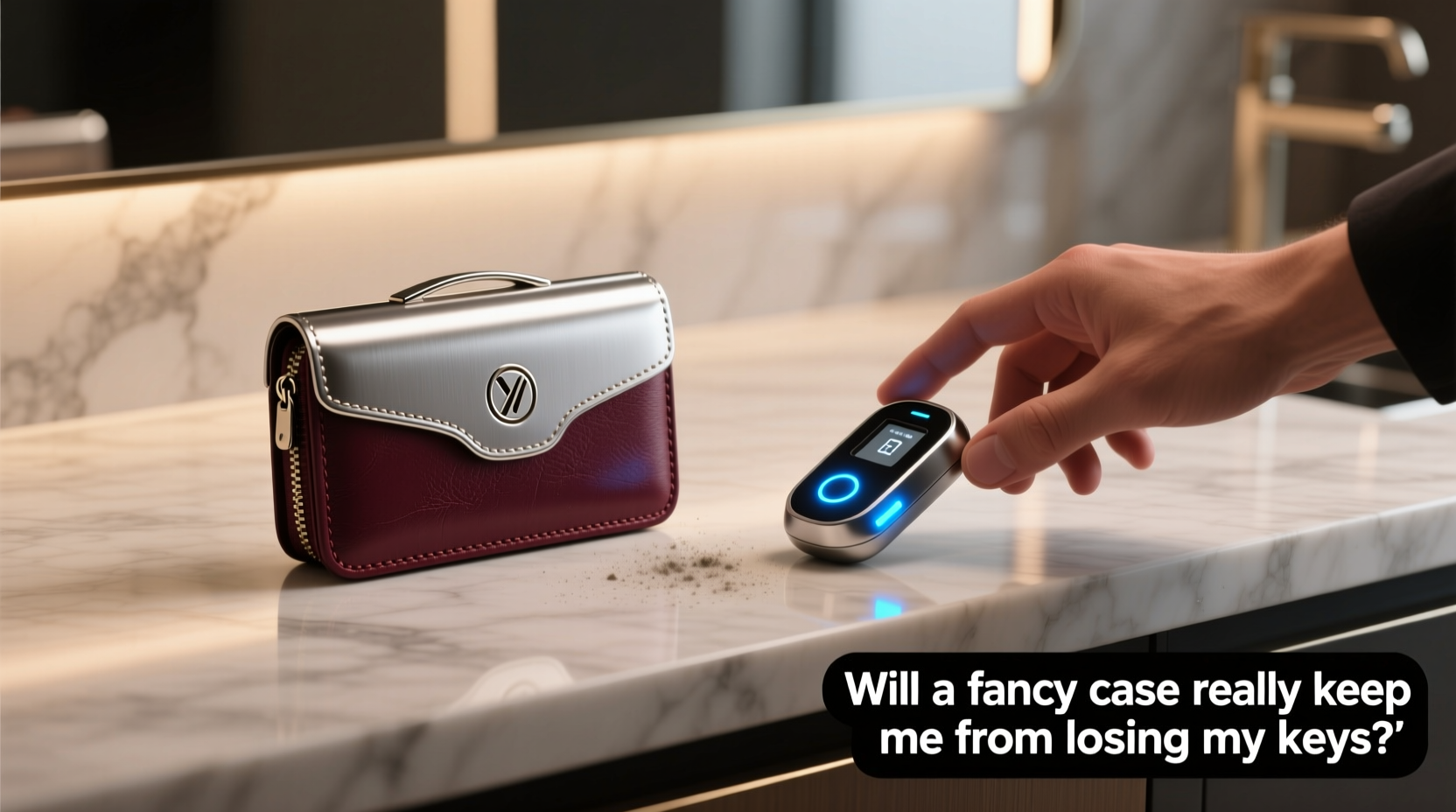
Most people don’t lose their keys because they’re careless—they lose them because of habit gaps. Keys are often removed from pockets or bags in transitional spaces: entryways, cars, offices, or restaurants. Without a consistent routine, it’s easy for them to end up on a kitchen counter, under a jacket, or in a grocery cart.
A 2023 survey by the National Home Safety Council found that 68% of adults misplace their keys at least once a month, with 23% doing so weekly. The average person spends 17 minutes per incident searching—adding up to nearly 7 hours annually. That’s time, stress, and sometimes money (think locksmith fees) wasted.
This is where both key finders and key cases enter the conversation—not just as accessories, but as tools for behavioral change.
Key Cases: Style, Protection, and Limited Prevention
A key case—especially a premium leather or metal version—is marketed as a way to organize, protect, and elevate your keys. These cases bundle multiple keys into one compact unit, reducing jingle and pocket wear. Some even include RFID shielding or bottle openers.
But do they prevent loss?
In short: indirectly. A well-designed case makes keys easier to handle and less likely to fall out of a pocket. However, it doesn’t stop you from setting them down absentmindedly. If you leave a designer key case on a café table, it’s still lost—just in a more expensive package.
Pros and Cons of Key Cases
| Aspect | Advantage | Limitation |
|---|---|---|
| Durability | Protects keys from scratches and moisture | May wear over time, especially leather |
| Organization | Keeps multiple keys together | Can become bulky with too many keys |
| Style | Elevates everyday carry | No tracking capability |
| Security | Some offer RFID blocking | Doesn’t prevent physical loss |
“Design matters, but function should lead. A beautiful case won’t help if it doesn’t fit your habits.” — Jordan Lee, Product Design Consultant at Urban Gear Labs
Key Finders: Technology That Finds What You Forget
Key finders like Tile, Apple AirTag, and Chipolo use Bluetooth or ultra-wideband technology to help locate lost items via smartphone apps. Attach one to your keychain, and within seconds, you can trigger a ring, view its last known location, or use precision finding (on compatible devices) to guide you step-by-step.
These devices turn passive loss into active recovery. Instead of tearing apart couch cushions, you get real-time feedback. Some even alert you when you leave your keys behind—a feature called “separation alerts.”
For frequent travelers or forgetful individuals, key finders are game-changers. They don’t prevent the act of misplacing, but they drastically reduce the consequences.
How Key Finders Work in Practice
- Attach the tracker to your keyring or inside a key case.
- Pair it with your smartphone via app.
- When keys are lost, open the app to see their last known location.
- If nearby, trigger a loud ring—even on silent mode.
- If far away, use crowd-finding networks (like Apple’s Find My) to anonymously detect location when someone else’s device passes by.
Real-World Example: Sarah’s Morning Routine
Sarah, a marketing manager in Chicago, used to lose her keys every few weeks—usually during rushed mornings. She invested in a premium leather key case, hoping the elegance would make her more mindful. It helped briefly, but she still left them on her kitchen island twice a month.
After paying $65 for a locksmith visit, she attached an AirTag to her keyring. Within days, the separation alert on her iPhone reminded her she’d left her keys at a coffee shop. She retrieved them before getting in her car. Over the next six months, she never fully lost her keys again. The tech didn’t stop her from misplacing them—it just ensured she found them fast.
She now uses both: the key case for organization and the AirTag for security. “The case looks nice,” she says, “but the tracker saves my sanity.”
Which Should You Choose? A Practical Comparison
The decision between a key finder and a key case isn’t either/or. For most people, the best solution combines both. But if you must pick one, consider your lifestyle.
- You travel frequently? A key finder is essential. Losing keys abroad can be costly and stressful.
- You value minimalism? A slim key case reduces bulk, but only if paired with good habits.
- You’re forgetful or rushed? A key finder with separation alerts will pay for itself in saved time and peace of mind.
- You care about aesthetics? A high-end case elevates your EDC (everyday carry), but don’t rely on it alone.
Checklist: Choosing the Right Solution
- Assess how often you lose your keys.
- Determine whether you need prevention or recovery.
- Decide on a budget: key cases range from $15–$150; key finders from $25–$35 each.
- Check compatibility: AirTags work best with iPhones; Tiles are cross-platform.
- Consider combining both: attach a tracker inside a durable case.
FAQ: Common Questions About Keys and Tracking
Can a key case prevent theft?
Not directly. While some cases have RFID blocking to protect against digital skimming, they don’t deter physical theft. A tracker is more useful here—if stolen, you can locate the keys remotely.
Do key finders work if my phone is off?
No, but they leverage global networks. For example, Apple’s Find My network uses millions of devices to detect lost items—even if your phone is off or out of range.
Are expensive key cases worth it?
If craftsmanship and longevity matter to you, yes. High-quality materials like full-grain leather or aerospace aluminum last years and age beautifully. But they won’t stop loss without behavioral changes or added tech.
Final Verdict: Tech Beats Aesthetics When It Comes to Preventing Loss
A fancy key case may make your keys look better and feel more organized, but it won’t stop you from leaving them behind. True loss prevention comes from awareness—and that’s where key finders excel. With real-time alerts, precise location data, and recovery networks, they address the root issue: human forgetfulness.
The ideal setup? Use a well-designed key case to consolidate and protect your keys, then embed a key finder inside it. This gives you the best of both worlds: elegance and intelligence. The case keeps your keys secure and tangle-free; the tracker ensures they’re never truly lost.
Behavioral habits still matter. Place your keys in the same spot daily. Use hooks by the door. But don’t rely solely on discipline. In a world where we track packages, phones, and pets, there’s no reason your keys should be harder to find than a sandwich from a delivery app.




 浙公网安备
33010002000092号
浙公网安备
33010002000092号 浙B2-20120091-4
Comments
No comments yet. Why don't you start the discussion?