
For years, the jingle of keys in a pocket has been an unavoidable part of daily life. But as minimalist design gains traction and people seek cleaner lines in their carry, a new contender has emerged: the key wallet. Marketed as a sleek, organized alternative to traditional keychains, key wallets promise to eliminate pocket bulge, prevent scratches, and even protect your phone from dings. But do they deliver on these claims, or are they just another overpriced trend wrapped in minimalist aesthetics?
This article dives deep into the practicality of key wallets versus classic keychains. We’ll examine weight, accessibility, durability, organization, and real-world user experiences to determine whether switching to a key wallet genuinely reduces bulk—or if it’s simply a clever rebranding of an old problem.
The Bulk Breakdown: What Are You Actually Carrying?
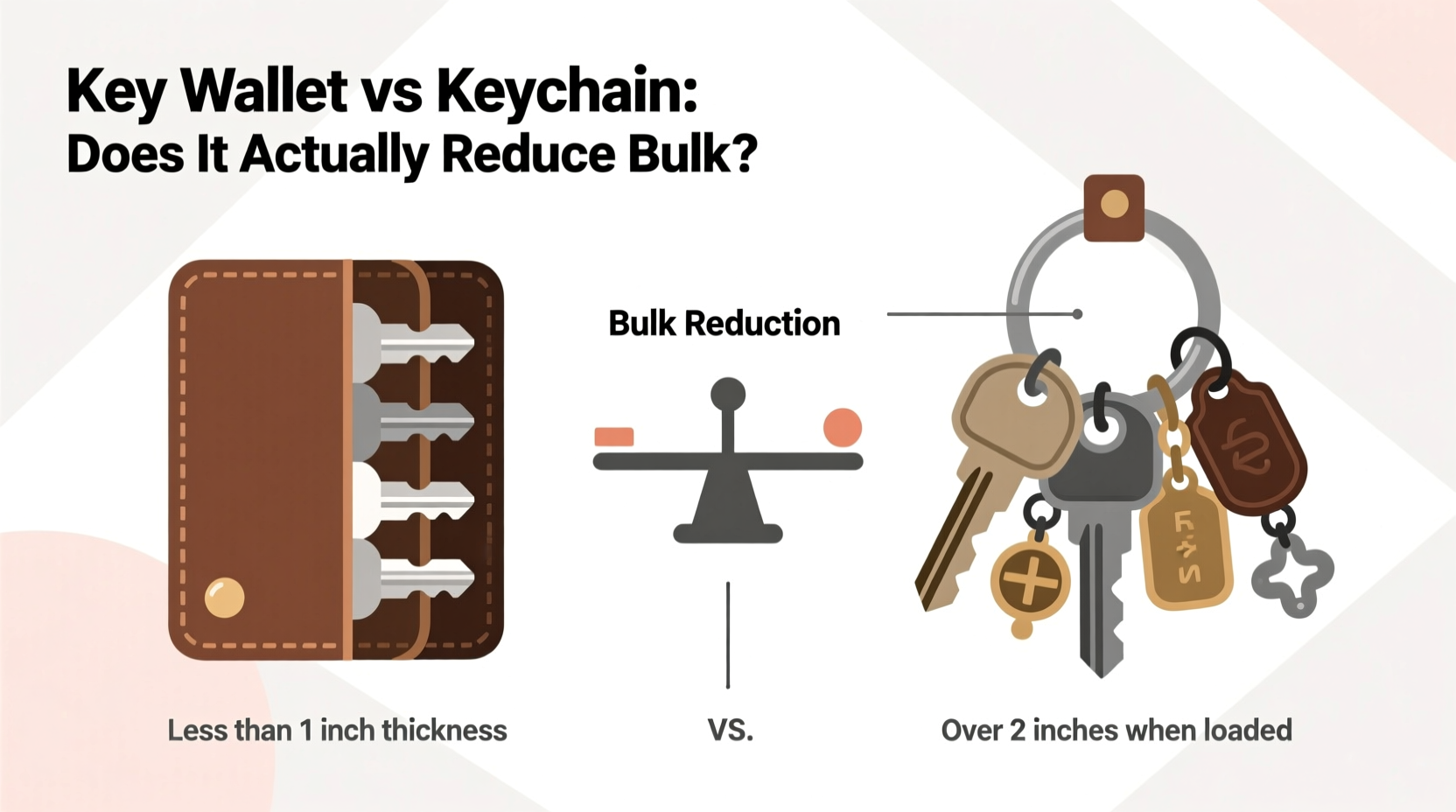
Bulk isn’t just about volume—it’s about how items distribute pressure in your pocket, how they interact with other objects, and how quickly you can access them. Traditional keychains often accumulate over time: house keys, car fobs, USB drives, bottle openers, and even tiny multitools. The result? A lumpy cluster that digs into your thigh and adds unnecessary heft.
Key wallets aim to solve this by organizing keys flat against each other, usually within a slim leather or metal case. Instead of dangling freely, keys are secured in slots or bands, theoretically reducing protrusions and streamlining shape.
But here’s the catch: while key wallets compress width, they often increase thickness. A standard keychain might be 10mm thick when folded but spread out loosely. A key wallet could be 15–20mm thick but occupy less surface area. So, does this trade-off actually reduce discomfort?
Design Comparison: Key Wallets vs. Keychains
Understanding the structural differences helps clarify where each option excels.
| Feature | Traditional Keychain | Key Wallet |
|---|---|---|
| Thickness | Low (when single ring), high when stacked | Moderate to high (compressed stack) |
| Footprint | Large (keys extend outward) | Compact (keys aligned) |
| Accessibility | Instant (grab and go) | Slower (must open case) |
| Durability | High (metal rings last decades) | Varies (leather wears, clips break) |
| Phone Safety | Poor (keys scratch screens) | Good (contained) |
| Expandability | Easy (add more rings) | Limited (fixed slots) |
The data shows a clear pattern: key wallets win in organization and protection but lose points in speed and adaptability. For someone carrying five or fewer keys, the switch makes sense. For those with garage remotes, padlocks, and work badges, a key wallet may become unwieldy or force compromises.
Real-World Test: One Month with a Key Wallet
To test the claims, a 34-year-old urban commuter switched from a standard 7-key keychain to a popular leather key wallet for one month. His setup included house keys, car fob, office badge, and bike lock key.
Week 1: Frustration was high. Retrieving the car fob required two hands—one to hold the wallet, one to slide the key out. In rain, this became impractical. The wallet added noticeable thickness to his front pocket, though it no longer poked him.
Week 2–3: He adapted. He began removing non-essential keys and using a separate lanyard for his office badge. The reduced clutter made the wallet feel lighter, despite similar total weight.
Week 4: Comfort improved significantly. His jeans no longer showed wear marks from key edges, and his phone screen stayed scratch-free. However, during emergencies—like locking himself out of his car—he missed the instant access of a dangling fob.
“We often overlook how much we rely on muscle memory with keys. Switching systems requires recalibration.” — Daniel Mezrioui, Industrial Designer at CarryGoods Studio
The takeaway? Key wallets aren’t inherently better—they’re different. Their effectiveness depends on lifestyle, key count, and willingness to streamline.
When a Key Wallet Makes Sense (And When It Doesn’t)
Not every user benefits equally. Here’s a checklist to help decide if a key wallet suits your needs:
- Do you carry 5 or fewer keys?
- Are you frustrated by keys scratching your phone?
- Do you value a clean pocket profile over speed?
- Are you willing to remove rarely used keys?
- Do you prefer leather or premium materials in your carry?
If you answered “yes” to most, a key wallet could reduce perceived bulk. If not, stick with a well-managed keychain.
Step-by-Step Guide to Minimizing Key Bulk (With or Without a Wallet)
Whether you choose a key wallet or stay with a keychain, reducing bulk starts with intentional editing. Follow this timeline:
- Day 1: Audit Your Keys – Lay out every key you carry. Identify which ones you use daily, weekly, or rarely.
- Day 3: Remove Redundancies – Eliminate duplicates or seldom-used keys (e.g., old mailbox, guest house). Store backups at home.
- Day 5: Consolidate Fobs – If you have multiple car fobs, consider keeping only one active. Some modern fobs support multi-vehicle pairing.
- Day 7: Choose Your System – Decide between a key wallet or a compact key organizer (like a KeySmart-style device).
- Day 10: Test and Adjust – Use your new setup for a full week. Note pain points: slow access, pocket strain, accidental drops.
- Day 14: Finalize – Either commit to the change or refine your approach—perhaps a hybrid system works best.
This process often reveals that the real issue isn’t the carrier—it’s key overload. Many users find relief simply by shedding two or three rarely used items.
Frequently Asked Questions
Do key wallets really reduce pocket bulge?
Yes, but conditionally. They reduce horizontal spread by aligning keys flat, which minimizes pocket distortion. However, they often add vertical thickness. If your pocket is shallow, this may feel worse than a thinner, looser keychain.
Are key wallets durable?
It depends on materials. Leather models age well but may stretch over time. Metal versions (like titanium) resist wear but can be cold to handle and noisy. Elastic retention bands tend to degrade after 6–12 months of daily use.
Can I still use a key wallet if I have a large car fob?
Some key wallets accommodate bulky fobs, but many don’t. Check dimensions before buying. Alternatively, use the wallet for standard keys and attach the fob externally via a mini carabiner—a hybrid approach that balances form and function.
Conclusion: Function Over Fashion
The idea that a key wallet automatically reduces bulk is partly hype—but only because it oversimplifies the problem. True reduction comes not from the container, but from what you choose to carry. A well-curated keychain with four essential keys will always be slimmer than a stuffed key wallet with seven.
That said, for users committed to minimalism, tech protection, and clean aesthetics, a key wallet offers tangible benefits: no more scratched phones, fewer snagged pockets, and a more intentional carry. It’s not a magic solution, but a tool—one that works best when paired with discipline.
Rather than chasing trends, assess your habits. Trim excess, prioritize access, and choose a system that supports your life—not one that forces you to adapt unnaturally. Whether it’s a $20 key organizer or a $120 hand-stitched leather wallet, the best choice is the one that disappears into your day.




 浙公网安备
33010002000092号
浙公网安备
33010002000092号 浙B2-20120091-4
Comments
No comments yet. Why don't you start the discussion?