
Car keys are more than just metal and plastic—they're access points to one of your most valuable assets. With rising vehicle thefts and increasing reliance on smart technology, many people are turning to accessories like keychain padlocks and key finders to protect their keys. But which option actually delivers better security? The answer isn’t as simple as choosing the flashier gadget or the sturdiest lock. It depends on what kind of threats you’re trying to guard against: physical tampering or digital loss.
Understanding the Threat Landscape
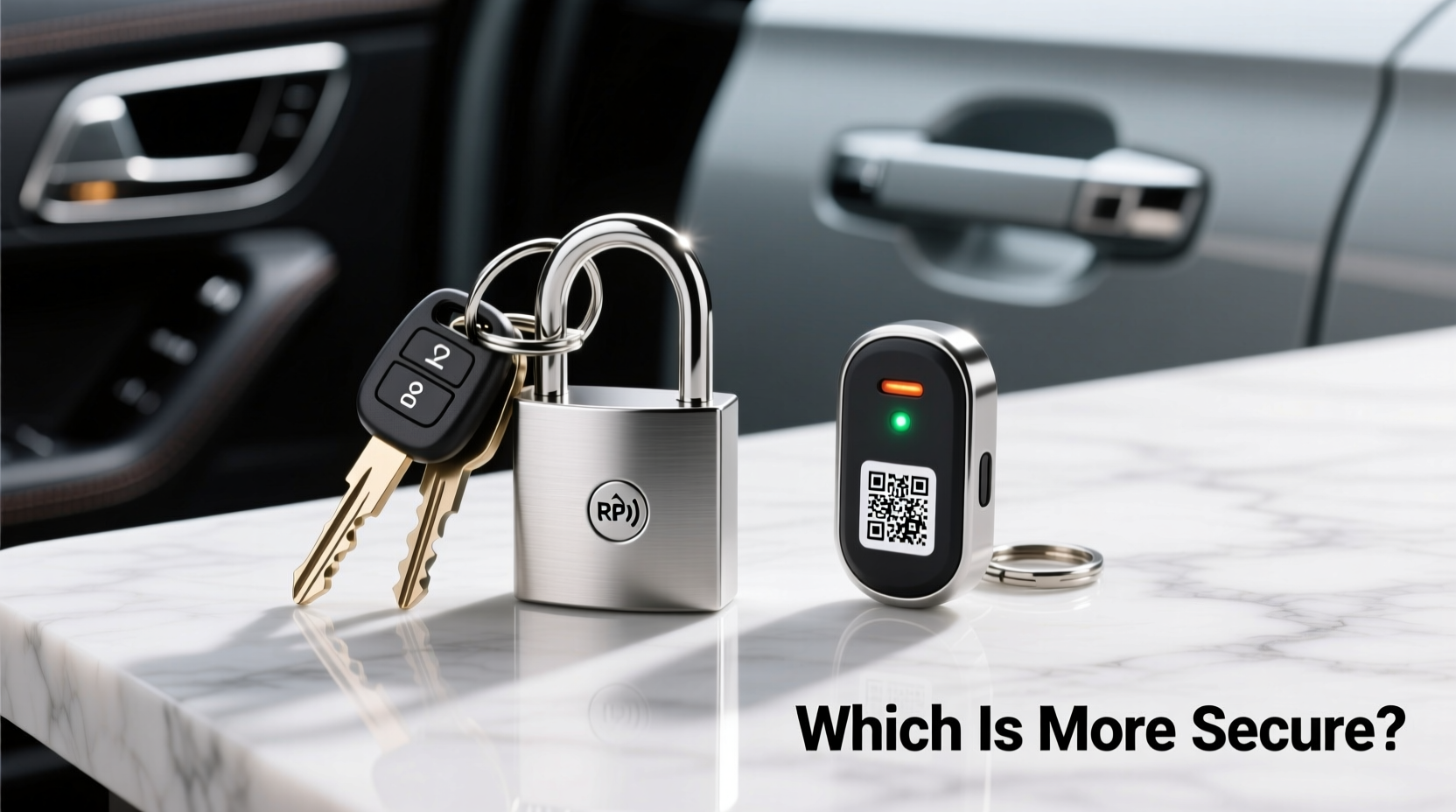
Before comparing tools, it’s essential to understand the risks associated with losing or having your car keys compromised. These fall into two main categories:
- Physical Theft: Someone takes your keys when unattended—left on a countertop, in a coat pocket, or inside a bag.
- Digital Tracking & Signal Relay Attacks: Thieves use signal boosters to intercept signals from smart keys, allowing them to unlock and start vehicles without ever touching the physical key.
A keychain padlock addresses the first risk by making it harder for someone to grab and go. A key finder tackles both visibility and recovery after loss—but does little to prevent unauthorized access if the keys are stolen outright.
“Most car key thefts occur in under 30 seconds during moments of distraction—like setting your bag down at a café.” — Sgt. Marcus Tran, Auto Theft Prevention Unit, Vancouver PD
Keychain Padlock: Physical Security First
A keychain padlock is a small, portable lock designed to encase your car key fob or mechanical key, rendering it unusable unless unlocked with a pin code or physical key. These devices are often made from hardened steel or reinforced alloys and marketed toward travelers, urban commuters, and anyone concerned about opportunistic theft.
The primary benefit lies in deterrence. Even if someone picks up your bag or removes your keys, they can't simply press a button to unlock your car. They’d need time, tools, and noise-making effort to break the lock—conditions rarely available in public spaces.
However, drawbacks exist. Adding bulk and weight to your keyring may be inconvenient. Some users report discomfort carrying locked keys in pockets. Additionally, if you lose the unlocking mechanism (e.g., forget the code or misplace the micro-key), accessing your actual car key becomes an urgent problem.
Key Finder: Location Over Lockdown
Key finders—devices like Tile, Apple AirTag, or Samsung SmartTag—are compact Bluetooth trackers that attach to your keychain. When misplaced, they connect to a smartphone app, showing last known location or triggering a sound alert.
These tools excel in recovery, not prevention. If you leave your keys at a gas station or misplace them at home, a key finder helps locate them quickly. More advanced models leverage global crowdsourced networks: even if your phone is out of range, other users’ devices anonymously detect your tag and relay its position.
But here's the catch: a thief who steals your keys gains full access to your vehicle—and potentially your home, if house keys are attached. The tracker might help police later, but it won’t stop the initial breach. Worse, some modern thieves now scan for active Bluetooth signals to identify high-value targets.
Real Example: How a Key Finder Failed to Prevent Theft
In 2023, a Tesla owner in Austin, Texas, left his jacket—with keys inside—at a restaurant booth. His AirTag alerted him within minutes. By the time he returned, the jacket was gone. Police recovered the location data two hours later—showing the car had been driven across town. Though the vehicle was eventually found, it had sustained $1,200 in interior damage from attempted component removal.
The takeaway? The key finder enabled recovery, but offered zero protection during the critical first minutes of theft.
Head-to-Head Comparison: Features That Matter
| Feature | Keychain Padlock | Key Finder |
|---|---|---|
| Prevents Immediate Vehicle Access | ✅ Yes – blocks fob signal and physical use | ❌ No – enables access while aiding tracking |
| Helps Recover Lost Keys | ❌ No – only protects while attached | ✅ Yes – via GPS/Bluetooth network |
| Resists Opportunistic Theft | ✅ Strong deterrent due to delay and noise | ❌ Minimal – keys remain instantly usable |
| Convenience & Portability | ⚠️ Adds bulk and weight | ✅ Lightweight and low-profile |
| Vulnerable to High-Tech Attacks | ✅ Low – no wireless components | ⚠️ Moderate – Bluetooth can be scanned or jammed |
Best Practices: Combining Both Worlds
Relying solely on one method leaves gaps. For maximum security, consider integrating both technologies strategically.
- Use a shielded case with a built-in lock: Some premium key organizers combine Faraday cage protection (to block relay attacks) with a manual locking mechanism.
- Attach a key finder outside the locked compartment: This allows tracking if the entire unit is lost or stolen, without compromising the secured key inside.
- Enable geofencing alerts: Set up notifications when your key finder moves beyond a trusted zone (e.g., your home or office).
Step-by-Step: Building a Secure Key System
- Evaluate your daily routine: Do you frequently set bags down in public? Are you in a high-theft area?
- Select a locking solution: Choose a compact keychain padlock compatible with your key fob size.
- Add signal protection: Wrap your fob in aluminum foil or use a Faraday sleeve before locking it. <4> Attach a key finder externally: Secure it to the outside of the lock or keyring so it remains functional.
- Test the setup: Try triggering the fob while locked—no signal should get through. Ensure the tracker appears in your app.
- Create a backup plan: Store a spare key at home in a secure lockbox, separate from this system.
Frequently Asked Questions
Can a key finder prevent car theft?
No. While a key finder helps recover lost or stolen keys after the fact, it does nothing to prevent someone from using the key to unlock and start your car. In some cases, it may even make your keys more attractive to tech-savvy thieves scanning for active signals.
Do keychain padlocks work with smart key fobs?
Yes, provided the lock fully encloses the fob. However, for maximum effectiveness, pair the padlock with a Faraday sleeve to block wireless signals and prevent relay attacks.
Is it safe to carry an AirTag with my car keys?
It’s safe for recovery purposes, but not for prevention. If your keys are stolen, the AirTag could aid law enforcement. However, never rely on it as a security measure—it doesn’t stop unauthorized access.
Final Verdict: What Actually Offers Better Security?
If your goal is to prevent unauthorized access to your vehicle, a keychain padlock—especially when combined with signal-blocking material—is objectively more secure. It introduces friction, delay, and physical barriers that thwart quick thefts.
A key finder serves a different purpose: post-loss recovery. It’s invaluable if you regularly misplace items but provides no meaningful defense against determined or opportunistic thieves.
For comprehensive protection, adopt a layered approach. Think of the padlock as your front-line defense and the key finder as your backup investigator. Together, they address both prevention and response.
“The best security isn’t a single product—it’s a system of habits and tools working together.” — Lena Choi, Cybersecurity Consultant, Urban Defense Labs
Take Action Today
Your car keys represent a single point of failure. One moment of carelessness can lead to costly consequences. Start by auditing how and where you keep your keys daily. Then, implement a solution that matches your lifestyle and threat profile. Whether you choose a rugged padlock, a smart tracker, or both, make the decision intentional—not reactive.




 浙公网安备
33010002000092号
浙公网安备
33010002000092号 浙B2-20120091-4
Comments
No comments yet. Why don't you start the discussion?