
In an era where personal security and convenience are paramount, the way we carry our essentials matters more than ever. Two increasingly popular options—keychain wallets and wallet chains—offer compact solutions for carrying cards, cash, and keys. But when it comes to everyday security, which one truly protects your belongings better? While both have loyal followings, their design, attachment method, and usage patterns lead to very different risk profiles.
This article breaks down the strengths and vulnerabilities of each option, backed by practical insights, real-world scenarios, and expert opinions, so you can make an informed decision about what works best for your lifestyle.
Understanding the Key Differences
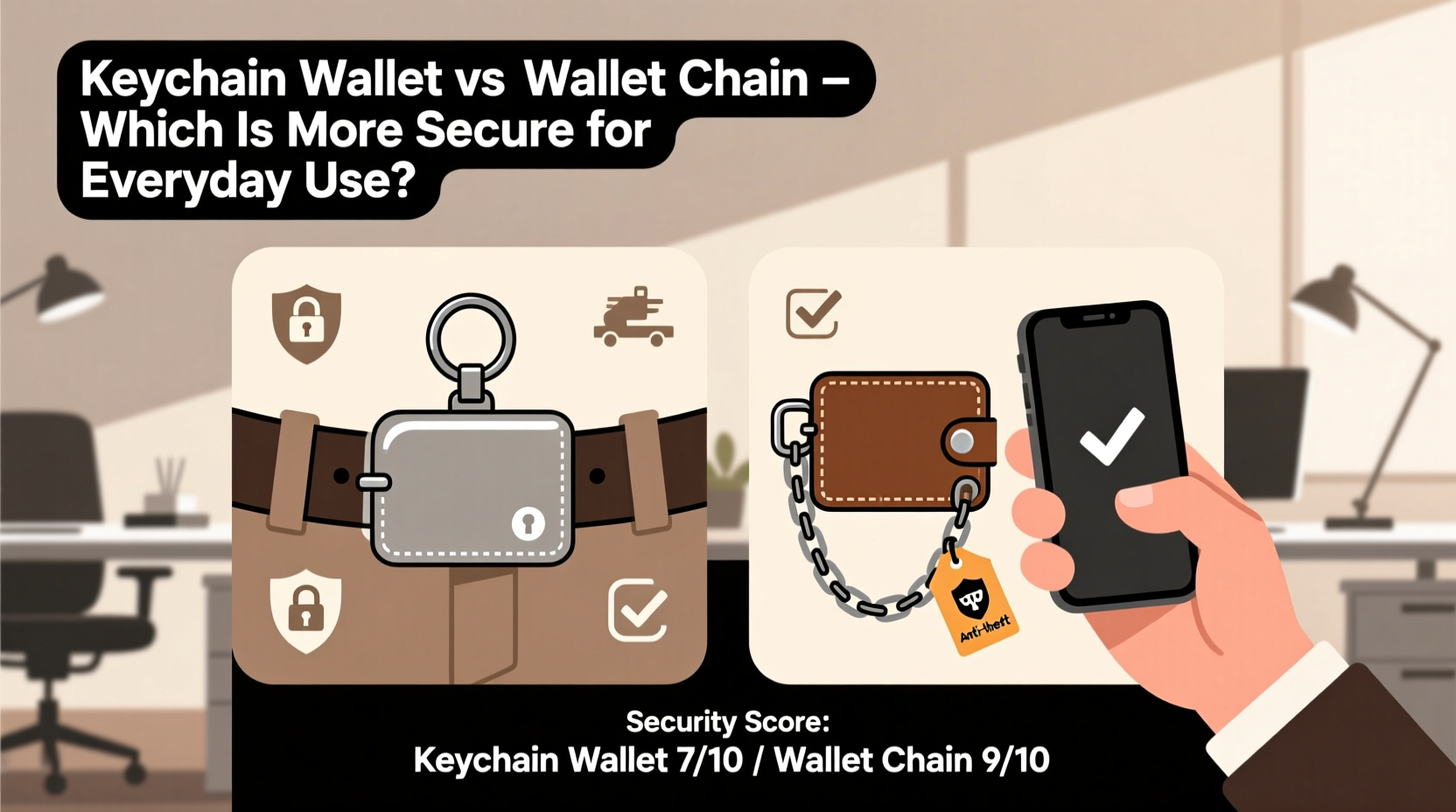
Before evaluating security, it's essential to distinguish between a keychain wallet and a wallet chain—two concepts often confused but fundamentally different in structure and purpose.
- Keychain Wallet: A slim, minimalist wallet designed to attach directly to your keyring. It typically holds 3–6 cards and some folded cash, integrating with your existing keys.
- Wallet Chain: A traditional bifold or slim wallet connected to your belt loop, pocket, or waistband via a metal chain or tether. The wallet itself remains separate but physically secured.
The key distinction lies in attachment strategy: the keychain wallet merges with your keys, while the wallet chain tethers your wallet to your body or clothing. This difference shapes how each performs under stress, during movement, and in high-risk environments like crowded spaces.
Security Comparison: Keychain Wallet vs Wallet Chain
When assessing security, three factors dominate: theft resistance, loss prevention, and accessibility during emergencies.
| Feature | Keychain Wallet | Wallet Chain |
|---|---|---|
| Theft Resistance | Moderate – Easy to overlook due to size, but blends with keys; harder to snatch unnoticed if attached securely. | High – Physically tethered; sudden pull alerts user immediately. |
| Loss Prevention | Low to Moderate – Prone to being left behind (e.g., on tables, in locks) because it’s part of the keyring. | High – Attached directly to wearer; rarely forgotten unless chain detaches. |
| Accessibility | High – Always with keys; quick access without removing from pocket. | Moderate – Requires unclipping or pulling chain from loop; slightly slower retrieval. |
| Durability | Moderate – Constant jostling with keys may wear edges and weaken stitching. | High – Chains are built for tension; wallets less exposed to abrasion. |
| Discreetness | High – Minimalist profile; doesn’t signal wealth or attract attention. | Low – Visible chain may draw eyes, especially in urban settings. |
The data suggests that wallet chains offer superior protection against snatching and pickpocketing due to their physical tethering mechanism. However, keychain wallets excel in subtlety and ease of access, making them ideal for users prioritizing speed over maximum security.
Real-World Scenarios: When Each Option Shines
Case Study: Commuting in a Crowded Metro
Alice, a daily commuter in Tokyo, switched from a front-pocket bifold to a wallet chain after her purse was stolen during rush hour. Now, her aluminum-trimmed slim wallet clips to her belt loop via a braided steel chain. During peak trains, she feels tugs but never loses her wallet. “The chain alerts me instantly if someone tries to reach into my pocket,” she says. “It’s not foolproof, but it’s far safer than loose storage.”
In contrast, Mark, a delivery driver in Austin, uses a titanium keychain wallet clipped to his ignition keys. He frequently hops in and out of his truck, pays tolls, and grabs snacks. His wallet stays with his keys, eliminating the need to fish through pockets. However, he once left it behind at a gas station pump after detaching his keys. “I didn’t realize it was gone until I needed my ID two hours later,” he admits.
This contrast highlights a core trade-off: constant companionship versus constant vigilance.
“Physical tethers dramatically reduce passive loss and active theft. A wallet chain forces awareness—it’s hard to ignore a tug on your hip.” — Daniel Ruiz, Urban Security Consultant
Best Practices for Maximizing Security
No accessory is inherently secure without proper usage. Whether you choose a keychain wallet or wallet chain, these steps will help minimize risks.
For Keychain Wallet Users
- Use a locking carabiner or twist-lock clip instead of a standard split ring to prevent accidental detachment.
- Limit contents to essentials only—overloading increases bulk and weakens structural integrity.
- Check attachment nightly as part of your key-counting routine.
- Avoid mixing with heavy tools like multitools or flashlights that accelerate wear.
For Wallet Chain Users
- Secure the chain to a fixed point like a belt loop rivet, not fabric that can tear.
- Choose a double-ended lock (e.g., spring gate + screw gate) for both wallet and loop ends.
- Keep chain length minimal—12 to 18 inches—to reduce snagging and visibility.
- Inspect regularly for fraying or weakened links, especially if used in high-movement jobs.
Frequently Asked Questions
Can a keychain wallet be tracked with technology?
Yes—many users integrate small Bluetooth trackers (like Tile or Apple AirTag) into their keychain wallet setup. Since it’s already attached to keys, pairing it with a tracker significantly improves recovery odds if lost. Just ensure the tracker fits within the slim profile and doesn’t compromise closure.
Are wallet chains allowed through airport security?
Absolutely. TSA does not prohibit wallet chains. However, metal detectors may pick up the chain, prompting a secondary screening. To avoid delays, remove the wallet from your pocket and place it in a bin during screening, just as you would with keys or belts.
Which option is better for travel?
For international or high-theft-risk travel, a wallet chain offers stronger anti-snatch protection. In crowded markets or public transit hubs, the immediate feedback of a tug is invaluable. That said, a keychain wallet paired with a digital backup (e.g., contactless payments, scanned IDs) can serve well for short trips where minimalism trumps maximum security.
Final Verdict: Which Is More Secure?
When evaluated purely on security metrics—resistance to theft, loss prevention, and real-time alertness—the **wallet chain is the clear winner**. Its physical connection to the wearer creates a passive defense system that reacts before loss occurs. Pickpockets hesitate at resistance, and users are alerted the moment unauthorized movement happens.
However, the keychain wallet isn’t obsolete. For those who value discretion, speed, and integration with existing routines (especially key management), it remains a viable, low-profile option—provided the user maintains strict habits around checking its presence.
Ultimately, security isn’t just about the tool, but how it’s used. A poorly attached wallet chain is no safer than a forgotten keychain wallet. The most secure system combines reliable hardware with consistent behavior.
“The best security feature is user awareness. No gadget replaces mindfulness.” — Lena Park, Digital & Physical Security Educator
Take Action Today
Review how you currently carry your essentials. Are you relying on luck rather than design? If you’re prone to misplacing items, a wallet chain might provide the tactile accountability you need. If you’re constantly juggling keys and wallets, a well-designed keychain wallet could streamline your routine—just add safeguards.
Whichever path you choose, upgrade your carry with intention. Your peace of mind is worth more than any shortcut.




 浙公网安备
33010002000092号
浙公网安备
33010002000092号 浙B2-20120091-4
Comments
No comments yet. Why don't you start the discussion?