
In an age where digital content dominates, choosing the right e-reader can significantly impact your daily reading habits. Two of the most respected names in the market—Amazon’s Kindle Paperwhite and Kobo’s Libra—stand out for their premium build, thoughtful design, and focus on long-term comfort. But when placed side by side, which one truly offers the superior reading experience? This in-depth comparison examines screen quality, ergonomics, software, ecosystem, customization, and real-world usability to help you make an informed decision.
Design and Ergonomics: Comfort That Lasts
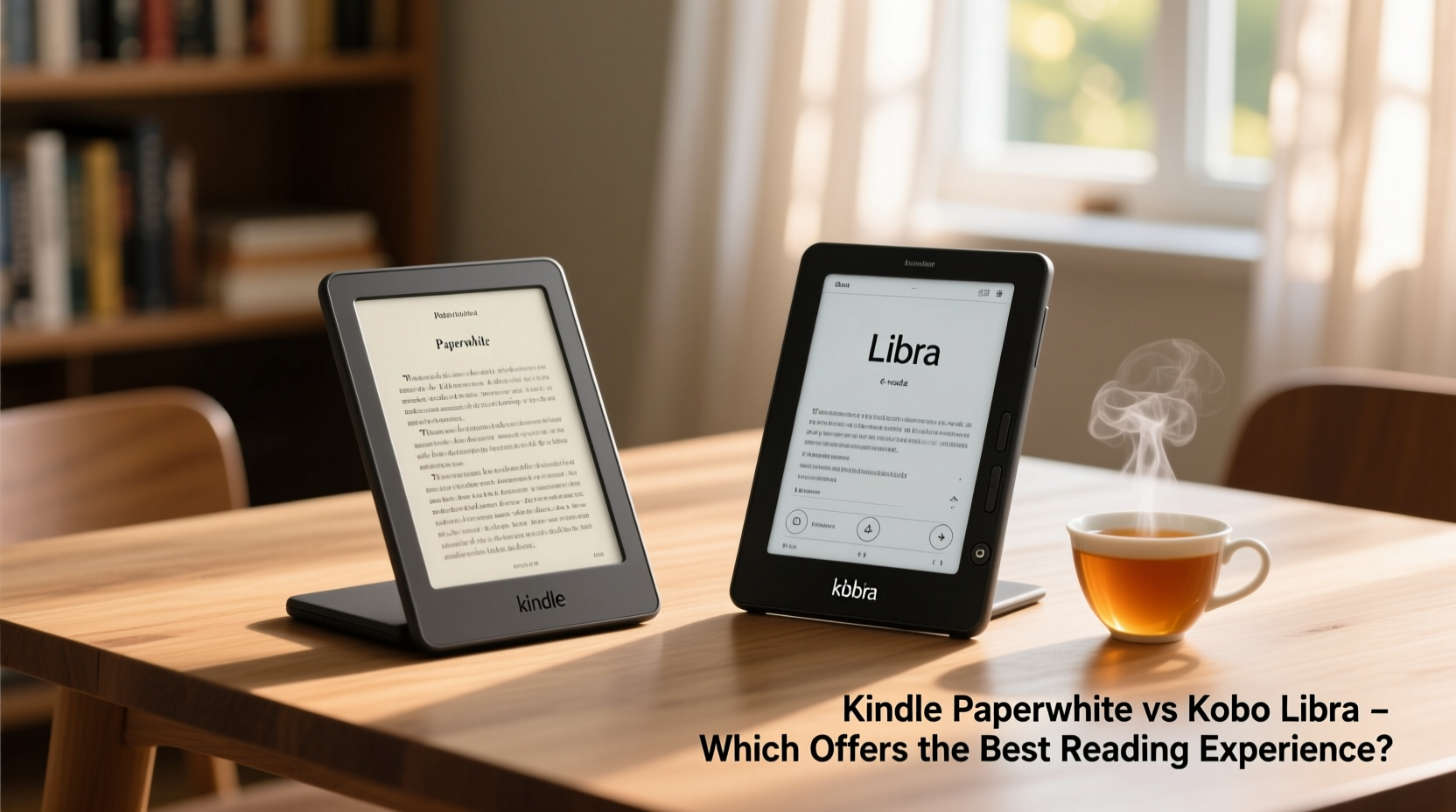
The physical feel of an e-reader matters more than many realize. A device that slips from your hand or causes fatigue during extended sessions defeats its primary purpose. The Kindle Paperwhite and Kobo Libra take different approaches to form and function.
The Kindle Paperwhite features a minimalist, symmetrical design with flat edges and rounded corners. It’s lightweight at 182 grams and has a flush-front screen that makes swiping between pages smooth. However, its symmetry means it doesn’t naturally favor right- or left-handed users, which can lead to accidental touches on the wrong side during one-handed reading.
In contrast, the Kobo Libra embraces asymmetry. Its tapered right edge fits snugly into the palm, making it ideal for one-handed use—especially for right-handed readers. Weighing slightly more at 197 grams, the added heft gives it a premium, balanced feel. The textured rubberized back prevents slippage, even during marathon reading sessions.
Screen Quality and Eye Comfort
Both devices use E Ink Carta 1200 screens, delivering crisp text, high contrast, and excellent glare resistance—even under direct sunlight. The Paperwhite has a 6.8-inch display with a resolution of 300 ppi, while the Libra matches this exactly. In practical terms, both render text as sharply as printed paper.
Where they differ is in lighting and adaptive technology. The Paperwhite uses a warm light system that adjusts from white to amber, reducing blue light in the evening. It also offers auto-brightness, using a built-in sensor to adapt to ambient lighting conditions—a feature praised for its convenience.
The Kobo Libra goes a step further with its ComfortLight PRO, which combines warm lighting with circadian rhythm support. Instead of manual scheduling, it automatically shifts color temperature based on the time of day. For night readers, this subtle transition helps maintain natural sleep patterns without requiring user intervention.
Both have front lights with 17 brightness levels. However, reviewers consistently note that the Libra’s lighting feels more uniform across the screen, with fewer hotspots near the edges. This may seem minor, but over hours of reading, uneven illumination can cause eye strain.
“Ergonomic design and consistent screen lighting are just as important as resolution when evaluating e-readers.” — Dr. Lena Patel, Vision Health Researcher at Toronto Institute of Optometry
Ecosystem and Content Availability
This is where the divide becomes most pronounced. Amazon’s Kindle ecosystem is vast, seamless, and tightly integrated. Purchasing books through the Kindle store is effortless, and WhisperSync ensures your progress, notes, and highlights sync instantly across devices. Kindle Unlimited offers access to over 4 million titles for a monthly fee, and Goodreads integration allows readers to track reviews and join reading challenges.
Kobo operates on a more open model. While its own store is smaller than Amazon’s, it supports EPUB, PDF, MOBI, and other formats natively—meaning you can sideload books from libraries, independent publishers, or personal collections without conversion. This flexibility appeals to readers who value ownership and control over their digital library.
Kobo also partners with major public libraries via OverDrive and PocketBook, enabling free borrowing with a library card. In contrast, Kindle supports library lending only through specific apps and often requires DRM-compatible formats that aren’t always available.
If you buy most of your books directly from Amazon or rely on Kindle Unlimited, the Paperwhite integrates effortlessly. But if you source books from multiple places—including international publishers or academic texts—the Libra’s openness provides unmatched versatility.
Feature Comparison: At a Glance
| Feature | Kindle Paperwhite (2021) | Kobo Libra |
|---|---|---|
| Screen Size | 6.8 inches | 7 inches |
| Resolution | 300 ppi | 300 ppi |
| Water Resistance | IPX8 rated (up to 2m for 60 mins) | IPX8 rated (up to 2m for 60 mins) |
| Battery Life | Up to 10 weeks | Up to 8 weeks |
| Storage | 8GB / 32GB options | 32GB standard |
| Weight | 182g | 197g |
| Lighting | Adjustable warm light + auto-brightness | ComfortLight PRO (auto color shift) |
| Supported Formats | MOBI, AZW, PDF, TXT (limited EPUB via Send-to-Kindle) | EPUB, PDF, MOBI, CBZ, CBR, TXT, HTML, RTF |
| Library Integration | Limited (via app) | Direct OverDrive support |
| Customization | Moderate (fonts, margins) | High (reading stats, dictionaries, themes) |
Customization and User Experience
The Kobo Libra shines in personalization. From adjustable font smoothing and line spacing to customizable home screen layouts and dictionary options (including offline multilingual dictionaries), it treats reading as a deeply individual activity. You can set goals, view detailed reading statistics, and even install third-party plugins via Calibre for advanced users.
The Kindle Paperwhite, while clean and intuitive, offers fewer tweaks. Font choices are limited, and margin adjustments are basic. However, its interface is simpler and faster for casual readers who don’t want to navigate complex menus. Features like Word Wise (which shows simplified definitions inline) and X-Ray (providing context on characters and terms) enhance comprehension, especially for learners or non-native English speakers.
One standout feature exclusive to the Libra is its page turn buttons. Physical buttons on the bottom right allow glove-friendly navigation and reduce screen smudges. Combined with touch controls, they offer dual input methods—a rarity in modern e-readers. The Paperwhite relies solely on touchscreen gestures, which work well but lack tactile feedback.
Real-World Example: The Commuter’s Choice
Consider Sarah, a university student who commutes two hours daily on public transit. She reads academic papers, novels, and borrowed library books. She values battery life, portability, and the ability to import research PDFs.
Initially, she bought a Kindle Paperwhite for its brand recognition. But she quickly grew frustrated: her library’s EPUB files wouldn’t load without conversion, and annotating dense PDFs was clunky. After switching to the Kobo Libra, she could directly download library books, resize PDFs with reflow support, and use the physical buttons to flip pages while wearing gloves in winter. Her reading efficiency improved dramatically—not because the screen was better, but because the device adapted to her workflow.
Step-by-Step Guide: Choosing the Right Device for You
Selecting between these two depends less on specs and more on how you read. Follow this decision-making path:
- Assess your book sources: Do you primarily buy from Amazon or use libraries and indie platforms? If it’s the latter, lean toward Kobo.
- Evaluate your reading environment: Do you read mostly at night? Both offer warm lighting, but Libra’s automatic shift may suit circadian health better.
- Test grip preference: If you read one-handed or in bed, hold both devices (or watch hands-on videos). The Libra’s shape may feel more secure.
- Check format needs: Do you read comics (CBZ/CBR), textbooks, or foreign language books? Kobo supports these natively; Kindle does not.
- Consider ecosystem loyalty: Are you invested in Amazon services (Audible, Goodreads)? Staying within the ecosystem simplifies syncing.
Frequently Asked Questions
Can I read Kindle books on a Kobo?
Yes, but not directly. You can convert Kindle (AZW/MOBI) files using tools like Calibre, though DRM-protected purchases from Amazon cannot be transferred due to copyright restrictions. Alternatively, use Amazon’s “Send to Kindle” email service for personal documents, which converts them to a compatible format.
Which e-reader lasts longer on a single charge?
The Kindle Paperwhite claims up to 10 weeks of battery life with moderate use, compared to Kobo Libra’s 8 weeks. In practice, actual duration depends on brightness settings, page turns, and Wi-Fi usage. Both easily last several weeks with daily reading.
Is water resistance reliable?
Both devices are IPX8-rated, meaning they can survive full submersion in freshwater up to 2 meters for 60 minutes. This makes them safe for bath reading or beach trips. However, avoid saltwater exposure and always rinse with fresh water if submerged.
Expert Insight: Why Flexibility Matters
“In the long run, the best e-reader isn’t the one with the most features, but the one that removes friction from your reading habit. For some, that’s seamless purchasing. For others, it’s format freedom.” — Marcus Reed, Digital Reading Consultant and Author of *The Future of Pages*
Final Verdict: Who Should Choose What?
The Kindle Paperwhite excels as a plug-and-play solution. It’s ideal for readers who value simplicity, deep integration with Amazon services, and a proven track record of reliability. Its auto-brightness and WhisperSync make it perfect for those who want a hassle-free experience without tinkering.
The Kobo Libra, meanwhile, is the choice for discerning readers who demand control. Whether you’re importing public domain classics, borrowing from global libraries, or reading technical PDFs, the Libra accommodates diverse needs with grace. Its ergonomic design and superior lighting algorithm also make it a top contender for heavy users.
Ultimately, the “best” reading experience is subjective. If your priority is convenience and ecosystem cohesion, the Kindle Paperwhite wins. If you value openness, customization, and physical comfort, the Kobo Libra stands apart.




 浙公网安备
33010002000092号
浙公网安备
33010002000092号 浙B2-20120091-4
Comments
No comments yet. Why don't you start the discussion?