
For nearly two decades, Kingda Ka stood as a towering symbol of thrill engineering at Six Flags Great Adventure in Jackson, New Jersey. As the tallest roller coaster in the world and once the fastest, it was more than just a ride—it was a landmark. But in late 2024, rumors turned into reality: Kingda Ka would be permanently closing. The announcement sent shockwaves through the amusement park community, sparking questions about why such an iconic attraction would be retired. The reasons are complex, rooted in aging infrastructure, rising operational costs, evolving safety standards, and strategic shifts within the Six Flags organization.
The Legacy of Kingda Ka
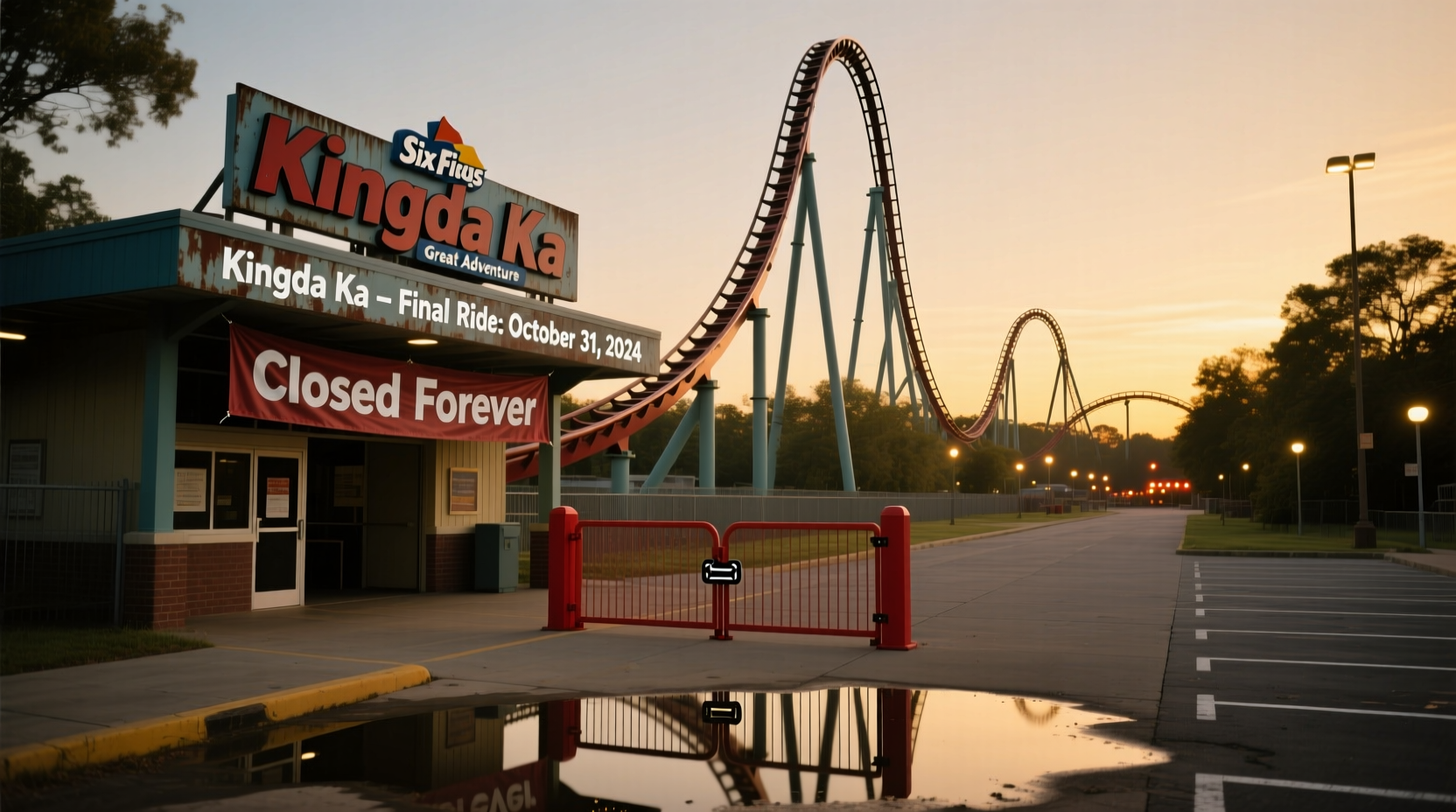
Opened in 2005, Kingda Ka was designed to outdo even its predecessor, Top Thrill Dragster at Cedar Point. Standing at 456 feet tall and reaching speeds of up to 128 mph in just 3.5 seconds, it launched riders skyward on a hydraulic catapult system before sending them into a dramatic 418-foot drop. For years, it held dual records: tallest and fastest roller coaster globally. Its gold-painted steel structure became a visual anchor of the park’s skyline, drawing enthusiasts from across the country.
Despite its acclaim, Kingda Ka was never without challenges. From frequent downtime to technical malfunctions, its reliability issues were well-documented. Still, fans tolerated these quirks because of the unmatched adrenaline rush. However, as the coaster aged, so did the problems—eventually contributing to its downfall.
Primary Reasons for Closure
1. Aging Infrastructure and Maintenance Burden
Kingda Ka is built on technology that, while groundbreaking in 2005, has become increasingly difficult to maintain. The hydraulic launch system—a marvel of engineering—is notoriously high-maintenance. Over time, parts have become obsolete or require custom fabrication, driving up repair costs significantly.
According to internal reports cited by industry analysts, Kingda Ka required unscheduled maintenance an average of 12–15 days per year between 2020 and 2023. Downtime not only affects guest experience but also impacts revenue. When one of the park’s headline attractions is closed, ticket sales and attendance can suffer.
2. Rising Operational Costs
Maintaining a coaster of this scale isn’t just about fixing broken parts—it involves daily inspections, certified technicians, energy-intensive launches, and rigorous safety checks. Annual operating costs for Kingda Ka are estimated to exceed $1.2 million, far above the average for other coasters in the park.
In contrast, newer rides use magnetic launch systems (like those seen on Jurassic World VelociCoaster) that are more reliable and less costly over time. With Six Flags focusing on profitability and lean operations, continuing to fund Kingda Ka became harder to justify.
3. Safety Concerns and Regulatory Pressure
Safety has always been paramount, but as regulations tighten, older rides face greater scrutiny. In 2022, the New Jersey Department of Community Affairs conducted a surprise inspection following a minor launch abort incident. While no violations were issued, the report highlighted “increasing wear on critical stress points” in the launch track and braking fins.
“Structures exposed to constant high-force acceleration and weather extremes degrade faster. By year 20, fatigue becomes a serious concern.” — Dr. Alan Reyes, Structural Engineer specializing in amusement rides
Repeated exposure to rapid acceleration, wind loads, and thermal expansion places immense strain on welds and support beams. Engineers noted microfractures in several joints during recent assessments, raising long-term structural integrity questions.
4. Strategic Shift Toward Themed Experiences
Modern theme parks are moving away from standalone thrill machines toward immersive, story-driven attractions. Six Flags has announced plans to rebrand several locations with stronger IP integration—such as Warner Bros. and DC Comics themes. Kingda Ka, with its minimalist jungle theme and lack of narrative elements, doesn’t align with this new vision.
The space occupied by Kingda Ka and its adjacent stand-by queue covers approximately 3.5 acres—an ideal footprint for a new multi-ride zone or themed land. Park executives have hinted at developing a \"Justice League Hypercoaster Experience\" in its place, combining storytelling, VR elements, and a next-gen launch coaster.
Timeline of Key Events Leading to Closure
The decision to close Kingda Ka wasn’t abrupt. It followed a series of operational setbacks and strategic evaluations over several years.
- 2018: Major refurbishment delays Kingda Ka’s opening season by six weeks; cost exceeds $750,000.
- 2020: Pandemic closures expose financial fragility; leadership begins reviewing low-utilization/high-cost rides.
- 2022: Two mid-season shutdowns due to launch mechanism failures; media coverage intensifies scrutiny.
- Early 2023: Internal memo reveals feasibility study for replacement attraction; engineering teams assess demolition logistics.
- September 2023: Rumors surface online after aerial drone footage shows survey markers near the ride base.
- March 2024: Six Flags officially announces Kingda Ka will close permanently after the 2024 summer season.
- November 2024: Final ride completed; demolition scheduled for Q1 2025.
What’s Next for the Site?
Rumors suggest the replacement will be a hybrid launch coaster with both vertical and inclined launches, themed around Superman or the Flash. Unlike Kingda Ka, which focused solely on height and speed, the new ride is expected to include inversions, immersive pre-shows, and synchronized lighting/sound effects.
Additionally, Six Flags aims to improve guest flow by replacing the sprawling single-rail layout with a compact dual-tracked system, allowing higher rider throughput—estimated at 1,600 riders per hour versus Kingda Ka’s 450.
| Feature | Kingda Ka | Planned Replacement (Rumored) |
|---|---|---|
| Top Speed | 128 mph | 110 mph |
| Height | 456 ft | ~380 ft |
| Throughput | 450 riders/hour | 1,600 riders/hour |
| Theme Integration | Minimal (jungle motif) | Full DC Universe immersion |
| Launch System | Hydraulic | Linear Synchronous Motor (LSM) |
Frequently Asked Questions
Will any part of Kingda Ka be preserved?
Yes. Six Flags has confirmed that the summit sign and one of the original trains will be displayed in a new “Legacy Zone” near the park entrance. Additionally, select pieces of track may be auctioned for charity.
Was Kingda Ka unsafe before closure?
No. Despite mechanical issues causing downtime, there were no major safety incidents linked to structural failure. The closure is proactive, based on long-term risk assessment rather than reactive to accidents.
Could Kingda Ka have been saved with upgrades?
Possibly, but not economically. A full system overhaul—including replacing the hydraulic launch with LSM tech—would cost an estimated $18–22 million, nearly equivalent to building a new coaster. Given the park’s direction, investment made more sense in replacement than renovation.
Tips for Theme Park Enthusiasts
- Follow official park social channels and enthusiast forums like Screamscape for early updates.
- Visit legacy rides early in the day and season—they’re more likely to be operational before wear accumulates.
- Consider visiting during “fan appreciation” events, where parks sometimes offer final access before demolition.
- Document your experiences. Take videos, collect boarding passes, and note timestamps—these become valuable when rides retire.
A Fan’s Perspective: Saying Goodbye to a Giant
Mark Tran, a roller coaster enthusiast from Philadelphia, visited Kingda Ka every year since its opening. “I brought my son for his first ride in 2015,” he recalled. “He screamed the whole way up—but when we hit the top, he looked out over the whole state and said, ‘Dad, I’m not scared anymore.’ That moment meant everything.”
When he heard about the closure, Mark organized a farewell gathering with fellow fans. They stood together under the shadow of the tower on a crisp autumn morning, watching the sun rise behind the spike. “It’s not just a ride,” he said. “It’s a memory machine.”
Conclusion
The closure of Kingda Ka marks the end of an era in American roller coaster history. While its retirement stems from practical concerns—cost, maintenance, and strategic evolution—it also reminds us how quickly innovation moves in the amusement industry. What was once the pinnacle of thrill engineering eventually gives way to safer, smarter, and more sustainable designs.
Yet, Kingda Ka’s legacy won’t vanish with the dismantling of its rails. It inspired a generation of taller, faster rides and proved that extreme heights could be achieved safely—most of the time. As Six Flags builds toward a more immersive future, honoring past icons like Kingda Ka ensures that progress doesn’t erase memory.




 浙公网安备
33010002000092号
浙公网安备
33010002000092号 浙B2-20120091-4
Comments
No comments yet. Why don't you start the discussion?