
When it comes to layering with elegance and comfort, few pieces are as timeless as the cardigan. But within this wardrobe staple lies a subtle yet significant decision: should you choose a fully knitted, closed-front cardigan or an open-front design? The answer isn’t just about fashion—it’s about fit, proportion, and how each style interacts with your body type, outfit, and lifestyle.
Both styles offer distinct advantages and visual effects. One can streamline your silhouette; the other adds dimension and versatility. Understanding the nuances between them helps you make intentional choices that enhance your look rather than compromise it.
The Anatomy of Flattering Cardigans
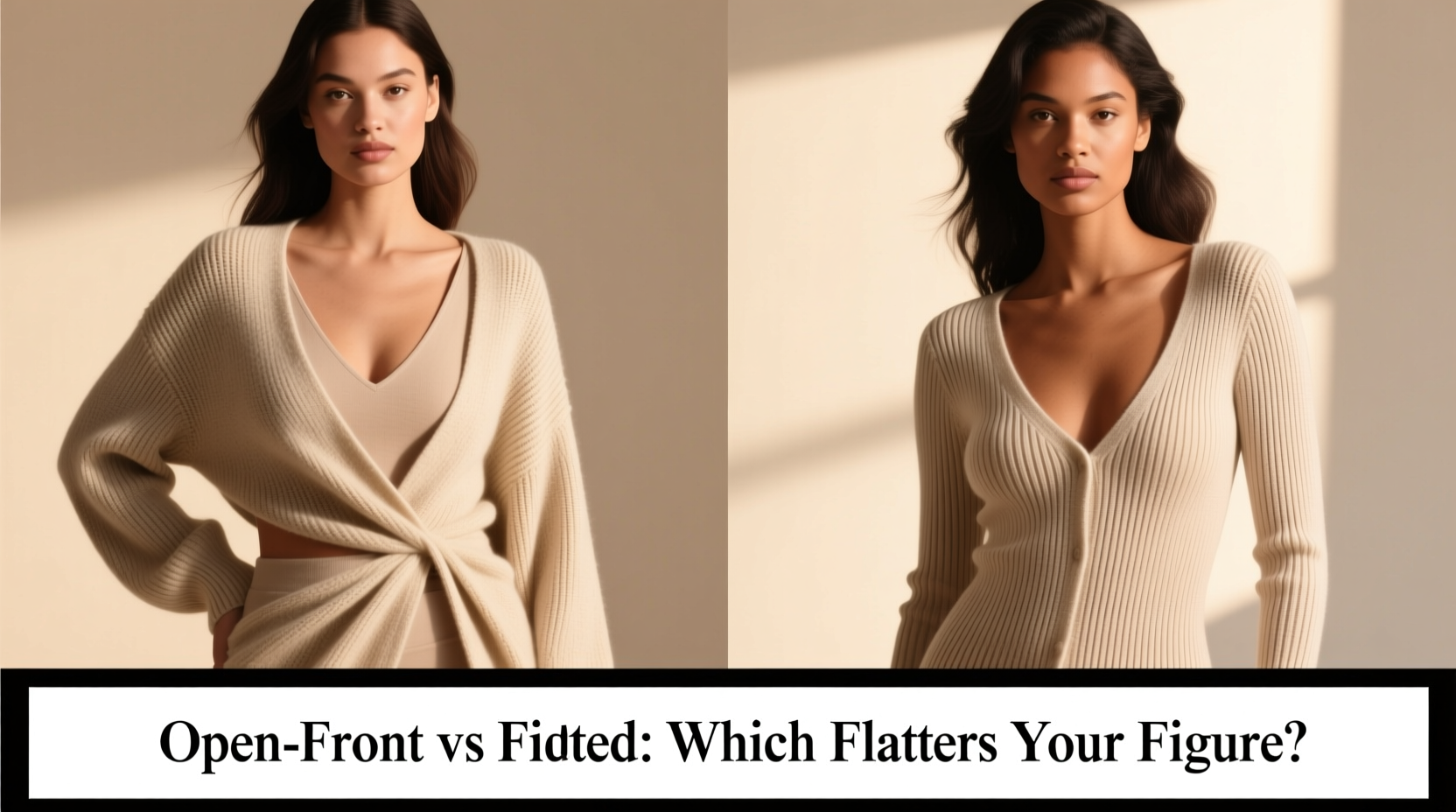
Flattery in clothing isn’t subjective—it’s rooted in proportion, line, and structure. A well-chosen cardigan can elongate the torso, balance the hips, draw attention to the waist, or soften broad shoulders. The difference between a knitted (closed-front) cardigan and an open-front version often comes down to control versus fluidity.
A closed-front cardigan behaves like a jacket. It wraps around the body, offering containment and definition. An open-front cardigan functions more like a drape—free-flowing, adjustable, and dynamic. Each alters the eye's path across your figure differently.
Fabrics also play a role. Traditional knitted cardigans are often made from denser yarns like wool, cotton, or blends, providing structure. Open-front versions may use lighter, looser weaves or even shawl-like knits that emphasize movement over form.
“Fit is the foundation of flattery. A cardigan should complement your natural lines, not fight them.” — Lena Moretti, Fashion Stylist & Body Positivity Advocate
Knitted (Closed-Front) Cardigans: Structure and Definition
Closed-front cardigans button, zip, or snap shut, creating a clean vertical line from neck to hem. This uninterrupted line has a slimming effect, especially when tailored slightly at the waist or cut long and lean.
These cardigans work exceptionally well for individuals seeking polish and modesty. They’re ideal under coats in winter or worn alone over dresses and blouses. Because they close fully, they offer warmth without bulk and maintain a streamlined appearance.
For apple-shaped bodies, a longer-line, closed cardigan in a darker shade can provide coverage while still defining the waist if belted. Pear shapes benefit from structured cardigans that balance wider hips by adding volume to the upper body.
Best For:
- Formal or office settings
- Cooler climates requiring insulation
- Creating a polished, cohesive outer layer
- Body types needing waist definition or balanced proportions
Open-Front Cardigans: Flow and Flexibility
Open-front cardigans prioritize ease and adaptability. Without closures, they allow wearers to control how much fabric drapes, how wide the opening falls, and how layered the look becomes. This flexibility makes them ideal for transitional weather and casual styling.
Because they don’t constrict the midsection, open-front cardigans are often more forgiving for those who dislike tightness around the stomach or hips. The way the edges fall naturally draws diagonal lines across the body, which can be visually slimming when done right.
Longline open cardigans, particularly those reaching the thigh or knee, act like soft jackets. When worn over fitted tops and straight-leg pants, they add texture without overwhelming the frame. Cropped open styles pair beautifully with high-waisted bottoms, emphasizing the waistline.
Best For:
- Casual, weekend wear
- Layering over tanks, tees, or dresses
- Warmer months or indoor environments
- Curvy figures wanting to avoid bulk at the waist
Comparing Styles: Which Is More Flattering?
There’s no universal answer—the most flattering style depends on individual factors. To help clarify, here’s a comparison based on key criteria:
| Feature | Closed-Front Knitted | Open-Front |
|---|---|---|
| Waist Definition | High – creates clear silhouette | Variable – depends on drape and layering |
| Warmth | Higher – full coverage | Moderate – gaps allow airflow |
| Versatility | Moderate – formal leaning | High – works across casual to smart-casual |
| Comfort | Depends on fit – can feel restrictive | Generally higher – no pressure points |
| Body Type Suitability | Better for hourglass, rectangle, inverted triangle | Ideal for pear, apple, petite frames |
Ultimately, the “more flattering” choice aligns with your goals. If you want precision and polish, go closed. If you value ease and adaptability, open-front wins.
Real-Life Example: Choosing for Confidence
Sophie, a 34-year-old teacher with a pear-shaped body, struggled with cardigans that emphasized her hips. She’d tried short, boxy knitted styles that ended at her widest point—accentuating imbalance. After consulting a stylist, she switched to long, open-front cardigans in medium-weight merino wool.
Worn over slim-fit turtlenecks and dark jeans, the drape created a vertical flow that minimized width at the hip. On colder days, she added a belt at the narrowest part of her waist, transforming the open piece into a semi-structured coat. The result? Greater confidence and consistent compliments.
Her experience underscores a vital truth: flattery isn’t about following trends—it’s about tailoring garments to your unique form.
How to Choose Based on Your Body Shape
Here’s a quick guide to help match cardigan style with your silhouette:
- Hourglass: Both styles work. Closed-front enhances curves; open-front offers breathability without losing shape.
- Pear: Opt for long open-front cardigans that skim the hips or closed styles with slight flare below the waist.
- Apple: Long open-front or closed-front with empire seams or vertical detailing to draw eyes upward.
- Rectangle: Use closed-front cardigans with belts or defined waists to create curves. Open-front adds soft layers.
- Inverted Triangle: Open-front in lightweight knits balances broader shoulders with flowing lower edges.
Checklist: Finding Your Flattering Fit
Before purchasing, ask yourself these questions:
- ✅ Do I need warmth, or am I layering for style?
- ✅ Will this piece be worn mostly indoors or outdoors?
- ✅ Does my body respond better to structure or drape?
- ✅ Can I adjust the fit (belt, tuck, drape) for different occasions?
- ✅ Does the length hit at a flattering point (e.g., not mid-hip)?
FAQ
Can I wear an open-front cardigan to work?
Yes, especially in business-casual environments. Pair a tailored open-front cardigan in neutral tones with a blouse and pencil skirt or trousers. Avoid overly slouchy fabrics unless your workplace culture allows it.
Do closed-front cardigans make you look heavier?
Not inherently. Poor fit does. A well-fitted closed cardigan with clean lines can be slimming. Avoid oversized cuts or horizontal textures that add visual weight.
Are open-front cardigans suitable for winter?
They can be, if layered properly. Choose dense knits like cable wool or cashmere blends, and wear over thermal layers or turtlenecks. Add a scarf and coat when needed.
Conclusion: Style With Intention
The debate between knitted and open-front cardigans isn’t about superiority—it’s about suitability. The most flattering cardigan is the one that aligns with your body, lifestyle, and aesthetic goals. Whether you gravitate toward the crispness of a closed front or the ease of an open drape, the key is intentionality.
Build your collection mindfully. Invest in one structured knitted piece for days when polish matters. Own a versatile open-front option for effortless layering. And above all, wear what makes you feel confident—not just covered.




 浙公网安备
33010002000092号
浙公网安备
33010002000092号 浙B2-20120091-4
Comments
No comments yet. Why don't you start the discussion?