
When winter winds howl and temperatures dip, your outerwear choices matter—not just for comfort, but for confidence. Two staples dominate cold-weather wardrobes: the knitted jacket and the sweater. Both are made from wool or wool-blend yarns, both offer texture and warmth, yet they serve different purposes and project distinct aesthetics. Choosing between them isn’t about picking a favorite—it’s about understanding function, fit, and fashion in real-world conditions.
The confusion often arises because both garments are knitted, sometimes even look similar at a glance. But their construction, layering potential, and design intent set them apart. One is built to be worn as outerwear; the other, typically an inner layer. So which keeps you warmer? Which makes you look cooler? The answer depends on climate, occasion, and personal style—but with the right knowledge, you can wear both strategically.
Understanding the Basics: What Defines Each Garment?
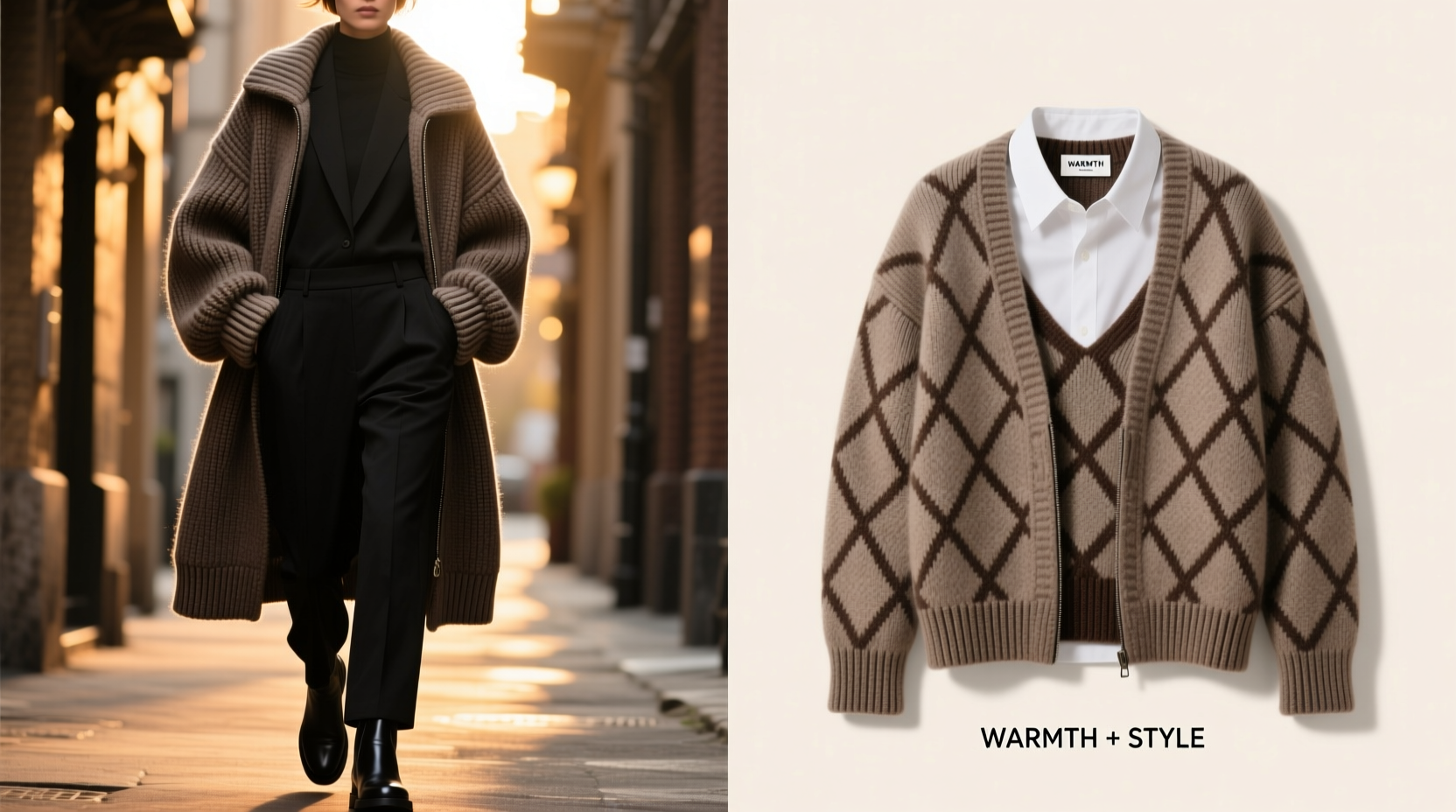
A **knitted jacket**—also known as a cardigan jacket, shacket (shirt-jacket), or cropped knit coat—is constructed like outerwear. It often features buttons, zippers, structured shoulders, and reinforced seams. Designed to be worn over other clothing, it resists wind and light moisture better than a standard sweater. Many are tailored with double-layered fronts or storm cuffs to enhance insulation.
In contrast, a **sweater**—whether crewneck, turtleneck, or V-neck—is primarily a mid-layer garment. It's meant to sit close to the body, trapping heat generated by your core. Sweaters rely on thickness (gauge) and fiber density for warmth but lack closures or weather-resistant finishes. They shine under a coat or layered over a shirt, but rarely stand alone against harsh elements.
Warmth Showdown: Insulation, Fit, and Fabric Matter
Warmth isn’t just about material—it’s about how heat is retained and lost. Let’s break down the key factors:
- Fiber Type: Merino wool, cashmere, and alpaca offer superior warmth-to-weight ratios. Acrylic blends are cheaper but less breathable and prone to pilling.
- Gauge & Thickness: Chunky knits trap more air, enhancing insulation. Fine-gauge sweaters are sleeker but require layering for serious cold.
- Closure System: Knitted jackets with full zippers or buttoned fronts reduce convective heat loss—critical when walking into the wind.
- Fit: Loose fits allow airflow, cooling you down. Tight-fitting sweaters minimize air pockets, making them more efficient insulators unless damp.
In still conditions, a thick turtleneck sweater may feel warmer due to direct skin contact and snug fit. But outdoors, especially in wind or drizzle, a closed knitted jacket outperforms by blocking external elements. According to Dr. Lena Torres, textile researcher at the Institute of Apparel Technology:
“Even a thin jacket with wind-resistant backing can retain 30% more body heat than an open-front sweater of identical weight. Structure matters as much as material.” — Dr. Lena Torres, Textile Researcher
Style Comparison: When Coolness Meets Context
\"Looking cooler\" isn't just about temperature—it's about perception, occasion, and silhouette. Here’s where context defines the winner.
| Scenario | Best Choice | Why |
|---|---|---|
| Office Wear | Sweater (crew or V-neck) | Clean lines, professional, pairs well with blazers |
| Weekend Errands | Knitted Jacket | Easy on/off, stylish standalone piece |
| Date Night | Turtleneck Sweater | Form-fitting, elegant, suggests refinement |
| Outdoor Festival | Longline Knit Jacket | Weather-ready, expressive patterns, functional |
| Layering Under Coat | Thin Merino Sweater | Low bulk, high warmth, invisible under outerwear |
Sweaters tend to score higher in minimalist, urban, or formal settings. A black merino turtleneck remains a timeless symbol of quiet sophistication. Knitted jackets, however, dominate in casual, creative, or transitional environments. Think oversized cable-knit cardigans with jeans or cropped shackets over dresses—they suggest effortless individuality.
Real Example: Alex’s Winter Commute Dilemma
Alex lives in Portland, Oregon, where winters are damp and unpredictable. His morning walk to the office is short but exposed. He used to wear a chunky wool sweater daily, only to arrive chilled and slightly damp from mist. After switching to a water-repellent lambswool knitted jacket with snap buttons, he noticed immediate improvement. “I stayed dry, didn’t need a bulky coat, and got more compliments,” he said. “It looked intentional, not just warm.”
The jacket served as both shield and statement—proof that performance and style aren’t mutually exclusive.
How to Maximize Warmth and Style: A Step-by-Step Guide
You don’t have to choose one forever. Master both by following this seasonal strategy:
- Evaluate Your Climate: Cold + dry? Prioritize insulation (sweaters). Cold + wet/windy? Choose structured knit jackets with closures.
- Invest in Layering Pieces: Buy fine-gauge merino or cashmere sweaters that fit smoothly under jackets or blazers.
- Pick One Statement Outer Knit: A well-cut, dark-colored knitted jacket in wool blend works year-round with proper care.
- Match Texture to Occasion: Smooth jersey-knit sweaters for work; rustic cable knits for weekends.
- Accessorize Strategically: Scarves add warmth without bulk. A silk scarf under a sweater neck elevates the look instantly.
Frequently Asked Questions
Can a knitted jacket replace a winter coat?
Not entirely. While heavy knit jackets provide moderate warmth and wind resistance, they lack the thermal lining, hood, and full coverage of a true winter coat. Use them in mild cold (35–50°F / 2–10°C) or layer over a sweater in deeper winter.
Are cardigans and knitted jackets the same thing?
Not exactly. All knitted jackets are cardigans in structure (open front), but not all cardigans are jackets. True knitted jackets are stiffer, longer, and designed for outerwear. Standard cardigans are softer, thinner, and meant for indoor or mild-weather use.
Which is more sustainable: sweater or knitted jacket?
It depends on materials and craftsmanship. High-quality wool pieces from ethical sources last decades. However, jackets often use more yarn and hardware (buttons, zippers), increasing resource use. Look for brands using recycled fibers and transparent production.
Final Verdict: Warmth vs. Coolness—Is There a Winner?
If warmth were the only factor, the answer would lean toward sweaters—especially tight-fitting, high-loft styles made from natural fibers. They excel at heat retention in stable environments. But in real life, conditions change. Wind, humidity, and movement shift the balance.
For overall performance and modern style, the **knitted jacket wins** in most practical scenarios. It offers adjustable ventilation (via buttons or zippers), better weather resistance, and greater visual impact as a standalone piece. It’s the garment that says, “I’m prepared—and I know what I’m wearing.”
That said, no wardrobe should be without a great sweater. It’s the foundation of layered dressing, the quiet hero beneath the headline piece. Together, they form a dynamic duo: the sweater for core warmth, the jacket for outer defense and aesthetic flair.
“You don’t dress for the weather you hope for—you dress for the one you’re in. And sometimes, looking cool means being smart about staying warm.” — Marcus Reed, Menswear Stylist & Author




 浙公网安备
33010002000092号
浙公网安备
33010002000092号 浙B2-20120091-4
Comments
No comments yet. Why don't you start the discussion?